


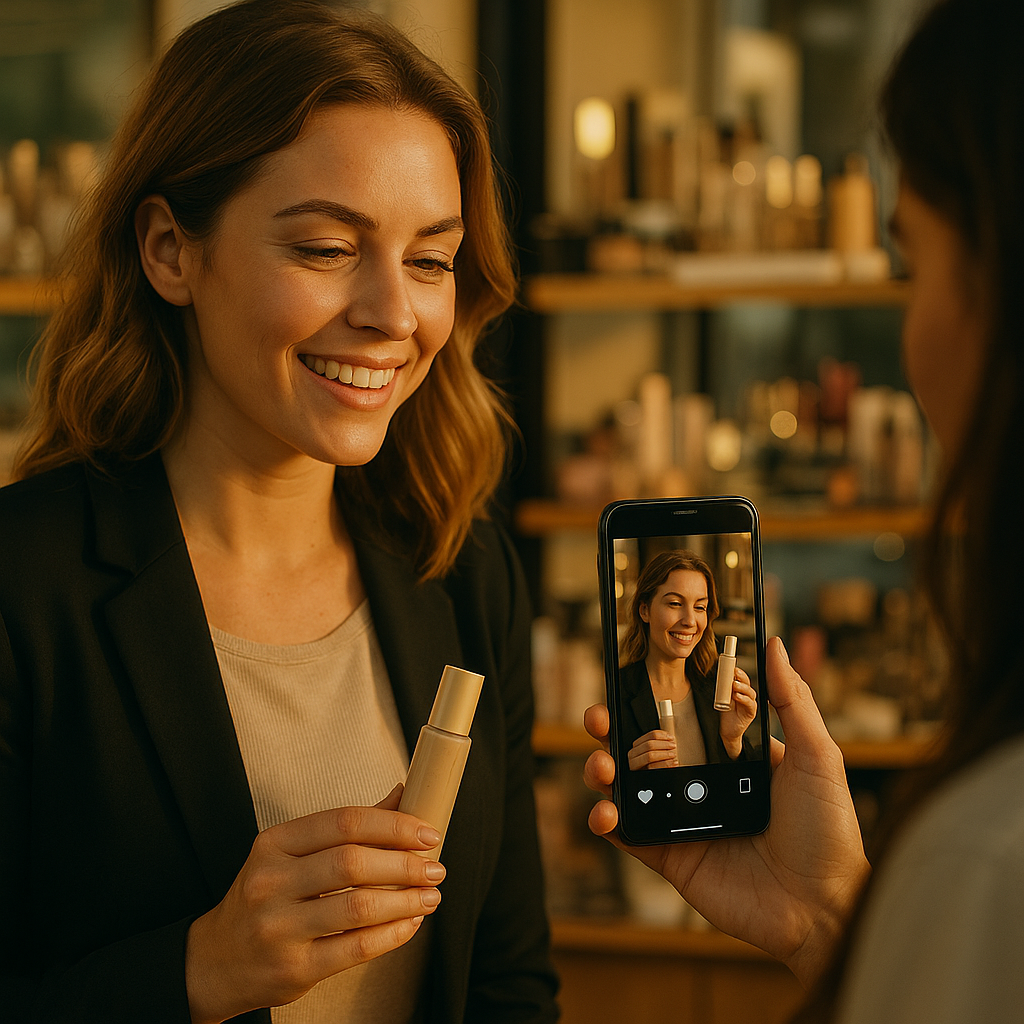
In 2026, beauty brands compete in feeds where attention is scarce and clicks are optional. This case study on zero click social education shows how one beauty company turned short-form lessons, ingredient explainers, and creator-led demos into sustained reach, stronger trust, and measurable sales lift. The strategy did not chase traffic first. It earned belief first, then demand—and that changed everything.
Why zero click content worked in beauty marketing
The brand in this case study was a mid-sized skincare company with solid products, a loyal customer base, and a familiar growth problem: paid acquisition costs were climbing while organic social reach felt inconsistent. Its team noticed a pattern in audience behavior. Users were saving posts, sharing Reels, and asking detailed questions in comments, but they were not always leaving the platform to read blog posts or product pages.
Instead of treating that as a failure, the team reframed it as an opportunity. They built a strategy around beauty marketing that delivered the full educational value inside social platforms. The goal was simple: answer the question before the customer needed to click.
This matters in beauty because purchase decisions are rarely based on a single product shot. People want to understand ingredients, routines, skin compatibility, application order, and expected results. If a brand can teach clearly within the feed, it reduces friction and earns trust faster.
The company focused on three audience needs:
- Clarity: What does this ingredient do, and who is it for?
- Confidence: How do I use it without irritation or confusion?
- Credibility: Why should I trust this brand over dozens of alternatives?
By meeting those needs through native social formats, the brand increased saves, shares, comments, profile visits, branded search, and eventually conversion rate. That sequence is important. Zero-click education did not replace the website. It created stronger intent before the visit happened.
Building a social education strategy that answered real skincare questions
The team started with research, not content production. They reviewed customer support tickets, on-site search terms, comment threads, creator feedback, and post-purchase surveys. This revealed recurring questions such as:
- Can I use niacinamide with retinol?
- What order should I apply these products in?
- How long before I see results?
- Is this safe for sensitive or acne-prone skin?
- Why does this formula pill under sunscreen or makeup?
These questions became the editorial calendar. Rather than publish generic “top tips,” the brand created highly specific, low-friction educational assets. Every post had one teaching objective, one core takeaway, and one proof point.
The content mix included:
- 15-second myth-busting videos with a single misconception corrected on-screen
- Carousel explainers breaking down ingredient benefits, pairing rules, and routine steps
- Texture and application demos showing quantity, spreadability, and layering
- Esthetician and chemist commentary translated into plain language
- Comment-led follow-ups where audience questions became the next post
This approach aligns with Google’s helpful content and EEAT principles even though the distribution happened on social. The educational claims were reviewed by qualified internal experts, the advice matched product instructions, and content avoided exaggerated promises. Where a topic required caution, such as sensitivity or combining actives, the brand said so directly.
Experience showed up through real application demos. Expertise came from licensed estheticians and formulation specialists. Authoritativeness grew as the content was repeatedly saved and cited by creators. Trustworthiness came from balanced education, visible results timelines, and no overstatement.
How short-form video and skincare education increased trust signals
The biggest shift came when the brand stopped using short-form video as an entertainment-first channel and began using it as a trust engine. Instead of dramatic before-and-after edits or vague transformation claims, it produced calm, useful, repeatable lessons.
One of the highest-performing series was “Routine in 30 Seconds.” Each video answered one practical skincare education question:
- When to apply a serum
- How much moisturizer to use
- What to avoid mixing in the same routine
- How to patch test correctly
- Why consistency matters more than overuse
These videos did not ask viewers to “read more in bio” or “visit the site for details.” The answer was on-screen, in the caption, and reinforced in comments. That zero-click format produced stronger behavioral signals than the brand expected:
- Save rates rose because the content solved recurring problems
- Share rates rose because users sent posts to friends with similar skin concerns
- Comment quality improved, moving from emoji reactions to specific product and routine questions
- Profile visits increased because users wanted to validate the source after receiving value
Trust in beauty is often built through repeated small proofs. A clear explanation of why pilling happens may seem minor, but it demonstrates product understanding. A realistic statement that visible improvement may take several weeks signals honesty. An esthetician acknowledging that one routine will not suit every skin type shows restraint. These are trust multipliers.
The brand also used creator partnerships differently. Instead of asking creators to push direct purchase messages, it briefed them to teach one routine, one ingredient use case, or one mistake to avoid. That made sponsored content feel more useful and less intrusive. Performance improved because the audience got immediate value before any call to action appeared.
Using audience insights and social proof to improve conversion rate
A common misconception is that zero-click social education is hard to measure because there is no immediate traffic event. The brand solved this by building a wider attribution framework. It tracked not only clicks, but also the leading indicators that tend to precede purchase intent.
The team monitored:
- Save rate by topic to identify evergreen education themes
- Share rate to find socially useful content with broader relevance
- Comment sentiment and question depth to measure understanding and trust
- Profile visit rate as a bridge signal between content and brand consideration
- Branded search volume after educational campaigns launched
- Product page conversion rate for items featured in educational series
Within months, the brand saw that zero-click educational posts were assisting conversion even when they were not the final touchpoint. Users would discover a routine tip on social, search the brand name later, then convert through branded search, email, or retargeting.
This changed budget allocation. The team stopped judging organic social solely on session traffic. It began treating educational content as an upper- and mid-funnel asset that improved downstream efficiency.
Social proof also became more useful. Rather than rely only on testimonials saying a product was “amazing,” the brand highlighted evidence tied to questions users already had. Examples included:
- Creators showing how a serum layered under sunscreen
- Customers explaining where they placed a treatment in their routine
- Expert commentary on who should start slowly with an active ingredient
This made proof more credible because it matched real-world decision criteria. Consumers do not just want praise. They want context.
Content operations for creator marketing and expert-led beauty content
Execution was not random. The brand built a repeatable operating model that allowed zero-click education to scale without losing accuracy.
First, it created a content taxonomy with fixed pillars:
- Ingredient education
- Routine building
- Application technique
- Troubleshooting
- Expectation setting
Second, it defined format rules for each platform. Reels prioritized one lesson and one visual proof. Carousels handled comparisons, sequences, and step-by-step routines. Stories captured live questions and objections. Comments were not moderation-only spaces; they were part of the educational experience.
Third, it used a lightweight expert review process. A content strategist drafted the idea, a product educator checked claims, and the social team adapted the language for platform-native delivery. This protected accuracy while preserving speed.
Fourth, it trained creators in message integrity. This was essential for creator marketing. Partners received clear boundaries on what could be claimed, what required nuance, and what should be framed as personal experience rather than universal truth. As a result, creator content remained authentic without becoming misleading.
The brand also repurposed successful lessons across the customer journey:
- High-save posts informed email onboarding for first-time buyers
- Frequent comment questions became product page FAQs
- Top-performing videos were embedded on landing pages
- Customer support macros echoed the same language used on social
This consistency matters for EEAT. Helpful content should not contradict itself from one channel to another. When social, site, support, and product education align, trust compounds.
Key lessons from this zero click social education case study
The beauty brand did not scale because it posted more often. It scaled because it taught more clearly. That distinction is the central lesson of this case study.
Several principles made the strategy work:
- Teach natively. Do not force a click just to deliver the answer. If the platform is where the question appears, answer it there.
- Start with real questions. Support tickets, comments, creator feedback, and on-site search reveal what people actually need.
- Use experts responsibly. In beauty, claims carry risk. Qualified review improves accuracy and credibility.
- Measure assisted outcomes. Saves, shares, branded search, profile visits, and conversion lift together tell a fuller story than clicks alone.
- Make creators educators. Utility often outperforms hype, especially in categories where confusion blocks purchase.
- Keep expectations realistic. Trust grows when brands explain timelines, limitations, and skin variability.
For brands wondering whether zero-click education can drive revenue, the answer is yes—when the education is specific, useful, accurate, and consistent. In beauty, consumers do not just buy products. They buy routines, confidence, and reduced uncertainty. A social strategy that reduces uncertainty can become a growth strategy.
There is also a broader takeaway for digital teams in 2026. Platform behavior continues to favor content that satisfies intent quickly. Brands that cling to click-first thinking may underperform in environments where users expect answers immediately. The companies that win will understand that educational value and commercial value are not opposites. In many cases, one creates the other.
FAQs about zero click social education for beauty brands
What is zero click social education?
It is content that fully answers a user’s question inside a social platform, without requiring a click to a website. In beauty, this often includes ingredient explainers, routine tutorials, application demos, and myth-busting posts.
Why is zero-click content effective for beauty brands?
Beauty purchases depend on trust and understanding. Consumers want help with routines, compatibility, order of use, and results timelines. When a brand teaches clearly in-feed, it lowers friction and builds confidence before the purchase journey continues.
Does zero click social education reduce website traffic?
It can reduce low-intent clicks, but that is not necessarily a negative outcome. Many brands see stronger branded search, more qualified site visits, and better conversion rates because users arrive with higher intent after being educated on social.
How do you measure ROI from zero-click social content?
Track saves, shares, comments, profile visits, branded search, assisted conversions, and product page conversion lift. Look for patterns between educational campaigns and downstream revenue, not just direct click-through rate.
What kind of beauty content performs best in a zero-click model?
Specific, practical content usually performs best: ingredient pairings, routine order, usage quantity, troubleshooting, skin-type guidance, and realistic expectations. Content tied to actual customer questions tends to outperform broad lifestyle messaging.
Should beauty brands use experts in social education?
Yes. Estheticians, dermatology-informed educators, formulators, and trained internal product experts can improve accuracy and trust. Their involvement should be visible in the process, especially when discussing active ingredients or sensitive skin concerns.
Can creator partnerships support zero-click education?
Absolutely. Creators are effective when they demonstrate routines, explain how they use products, and answer practical questions. The best partnerships prioritize usefulness and transparency over aggressive selling.
How often should a beauty brand post educational content?
Consistency matters more than volume. A sustainable cadence built around recurring audience questions is better than frequent low-value posting. Brands should publish often enough to learn from engagement patterns and refine their education themes.
What is the biggest mistake brands make with zero-click social education?
The most common mistake is withholding the answer to force a click. If users feel the content is incomplete by design, trust drops. The second mistake is oversimplifying or overstating claims in ways that undermine credibility.
Is zero click social education only for skincare brands?
No. It also works for makeup, haircare, body care, fragrance, and beauty devices. Any category where product usage, technique, expectations, or selection can be clarified through short, useful lessons can benefit.
Zero-click social education helped this beauty brand grow because it replaced interruption with instruction. By answering real questions in-feed, using experts and creators responsibly, and measuring trust signals alongside revenue outcomes, the company built stronger demand with less friction. The clearest takeaway is practical: teach first, earn confidence, and let conversion follow from understanding rather than pressure.