


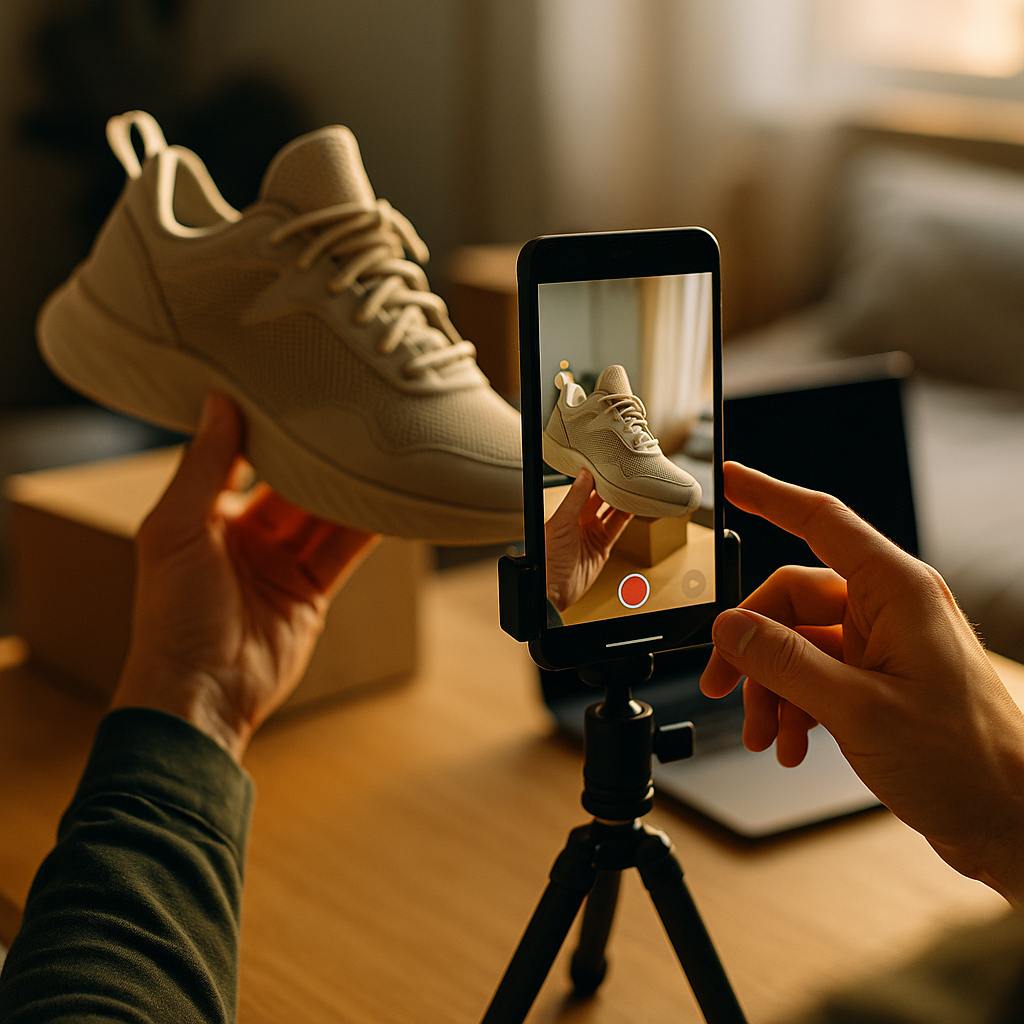
The Unboxing Is Dead. What Replaces It?
Instagram’s internal data shows saved posts now correlate more strongly with purchase intent than likes or comments. Yet 73% of sponsored product reveals still follow the same unboxing-haul template that peaked in relevance around 2019. If your product reveal content strategy starts and ends with “send box, film reaction,” you’re leaving conversion on the table. Here are ten concepts that actually work—each one production-ready, briefable, and designed to feel organic while hitting measurable business outcomes.
Why Saves (Not Views) Should Drive Your Creative Brief
The algorithm shift is real. TikTok, Instagram, and YouTube Shorts all weight save-to-view ratio as a primary signal for extended distribution. A video that earns 5,000 saves from 100,000 views will outperform one that earns 50,000 likes from the same reach. Saves indicate utility, aspiration, or future purchase intent—exactly the behaviors brands pay for.
Saves are the new clicks. When someone bookmarks a product reveal, they’re building a personal shopping list your brand gets to live on for free.
This means your creative brief needs a “save trigger”—a reason for the viewer to come back. Every concept below is engineered with at least one built-in save mechanic.
Ten Concepts Worth Briefing
1. The Ingredient Audit
Instead of showing the box, the creator dissects what’s inside the product—ingredients, materials, sourcing. Think a skincare creator running each ingredient through the Yuka app on camera, or a fashion creator pulling up the mill origin of a fabric. This format earns saves because it’s reference material. It builds trust because it invites scrutiny rather than hiding from it. Brief the creator to highlight two or three ingredients that genuinely differentiate your product from competitors—and let them be honest about the rest. Audiences can smell a whitewash.
2. The “Wrong Way / Right Way” Demo
Show the product failing first. Seriously. A hair tool creator who demonstrates the wrong technique (frizzy results) before the correct one (salon finish) creates a narrative arc that flat product worship never achieves. The save trigger? Viewers bookmark the correct technique for later. This format also performs as short-form video for conversion because it addresses objections preemptively. If a viewer sees the product can go wrong and still gets shown the fix, their purchase confidence spikes.
3. The Slow-Build ASMR Reveal
No talking. No music. Just texture, sound, and close-up footage. The product is revealed through sensory experience—crinkling tissue, the click of a compact, the sound of a zipper. This format consistently outperforms traditional unboxings on completion rate because curiosity compounds with each shot. Production note: invest in a decent lav mic or shotgun. Bad audio kills ASMR instantly. Consider pairing this with color pacing techniques to keep retention curves high through the full duration.
4. The Side-by-Side Stress Test
Pit your product against a competitor—or against the creator’s current go-to. This is not a takedown. Frame it as a genuine comparison the audience would run themselves. A creator testing two foundations through an eight-hour workday, checking in at intervals, gives the audience data they can act on. The save mechanic is obvious: it’s a buying guide disguised as content.
Worried about legal? Have your compliance team pre-approve comparative claims. The FTC’s endorsement guidelines require that comparative claims be substantiated, so keep the creator’s language observational (“here’s what I noticed”) rather than absolute.
5. The “Day in My Life” Integration
The product appears three to four times across a full day-in-my-life vlog—but never as the hero. It’s the protein bar grabbed between meetings, the serum applied at 6 AM before the camera is “ready,” the headphones pulled on for a commute. This concept works because Gen Z authenticity expectations demand that products exist in context, not in a vacuum. Brief the creator with three natural insertion points and let them build the narrative around their real schedule.
6. The Maker’s Commentary
Pair the creator with someone from your product team—a formulator, designer, or engineer—via split-screen or voiceover. The creator asks the questions their audience actually has (“Why does it smell like that?” “Why did you skip retinol?”). This positions the brand as transparent and gives the creator genuine material to react to. It also produces content with high informational density, which TikTok’s discovery algorithm actively rewards with extended shelf life.
7. The Transformation Timelapse
Forget the “final look” reveal. Show the full transformation compressed into 30–60 seconds. A room makeover with a new furniture piece. A week of using a skincare product, shot same-angle each morning. A garden growing after applying a fertilizer product. Timelapses are inherently save-worthy because they contain proof. They also strip away the creator’s personal charisma as the variable, making the product the undeniable protagonist.
8. The “Convince Me” Challenge
The creator starts skeptical. The brief literally instructs them to open with doubt: “I’ve tried six of these and none of them work.” Then they use the product over a defined period—one workout, one meal prep, one week—and report back honestly. The tension between skepticism and potential conversion keeps viewers watching. If the creator is genuinely won over, the payoff feels earned. If they’re not? That’s even more powerful for your brand’s credibility long-term, provided you’ve selected creators whose audiences align with actual product-market fit. For deeper frameworks on briefing for honest outcomes, our shoppable content playbook covers the mechanics.
9. The Remix-Ready Reveal
Design the first three seconds of the video as a standalone hook that invites stitches, duets, and remixes. Think: a satisfying product snap, an unexpected color reveal, a sound that becomes memeable. When other creators remix the original, your product reveal multiplies organically. This requires deliberate sound and visual design—brief the creator to front-load a “remixable moment” before the full reveal unfolds. Brands using this approach have seen remix-driven amplification extend campaign reach by 3–8x beyond the original post.
10. The Anti-Reveal
You never fully show the product. The entire video is about the problem the product solves, told through the creator’s experience, frustration, and eventual relief. The product itself appears only in the final two seconds—or only in the comments/link. This creates curiosity loops that drive click-throughs at rates traditional reveals can’t match. It works especially well for categories where the problem has emotional weight: acne, organization, sleep, pain relief.
The most effective product reveal might be the one where the product barely appears. Curiosity converts harder than exposure.
How to Brief These Without Killing the Organic Feel
Every concept above fails if the brief is too rigid. Here’s the framework that works:
- Mandatory elements: FTC disclosure, key product name, one specific claim (pre-approved). That’s it.
- Guided elements: Suggested hook style, recommended save trigger, preferred CTA placement. Creator can adapt or replace.
- Forbidden elements: Scripted dialogue, required superlatives (“best ever”), mandated camera angles.
If your brief is longer than one page, it’s too long. The best creator managers we’ve spoken to use a “billboard test”—if the key direction can’t fit on a billboard, it’s overcomplicated. For a template that balances structure with creative freedom, the AI-enhanced creative brief template is a solid starting point.
Measuring What Matters
Vanity metrics will tell you these concepts “underperform” traditional unboxings. Views may be lower. Likes may dip. Ignore that noise.
Track these instead:
- Save rate (saves ÷ impressions). Benchmark: above 2% is strong, above 4% is exceptional.
- Click-through to PDP (product detail page). Use UTM parameters or platform-native shopping tags.
- Assisted conversions within 14 days. Most creator-driven purchases happen 3–10 days after first exposure, according to HubSpot’s marketing research.
- Earned media value from remixes/stitches. Particularly relevant for concept #9.
- Comment sentiment quality. “Where do I buy this?” beats “Great video!” every time.
Attribution remains the hardest part of influencer marketing. If you haven’t already built a framework for connecting creator content to revenue, start with a revenue attribution model before scaling any of these concepts.
Your Next Move
Pick two concepts from this list that fit your product category. Brief one creator on each using the framework above. Run them simultaneously against your standard unboxing template for 30 days, measuring save rate and assisted conversions—not views. The data will make the case for killing the haul forever.
Frequently Asked Questions
What makes product reveal content feel organic instead of scripted?
Organic-feeling product reveals give creators control over dialogue, pacing, and narrative structure. The brand provides mandatory compliance elements and one core product message, then steps back. When a creator integrates a product into their existing content rhythm—whether that’s a day-in-my-life vlog or a stress test—viewers perceive authenticity because the format matches what the creator already produces unpaid.
How do you measure the success of creative product reveal videos beyond views?
Focus on save rate (saves divided by impressions), click-through rate to product detail pages, assisted conversions within a 14-day attribution window, earned media from remixes or stitches, and comment sentiment quality. Saves are the strongest intent signal on platforms like Instagram and TikTok, correlating more directly with purchase behavior than likes or raw view counts.
How many mandatory talking points should a product reveal brief include?
No more than three. Best practice is one required product name mention, one pre-approved claim, and the FTC-required sponsorship disclosure. Every additional mandatory element reduces the creator’s ability to integrate the product naturally and increases the likelihood the content feels like an advertisement rather than a recommendation.
Which product reveal format drives the highest conversion rates?
Side-by-side stress tests and “convince me” challenge formats consistently produce the highest click-through and conversion rates because they address purchase objections within the content itself. The anti-reveal format—where the product appears only briefly at the end—also drives strong click-throughs through curiosity, though it requires careful CTA placement to capture intent.
Can these creative product reveal concepts work for B2B products?
Yes. The ingredient audit translates directly to feature teardowns for SaaS tools. The maker’s commentary works well when pairing a creator with a product engineer. The transformation timelapse can showcase workflow improvements or dashboard results over time. The key principle—replacing passive product display with narrative tension and utility—applies regardless of whether you sell skincare or enterprise software.
Top Influencer Marketing Agencies
The leading agencies shaping influencer marketing in 2026
Agencies ranked by campaign performance, client diversity, platform expertise, proven ROI, industry recognition, and client satisfaction. Assessed through verified case studies, reviews, and industry consultations.
Moburst

-
2

The Shelf
Boutique Beauty & Lifestyle Influencer AgencyA data-driven boutique agency specializing exclusively in beauty, wellness, and lifestyle influencer campaigns on Instagram and TikTok. Best for brands already focused on the beauty/personal care space that need curated, aesthetic-driven content.Clients: Pepsi, The Honest Company, Hims, Elf Cosmetics, Pure LeafVisit The Shelf → -
3

Audiencly
Niche Gaming & Esports Influencer AgencyA specialized agency focused exclusively on gaming and esports creators on YouTube, Twitch, and TikTok. Ideal if your campaign is 100% gaming-focused — from game launches to hardware and esports events.Clients: Epic Games, NordVPN, Ubisoft, Wargaming, Tencent GamesVisit Audiencly → -
4

Viral Nation
Global Influencer Marketing & Talent AgencyA dual talent management and marketing agency with proprietary brand safety tools and a global creator network spanning nano-influencers to celebrities across all major platforms.Clients: Meta, Activision Blizzard, Energizer, Aston Martin, WalmartVisit Viral Nation → -
5

The Influencer Marketing Factory
TikTok, Instagram & YouTube CampaignsA full-service agency with strong TikTok expertise, offering end-to-end campaign management from influencer discovery through performance reporting with a focus on platform-native content.Clients: Google, Snapchat, Universal Music, Bumble, YelpVisit TIMF → -
6

NeoReach
Enterprise Analytics & Influencer CampaignsAn enterprise-focused agency combining managed campaigns with a powerful self-service data platform for influencer search, audience analytics, and attribution modeling.Clients: Amazon, Airbnb, Netflix, Honda, The New York TimesVisit NeoReach → -
7

Ubiquitous
Creator-First Marketing PlatformA tech-driven platform combining self-service tools with managed campaign options, emphasizing speed and scalability for brands managing multiple influencer relationships.Clients: Lyft, Disney, Target, American Eagle, NetflixVisit Ubiquitous → -
8

Obviously
Scalable Enterprise Influencer CampaignsA tech-enabled agency built for high-volume campaigns, coordinating hundreds of creators simultaneously with end-to-end logistics, content rights management, and product seeding.Clients: Google, Ulta Beauty, Converse, AmazonVisit Obviously →