


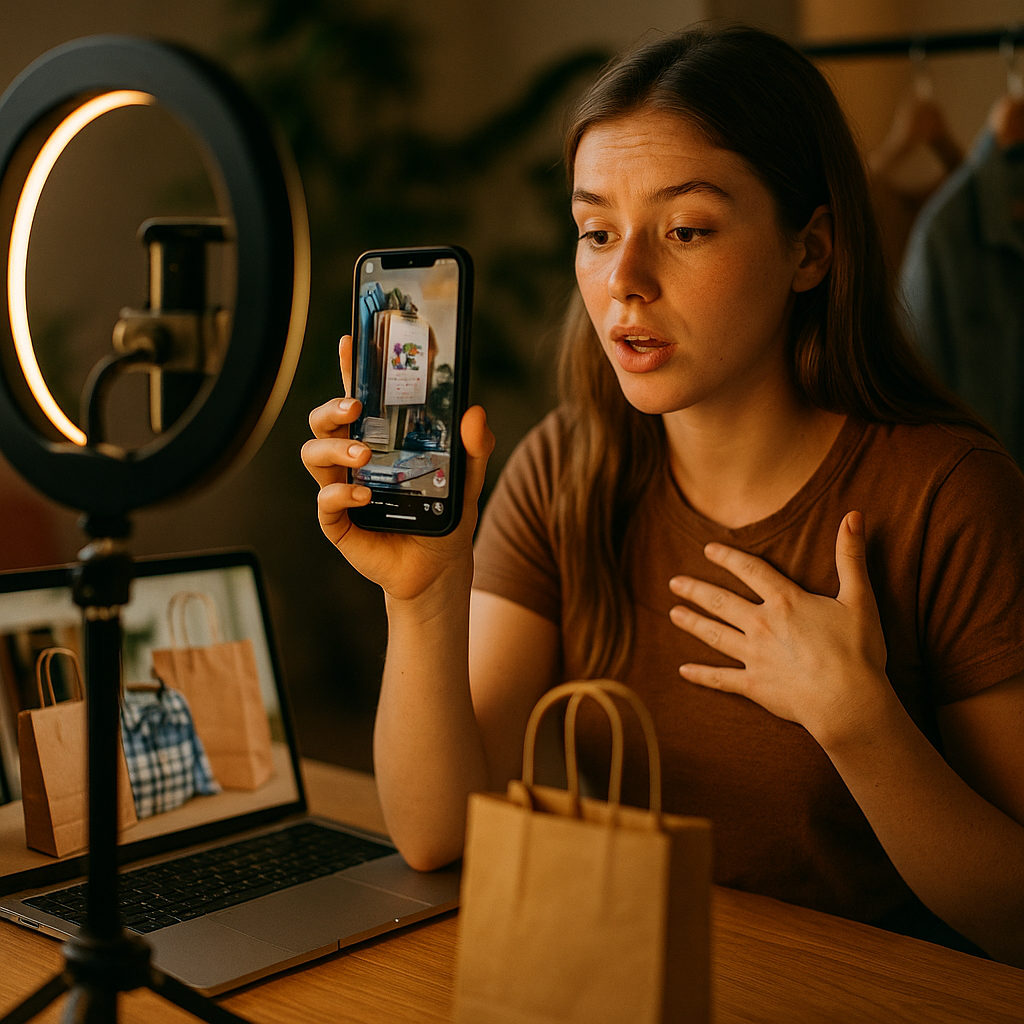
Seventy-Three Percent of Gen Z Say They Can Spot a Scripted Ad Instantly — So Why Do Most Brands Still Write Scripts?
Morning Consult data shows nearly three-quarters of Gen Z consumers distrust content that feels rehearsed, yet the same cohort drives more social commerce revenue per capita than any generation before it. That tension — craving genuineness while shopping through content — is the Gen Z authenticity paradox in social commerce. Brands that crack it unlock conversion rates two to three times higher than standard paid social. Brands that don’t get scrolled past, or worse, mocked.
What the Authenticity Paradox Actually Looks Like in the Feed
Let’s name the contradiction plainly. Gen Z wants creators to be real, unfiltered, and opinionated. They also want seamless product links, clear pricing, and instant checkout. Those two desires pull in opposite directions because commerce infrastructure — overlays, tags, affiliate disclaimers — inherently signals “someone is trying to sell me something.”
The paradox isn’t new, but it’s intensified. TikTok Shop processed over $20 billion in global GMV in 2024, according to Statista estimates, and that number continues to climb. Instagram’s native checkout and YouTube Shopping integrations have compressed the funnel further. The gap between “entertaining me” and “selling to me” is now measured in milliseconds.
Gen Z doesn’t reject commerce in content. They reject performative commerce — the kind where a creator’s voice visibly shifts from casual to salesy mid-sentence. The line between authentic and performative is thinner than most brand teams realize.
Here’s what that looks like operationally: a creator films a genuine get-ready-with-me clip, drops a product mention organically at the 12-second mark, but then reads a benefit statement word-for-word from a brief at second 18. The comments section catches it every time. “Ad voice activated 💀” is basically a genre of reply at this point.
Why Traditional Briefs Fail This Audience
Most creator briefs are built for compliance, not conversation. They include mandatory talking points, required product shots, approved claims, and sometimes even shot-by-shot storyboards. That framework made sense when influencer content lived on YouTube pre-rolls or Instagram carousel posts with long captions. It breaks completely in short-form.
Short-form video rewards spontaneity, speed, and a specific kind of casual confidence. When you hand a creator a 14-point brief for a 30-second TikTok, you’re engineering the exact stiffness Gen Z rejects. The math doesn’t work either — 30 seconds minus a required 3-second brand mention, a 2-second product hold, and an FTC disclosure leaves roughly 20 seconds for the creator to be themselves. That’s not enough runway for authenticity to develop.
The solution isn’t to abandon briefs. It’s to redesign them.
Brands seeing the best results with Gen Z social commerce campaigns are shifting to what I call “guardrail briefs” — documents that define boundaries (what you can’t say, regulatory requirements, brand-safety zones) rather than prescribing content. A guardrail brief might say “mention the product naturally within context of your morning routine” instead of “hold the product at eye level and state the following three benefits.” If you want to go deeper on structuring briefs for commerce outcomes, our shoppable content playbook breaks down the mechanics.
The Four Signals Gen Z Uses to Judge Authenticity
Understanding what triggers the “this is fake” response helps brands reverse-engineer content that passes the test. Based on behavioral research from EMARKETER and platform-level engagement data, Gen Z evaluates creator commerce content against four signals:
- Voice consistency. Does the creator sound the same as in their non-sponsored content? Any tonal shift registers as performative.
- Context fit. Does the product belong in this creator’s world? A skincare creator reviewing headphones creates cognitive dissonance — not the good kind.
- Disclosure transparency. Paradoxically, clear #ad labels increase trust. Hiding the commercial relationship feels deceptive. The FTC’s updated endorsement guides actually align with what Gen Z already expects.
- Edit style. Over-produced content with perfect lighting, multiple angles, and cinematic transitions signals “brand money.” An unpolished aesthetic — slightly shaky footage, natural light, raw audio — outperforms studio-quality in commerce conversion for this demographic.
Miss one of these signals, and engagement drops. Miss two, and you’re in screenshot territory — the kind where your brand becomes a cautionary tale on Reddit.
Designing Campaigns That Are Commerce-Ready Without Being Commerce-Forward
There’s a critical distinction here. “Commerce-ready” means the infrastructure exists for a viewer to buy — product tags, affiliate links, swipe-up destinations, TikTok Shop integration. “Commerce-forward” means the content’s primary energy is selling. Gen Z tolerates the first. They punish the second.
Operationally, this means:
- Embed commerce passively. Let TikTok Shop’s product link sit in the corner. Don’t make the creator verbally direct people to it. The viewers who want to buy will tap. Those who don’t won’t feel ambushed.
- Prioritize formats that naturally accommodate products. Hauls, routines, “things I actually use” lists, and problem-solution clips all create organic purchase context. These creator formats outperform traditional review-style content by significant margins in social commerce.
- Separate the CTA from the content arc. The story of the video should feel complete without the sale. The product link is a bonus for interested viewers, not the narrative climax.
- Use remix and stitch features. When a creator reacts to or builds on another creator’s product content, the commerce signal gets distributed across multiple voices. It feels like a conversation, not a pitch. Brands exploring remix features as amplifiers are seeing this play out with measurable earned media lift.
The highest-converting Gen Z social commerce content doesn’t look like it’s trying to convert. It looks like a person who genuinely uses a product sharing that fact while doing something else. The purchase infrastructure is available but invisible until needed.
Speed Matters More Than You Think
Gen Z’s relationship with content is defined by velocity. The average TikTok session involves exposure to dozens of videos, and decisions about engagement happen in under two seconds. Your creator content doesn’t just compete with other ads — it competes with memes, friend updates, news clips, and whatever niche micro-community the algorithm has surfaced that day.
This means campaign timelines need compression too. A brand that takes six weeks from brief to publish is creating content that feels dated on arrival. Cultural references move fast. Audio trends cycle in days. The most effective social commerce programs in 2026 operate on 48-72 hour turnaround from brief to live post, with pre-approved creator rosters and streamlined legal review. Tools like TikTok’s commerce suite now enable near-instant product tagging, reducing the friction between content creation and shoppability.
If your approval process involves four rounds of revision and a legal committee that meets biweekly, you’re not just slow — you’re structurally incapable of meeting Gen Z where they are. Scaling this kind of velocity without sacrificing quality is exactly where an AI-enhanced UGC operations stack earns its investment back.
Measurement Without Killing the Magic
One final operational trap: over-indexing on direct attribution in a way that warps content quality. When every creator post is judged solely by last-click ROAS, briefs inevitably get more prescriptive, CTAs get louder, and authenticity dies.
Smart brands measure Gen Z social commerce programs across a blended scorecard:
- Engagement quality — comment sentiment, saves, shares (not just likes)
- Assisted conversions — view-through and multi-touch attribution, not just last click
- Content lifespan — how long a video continues generating views and sales organically
- Creator retention rate — your best creators choosing to work with you again is a leading indicator that briefs and relationships are healthy
If a creator’s post generates 400,000 views, overwhelmingly positive sentiment, and a 1.2% click-through to your product page but “only” a 0.4% conversion rate, that’s not failure. That’s a top-of-funnel asset building purchase intent that will convert through retargeting, brand search, or a subsequent creator touchpoint.
The Bottom Line
Audit your current creator briefs against the four authenticity signals above, cut any mandatory talking points that force tonal shifts, and compress your approval cycle to under 72 hours. That’s where the paradox resolves — not in choosing between authentic and commercial, but in building systems that let both coexist without friction.
Frequently Asked Questions
What is the Gen Z authenticity paradox in social commerce?
The Gen Z authenticity paradox describes the tension between Gen Z’s demand for genuine, unscripted creator content and their simultaneous expectation for seamless, commerce-ready shopping experiences within that same content. Brands must balance realness with purchase infrastructure without making content feel like a traditional advertisement.
How should brands brief creators for Gen Z social commerce campaigns?
Brands should use “guardrail briefs” that define boundaries — such as regulatory requirements and brand-safety limits — rather than prescribing specific scripts, shot lists, or mandatory talking points. This approach gives creators enough freedom to maintain their natural voice while staying within brand guidelines.
Why does unpolished content outperform polished ads with Gen Z?
Gen Z associates high production value with corporate advertising, which triggers distrust. Content that uses natural lighting, casual framing, and raw audio mirrors the organic posts Gen Z sees from friends and trusted creators, making commercial messages feel more credible and less intrusive.
How fast should brands turn around creator content for Gen Z audiences?
Leading social commerce programs aim for 48 to 72 hours from brief to live post. Longer timelines risk producing content that references outdated trends or audio, which signals to Gen Z that the brand is out of touch with the platform’s cultural pace.
What metrics best measure Gen Z social commerce campaign success?
A blended scorecard works best, combining engagement quality metrics like comment sentiment and shares, assisted and view-through conversions, content lifespan measuring ongoing organic views and sales, and creator retention rate as an indicator of healthy brand-creator relationships. Relying solely on last-click ROAS distorts content quality over time.
Top Influencer Marketing Agencies
The leading agencies shaping influencer marketing in 2026
Agencies ranked by campaign performance, client diversity, platform expertise, proven ROI, industry recognition, and client satisfaction. Assessed through verified case studies, reviews, and industry consultations.
Moburst

-
2

The Shelf
Boutique Beauty & Lifestyle Influencer AgencyA data-driven boutique agency specializing exclusively in beauty, wellness, and lifestyle influencer campaigns on Instagram and TikTok. Best for brands already focused on the beauty/personal care space that need curated, aesthetic-driven content.Clients: Pepsi, The Honest Company, Hims, Elf Cosmetics, Pure LeafVisit The Shelf → -
3

Audiencly
Niche Gaming & Esports Influencer AgencyA specialized agency focused exclusively on gaming and esports creators on YouTube, Twitch, and TikTok. Ideal if your campaign is 100% gaming-focused — from game launches to hardware and esports events.Clients: Epic Games, NordVPN, Ubisoft, Wargaming, Tencent GamesVisit Audiencly → -
4

Viral Nation
Global Influencer Marketing & Talent AgencyA dual talent management and marketing agency with proprietary brand safety tools and a global creator network spanning nano-influencers to celebrities across all major platforms.Clients: Meta, Activision Blizzard, Energizer, Aston Martin, WalmartVisit Viral Nation → -
5

The Influencer Marketing Factory
TikTok, Instagram & YouTube CampaignsA full-service agency with strong TikTok expertise, offering end-to-end campaign management from influencer discovery through performance reporting with a focus on platform-native content.Clients: Google, Snapchat, Universal Music, Bumble, YelpVisit TIMF → -
6

NeoReach
Enterprise Analytics & Influencer CampaignsAn enterprise-focused agency combining managed campaigns with a powerful self-service data platform for influencer search, audience analytics, and attribution modeling.Clients: Amazon, Airbnb, Netflix, Honda, The New York TimesVisit NeoReach → -
7

Ubiquitous
Creator-First Marketing PlatformA tech-driven platform combining self-service tools with managed campaign options, emphasizing speed and scalability for brands managing multiple influencer relationships.Clients: Lyft, Disney, Target, American Eagle, NetflixVisit Ubiquitous → -
8

Obviously
Scalable Enterprise Influencer CampaignsA tech-enabled agency built for high-volume campaigns, coordinating hundreds of creators simultaneously with end-to-end logistics, content rights management, and product seeding.Clients: Google, Ulta Beauty, Converse, AmazonVisit Obviously →