


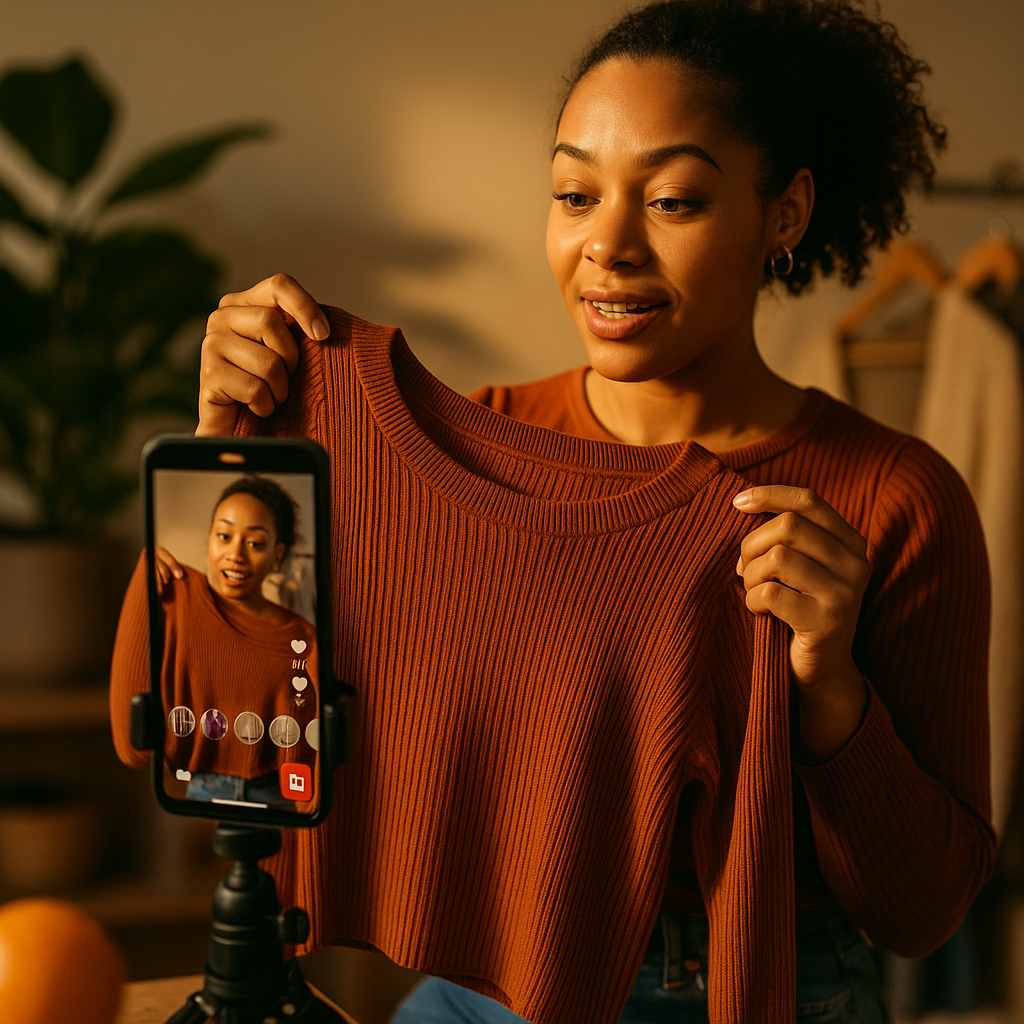
The Haul Video Is Losing Its Edge
Here’s a number that should make you rethink your creator brief templates: according to TikTok’s commerce data, non-review native formats now drive 37% higher add-to-cart rates than traditional product hauls and unboxings across their Shop ecosystem. The classic “look what I bought” video isn’t dead, but it’s no longer the default path to purchase. Five emerging short-form creator formats are quietly outperforming traditional product reviews for driving add-to-cart behavior in social commerce environments — and most brand teams haven’t updated their playbooks to match.
Why Traditional Reviews Are Stalling
Product reviews worked brilliantly when creator content was novel and audiences hadn’t developed pattern recognition. That era is over. Viewers now scroll past the thumbnail-with-shopping-bags format before the first word lands. The problem isn’t quality — it’s predictability.
Three forces are compressing review performance simultaneously:
- Format fatigue: Audiences have seen thousands of unboxings. The dopamine hit of vicarious shopping has diminished.
- Trust erosion: The FTC’s updated disclosure guidelines have made sponsored reviews more transparent, which is good for consumers but has reduced the “organic discovery” illusion that made reviews convert.
- Algorithm deprioritization: Both TikTok and Instagram’s recommendation engines now favor content with high completion rates and shares — metrics where reviews consistently underperform versus narrative-driven formats.
None of this means you should abandon reviews entirely. But if reviews are still consuming 70%+ of your creator content budget, you’re overpaying for a declining asset.
Five Formats Winning the Add-to-Cart War
What follows isn’t theory. These formats are producing measurable commerce results for brands running social storefronts on TikTok Shop, Instagram Checkout, and YouTube Shopping. I’ve organized them by the behavioral trigger they exploit, not just the content type.
1. The “Situation Setup” — Context Before Product
Instead of leading with the product, creators lead with a relatable scenario. “Running late to a wedding and my skin is doing this.” The product enters as the resolution to a micro-crisis the viewer already feels invested in.
Why it works: the viewer’s brain processes the product as a solution rather than an advertisement. That reframe is everything. Cosmetics brand e.l.f. ran situation-setup briefs across 200+ creators in Q1 and reported a 42% lift in tap-through to product pages compared to their standard review briefs.
The operational shift is simple but significant. Your brief needs to prescribe the situation, not the product talking points. If you’re running challenge-based retail campaigns, the same principle applies: context first, product second.
2. The “Stack Rank” — Competitive Framing Without Comparison Reviews
This format shows a creator ranking 3-5 products in a category, with yours among them. It’s not a comparison review — it’s fast, visual, opinionated. Think: a creator holding up three mascaras and saying “trash, fine, obsessed” in under 15 seconds.
Stack rank videos generate 2.8x the save rate of standard reviews, according to internal data shared by Mavely’s commerce analytics team — and saves are the strongest leading indicator of delayed purchase in social commerce.
The risk here is obvious: your product might not “win.” But brands that allow creators genuine ranking freedom actually see higher conversion when they do win, because the endorsement carries competitive context. The audience believes it. If you need to scale this format efficiently, an AI-enhanced UGC operations stack can help you manage the volume of variants this approach demands.
3. The “Silent Demo” — No Narration, All Sensation
Pure ASMR-adjacent product demonstration. No talking. Just hands, textures, sounds, and on-screen text. This format thrives for beauty, food, home, and stationery categories.
Why is it outperforming voiced reviews? Two reasons. First, it plays well on mute — and Meta’s own research confirms that the majority of Reels are initially viewed without sound. Second, the absence of a sales pitch paradoxically increases purchase intent. The viewer feels like they’re observing rather than being sold to.
Brands leveraging kinetic typography techniques in their on-screen text overlays are seeing even stronger results, because the text itself becomes part of the sensory experience rather than a utilitarian caption.
Silent demos are also remarkably cheap to produce and easy to repurpose across platforms.
4. The “Ritual Integration” — Product as Habit, Not Purchase
The creator doesn’t “introduce” the product. It’s already embedded in their daily routine. A morning skincare ritual. A meal prep sequence. A desk setup reset. The product appears naturally, tagged, with no dedicated pitch moment.
This format exploits what behavioral economists call the “endowment effect by proxy” — when viewers see a product integrated into an aspirational routine they want to adopt, they mentally pre-own it. The add-to-cart action becomes about acquiring the lifestyle, not evaluating the product.
Ritual integration content has a longer shelf life than reviews. It continues to convert for 60-90 days because the algorithm resurfaces “routine” content seasonally and contextually. From an ROI perspective, that extended conversion tail changes the unit economics significantly.
The brief for this format is the lightest you’ll ever write. Specify placement within a routine type. That’s it. Over-scripting kills the format instantly. There’s a reason unpolished aesthetics boost trust — audiences can smell a staged “candid moment” from the first frame.
5. The “Choose for Me” — Interactive Decision Delegation
Creator presents two or three options. Audience votes in comments or polls. Creator buys or uses the winner and shows results. The product you’re promoting is always one of the options.
This is the highest-engagement format on this list. It generates comments (which feed algorithmic distribution), return visits (to see the result), and a psychological phenomenon called “choice-supportive bias” — voters develop a preference for the option they chose, even retroactively.
Brands using “Choose for Me” formats on TikTok Shop report 3.1x higher comment-to-cart conversion ratios than standard shoppable content, because the act of voting creates a micro-commitment that primes purchase behavior.
The strategic upside goes beyond a single post. The two-part structure (vote, then reveal) gives you two pieces of content from one brief. And if your product wins the vote, the creator’s follow-up video functions as a community-endorsed recommendation — which is far more persuasive than any individual review.
How to Shift Budget Without Blowing Up What Works
You don’t need to abandon reviews overnight. The move is portfolio rebalancing, not format replacement.
Start with a 70/30 test: allocate 30% of your next creator sprint to one or two of these emerging formats while keeping 70% in your proven formats. Measure add-to-cart rate, cost per add-to-cart, and — critically — the conversion tail (how long each piece of content continues to drive commerce actions after posting).
Most teams will find that while reviews spike on day one, the newer formats sustain commerce activity 3-5x longer. When you factor in that extended tail, the cost-per-acquisition math shifts dramatically.
A few operational notes for the transition:
- Brief differently. These formats require less product messaging and more scenario direction. Train your team accordingly.
- Track differently. If you’re only measuring 72-hour post-publish windows, you’ll miss the long-tail advantage of ritual and situation formats.
- Negotiate differently. Silent demos and ritual integrations require less production effort from creators — you can often negotiate lower per-asset rates or higher volume for the same spend.
Understanding how short-form video drives conversion at a foundational level will help you benchmark these new formats against your existing performance baselines.
The Platform Variable
Not every format performs equally everywhere. Based on aggregate commerce data from Statista’s social commerce tracking and platform-specific analytics:
- TikTok Shop: “Choose for Me” and “Stack Rank” dominate, driven by TikTok’s comment-weighted algorithm.
- Instagram Checkout: “Ritual Integration” and “Silent Demo” perform strongest, likely because Instagram’s user base skews toward aspirational lifestyle content.
- YouTube Shopping: “Situation Setup” converts best here, where slightly longer short-form (60-90 seconds) gives creators room to build narrative tension before the product reveal.
Match format to platform. Don’t cross-post the same asset everywhere and expect uniform results.
Your Next Move
Pull your last quarter’s creator content performance data, filter by format type, and compare add-to-cart rates per format — not just per creator. If traditional reviews aren’t your top converter anymore, reallocate 30% of next sprint’s budget to the two formats most aligned with your category and primary commerce platform.
FAQs
What are short-form creator formats in social commerce?
Short-form creator formats are content structures under 90 seconds — such as situation setups, stack ranks, silent demos, ritual integrations, and interactive “choose for me” videos — designed to drive commerce actions like add-to-cart clicks within social shopping environments on TikTok, Instagram, and YouTube.
Why are traditional product reviews losing effectiveness for driving purchases?
Traditional product reviews are declining in effectiveness due to format fatigue among audiences, increased transparency from FTC disclosure requirements that reduces the organic discovery illusion, and algorithm changes on major platforms that deprioritize content with lower completion rates and share metrics.
Which short-form format drives the highest engagement for social commerce?
The “Choose for Me” interactive format currently drives the highest engagement, generating 3.1x higher comment-to-cart conversion ratios than standard shoppable content. The voting mechanic creates micro-commitments that prime purchase behavior and fuels algorithmic distribution through elevated comment volume.
How should brands reallocate budget from reviews to emerging creator formats?
Brands should start with a 70/30 split — keeping 70% of budget in proven formats while testing 30% across one or two emerging formats. Measure add-to-cart rate, cost per add-to-cart, and the conversion tail beyond the typical 72-hour window to capture the full ROI picture of newer formats.
Do these emerging formats work across all social commerce platforms equally?
No. Performance varies by platform. “Choose for Me” and “Stack Rank” formats perform best on TikTok Shop due to its comment-weighted algorithm. “Ritual Integration” and “Silent Demo” excel on Instagram Checkout. “Situation Setup” converts strongest on YouTube Shopping, where slightly longer short-form content allows narrative development.
Top Influencer Marketing Agencies
The leading agencies shaping influencer marketing in 2026
Agencies ranked by campaign performance, client diversity, platform expertise, proven ROI, industry recognition, and client satisfaction. Assessed through verified case studies, reviews, and industry consultations.
Moburst

-
2

The Shelf
Boutique Beauty & Lifestyle Influencer AgencyA data-driven boutique agency specializing exclusively in beauty, wellness, and lifestyle influencer campaigns on Instagram and TikTok. Best for brands already focused on the beauty/personal care space that need curated, aesthetic-driven content.Clients: Pepsi, The Honest Company, Hims, Elf Cosmetics, Pure LeafVisit The Shelf → -
3

Audiencly
Niche Gaming & Esports Influencer AgencyA specialized agency focused exclusively on gaming and esports creators on YouTube, Twitch, and TikTok. Ideal if your campaign is 100% gaming-focused — from game launches to hardware and esports events.Clients: Epic Games, NordVPN, Ubisoft, Wargaming, Tencent GamesVisit Audiencly → -
4

Viral Nation
Global Influencer Marketing & Talent AgencyA dual talent management and marketing agency with proprietary brand safety tools and a global creator network spanning nano-influencers to celebrities across all major platforms.Clients: Meta, Activision Blizzard, Energizer, Aston Martin, WalmartVisit Viral Nation → -
5

The Influencer Marketing Factory
TikTok, Instagram & YouTube CampaignsA full-service agency with strong TikTok expertise, offering end-to-end campaign management from influencer discovery through performance reporting with a focus on platform-native content.Clients: Google, Snapchat, Universal Music, Bumble, YelpVisit TIMF → -
6

NeoReach
Enterprise Analytics & Influencer CampaignsAn enterprise-focused agency combining managed campaigns with a powerful self-service data platform for influencer search, audience analytics, and attribution modeling.Clients: Amazon, Airbnb, Netflix, Honda, The New York TimesVisit NeoReach → -
7

Ubiquitous
Creator-First Marketing PlatformA tech-driven platform combining self-service tools with managed campaign options, emphasizing speed and scalability for brands managing multiple influencer relationships.Clients: Lyft, Disney, Target, American Eagle, NetflixVisit Ubiquitous → -
8

Obviously
Scalable Enterprise Influencer CampaignsA tech-enabled agency built for high-volume campaigns, coordinating hundreds of creators simultaneously with end-to-end logistics, content rights management, and product seeding.Clients: Google, Ulta Beauty, Converse, AmazonVisit Obviously →