


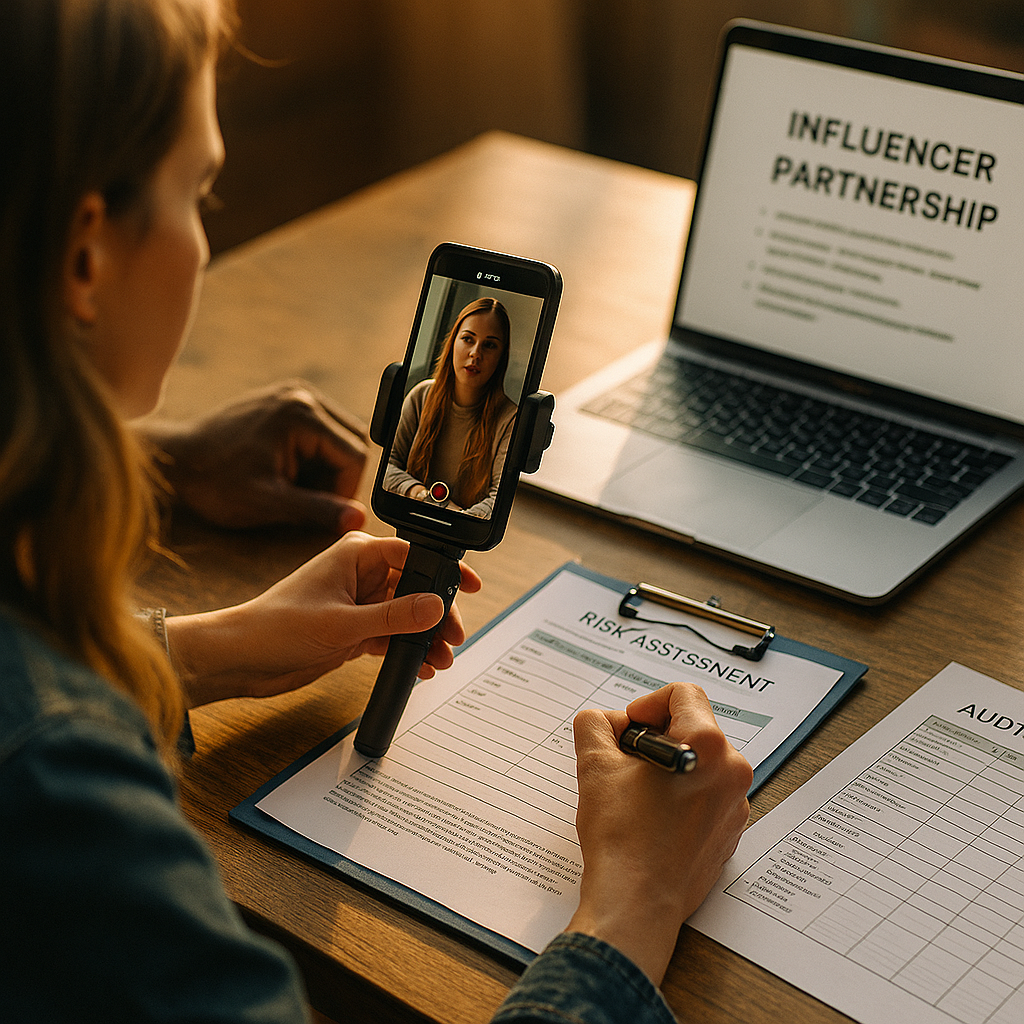
One Bad Partnership Can Cost More Than Your Entire Creator Budget
A single influencer controversy can wipe out months of brand equity. According to Statista, 67% of consumers say they would stop buying from a brand associated with a controversial public figure. Yet most marketing teams still evaluate creators primarily on reach and engagement rate. The creator risk audit — a structured pre-partnership due diligence framework — is how sophisticated brands now protect themselves before signing on the dotted line.
Why Follower Count Is the Worst Proxy for Partner Quality
Let’s be honest: follower count is vanity. Everyone knows this. And yet, when you watch how most brands actually shortlist creators, the first filter is still audience size. It’s fast. It’s legible. It’s also dangerously incomplete.
A creator with 2 million followers and a history of deleted tweets, undisclosed paid partnerships, and bot-inflated engagement isn’t a marketing asset. They’re a liability masquerading as reach. The real question isn’t “how many people will see this?” It’s “what happens to our brand if this person becomes tomorrow’s headline?”
This is where a formal creator risk audit changes the game. Think of it the way a PE firm thinks about acquiring a company. You wouldn’t write a check based on top-line revenue alone. You’d examine the balance sheet, the litigation history, the customer concentration risk. Creator partnerships deserve the same rigor — especially as investment in high-performance creators climbs into six and seven figures for enterprise brands.
The Three Pillars of a Creator Risk Audit
A comprehensive creator risk audit evaluates three distinct categories of exposure: reputational risk, legal risk, and conversion risk. Each requires its own methodology, data sources, and scoring criteria. Collapse them into a single “vibe check” and you’ll miss the signal in the noise.
Reputational Risk: What Could Go Wrong Publicly?
This is the pillar most teams instinctively understand — but rarely operationalize. Reputational risk assessment goes far beyond a cursory scroll through someone’s Instagram grid. It requires systematic analysis of:
- Content history across all platforms — not just the primary channel. A creator may be polished on YouTube and reckless on X or a personal podcast.
- Community sentiment — what do their own followers say about them? Reddit threads, comment sections, and Discord servers often reveal tensions that surface metrics never capture.
- Association mapping — who else do they collaborate with? Who appears in their content? Guilt-by-association is irrational but real, and brand safety requires accounting for it.
- Controversy velocity — some creators attract controversy once a quarter. Others have gone a decade without incident. Pattern matters more than any single event.
Tools like Brandwatch, Meltwater, and even manual Boolean searches across social platforms can surface red flags that a media kit never will. The goal isn’t to find perfect people. Perfect people don’t exist. The goal is to quantify the probability and severity of a reputational event and decide whether the upside justifies the exposure.
The most expensive creator partnership isn’t the one with the highest fee — it’s the one that triggers a brand crisis requiring a public apology and media cycle management.
Legal Risk: Compliance Isn’t Optional Anymore
The regulatory environment for influencer marketing has tightened dramatically. The FTC has shifted from issuing warning letters to pursuing enforcement actions. The UK’s ICO is increasingly scrutinizing data handling in creator-driven campaigns. And new state-level privacy and advertising disclosure laws add another layer of complexity for brands operating across jurisdictions.
A legal risk audit should evaluate:
- Disclosure compliance history — Has the creator consistently used proper #ad, #sponsored, or platform-native disclosure tools? A pattern of non-disclosure exposes your brand to regulatory action, not just the creator.
- Exclusivity conflicts — Are they currently under contract with a competitor? Have they promoted competing products in the past 90 days? Overlapping commitments create both legal and brand dilution risk.
- Content rights and licensing — Can you repurpose their content for paid media, retail displays, or OTT? Ambiguity here leads to expensive disputes post-campaign.
- Claims and substantiation — Creators in health, finance, and beauty verticals frequently make claims that could trigger regulatory scrutiny. If they say your supplement “cured” their acne, that’s your problem too.
Smart brands now embed legal risk scoring directly into their creator onboarding workflows, using structured checklists that legal teams co-develop with influencer marketing managers. This isn’t bureaucratic overhead. It’s insurance. And given how creator compensation models are diversifying — with performance bonuses, equity stakes, and long-term retainers — the contractual complexity demands upfront scrutiny.
Conversion Risk: Will This Actually Drive Revenue?
Here’s where most audits fall short. Reputational and legal checks are defensive. Conversion risk assessment is offensive — it answers whether a creator can actually move product or generate qualified leads for your specific audience.
High engagement doesn’t guarantee conversions. A comedy creator with a 7% engagement rate might generate millions of views and zero purchases. Meanwhile, a niche micro-creator with 30,000 followers might deliver a 4x ROAS because their audience trusts their recommendations implicitly.
Conversion risk factors to evaluate:
- Audience-brand alignment — Use tools like SparkToro, Audiense, or platform-native analytics to verify that the creator’s actual audience demographics match your buyer persona. Don’t rely on the creator’s self-reported data.
- Past campaign performance — Request case studies, screenshots of analytics dashboards, or references from previous brand partners. If a creator can’t (or won’t) share performance data, that tells you something.
- Content-commerce fit — Does the creator’s natural content style lend itself to product integration? Forced placements destroy authenticity and tank conversion rates.
- Platform algorithm dependency — A creator whose views have dropped 60% in six months due to algorithm shifts is a different risk profile than one with stable, organic reach.
If you’re building toward a revenue flywheel powered by creator content, conversion risk assessment isn’t a nice-to-have. It’s the difference between a flywheel and a money pit.
Building the Scoring Matrix
Theory is great. Execution is better. Here’s how to make this operational.
Create a weighted scoring matrix where each risk pillar receives a score from 1-5 (1 = high risk, 5 = low risk). Weight each pillar based on your campaign objectives and brand risk tolerance. A regulated pharma brand will weight legal risk heavily. A DTC startup optimizing for immediate ROAS will weight conversion risk higher.
A sample weighting might look like:
- Reputational risk: 40%
- Legal risk: 30%
- Conversion risk: 30%
Any creator scoring below a 2 in any single category should trigger an automatic escalation review — regardless of their composite score. A creator who’s a 5 on conversion but a 1 on legal risk isn’t a calculated gamble. They’re a ticking clock.
Risk audits don’t eliminate risk. They make risk visible, quantifiable, and manageable — which is exactly what your CFO and general counsel need to see before approving six-figure creator budgets.
For teams running always-on creator programs, this matrix should be integrated into your CRM or influencer management platform. Audit scores need to be living documents, updated quarterly as creators evolve — because they do evolve, often unpredictably.
What About AI-Powered Screening?
Several platforms now offer AI-driven brand safety scoring for creators, including CreatorIQ, GRIN, and Traackr. These tools use natural language processing to scan historical content for brand-unsafe language, sentiment anomalies, and audience authenticity indicators. They’re useful as a first pass — a way to screen hundreds of candidates down to a manageable shortlist.
But they have limits. AI struggles with context, sarcasm, cultural nuance, and evolving norms. A tool might flag a comedian’s satirical content as “negative sentiment” while missing a wellness creator’s pattern of quietly deleting debunked health claims. Human judgment remains essential at the final decision stage. The best approach is human-led strategy augmented by AI efficiency — not the other way around.
The Audit in Practice: A Quick-Start Workflow
For teams that want to implement a creator risk audit this quarter, here’s a distilled workflow:
- Define your risk thresholds — What’s non-negotiable? Past hate speech? Active lawsuits? Sub-1% engagement rates? Get alignment across marketing, legal, and executive stakeholders before you start evaluating anyone.
- Assemble your data sources — Platform analytics, social listening tools, social media management platforms, public records, and direct creator disclosures. No single source is sufficient.
- Score and rank — Apply your weighted matrix. Document the rationale behind every score for internal accountability and future reference.
- Escalate edge cases — Borderline creators go to a cross-functional review panel, not a single marketing manager’s gut instinct.
- Re-audit on a cadence — Quarterly for always-on partners. Before every new campaign activation for project-based creators.
Start with your top ten highest-spend creator partners. Retroactively audit them. You might be surprised by what you find — and grateful you looked before your competitor’s PR team found it first.
FAQs
What is a creator risk audit?
A creator risk audit is a structured pre-partnership due diligence framework that evaluates a creator across three dimensions — reputational risk, legal risk, and conversion risk — before a brand commits to a partnership. It goes beyond surface metrics like follower count and engagement rate to assess whether a creator is a safe, compliant, and commercially viable partner.
How often should brands re-audit existing creator partners?
For always-on or long-term partnerships, brands should re-audit creators quarterly. For project-based or campaign-specific partnerships, a fresh audit should be conducted before each new activation. Creators’ public behavior, audience composition, and platform performance can shift rapidly, making periodic reassessment essential.
What tools can help automate creator risk screening?
Platforms like CreatorIQ, GRIN, Traackr, and Brandwatch offer AI-powered brand safety and audience authenticity scoring. Social listening tools such as Meltwater and Sprout Social help surface sentiment and controversy signals. However, automated tools should be used as a first-pass filter, with human review applied at the final decision stage for context and nuance.
Who should be involved in the creator risk audit process?
A cross-functional team including influencer marketing managers, legal counsel, and brand safety leads should collaborate on the audit process. For high-spend or high-visibility partnerships, executive stakeholders should also review edge cases. Relying on a single team or individual increases the chance of blind spots.
Does a creator risk audit slow down campaign timelines?
Initially, yes — by a few days. But once the scoring framework and data sources are established, audits can be completed within 24-48 hours for most creators. The operational cost of a brief delay is negligible compared to the financial and reputational cost of partnering with a high-risk creator who damages brand equity.
Top Influencer Marketing Agencies
The leading agencies shaping influencer marketing in 2026
Agencies ranked by campaign performance, client diversity, platform expertise, proven ROI, industry recognition, and client satisfaction. Assessed through verified case studies, reviews, and industry consultations.
Moburst

-
2

The Shelf
Boutique Beauty & Lifestyle Influencer AgencyA data-driven boutique agency specializing exclusively in beauty, wellness, and lifestyle influencer campaigns on Instagram and TikTok. Best for brands already focused on the beauty/personal care space that need curated, aesthetic-driven content.Clients: Pepsi, The Honest Company, Hims, Elf Cosmetics, Pure LeafVisit The Shelf → -
3

Audiencly
Niche Gaming & Esports Influencer AgencyA specialized agency focused exclusively on gaming and esports creators on YouTube, Twitch, and TikTok. Ideal if your campaign is 100% gaming-focused — from game launches to hardware and esports events.Clients: Epic Games, NordVPN, Ubisoft, Wargaming, Tencent GamesVisit Audiencly → -
4

Viral Nation
Global Influencer Marketing & Talent AgencyA dual talent management and marketing agency with proprietary brand safety tools and a global creator network spanning nano-influencers to celebrities across all major platforms.Clients: Meta, Activision Blizzard, Energizer, Aston Martin, WalmartVisit Viral Nation → -
5

The Influencer Marketing Factory
TikTok, Instagram & YouTube CampaignsA full-service agency with strong TikTok expertise, offering end-to-end campaign management from influencer discovery through performance reporting with a focus on platform-native content.Clients: Google, Snapchat, Universal Music, Bumble, YelpVisit TIMF → -
6

NeoReach
Enterprise Analytics & Influencer CampaignsAn enterprise-focused agency combining managed campaigns with a powerful self-service data platform for influencer search, audience analytics, and attribution modeling.Clients: Amazon, Airbnb, Netflix, Honda, The New York TimesVisit NeoReach → -
7

Ubiquitous
Creator-First Marketing PlatformA tech-driven platform combining self-service tools with managed campaign options, emphasizing speed and scalability for brands managing multiple influencer relationships.Clients: Lyft, Disney, Target, American Eagle, NetflixVisit Ubiquitous → -
8

Obviously
Scalable Enterprise Influencer CampaignsA tech-enabled agency built for high-volume campaigns, coordinating hundreds of creators simultaneously with end-to-end logistics, content rights management, and product seeding.Clients: Google, Ulta Beauty, Converse, AmazonVisit Obviously →