


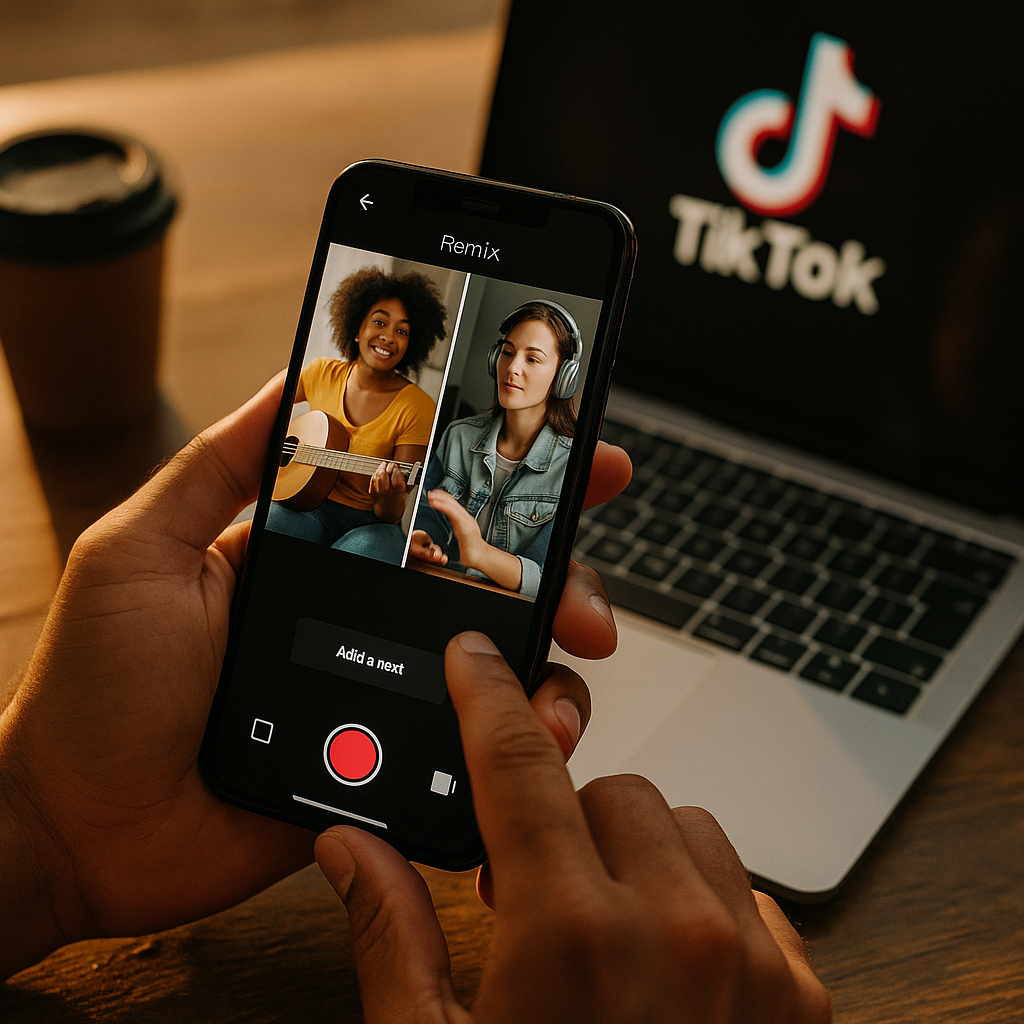
The Remix Economy Is Already Reshaping Brand Campaigns
Here’s a number that should reframe your content strategy: TikTok remixed content now generates 2.3x the engagement of original branded posts, according to internal data shared at TikTok World earlier this year. That’s not a marginal lift. That’s a structural shift in how audiences interact with brand content — and most marketing teams are still treating TikTok Remix as a brand amplification tool like an afterthought rather than a campaign pillar.
The brands winning attention right now aren’t just posting videos. They’re engineering remix-friendly content architectures that invite participation, lean on AI-assisted creation, and still keep the brand narrative on rails.
What TikTok Remix Actually Means for Brand Strategy
Let’s clarify what we’re talking about, because “Remix” has become an overloaded term. TikTok’s Remix feature — functionally similar to Instagram’s old Reels Remix but significantly more flexible — lets users create new content alongside, on top of, or stitched into existing videos. Since late last year, TikTok has expanded Remix capabilities to include AI-powered audio remixing, visual overlay templates, and auto-generated caption layers that make it absurdly easy for creators to riff on branded content.
For marketers, this creates a fascinating paradox. You want your content remixed because every remix is organic amplification with built-in attribution back to your original post. But you also need to control — or at least influence — the direction those remixes take.
That tension is where strategy lives.
Every TikTok Remix carries a native backlink to the original video. This means remixed brand content compounds reach without additional media spend — but only if the original is engineered to invite the right kind of participation.
How AI-Generated Remixes Change the Math
The AI layer is what makes this conversation urgent rather than theoretical. TikTok’s Symphony AI suite now offers creators one-tap remix generation: select a branded video, choose a remix style (reaction, duet, reinterpretation, parody), and the platform’s generative tools handle the heavy lifting. Captions, transitions, even suggested audio tracks are auto-populated.
What does this mean in practice? Volume explodes. A single well-structured brand video can spawn hundreds of AI-assisted remixes within 48 hours of posting. The TikTok for Business platform reports that campaigns optimized for remix engagement see 40-60% lower cost-per-view compared to standard in-feed ads.
But volume without direction is noise. And noise erodes brand equity fast.
This is where the campaign structure conversation gets tactical. Brands like Glossier, Duolingo, and Chipotle have invested heavily in what internal teams call “remix scaffolding” — pre-built content frameworks designed to channel AI-generated remixes toward on-brand outcomes. Think of it as leaving just enough creative white space for creators to feel ownership while embedding enough structural constraints (visual anchors, audio hooks, branded transitions) that the remix output stays within an acceptable brand corridor.
Building a Remix-Ready Campaign: The Structural Playbook
If you’re planning to harness TikTok Remix as a brand amplification tool, the architecture of your seed content matters more than the content itself. Here’s what the operational framework looks like:
1. Design the “Remixable Moment”
Not every second of your video is remix-worthy. Identify — and intentionally create — a 3-5 second segment that functions as a standalone remixable unit. This could be a visual gag, a provocative statement, a sound bite, or a transition effect. This segment needs to work when stripped from context and dropped into someone else’s creative.
2. Seed with Tiered Creator Partnerships
Don’t launch a remix campaign cold. Seed your content through 8-15 creators across different audience segments who publish their own remixes within the first 24 hours. This establishes the “remix language” — it shows other creators (and the AI suggestion engine) what a good remix of your content looks like. Scaling creator partnerships at scale is essential to getting this seeding phase right without diluting quality.
3. Leverage AI Templates Strategically
TikTok’s Symphony suite lets brands create custom remix templates that appear as suggested options when users remix their content. This is massively underused. By designing 3-4 branded templates with built-in visual and audio guardrails, you funnel AI-generated remixes toward outcomes that reinforce rather than undermine your messaging.
4. Set Remix Permissions Deliberately
TikTok allows granular control over which remix types are enabled on any given video. You can permit audio remixes but block visual overlays — or allow stitches but disable side-by-side duets. Map your permissions to your risk tolerance. Higher-consideration brands (financial services, healthcare) typically restrict to audio-only remixes. Lifestyle and CPG brands tend to open all formats.
5. Monitor and Moderate at Scale
This is where most teams under-resource. Once remix volume hits escape velocity, you need real-time monitoring infrastructure. Tools like Sprout Social and Brandwatch now offer TikTok remix-specific tracking dashboards that flag off-brand remixes, detect potential IP issues, and surface high-performing organic remixes you can boost with paid amplification. Sprout Social’s platform has been particularly aggressive in building these capabilities.
Controlling Brand Narrative Without Killing Creativity
Here’s the uncomfortable truth: you can’t fully control what happens once your content enters the remix ecosystem. And you shouldn’t try to.
The brands that fail at remix campaigns are invariably the ones that over-specify. They create content so tightly controlled that there’s nothing left for creators to do with it. The remix feels like an assignment, not an invitation. Engagement craters.
The brands that succeed understand narrative corridors. They define the boundaries — acceptable themes, visual anchors, brand-safe zones — and leave everything between those boundaries open. Think of it like improv comedy: you set the scene, but you let the performers find the funny.
The most effective remix campaigns define brand narrative boundaries, not brand narrative scripts. Creators perform best inside a corridor, not on a track.
Practically, this means your creative brief for remix campaigns looks radically different from traditional influencer briefs. Instead of specifying deliverables and talking points, you’re specifying “remix rails” — visual elements that must persist, audio hooks that anchor brand recognition, and thematic zones that creators can explore freely.
For marketers already working with micro-influencer syndicates, this approach scales naturally. Smaller creators are often more willing to work within structural frameworks because the creative challenge is inherently interesting to them.
The Compliance Layer You Can’t Ignore
AI-generated remixes introduce genuine legal and regulatory wrinkles that your legal team needs to understand now, not after a crisis.
First, the FTC’s updated guidance on AI-generated content disclosure applies to remixed brand content. If a creator uses AI tools to remix your sponsored content, the disclosure obligations cascade. Both the original sponsored relationship and the AI-generation component may require separate disclosures depending on the creator’s relationship to your brand.
Second, music licensing in AI-remixed content is a live minefield. TikTok’s commercial music library covers most standard use cases, but AI-generated audio remixes can inadvertently create derivative works that trigger licensing disputes. Your contracts with seeding creators should explicitly address AI remix rights.
Third — and this is the one teams miss most frequently — brand safety in remix chains. A remix of a remix of a remix can end up contextually adjacent to content that would never pass your standard brand safety filters. Build escalation protocols for chain-remix monitoring.
Measurement: What Actually Matters
Traditional influencer campaign KPIs don’t map cleanly onto remix campaigns. Here’s what to track instead:
- Remix velocity: How many remixes your seed content generates per hour in the first 72 hours. This is your leading indicator of campaign momentum.
- Brand anchor retention: What percentage of remixes retain your core visual or audio brand elements. This measures narrative control effectiveness.
- Chain depth: How many “generations” of remixes your content produces (remix of remix of remix). Deeper chains indicate genuine cultural penetration.
- Sentiment distribution: The ratio of positive/neutral/negative remixes. AI-powered sentiment analysis from platforms like Brandwatch can process this at scale.
- Earned media value (EMV) from remixes: The total impressions and engagements generated by organic remixes, expressed as equivalent paid media cost.
Teams building out community-driven approaches on other platforms — like those building Discord communities — already understand the importance of tracking organic amplification loops. The same mindset applies here, just at TikTok speed.
What to Do Monday Morning
Audit your last three TikTok campaigns and identify which videos generated organic remixes — even one or two. Reverse-engineer what made those moments remixable. Then build your next campaign’s seed content around that structural pattern, layered with AI template constraints and tiered creator seeding. For a deeper tactical dive, explore our full AI remix strategy breakdown. The brands that build this muscle now will own an amplification channel that compounds — the ones that wait will pay to catch up.
Frequently Asked Questions
What is TikTok Remix and how does it work for brand campaigns?
TikTok Remix allows users to create new content alongside, on top of, or stitched into existing videos. For brand campaigns, this means a single piece of seed content can generate hundreds of organic derivative videos — each carrying a native attribution link back to the original. Brands use Remix as an amplification tool by engineering seed content with remixable moments and deploying AI-assisted templates to guide the creative output toward on-brand results.
How can brands control their narrative when content is being remixed by others?
Brands control narrative through structural design rather than content policing. This includes embedding persistent visual anchors and audio hooks in seed content, setting granular remix permissions on each video (e.g., allowing audio remixes but blocking visual overlays), creating branded AI remix templates through TikTok’s Symphony suite, and seeding initial remixes through contracted creators who establish the creative direction for organic participants to follow.
What are the FTC disclosure requirements for AI-generated TikTok remixes?
The FTC’s updated guidance requires disclosure of both sponsored relationships and AI-generated content. If a creator remixes branded content using AI tools, disclosure obligations may cascade — meaning both the original sponsorship and the AI-generation component need separate disclosures. Brands should build disclosure requirements into their creator contracts and monitor remix chains for compliance gaps.
How do you measure the success of a TikTok Remix campaign?
Key metrics include remix velocity (remixes generated per hour in the first 72 hours), brand anchor retention (percentage of remixes retaining core brand elements), chain depth (how many generations of remixes emerge), sentiment distribution across organic remixes, and earned media value calculated from total impressions and engagements generated by organic remixes expressed as equivalent paid media cost.
What types of brands benefit most from TikTok Remix campaigns?
Lifestyle, CPG, entertainment, and DTC brands typically see the strongest results because their content naturally invites creative reinterpretation. However, B2B and higher-consideration brands like financial services can still leverage remix campaigns by restricting remix types to lower-risk formats such as audio-only remixes and maintaining tighter narrative corridors through template design and creator seeding strategies.
Top Influencer Marketing Agencies
The leading agencies shaping influencer marketing in 2026
Agencies ranked by campaign performance, client diversity, platform expertise, proven ROI, industry recognition, and client satisfaction. Assessed through verified case studies, reviews, and industry consultations.
Moburst

-
2

The Shelf
Boutique Beauty & Lifestyle Influencer AgencyA data-driven boutique agency specializing exclusively in beauty, wellness, and lifestyle influencer campaigns on Instagram and TikTok. Best for brands already focused on the beauty/personal care space that need curated, aesthetic-driven content.Clients: Pepsi, The Honest Company, Hims, Elf Cosmetics, Pure LeafVisit The Shelf → -
3

Audiencly
Niche Gaming & Esports Influencer AgencyA specialized agency focused exclusively on gaming and esports creators on YouTube, Twitch, and TikTok. Ideal if your campaign is 100% gaming-focused — from game launches to hardware and esports events.Clients: Epic Games, NordVPN, Ubisoft, Wargaming, Tencent GamesVisit Audiencly → -
4

Viral Nation
Global Influencer Marketing & Talent AgencyA dual talent management and marketing agency with proprietary brand safety tools and a global creator network spanning nano-influencers to celebrities across all major platforms.Clients: Meta, Activision Blizzard, Energizer, Aston Martin, WalmartVisit Viral Nation → -
5

The Influencer Marketing Factory
TikTok, Instagram & YouTube CampaignsA full-service agency with strong TikTok expertise, offering end-to-end campaign management from influencer discovery through performance reporting with a focus on platform-native content.Clients: Google, Snapchat, Universal Music, Bumble, YelpVisit TIMF → -
6

NeoReach
Enterprise Analytics & Influencer CampaignsAn enterprise-focused agency combining managed campaigns with a powerful self-service data platform for influencer search, audience analytics, and attribution modeling.Clients: Amazon, Airbnb, Netflix, Honda, The New York TimesVisit NeoReach → -
7

Ubiquitous
Creator-First Marketing PlatformA tech-driven platform combining self-service tools with managed campaign options, emphasizing speed and scalability for brands managing multiple influencer relationships.Clients: Lyft, Disney, Target, American Eagle, NetflixVisit Ubiquitous → -
8

Obviously
Scalable Enterprise Influencer CampaignsA tech-enabled agency built for high-volume campaigns, coordinating hundreds of creators simultaneously with end-to-end logistics, content rights management, and product seeding.Clients: Google, Ulta Beauty, Converse, AmazonVisit Obviously →