


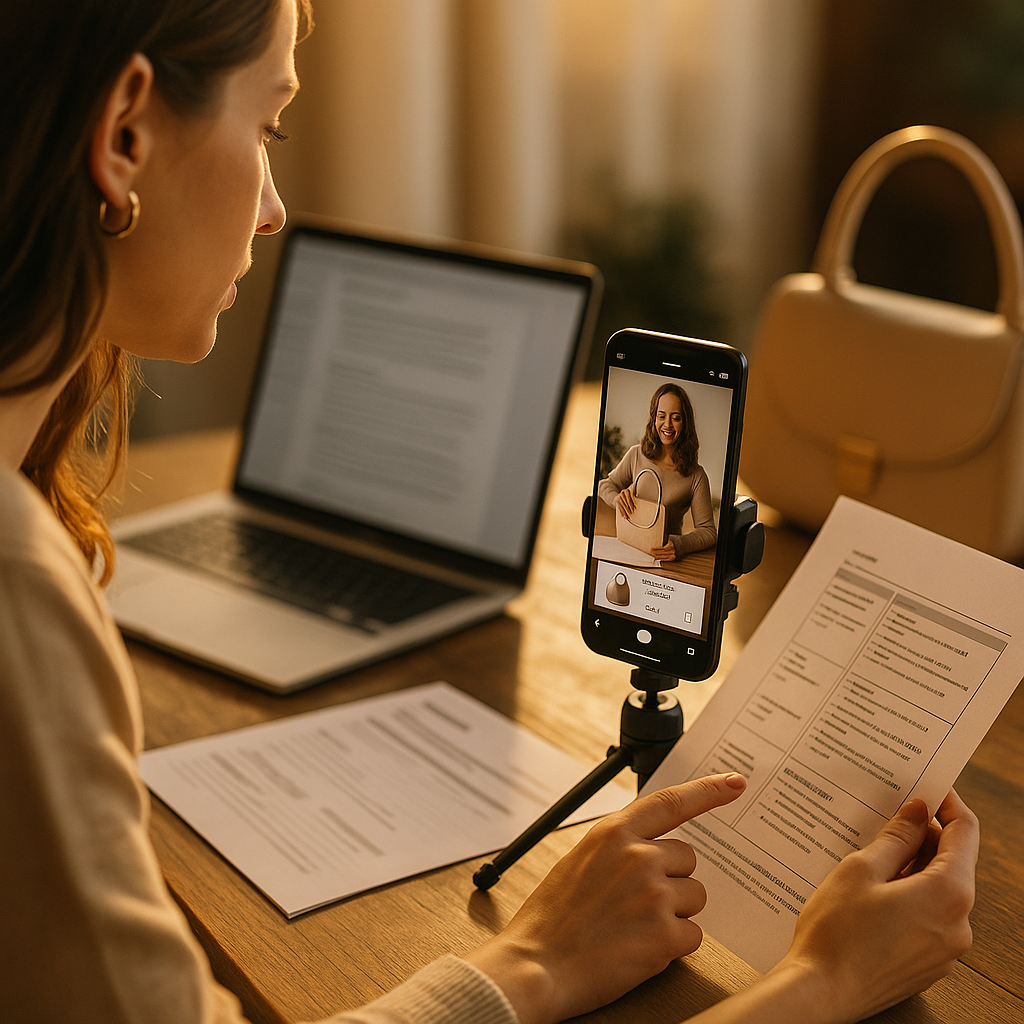
Vertical-First Shoppable Content: A Creative Direction Playbook for Briefing Creators
Seventy-two percent of social commerce purchases now originate from short-form vertical video — yet most brand briefs still treat product links as an afterthought, a URL tacked onto a caption. That disconnect is costing you conversions. This playbook breaks down how to brief creators to produce vertical-first shoppable content that weaves product links into the viewing experience naturally, performs inside AI-optimized feeds, and turns passive scrollers into buyers at each swipe point.
Why Traditional Briefs Fail the Shoppable Format
Most creator briefs were designed for awareness. They specify brand mentions, hashtag usage, and talking points — then leave the commerce layer entirely to the platform’s native tagging tools. The result? A creator films a gorgeous 30-second spot, slaps a product tag on it, and the link feels like an interruption rather than an invitation.
AI-driven feeds on TikTok, Instagram Reels, and YouTube Shorts now evaluate content against hundreds of engagement signals within the first 300 milliseconds. If your shoppable content doesn’t hook, hold, and convert in a single vertical frame, the algorithm buries it before your target audience ever sees it.
The brief is the product. If your creative direction document doesn’t specify exactly where, when, and how a product link surfaces within the video narrative, you’re outsourcing your conversion strategy to a creator who may never have optimized for commerce.
This isn’t about restricting creative freedom. It’s about giving creators the structural guardrails that make shoppable moments feel organic. Think of it like a screenplay: the story belongs to the actor, but the scene breaks belong to the director.
The Anatomy of a Shoppable-First Brief
A brief optimized for short-form video conversion looks different from a standard influencer brief. Here’s what to include beyond the usual brand guidelines:
1. Swipe-Point Mapping
Identify the exact moments in the video where a product link should appear or be referenced. For a 30-second clip, you typically have two to three viable swipe points: the hook (0-3 seconds), the product reveal (8-15 seconds), and the close (25-30 seconds). Map each one. Specify whether the creator should use a verbal CTA, a visual overlay, a pinned comment link, or a platform-native product tag at each point.
2. Link Integration Style
Not all product links behave the same way. TikTok Shop’s in-video product cards differ from Instagram’s product stickers, which differ from YouTube’s affiliate shelf. Your brief should name the specific link format and explain how it fits the narrative. A “tap to shop” overlay during an unboxing feels seamless. The same overlay during an emotional storytelling moment feels jarring.
3. AI-Feed Optimization Directives
Platforms like TikTok use an AI discovery layer that weighs watch-through rate, replay behavior, and interaction depth. Your brief should instruct creators on pacing, text-on-screen timing, and hook structure — not because you’re micromanaging, but because these signals directly determine distribution. A video with a 65% average watch-through rate will reach 4-8x more users than one with 40%.
4. Sound-On and Sound-Off Versions
According to Meta’s business resources, roughly 40% of short-form video is consumed without sound. If your product link CTA is purely verbal, you’re invisible to nearly half your audience. Brief creators to include text overlays or kinetic typography that communicates the shoppable moment visually.
Structuring the Video for Conversion at Every Swipe Point
Let’s get specific. Here’s a framework we call the Hook-Demo-Drop model, built for vertical-first shoppable content:
- Hook (0-3 seconds): Open with a pattern interrupt — a surprising visual, a provocative question, or a before/after tease. No logo cards. No brand intros. The product can be visible, but the hook earns attention, not the brand name.
- Demo (4-18 seconds): Show the product in context. This is where the creator’s authenticity matters most. A skincare creator applying the product on camera. A tech reviewer stress-testing a gadget. The product link should appear as a native tag or sticker around second 10-12 — the moment the viewer’s curiosity peaks but before their attention fades.
- Drop (19-30 seconds): Deliver the payoff (the result, the reveal, the recommendation) and pair it with a direct CTA. “Link’s pinned” or “Tap the bag” — keep it conversational. This is your highest-intent swipe point.
The model works because it mirrors how AI-optimized feeds evaluate content. Strong hooks boost impression volume. Engaged demos increase watch-through rate. Clear drops drive click-through and conversion events, which in turn signal the algorithm to distribute further.
Brands like Glossier and Shein have A/B tested this structure extensively on TikTok Shop, finding that videos with a mid-video product tag (the Demo phase) outperform end-card-only placements by 38% in click-through rate. The reason is simple: by the time a viewer reaches the end, many have already swiped away.
What “Natural” Actually Means in Shoppable Content
Every brand brief says “integrate the product naturally.” Almost none define what that means. So let’s define it.
Natural integration means the product link serves the viewer’s intent at that moment, not the brand’s. If a creator is demonstrating how to style a jacket, the product tag on the jacket is natural — it answers the question the viewer is already thinking. A product tag on the creator’s earrings during a cooking tutorial? That’s a distraction.
Context alignment is everything. Your brief should specify which product(s) to tag and explicitly exclude which ones to leave untagged. Over-tagging kills conversion rates because it creates decision paralysis. Data from TikTok’s advertising platform shows that videos with one to two product tags convert at nearly double the rate of videos with four or more.
There’s also the question of unpolished aesthetics. Overproduced shoppable content triggers ad-avoidance instincts. The most effective vertical-first commerce videos look like native content with commerce built in — not ads with a creator’s face on them.
One to two product tags per video. Context-aligned placement. Creator-native production quality. These three constraints consistently outperform the “tag everything, post everywhere” approach by 2-3x on conversion metrics.
Briefing for AI-Optimized Feeds: The Technical Layer
AI recommendation engines don’t just look at engagement anymore. They analyze visual composition, text density, audio patterns, and even the velocity of viewer interactions within the first few seconds. Your creative brief needs a technical layer that most brands skip entirely.
Frame composition matters. Keep the product and the creator’s face in the center 60% of the vertical frame — that’s where eyes land first on mobile. Platform UI elements (like TikTok’s right-side icons or Instagram’s bottom nav) occlude the edges. If your product tag sits behind a share button, it doesn’t exist.
Text-on-screen pacing. AI systems track how text overlays correlate with pause and replay behavior. Brief your creators to introduce text at a rate of one phrase every 2-3 seconds. Faster than that causes scroll-away. Slower creates dead air. Use color pacing techniques to differentiate product CTAs from narrative text.
Caption and metadata alignment. The words in your caption, the spoken audio, and the on-screen text should semantically align. AI systems cross-reference these layers. If the creator says “this moisturizer changed my skin” but the caption reads “ad #partnership #beauty,” you’re sending mixed signals. Brief creators to write captions that reinforce the product narrative, with disclosure handled cleanly but not dominantly. The FTC’s endorsement guidelines require clear disclosure, but “ad” in the caption or platform’s paid partnership label fulfills that — no need to let compliance language cannibalize your commercial copy.
Formats That Are Outperforming Standard Reviews
Static product reviews are losing ground. The creator formats beating reviews right now include:
- Get-Ready-With-Me (GRWM) with embedded links: The product appears in a routine, not a pitch. Each product used gets a brief mention and a tag. Viewers self-select which items to shop.
- “This vs. That” comparisons: Two products, side by side, honest verdict. Both are tagged. The creator’s recommendation drives conversion on one, but curiosity drives clicks on both.
- Day-in-my-life montages with contextual tags: Products appear organically across multiple scenes. Tags appear only when the product is actively in use.
- Remix and duet formats: Creators react to or build on existing brand content, adding their own shoppable layer. This approach functions as earned media amplification while driving direct commerce.
Brief for the format, not just the product. A creator who excels at GRWM content will produce a better shoppable video in that format than in a scripted testimonial — even if the testimonial brief is “better” on paper.
Measuring What Matters
Impressions don’t pay invoices. For shoppable vertical content, track these metrics in order of priority:
- Swipe-point click-through rate: What percentage of viewers tapped a product link, and at which point in the video?
- Add-to-cart rate from video: Did the click convert to intent?
- Average watch-through to product tag: Are viewers even reaching the moment where the link appears?
- Return on creator spend (ROCS): Revenue generated divided by total creator fees plus production costs.
Tools like CreatorIQ and TikTok’s native commerce analytics now offer swipe-point-level data. Use it. If 80% of your audience drops off before the product tag appears, the fix isn’t a better product — it’s a better hook.
Your next brief should include a swipe-point map, a single primary product tag, a sound-off text layer, and explicit format guidance — send it to one creator as a test, measure click-through at each video phase, and iterate before you scale.
FAQs
What is vertical-first shoppable content?
Vertical-first shoppable content is short-form video created specifically for mobile consumption in a 9:16 aspect ratio, with product links, tags, or purchase pathways integrated directly into the viewing experience rather than added as an afterthought.
How many product tags should I include in a shoppable video?
Data consistently shows that one to two product tags per video yield the highest conversion rates. More than four tags create decision paralysis and can cut click-through rates nearly in half.
Where should product links appear in a short-form video?
The highest-performing placement is during the demonstration phase of the video, typically between seconds 10 and 15, when viewer curiosity is at its peak. A secondary CTA at the close reinforces intent for viewers who watch through.
How do AI-optimized feeds affect shoppable content performance?
AI recommendation engines evaluate hook strength, watch-through rate, replay behavior, text-audio alignment, and interaction velocity. Videos optimized for these signals receive significantly more distribution, which directly increases the number of viewers who encounter your product links.
Do creators need different briefs for shoppable content versus awareness content?
Yes. Shoppable briefs require swipe-point mapping, specific link format instructions, sound-off text layers, and format guidance that standard awareness briefs typically omit. Without these elements, creators default to awareness-style content with commerce bolted on.
Top Influencer Marketing Agencies
The leading agencies shaping influencer marketing in 2026
Agencies ranked by campaign performance, client diversity, platform expertise, proven ROI, industry recognition, and client satisfaction. Assessed through verified case studies, reviews, and industry consultations.
Moburst

-
2

The Shelf
Boutique Beauty & Lifestyle Influencer AgencyA data-driven boutique agency specializing exclusively in beauty, wellness, and lifestyle influencer campaigns on Instagram and TikTok. Best for brands already focused on the beauty/personal care space that need curated, aesthetic-driven content.Clients: Pepsi, The Honest Company, Hims, Elf Cosmetics, Pure LeafVisit The Shelf → -
3

Audiencly
Niche Gaming & Esports Influencer AgencyA specialized agency focused exclusively on gaming and esports creators on YouTube, Twitch, and TikTok. Ideal if your campaign is 100% gaming-focused — from game launches to hardware and esports events.Clients: Epic Games, NordVPN, Ubisoft, Wargaming, Tencent GamesVisit Audiencly → -
4

Viral Nation
Global Influencer Marketing & Talent AgencyA dual talent management and marketing agency with proprietary brand safety tools and a global creator network spanning nano-influencers to celebrities across all major platforms.Clients: Meta, Activision Blizzard, Energizer, Aston Martin, WalmartVisit Viral Nation → -
5

The Influencer Marketing Factory
TikTok, Instagram & YouTube CampaignsA full-service agency with strong TikTok expertise, offering end-to-end campaign management from influencer discovery through performance reporting with a focus on platform-native content.Clients: Google, Snapchat, Universal Music, Bumble, YelpVisit TIMF → -
6

NeoReach
Enterprise Analytics & Influencer CampaignsAn enterprise-focused agency combining managed campaigns with a powerful self-service data platform for influencer search, audience analytics, and attribution modeling.Clients: Amazon, Airbnb, Netflix, Honda, The New York TimesVisit NeoReach → -
7

Ubiquitous
Creator-First Marketing PlatformA tech-driven platform combining self-service tools with managed campaign options, emphasizing speed and scalability for brands managing multiple influencer relationships.Clients: Lyft, Disney, Target, American Eagle, NetflixVisit Ubiquitous → -
8

Obviously
Scalable Enterprise Influencer CampaignsA tech-enabled agency built for high-volume campaigns, coordinating hundreds of creators simultaneously with end-to-end logistics, content rights management, and product seeding.Clients: Google, Ulta Beauty, Converse, AmazonVisit Obviously →