


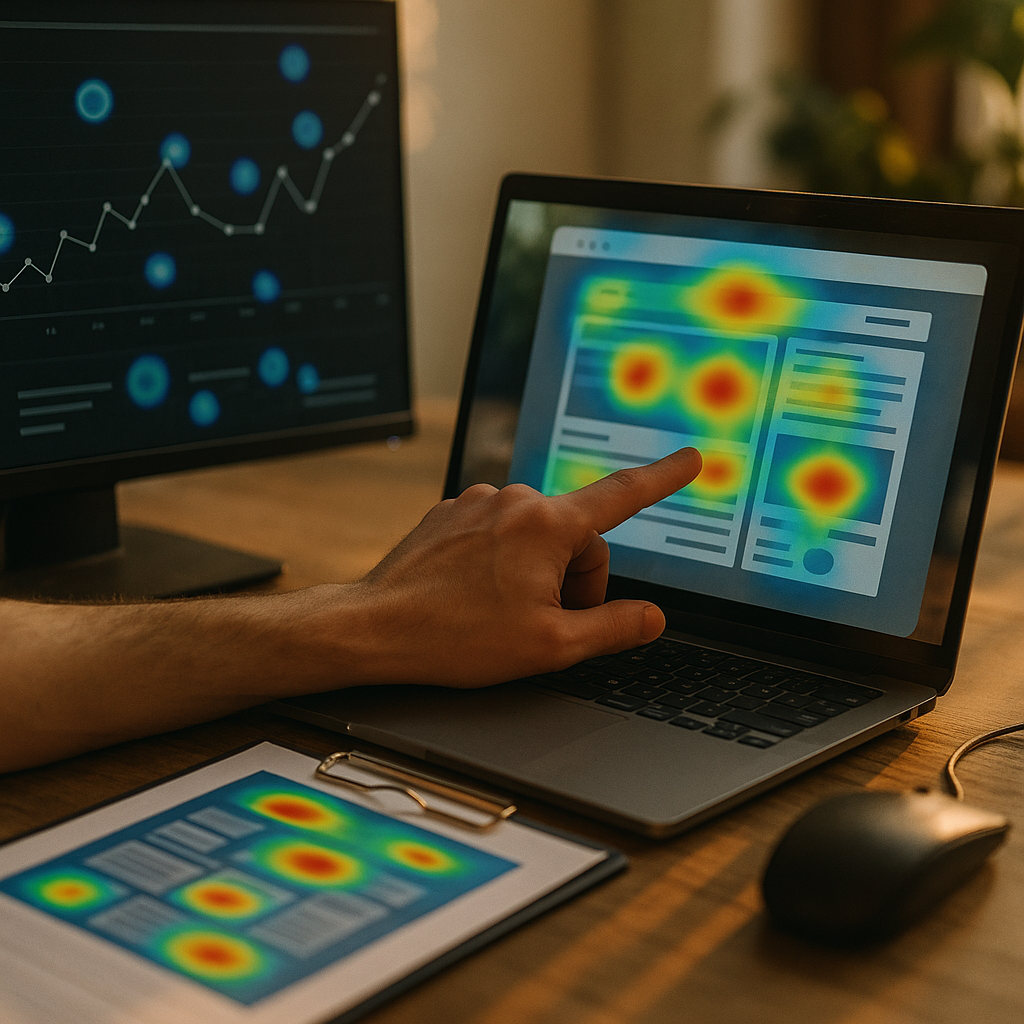
Heatmap and click-tracking tools for websites are crucial for understanding real user behavior and optimizing site performance in 2025. These platforms provide actionable insights that elevate user experience, conversion rates, and business growth. But how do you choose the right tool, and which features are essential? Read on for an in-depth review to make the smartest investment for your site.
Why User Experience Analytics Matter for Website Optimization
No longer is mere page traffic enough—today’s digital landscape demands a deeper understanding of user experience analytics. By tracking how visitors interact with site elements, businesses gain visibility into pain points and engagement patterns. According to a 2025 report by Web UX Insights, companies leveraging these insights saw, on average, a 28% increase in time-on-site and a 22% decrease in bounce rates.
Modern heatmap and click-tracking tools reveal which page areas attract attention (or get ignored), which calls-to-action work, and where usability improves conversion funnels. Continuous monitoring also helps spot technical glitches that might otherwise fly under the radar. Investing in the right analytics tool has become an essential step for digital success.
Key Features to Look for in Heat Mapping Software
Choosing a heat mapping tool requires weighing features that maximize actionable insights. Not all platforms are created equal, and missing critical capabilities can hinder your digital growth. Prioritize the following when evaluating software:
- Dynamic heatmaps: Interactive visualizations that display real clicks, taps, and scrolls—crucial for understanding behavior on mobile devices and dynamic single-page applications.
- Session replay: Watch anonymized, GDPR-compliant playbacks of real user journeys to see points of friction and test interface tweaks in real time.
- Segmentation filters: Filter behaviors by device, user segment, traffic source, and even custom events to pinpoint actionable opportunities for specific audiences.
- Conversion funnel analysis: Identify exactly where users drop from your sales or sign-up processes.
- Integration capabilities: Ensure smooth interoperability with your current analytics stack (e.g., Google Analytics, e-commerce platforms, and A/B testing tools).
Remember that privacy compliance and site speed impact must also factor into your choice, as search engines in 2025 continue to rank pages based partly on site performance and security.
Top Heatmap and Click-Tracking Tools Reviewed in 2025
Several industry-leading heatmap and click-tracking tools have distinguished themselves this year for reliability and innovative features. Here’s a review of the top solutions to consider:
- Hotjar: Continues to dominate the market with easy-to-understand heatmaps, session replays, and user surveys. Its expanded support for mobile gestures and custom event tracking suits businesses seeking a well-rounded, intuitive tool.
- Crazy Egg: Known for simple deployment and granular “confetti” click maps that reveal individual user actions. Its A/B testing and AI-powered recommendations make it a favorite for marketers.
- Microsoft Clarity: Offers unlimited free session recordings and heatmaps, with robust AI anomaly detection. Its privacy emphasis and ease of use make it particularly attractive to smaller teams or startups.
- Smartlook: Integrates seamlessly with e-commerce and SaaS platforms, offering funnel analytics, segmentation, and event tracking. Its customizable dashboards suit enterprises and tech-driven businesses.
- Contentsquare: A top choice for large enterprises, providing deep behavioral analytics, zone-based heatmaps, and advanced data-rich reports for optimizing at scale.
All these tools support privacy guidelines and prioritize data security, a non-negotiable in the current compliance-driven environment.
How Click-Tracking Data Drives Conversion Rate Improvement
Click-tracking software delivers quantifiable benefits by translating real user actions into measurable business outcomes. By pinpointing exactly where users click and hesitate—or where they ignore key calls to action—conversion optimization gets precise, rapid, and data-driven.
Leading e-commerce brands reported in early 2025 that leveraging advanced click-tracking cut checkout abandonment by 15-20%. For content-driven sites, optimizing layouts based on scroll-depth and click patterns significantly improved ad engagement and subscriber sign-ups. The return on investment becomes tangible within weeks, not months, when insights are systematically applied.
Site owners also benefit from identifying technical bugs, misaligned design elements, and mobile responsiveness issues that traditional analytics might miss—boosting both user satisfaction and search engine rankings.
Privacy, Security, and Compliance: Essential Considerations in 2025
With regulatory frameworks becoming ever more rigorous, webmasters must be vigilant about privacy, security, and compliance when deploying heatmap and click-tracking solutions. In 2025, all top platforms offer features such as:
- Anonymization of personally identifiable information (PII) by default
- Options to exclude sensitive form fields from recording
- GDPR, CCPA, and regional law compliance settings
- Transparent data storage, retention, and user opt-out controls
Choosing a vendor that is proactive in adapting to evolving data privacy standards ensures long-term protection for both users and business, and guards against potential legal risks.
Integrating Heatmaps with Broader Analytics Strategies
Today, effective website optimization involves more than just standalone heatmaps or click-tracking. True digital intelligence comes from integrating these insights with your broader analytics stack:
- Align heatmap insights with inbound marketing campaigns to validate content effectiveness
- Combine session replay with A/B test results for deeper understanding of experiment outcomes
- Leverage custom events from e-commerce analytics to segment visitor interactions for targeted optimizations
- Automate reporting workflows so key findings reach stakeholders in real time
Such integrative approaches future-proof your web strategy, turning raw behavioral data into ongoing business growth.
Conclusion
Heatmap and click-tracking tools for websites have become essential for data-driven optimization in 2025. Select a solution combining powerful analytics, robust privacy, and easy integrations to unlock real engagement and growth. By systematically applying behavioral insights, you can elevate user experience and realize measurable ROI in record time.
Frequently Asked Questions (FAQs)
- What is a website heatmap?
A website heatmap visually represents user interactions—such as clicks, taps, and scrolls—using color gradients, revealing which areas of a web page attract the most or least attention. - Are heatmap and click-tracking tools safe for user privacy?
Yes, leading tools anonymize all personal data and offer settings to exclude sensitive fields. They comply with regulations like GDPR and CCPA to protect both users and site owners. - How do I choose the best heatmap tool for my needs?
Consider your business size, analytics needs, desired integrations, and privacy requirements. Prioritize tools with dynamic heatmaps, session replay, and segmentation features for comprehensive insights. - Can I use heatmaps on mobile websites?
Absolutely. Modern tools offer mobile-responsive heatmaps that capture taps, swipes, and gestures, essential for optimizing user experience across all device types. - Will using heatmaps slow down my site?
Top heatmap vendors in 2025 use lightweight tracking scripts that minimally impact site speed and can be customized for performance optimization. - How often should I review heatmap data?
It’s best to review behavioral analytics regularly—ideally after major design changes, campaigns, or product launches—to ensure ongoing optimization and usability improvements.
Top Influencer Marketing Agencies
The leading agencies shaping influencer marketing in 2026
Agencies ranked by campaign performance, client diversity, platform expertise, proven ROI, industry recognition, and client satisfaction. Assessed through verified case studies, reviews, and industry consultations.
Moburst

-
2

The Shelf
Boutique Beauty & Lifestyle Influencer AgencyA data-driven boutique agency specializing exclusively in beauty, wellness, and lifestyle influencer campaigns on Instagram and TikTok. Best for brands already focused on the beauty/personal care space that need curated, aesthetic-driven content.Clients: Pepsi, The Honest Company, Hims, Elf Cosmetics, Pure LeafVisit The Shelf → -
3

Audiencly
Niche Gaming & Esports Influencer AgencyA specialized agency focused exclusively on gaming and esports creators on YouTube, Twitch, and TikTok. Ideal if your campaign is 100% gaming-focused — from game launches to hardware and esports events.Clients: Epic Games, NordVPN, Ubisoft, Wargaming, Tencent GamesVisit Audiencly → -
4

Viral Nation
Global Influencer Marketing & Talent AgencyA dual talent management and marketing agency with proprietary brand safety tools and a global creator network spanning nano-influencers to celebrities across all major platforms.Clients: Meta, Activision Blizzard, Energizer, Aston Martin, WalmartVisit Viral Nation → -
5

The Influencer Marketing Factory
TikTok, Instagram & YouTube CampaignsA full-service agency with strong TikTok expertise, offering end-to-end campaign management from influencer discovery through performance reporting with a focus on platform-native content.Clients: Google, Snapchat, Universal Music, Bumble, YelpVisit TIMF → -
6

NeoReach
Enterprise Analytics & Influencer CampaignsAn enterprise-focused agency combining managed campaigns with a powerful self-service data platform for influencer search, audience analytics, and attribution modeling.Clients: Amazon, Airbnb, Netflix, Honda, The New York TimesVisit NeoReach → -
7

Ubiquitous
Creator-First Marketing PlatformA tech-driven platform combining self-service tools with managed campaign options, emphasizing speed and scalability for brands managing multiple influencer relationships.Clients: Lyft, Disney, Target, American Eagle, NetflixVisit Ubiquitous → -
8

Obviously
Scalable Enterprise Influencer CampaignsA tech-enabled agency built for high-volume campaigns, coordinating hundreds of creators simultaneously with end-to-end logistics, content rights management, and product seeding.Clients: Google, Ulta Beauty, Converse, AmazonVisit Obviously →