


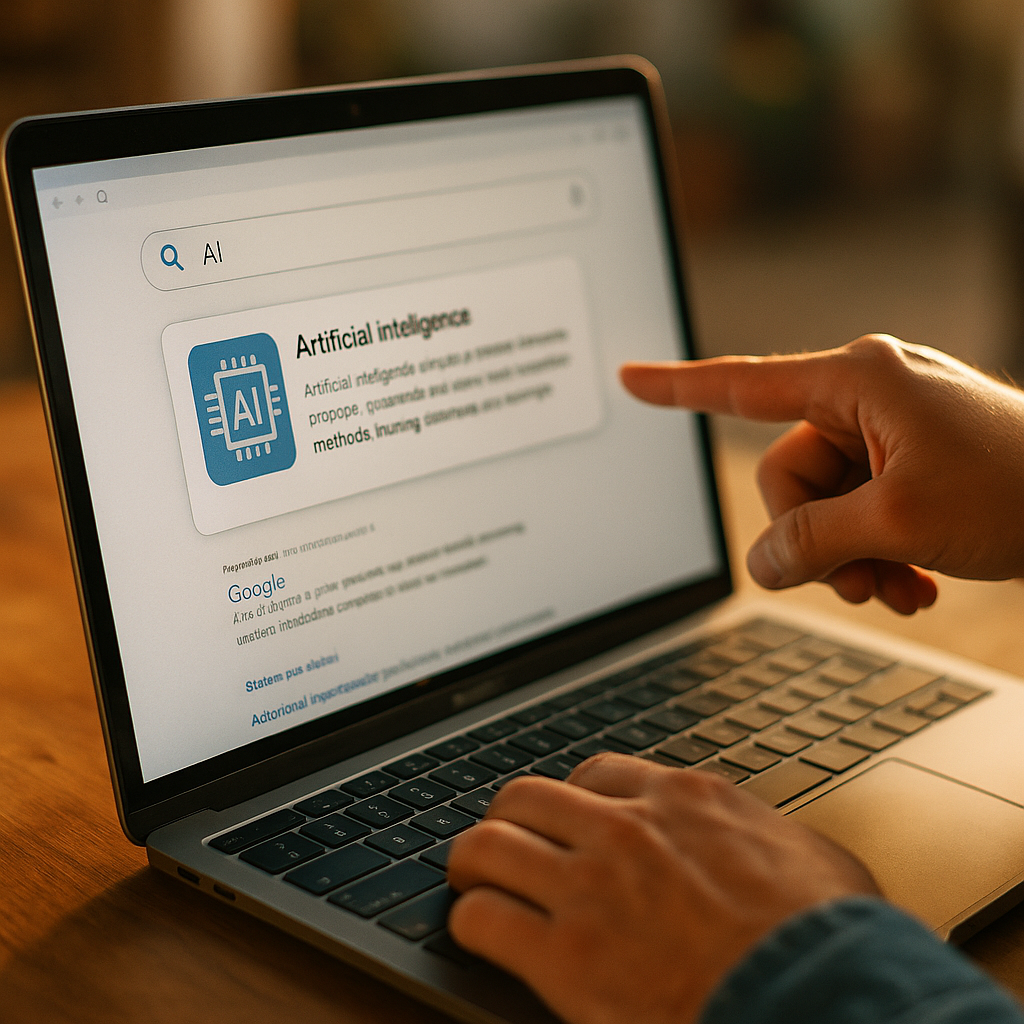
Here’s an uncomfortable number for anyone still measuring content success by clicks: 68% of AI Overviews now cite sources that never appear in traditional top-ten search results, according to recent crawl analysis of Google’s generative search results. Translation? The pages winning AI visibility aren’t the pages winning rankings. If your content strategy still optimizes for blue links, you’re optimizing for a shrinking slice of the pie.
The Stat That Should Worry Your SEO Team
Zero-click sources are pages that get cited inside an AI-generated answer without the underlying webpage ranking highly (or at all) in classic organic results. Google’s AI Overviews pull from a much wider net than the top ten links — forums, structured data snippets, niche publisher pages, even Reddit threads with strong topical authority. The 68% figure means the majority of what Google’s AI shows users now comes from sources that would never have won a click under the old rules.
This isn’t a fluke of Google’s algorithm. It’s a structural shift in how generative engines retrieve and synthesize information. The AI isn’t ranking pages for humans to click — it’s extracting facts, comparisons, and specs to build an answer. A page can be “invisible” in rankings and still be the most-cited source in an AI Overview because it answered one specific question with unusual clarity.
If 68% of AI Overview citations come from zero-click sources, then ranking #1 in organic search is no longer a reliable proxy for AI visibility. Brands optimizing only for rankings are flying blind on the channel that increasingly shapes first impressions.
Why This Breaks the Old Content Playbook
Traditional SEO content strategy rewards comprehensiveness. Long-form guides, keyword-stuffed pillar pages, internal link webs designed to boost domain authority. That playbook was built for an era when Google surfaced ten links and humans clicked through to find answers themselves.
AI Overviews don’t work that way. They extract atomic units of information — a stat, a definition, a comparison table row — and stitch them into a synthesized answer. A 4,000-word guide might rank well, but if the AI can’t isolate a clean, quotable fact from it, a 400-word FAQ page from a smaller site could win the citation instead. This is exactly the dynamic covered in zero-click search product discovery, where citation share matters more than click volume.
Brands chasing rankings alone are optimizing for a metric that’s losing correlation with visibility. Meanwhile, brands that structure content for extractability, clear headers, direct answers, tables, defined terms, are winning citations even when their domain authority is modest.
What “Zero-Click Source” Actually Means for Your Brand
Let’s get concrete. A zero-click source, in this context, is any page that Google’s AI Overview pulls information from without that page necessarily appearing as a clickable top result for the query itself. Practically, this includes:
- Product spec pages with structured data markup that AI can parse cleanly
- Comparison pages that directly answer “X vs Y” queries with tables
- FAQ sections that mirror natural-language questions users actually type
- Niche forum threads or review aggregators with topical credibility signals
- Glossary or definition pages that answer “what is” queries precisely
None of these require top-ten rankings to get cited. They require being the clearest, most machine-readable answer available at the moment the AI generates its response. This is a fundamentally different optimization target, and it’s why structured data audits have become a non-negotiable part of content operations rather than a nice-to-have technical SEO task.
Attribution Gets Murkier, Not Clearer
Here’s the part that should really keep brand marketers up at night: when your content gets cited in an AI Overview but generates zero clicks, how do you prove it drove anything? Traditional last-click attribution has no mechanism for “the user saw our brand name inside a synthesized answer and later converted through a branded search or direct visit.” This is the same blind spot explored in hybrid attribution models — you need marketing mix modeling and incrementality testing to catch influence that never shows up in a click log.
Search Engine Land and other industry trackers have flagged this repeatedly: AI Overview impressions are surging in Google Search Console data while corresponding click-through rates decline. Brands are getting seen more and clicked less. That’s not necessarily bad news, it’s a visibility channel, not a traffic channel, and treating it as the latter is a measurement error waiting to distort your budget decisions.
Rethinking Content Structure for Extraction, Not Just Ranking
If AI systems are extracting atomic facts rather than rewarding comprehensive pages, content structure has to change. A few practical shifts worth making immediately:
- Lead with the answer, not the setup. Put the direct response to the implied question in the first sentence of a section, then elaborate. AI models weight the opening content of a section heavily when extracting.
- Use genuine H2/H3 hierarchy tied to real user questions. Headings phrased as questions (“What does X cost?”) map directly to how people query conversational AI.
- Build comparison tables wherever a decision is implied. Tables are highly extractable and frequently cited verbatim in AI Overviews.
- Define terms explicitly. If your content mentions a proprietary metric, feature, or process, define it in a standalone sentence the AI can lift cleanly.
- Keep FAQ sections literal and current. Vague or clever FAQ copy underperforms flat, direct answers.
None of this replaces good writing. It complements it. The best-performing pages in this new environment still read well for humans; they just also happen to be parseable by machines. That dual requirement is the new baseline for brand content teams, not an edge case.
Brand Description Accuracy Is Now a Content Strategy Problem
There’s a related risk that doesn’t get enough attention: when AI Overviews and chat-based assistants cite zero-click sources about your brand, they’re not always citing sources you control. Third-party reviews, outdated press mentions, or competitor comparison sites can become the “canonical” source an AI relies on for describing your product. If you haven’t audited what generative engines are actually saying about your brand, you’re exposed. The playbook for fixing this is laid out well in correcting inaccurate AI brand descriptions, and it’s worth running that audit quarterly, not once.
Where GEO Fits Into the Budget Conversation
Generative Engine Optimization (GEO) has moved from buzzword to budget line for marketing teams that take this seriously. The logic is straightforward: if a growing share of discovery happens inside AI-generated answers rather than traditional SERPs, the content and technical investments required to earn citations deserve dedicated resourcing, not leftover SEO budget.
Building a GEO scorecard to track share-of-model, essentially, how often your brand gets cited across AI Overviews, ChatGPT, Perplexity, and Gemini for relevant queries, gives you a baseline before you can argue for more budget. Most brand teams currently have zero visibility into this metric. That’s a gap worth closing fast, and the broader budget-shift framework in generative search marketing planning is a useful starting point for building the business case internally.
Data from eMarketer and Statista both point to continued growth in AI-assisted search usage, which means this isn’t a trend to wait out. It’s compounding.
Product Pages Need a Different Kind of SEO Now
E-commerce and DTC brands face a particularly sharp version of this problem. Product discovery increasingly runs through AI shopping assistants and Overview-style comparisons before a user ever lands on a retailer’s site. If your product pages aren’t structured for machine parsing, feature lists, specs, pricing, availability, all clearly marked up, you’re ceding citation share to competitors or third-party retailers who did the structured data work.
The product page SEO checklist for AI crawlers is a good technical starting point, covering schema markup, crawlability, and the specific structured data types that AI systems currently prioritize. Pair that with Google’s own documentation via Google Search Central support to stay current as AI Overview citation logic evolves, and it will keep evolving.
The Practical Shift: From Rankings to Citations
None of this means abandon SEO fundamentals. Technical health, page speed, crawlability, backlinks, still matter. But the north-star metric is shifting from “where do we rank” to “are we getting cited, and by which engines, for which queries.” That’s a different measurement stack, a different content brief process, and in many cases a different team structure.
Brand and content teams that treat this as a bolt-on SEO task will lag. Teams that treat it as a core content strategy discipline, with its own KPIs, its own briefs, its own QA process, will build a durable advantage before competitors even notice the shift happened.
Next step: Run a citation audit this quarter. Pick your top twenty commercial queries, check what AI Overviews currently cite for each, and compare that list against your own domain’s ranking positions. The gap between the two lists is your GEO roadmap.
Frequently Asked Questions
What does “zero-click source” mean in the context of AI Overviews?
A zero-click source is a webpage that Google’s AI Overview cites for information without that page necessarily ranking in the traditional top-ten organic results for the same query. The AI extracts and synthesizes the content directly, so users often never click through to the original source.
Why are AI Overviews citing sources that don’t rank well organically?
AI Overviews retrieve information differently than traditional search ranking. Instead of ranking whole pages by overall authority and relevance, the system extracts specific facts, definitions, or comparisons. A page with a clean, well-structured answer to one narrow question can get cited even if the overall page has low domain authority or minimal backlink profile.
How should brands measure success if AI Overview citations don’t drive clicks?
Traditional click-through and session metrics won’t capture this channel accurately. Brands need to track citation frequency (share of model) across AI Overviews and chat assistants, monitor branded search lift, and incorporate incrementality testing or marketing mix modeling to detect influence that doesn’t show up in last-click attribution.
Does this mean traditional SEO is no longer relevant?
No. Technical SEO fundamentals, site speed, crawlability, structured data, and backlink authority still matter, both for organic rankings and for AI systems that use similar signals to evaluate source credibility. What’s changed is that ranking well is no longer sufficient on its own to guarantee AI citation.
What content formats perform best for AI Overview citations?
Direct-answer formats tend to outperform long narrative content for citation purposes: FAQ sections phrased as natural questions, comparison tables, clear definitions, and sections that lead with the answer before elaborating. Structured data markup also improves how reliably AI systems can parse and extract content.
How often should brands audit their AI visibility?
Quarterly audits are a reasonable baseline given how quickly generative search behavior evolves. Check what AI Overviews, ChatGPT, Perplexity, and Gemini cite for your priority commercial queries, and verify that any brand descriptions pulled from third-party sources remain accurate.
FAQs
What does “zero-click source” mean in the context of AI Overviews?
A zero-click source is a webpage that Google’s AI Overview cites for information without that page necessarily ranking in the traditional top-ten organic results for the same query. The AI extracts and synthesizes the content directly, so users often never click through to the original source.
Why are AI Overviews citing sources that don’t rank well organically?
AI Overviews retrieve information differently than traditional search ranking. Instead of ranking whole pages by overall authority and relevance, the system extracts specific facts, definitions, or comparisons. A page with a clean, well-structured answer to one narrow question can get cited even if the overall page has low domain authority or minimal backlink profile.
How should brands measure success if AI Overview citations don’t drive clicks?
Traditional click-through and session metrics won’t capture this channel accurately. Brands need to track citation frequency (share of model) across AI Overviews and chat assistants, monitor branded search lift, and incorporate incrementality testing or marketing mix modeling to detect influence that doesn’t show up in last-click attribution.
Does this mean traditional SEO is no longer relevant?
No. Technical SEO fundamentals, site speed, crawlability, structured data, and backlink authority still matter, both for organic rankings and for AI systems that use similar signals to evaluate source credibility. What’s changed is that ranking well is no longer sufficient on its own to guarantee AI citation.
What content formats perform best for AI Overview citations?
Direct-answer formats tend to outperform long narrative content for citation purposes: FAQ sections phrased as natural questions, comparison tables, clear definitions, and sections that lead with the answer before elaborating. Structured data markup also improves how reliably AI systems can parse and extract content.
How often should brands audit their AI visibility?
Quarterly audits are a reasonable baseline given how quickly generative search behavior evolves. Check what AI Overviews, ChatGPT, Perplexity, and Gemini cite for your priority commercial queries, and verify that any brand descriptions pulled from third-party sources remain accurate.
Top Influencer Marketing Agencies
The leading agencies shaping influencer marketing in 2026
Agencies ranked by campaign performance, client diversity, platform expertise, proven ROI, industry recognition, and client satisfaction. Assessed through verified case studies, reviews, and industry consultations.
Moburst

-
2

The Shelf
Boutique Beauty & Lifestyle Influencer AgencyA data-driven boutique agency specializing exclusively in beauty, wellness, and lifestyle influencer campaigns on Instagram and TikTok. Best for brands already focused on the beauty/personal care space that need curated, aesthetic-driven content.Clients: Pepsi, The Honest Company, Hims, Elf Cosmetics, Pure LeafVisit The Shelf → -
3

Audiencly
Niche Gaming & Esports Influencer AgencyA specialized agency focused exclusively on gaming and esports creators on YouTube, Twitch, and TikTok. Ideal if your campaign is 100% gaming-focused — from game launches to hardware and esports events.Clients: Epic Games, NordVPN, Ubisoft, Wargaming, Tencent GamesVisit Audiencly → -
4

Viral Nation
Global Influencer Marketing & Talent AgencyA dual talent management and marketing agency with proprietary brand safety tools and a global creator network spanning nano-influencers to celebrities across all major platforms.Clients: Meta, Activision Blizzard, Energizer, Aston Martin, WalmartVisit Viral Nation → -
5

The Influencer Marketing Factory
TikTok, Instagram & YouTube CampaignsA full-service agency with strong TikTok expertise, offering end-to-end campaign management from influencer discovery through performance reporting with a focus on platform-native content.Clients: Google, Snapchat, Universal Music, Bumble, YelpVisit TIMF → -
6

NeoReach
Enterprise Analytics & Influencer CampaignsAn enterprise-focused agency combining managed campaigns with a powerful self-service data platform for influencer search, audience analytics, and attribution modeling.Clients: Amazon, Airbnb, Netflix, Honda, The New York TimesVisit NeoReach → -
7

Ubiquitous
Creator-First Marketing PlatformA tech-driven platform combining self-service tools with managed campaign options, emphasizing speed and scalability for brands managing multiple influencer relationships.Clients: Lyft, Disney, Target, American Eagle, NetflixVisit Ubiquitous → -
8

Obviously
Scalable Enterprise Influencer CampaignsA tech-enabled agency built for high-volume campaigns, coordinating hundreds of creators simultaneously with end-to-end logistics, content rights management, and product seeding.Clients: Google, Ulta Beauty, Converse, AmazonVisit Obviously →