


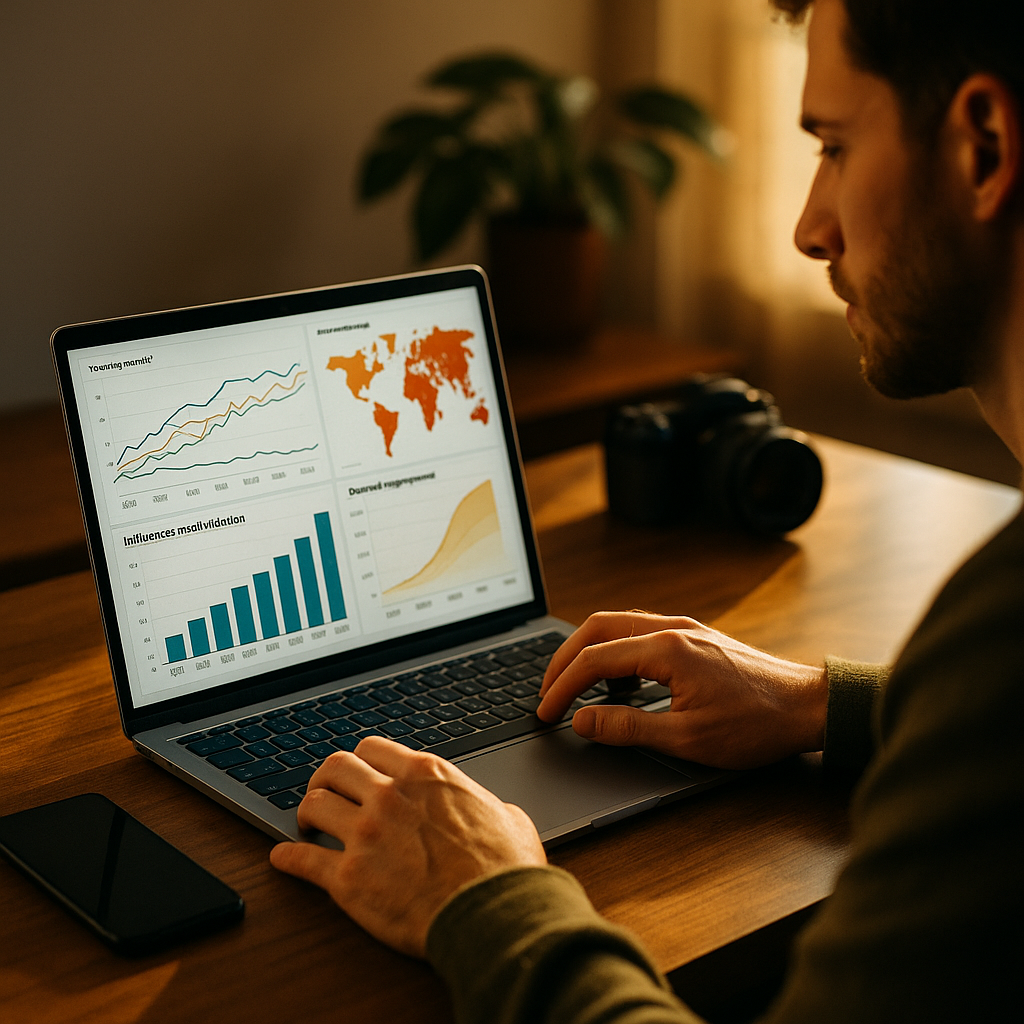
Brands and agencies use predictive analytics to forecast an influencer’s potential reach with precision, leveraging data-driven insights rather than guesswork. This not only maximizes campaign ROI but also helps brands form more authentic partnerships in 2025’s crowded digital ecosystem. Ready to discover actionable steps and proven strategies? Let’s dive into harnessing predictive analytics for influencer reach forecasting.
Understanding Predictive Analytics in Influencer Marketing
Predictive analytics employs statistical techniques, data mining, and machine learning to forecast future outcomes. In the context of influencer marketing, this methodology analyzes past performance data and current trends to estimate how many people an influencer can reach with future content. By using predictive analytics, marketers gain a competitive edge—the guesswork is replaced by actionable, data-led insights.
As influencer marketing grows increasingly sophisticated, the ability to forecast reach with confidence lets brands allocate budgets wisely, avoid influencer fraud, and create targeted, high-impact campaigns. The process draws on a variety of influencer data points, such as engagement rate, follower growth trajectory, content type, and even audience sentiment. Predictive analytics not only offers accuracy but also transparency, building greater trust between brands and influencers.
Key Data Points for Forecasting Influencer Potential
Accurate forecasting starts with selecting the right data. For robust predictive modeling in influencer reach, experts recommend gathering the following metrics:
- Historical Reach: Analyze recent content views or impressions for different content types (Stories, Reels, YouTube Shorts, etc.).
- Engagement Rate: Measure average likes, comments, shares, and saves to gauge active audience involvement.
- Audience Demographics: Consider age, gender, location, and interests for relevancy to the campaign’s target market.
- Posting Frequency and Consistency: Evaluate how often and regularly the influencer posts, as consistency often correlates with loyalty and higher reach.
- Follower Growth Rate: Trend upward or downward? Fast-growing accounts may indicate rising influence, while stagnant growth may suggest audience fatigue.
- Authenticity Metrics: Look for red flags like sudden follower spikes, which could signal purchased followers rather than organic growth.
Industry leaders in 2025 are also integrating advanced data such as AI-powered audience sentiment analysis and influence network mapping. These refined points further enhance predictive accuracy, uncovering hidden trends and the true resonance of an influencer’s voice.
Building a Predictive Model: Step-by-Step Process
Once you’ve gathered the appropriate data, the next step is building a predictive model. This typically involves the following workflow:
- Data Collection and Cleansing: Aggregate data from social platforms, influencer platforms, or proprietary analytics tools. Eliminate duplicates and correct anomalies.
- Feature Selection: Identify which variables most affect reach. In 2025, top-performing models emphasize engagement rate and recent post reach, alongside audience sentiment scores.
- Algorithm Selection: Consider regression analysis, decision trees, or machine learning models. Many marketers employ ensemble learning—which combines several algorithms for optimal accuracy.
- Training & Testing: Train your model on a portion of your data and test it with remaining data. Cross-validation ensures predictions are reliable under multiple scenarios.
- Prediction and Iteration: Deploy the model to generate future reach estimates for influencers. Continuously refine as new data becomes available, calibrating for evolving platform algorithms.
Modern AI tools, such as those integrated with influencer marketing platforms, automate many steps—allowing even small teams to forecast at scale. However, human oversight remains crucial: context, creative changes, or sudden trends can sway reach in ways no algorithm can fully anticipate.
Secondary Keyword: Best Practices for Maximizing Influencer Forecast Accuracy
To ensure your influencer reach forecasting remains both accurate and actionable, follow these best practices:
- Always Validate with Real-World Campaign Data: Use post-campaign results to adjust and improve your models, not just historical data.
- Update Models Frequently: Social platforms evolve rapidly. Refresh your predictive models regularly with new metrics and features.
- Look Beyond Vanity Metrics: High follower counts do not always translate into high reach. Engagement and relevance should be prioritized.
- Layer Qualitative Insights: Interview influencers or review their recent collaborations to contextualize the quantitative model outputs.
- Promote Transparency with Influencers: Share reach forecasts and underlying assumptions. Collaboration builds trust and fosters successful long-term partnerships.
Adhering to these best practices upholds Google’s EEAT (Experience, Expertise, Authoritativeness, Trustworthiness) standards, ensuring both brands and influencers are equipped to make data-driven decisions for impactful campaigns.
Tools and Technologies for Influencer Marketing Analytics
In 2025, many tools simplify predictive analytics in influencer marketing, making data-driven forecasting accessible to all brands and agencies. Popular influencer platforms increasingly integrate machine learning capabilities—the more data they process, the smarter their predictions become.
Look for key features in analytics tools:
- Automated Data Aggregation: Collects and consolidates data from all major social platforms (Instagram, TikTok, YouTube, etc.).
- Customizable Models: Tailor predictive models to your industry, niche, or campaign goals.
- Real-Time Forecast Updates: Instantly tweaks predictions based on fresh data—critical during fast-moving, high-stakes campaigns.
- Visualization Dashboards: Easy-to-read charts and trend lines for executive reporting and stakeholder buy-in.
- Integrations: Seamless connections with your marketing stack (CRM, e-commerce, ad platforms).
Examples of leading platforms include Upfluence, Traackr, and Julius, all of which have invested heavily in AI-powered analytics. However, building custom dashboards via BI tools like Power BI or Tableau provides ultimate flexibility and transparency if your team has in-house data expertise.
Common Pitfalls and How to Avoid Them
While predictive analytics brings powerful futurecasting to influencer marketing, its effectiveness depends on nuanced execution. Watch out for these common pitfalls:
- Overfitting: An overly complex model may “learn” the quirks of historical data rather than true patterns, resulting in inaccurate predictions. Keep models parsimonious and test on multiple data sets.
- Ignoring External Factors: Algorithm updates, global events, and viral moments can supercharge or suppress influencer reach overnight. Always leave room for qualitative assessment and rapid model updates.
- Data Privacy Compliance: Only use data with proper permissions and comply with global data privacy regulations (like GDPR or CCPA). Violations damage both reputation and campaign viability.
- Neglecting Cross-Platform Context: An influencer’s reach can differ dramatically between YouTube, Instagram, and TikTok. Model each platform separately where possible.
Strategically side-stepping these pitfalls ensures more reliable forecasting—and futureproofs your influencer marketing strategy against the rapid changes of the digital landscape.
Conclusion: The Strategic Advantage of Predictive Analytics for Influencer Reach
In 2025, predictive analytics offers marketers a decisive edge in forecasting an influencer’s potential reach. By combining robust data, advanced modeling, and transparent communication, you empower your campaigns to deliver measurable results, reduce risk, and form lasting, productive influencer partnerships.
FAQs: Predictive Analytics for Influencer Reach Forecasting
-
Q: What is predictive analytics in influencer marketing?
A: Predictive analytics uses historical data, statistical methods, and AI to forecast how many people an influencer’s content is likely to reach in the future. -
Q: Which data points matter most for influencer reach prediction in 2025?
A: Engagement rate, audience demographics, follower growth, posting consistency, and audience sentiment are most important. -
Q: Can small businesses take advantage of predictive analytics tools?
A: Yes. Many platforms now offer user-friendly predictive analytics features suitable for businesses of all sizes, often at accessible price points. -
Q: How accurate are influencer reach predictions?
A: With quality data and proper model updates, reach forecasts can be highly accurate. However, always account for unexpected shifts in platform algorithms or audience behavior. -
Q: Do influencers have access to their predictive analytics?
A: Increasingly, yes. Many platforms now provide influencer dashboards with predictive reach, so both brands and creators can strategize collaboratively.
Top Influencer Marketing Agencies
The leading agencies shaping influencer marketing in 2026
Agencies ranked by campaign performance, client diversity, platform expertise, proven ROI, industry recognition, and client satisfaction. Assessed through verified case studies, reviews, and industry consultations.
Moburst

-
2

The Shelf
Boutique Beauty & Lifestyle Influencer AgencyA data-driven boutique agency specializing exclusively in beauty, wellness, and lifestyle influencer campaigns on Instagram and TikTok. Best for brands already focused on the beauty/personal care space that need curated, aesthetic-driven content.Clients: Pepsi, The Honest Company, Hims, Elf Cosmetics, Pure LeafVisit The Shelf → -
3

Audiencly
Niche Gaming & Esports Influencer AgencyA specialized agency focused exclusively on gaming and esports creators on YouTube, Twitch, and TikTok. Ideal if your campaign is 100% gaming-focused — from game launches to hardware and esports events.Clients: Epic Games, NordVPN, Ubisoft, Wargaming, Tencent GamesVisit Audiencly → -
4

Viral Nation
Global Influencer Marketing & Talent AgencyA dual talent management and marketing agency with proprietary brand safety tools and a global creator network spanning nano-influencers to celebrities across all major platforms.Clients: Meta, Activision Blizzard, Energizer, Aston Martin, WalmartVisit Viral Nation → -
5

The Influencer Marketing Factory
TikTok, Instagram & YouTube CampaignsA full-service agency with strong TikTok expertise, offering end-to-end campaign management from influencer discovery through performance reporting with a focus on platform-native content.Clients: Google, Snapchat, Universal Music, Bumble, YelpVisit TIMF → -
6

NeoReach
Enterprise Analytics & Influencer CampaignsAn enterprise-focused agency combining managed campaigns with a powerful self-service data platform for influencer search, audience analytics, and attribution modeling.Clients: Amazon, Airbnb, Netflix, Honda, The New York TimesVisit NeoReach → -
7

Ubiquitous
Creator-First Marketing PlatformA tech-driven platform combining self-service tools with managed campaign options, emphasizing speed and scalability for brands managing multiple influencer relationships.Clients: Lyft, Disney, Target, American Eagle, NetflixVisit Ubiquitous → -
8

Obviously
Scalable Enterprise Influencer CampaignsA tech-enabled agency built for high-volume campaigns, coordinating hundreds of creators simultaneously with end-to-end logistics, content rights management, and product seeding.Clients: Google, Ulta Beauty, Converse, AmazonVisit Obviously →