


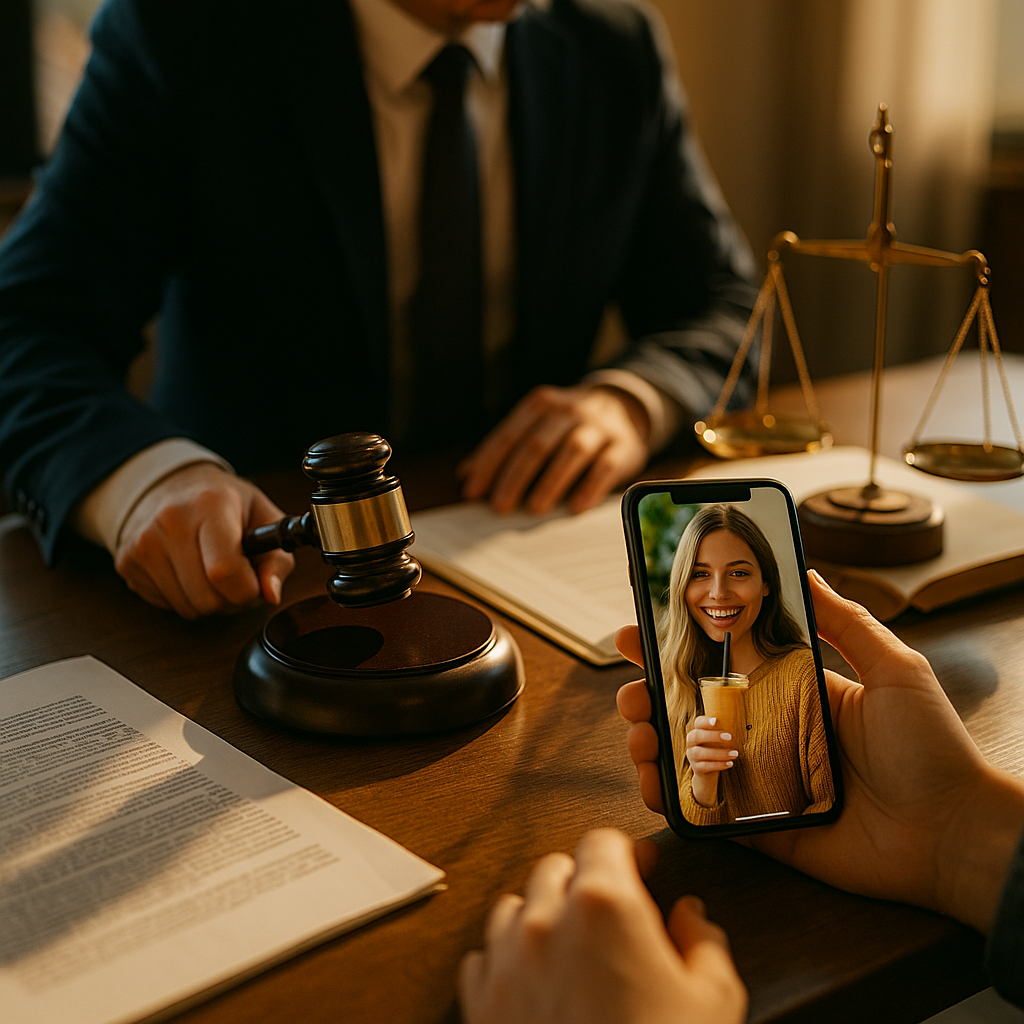
The legal difference between user-generated content and commissioned influencer assets is essential for marketers, creators, and brands to understand in 2025. As digital content strategies evolve, distinguishing rights, responsibilities, and potential risks is crucial. Explore how these content types are governed under intellectual property law, contract obligations, and brand safety—so you can protect your strategy and build trust in a shifting online marketplace.
User-Generated Content: Legal Responsibilities and Secondary Rights
User-generated content (UGC) refers to photos, videos, reviews, social posts, and other media created voluntarily by consumers or online audiences, rather than by contracted creators. Brands use UGC for authenticity and engagement, but legal frameworks limit what companies can do with this material. Unlike commissioned influencer assets, users usually retain copyright over their submissions, unless they explicitly grant permissions through terms of service, promotions, or rights-request tools.
Key legal responsibilities for brands using UGC include:
- Obtaining consent: Never assume public posts are free to use. Gaining written permission or responding to rights-request messages ensures valid usage rights.
- Adhering to intellectual property laws: UGC may contain copyrighted music, logos, or identifiable individuals. Brands risk infringement claims if these are reposted without securing underlying permissions.
- Complying with privacy and publicity rights: Featuring content with minors or private individuals in a commercial context can violate personality rights, especially for campaigns beyond organic social sharing.
By distinguishing these requirements, brands enhance compliance and respect for online communities—building trust for long-term engagement.
Commissioned Influencer Assets: Intellectual Property and Contractual Control
Commissioned influencer assets are created when a brand contracts an influencer or content creator to produce media, such as videos, photos, or endorsements. Unlike UGC, the legal relationship here is defined by explicit contracts addressing copyright ownership, usage, exclusivity, and deliverables.
Essential elements of commissioned content contracts typically include:
- Cession or licensing of rights: Brands often require influencers to transfer copyright or grant broad licenses for campaigns, allowing legal use for marketing objectives.
- Usage scope and term: Details whether assets are limited to social campaigns or can be repurposed for web, email, digital ads, and future projects.
- Disclosure requirements: Latest FTC guidelines mandate that sponsored content be transparently disclosed. Brands and influencers share compliance responsibilities and can be jointly liable for nondisclosure.
- Exclusivity and morality clauses: Prevents creators from promoting competing products or engaging in activities that might harm the brand’s reputation during and after the campaign.
Commissioned influencer assets offer brands more legal certainty and flexibility compared to UGC, provided contracts are clear and up to date with 2025’s best practices.
Categorizing Content: Who Owns What?
Understanding who owns each content type is key for staying legally compliant. User-generated content is, by default, owned by its creator unless permission is formally given away or licensed to another party. For example, comments on a brand’s Instagram post remain the intellectual property of the original poster unless that brand receives permission or the terms of the platform grant re-use rights.
By contrast, in a commissioned influencer campaign, the agreement usually dictates ownership. Typically, brands require an assignment (transfer) or exclusive license to use the influencer’s work. Without such clauses, creators generally retain ownership, even though the brand has paid for the deliverables.
This distinction impacts brand strategy:
- Reposting organic UGC requires ongoing permissions, especially for paid advertising.
- Commissioned influencer content can be leveraged more broadly, but only within the contract’s bounds.
- Ambiguity around ownership risks future litigation and lost marketing opportunities.
Clarifying ownership reduces legal disputes and ensures efficient, creative use of digital assets.
Disclosures, Brand Safety, and Consumer Trust
Transparency is now a non-negotiable aspect of digital marketing. Regulators such as the U.S. Federal Trade Commission (FTC) and equivalents worldwide require clear disclosures for sponsored or incentivized content, impacting both UGC and influencer campaigns. As consumers grow savvy about sponsored messaging, brand safety and trust hinge on compliance.
Consider these guidelines:
- Disclose sponsorships: Both commission-based influencer content and incentivized UGC must include unambiguous statements (e.g., #Ad or #Sponsored) to avoid misleading audiences.
- Moderate UGC for brand safety: Brands must monitor UGC to avoid association with offensive, false, or infringing material.
- Enforce community guidelines: Document and consistently apply standards for published UGC to protect audience welfare and company reputation.
Effective disclosure and moderation nurture trust and minimize regulatory risk in an environment where consumer protection is paramount.
Navigating Platform Terms and Evolving Regulations
The boundaries between UGC and commissioned content are also shaped by social platforms’ terms of service and changing legal frameworks. As of 2025, major platforms (Instagram, TikTok, YouTube) require that users grant them broad licenses to display, distribute, and use uploads—but do not grant fellow users or brands blanket permission.
Recent legal developments include:
- Strengthened copyright claims: Courts increasingly support creators asserting rights against unauthorized brand use, especially with AI-generated or remixed content.
- Updated ad and privacy law: New digital advertising legislation emphasizes consent for data use, visual likeness, and even biometric markers in content.
- Platform enforcement: Stricter takedown and reporting tools empower users whose content is misused, accelerating regulatory enforcement directly on social platforms.
Staying current on terms and laws ensures content strategies remain agile, informed, and risk-aware.
Best Practices for Brands and Creators in 2025
To optimize compliance, protect reputations, and maximize content value, brands and creators should follow these actionable steps:
- Document all agreements: Use clear, written contracts or standardized release forms for influencer collaborations and UGC reuse.
- Seek explicit consent: Implement robust rights-request workflows for collecting and publishing UGC, and archive permissions.
- Monitor evolving regulations: Assign legal or compliance professionals to track major legal changes and platform updates.
- Standardize disclosures: Educate teams and collaborators on proper use of transparent sponsorship and influencer marketing tags.
- Maintain content moderation programs: Deploy AI and human review to identify and remove questionable UGC quickly.
Fostering a culture of legal literacy and good faith collaboration benefits everyone—strengthening brand authenticity and creator opportunity in a competitive digital landscape.
Conclusion
User-generated content and commissioned influencer assets carry distinct legal implications for ownership, usage, and responsibility. Understanding their differences empowers brands, influencers, and marketers to create safe, compliant, and effective campaigns. Prioritizing permissions, robust contracts, and transparent disclosures ensures a sustainable strategy that builds audience trust and withstands legal scrutiny in 2025 and beyond.
FAQs: Legal Differences Between UGC and Influencer Assets
-
Who owns user-generated content used by brands?
The original creator typically retains copyright over UGC unless they have legally granted permission or transferred rights to the brand through a release or rights-request process.
-
Can brands use influencer content in advertising without additional permissions?
Only if the influencer contract explicitly provides for advertising use. Otherwise, additional negotiations or extended licenses are needed to use the content beyond the campaign’s original scope.
-
Are disclosures mandatory for both UGC and influencer campaigns?
Yes. Disclosure is required if users or influencers receive compensation, incentives, or free products, in order to comply with FTC and other advertising regulations as of 2025.
-
What are the risks of using UGC without permission?
Brands risk copyright infringement, privacy claims, and reputational damage if they use UGC without obtaining clear consent or rights from the content creator and any featured individuals.
-
How should brands handle ambiguous ownership situations?
Seek legal advice and obtain written permissions or clarifying contracts before publishing or repurposing content, especially for high-visibility or paid marketing campaigns.
Top Influencer Marketing Agencies
The leading agencies shaping influencer marketing in 2026
Agencies ranked by campaign performance, client diversity, platform expertise, proven ROI, industry recognition, and client satisfaction. Assessed through verified case studies, reviews, and industry consultations.
Moburst

-
2

The Shelf
Boutique Beauty & Lifestyle Influencer AgencyA data-driven boutique agency specializing exclusively in beauty, wellness, and lifestyle influencer campaigns on Instagram and TikTok. Best for brands already focused on the beauty/personal care space that need curated, aesthetic-driven content.Clients: Pepsi, The Honest Company, Hims, Elf Cosmetics, Pure LeafVisit The Shelf → -
3

Audiencly
Niche Gaming & Esports Influencer AgencyA specialized agency focused exclusively on gaming and esports creators on YouTube, Twitch, and TikTok. Ideal if your campaign is 100% gaming-focused — from game launches to hardware and esports events.Clients: Epic Games, NordVPN, Ubisoft, Wargaming, Tencent GamesVisit Audiencly → -
4

Viral Nation
Global Influencer Marketing & Talent AgencyA dual talent management and marketing agency with proprietary brand safety tools and a global creator network spanning nano-influencers to celebrities across all major platforms.Clients: Meta, Activision Blizzard, Energizer, Aston Martin, WalmartVisit Viral Nation → -
5

The Influencer Marketing Factory
TikTok, Instagram & YouTube CampaignsA full-service agency with strong TikTok expertise, offering end-to-end campaign management from influencer discovery through performance reporting with a focus on platform-native content.Clients: Google, Snapchat, Universal Music, Bumble, YelpVisit TIMF → -
6

NeoReach
Enterprise Analytics & Influencer CampaignsAn enterprise-focused agency combining managed campaigns with a powerful self-service data platform for influencer search, audience analytics, and attribution modeling.Clients: Amazon, Airbnb, Netflix, Honda, The New York TimesVisit NeoReach → -
7

Ubiquitous
Creator-First Marketing PlatformA tech-driven platform combining self-service tools with managed campaign options, emphasizing speed and scalability for brands managing multiple influencer relationships.Clients: Lyft, Disney, Target, American Eagle, NetflixVisit Ubiquitous → -
8

Obviously
Scalable Enterprise Influencer CampaignsA tech-enabled agency built for high-volume campaigns, coordinating hundreds of creators simultaneously with end-to-end logistics, content rights management, and product seeding.Clients: Google, Ulta Beauty, Converse, AmazonVisit Obviously →