


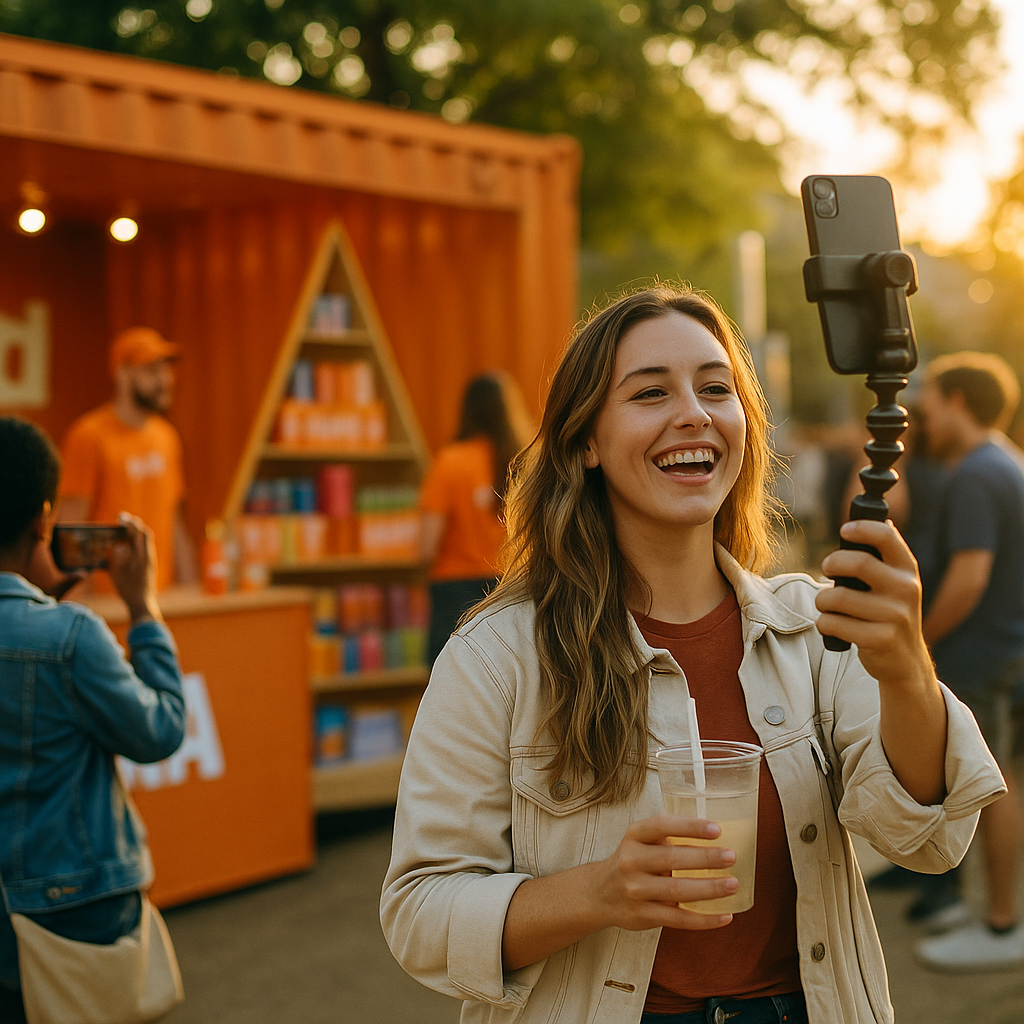
Brands spend an average of $600 per attendee on experiential activations, yet most walk away with a handful of polished recap videos and a rapidly decaying earned media window. That’s not a production problem. It’s a content architecture problem. Immersive brand activations, designed correctly, should function as perpetual content engines — generating simultaneous creator and consumer content that distributes value long after the event ends.
The Problem With “Build It and They’ll Post” Thinking
Most brand marketers still treat experiential and creator strategy as parallel tracks. The experiential team builds the activation. The influencer team books talent. Both groups show up on event day hoping the two will somehow collide into viral moments. They rarely do — at least not with the consistency or content quality brands need to justify six-figure production budgets.
The more operationally sound model treats the physical (or digital) activation as a content production set with multiple simultaneous crews shooting at different quality tiers, capture zones designed for specific formats, and usage rights captured at every touchpoint before a single piece of content goes live. This isn’t a creative restriction. It’s distribution ROI.
An activation that generates 10 hero creator videos, 200 pieces of consumer UGC, and proper licensing for all of it across paid and organic channels is worth 4-5x more in media value than an event that produces the same 10 videos with no downstream rights.
Multi-Tier Creator Deployment: Beyond the Standard Influencer Grid
The instinct is to hire three or four macro creators, brief them vaguely, and let them loose. The problem is macro creators optimize for their own audience — not for brand distribution needs. A better framework deploys creators across at least three tiers simultaneously, each with a distinct content role.
Tier 1: Anchor creators (macro/mega). These are the tent-pole names whose attendance signals cultural relevance and drives initial awareness. Brief them on the narrative, not the shot list. Their job is presence and reach. Think of how immersive creator activations use high-profile talent to establish event legitimacy before the doors even open.
Tier 2: Mid-tier format specialists (50K-500K). These creators are briefed on specific content formats: behind-the-scenes vertical video, product interaction tutorials, reaction content. They produce volume. If your Tier 1 creator posts once, your Tier 2 layer should produce 15-20 pieces across platforms in a single activation window.
Tier 3: Nano/micro activators and credentialed consumers. The most underutilized tier. These are creators with 1K-10K followers, often operating in high-trust niche communities. At the activation itself, they function almost identically to engaged consumers — but they produce content that punches above its reach weight in authenticity signals. Pair this tier with a structured experiential creator brief and their content often outperforms macro content in engagement rate.
Each tier needs a separate brief. Same brand voice, different objectives, different platform targets, different rights structure. Running all three simultaneously from a single event means your content calendar is populated for 2-3 weeks minimum from a single production day.
Shareable Moment Architecture: Designing for the Algorithm, Not the Attendee
This is where experiential design and content strategy need to genuinely merge — and where most agencies still operate in silos.
Shareable moment architecture means engineering specific physical (or digital) zones within an activation that are designed to produce particular content formats. A photo moment designed for Instagram carousels looks different from a video zone optimized for TikTok vertical capture. A sensory experience that drives authentic reaction content requires different lighting, acoustics, and flow than a product demonstration zone.
Concrete elements to build into every activation brief:
- Format-specific capture zones: Designate areas with correct lighting ratios, background depth, and sound management for vertical video, wide-shot photography, and close-up product interaction.
- Scripted unpredictability: Surprise-and-delight moments (unexpected product reveals, celebrity drop-ins, interactive technology triggers) generate authentic reaction content that algorithms favor over polished, scripted posts.
- Loop-friendly visuals: Any installation that auto-plays, cycles, or transforms on a loop creates higher video completion rates. Experiential designers rarely think in terms of TikTok loop optimization. Content strategists should.
- Native hashtag and sound architecture: Don’t slap a hashtag on the event. Build it into the experience. A branded sound integrated into a physical installation (think: a jingle that plays when attendees trigger an interactive moment) creates organic audio association. This connects directly to how brand audio strategy can extend activation reach into social commerce.
The goal is a venue layout where any attendee with a phone in hand naturally produces on-brand content without being instructed to. That’s the benchmark. If your activation requires a staff member to tell people what to post, you’ve already lost the organic layer.
Rights-First UGC Capture: The Operational Step Most Brands Skip
Here’s where activations consistently leave money on the table. Consumer-generated content from events is often the highest-performing asset in a brand’s paid media library, yet most brands either can’t use it (no rights) or can only use it reactively (no systematic capture process).
Rights-first UGC capture means building consent and licensing infrastructure before the activation, not scrambling to DM creators after the fact. Practically, this looks like:
- Event registration flows with explicit UGC consent language, compliant with FTC disclosure requirements and applicable privacy regulations
- On-site QR code stations where attendees can voluntarily upload content and grant usage rights in exchange for perks (product samples, early access, exclusive content)
- Creator contracts that pre-clear all content produced at the event for paid amplification across specified channels and timeframes
- A content ingestion tool (platforms like TINT, Stackla, or UGC amplification workflows that connect directly to paid media teams) so assets move from capture to campaign within 24-48 hours
The FTC’s endorsement guidelines require that material connections between brands and creators are disclosed even in event contexts. Build disclosure prompts into your QR-based submission flows. This is non-negotiable compliance infrastructure, not optional best practice.
Consumer UGC from brand events consistently outperforms studio-produced creative in paid social performance benchmarks, according to data from platforms including Meta’s business insights. The bottleneck is never content volume. It’s rights infrastructure.
Measuring Activation Content ROI Beyond Impressions
Impression counts from events are vanity metrics unless they’re connected to distribution rights and downstream media value. A more operationally useful measurement framework tracks:
- Rights-cleared asset count: How many pieces of content from this activation can your paid media team legally use across channels?
- Content longevity: Are assets still generating engagement 2 weeks post-event, or did performance decay within 48 hours?
- Cost-per-usable-asset: Divide total activation budget by the number of rights-cleared assets produced. This creates a real production cost benchmark you can compare against studio creative.
- Earned media amplification ratio: Total earned media value of organic creator and consumer posts divided by paid media spend on creator fees. A well-architected activation should generate 3:1 or better.
Brands running virtual event activations alongside physical events are finding that hybrid formats often produce superior content ROI because digital touchpoints make rights capture structurally easier. Registration-gated content means consent is built into access.
The broader point: every line item in your activation budget should be evaluated against its contribution to rights-cleared content output. A $20,000 LED installation that generates 500 UGC posts with proper rights is a better investment than a $50,000 experiential element that produces beautiful attendee memories and zero licensable assets.
Integrating Paid Amplification Before the Event Ends
Real-time content capture paired with real-time paid amplification is the new standard for performance-oriented activations. The window between a creator posting from an activation and that content reaching peak organic performance is narrow — often 2-6 hours on TikTok. Brands that wait for post-event reporting cycles miss the amplification window entirely.
Build an on-site “content war room” with a social media manager, a paid media buyer, and a rights clearance checklist. As content is posted and rights are confirmed, high-performing pieces go directly into paid amplification queues. TikTok’s Spark Ads format is purpose-built for this: amplifying creator posts from their own handles without pulling content out of its native context. This preserves authenticity while adding paid distribution muscle. Sprout Social‘s monitoring tools can help surface peak-performing organic posts in real time so your paid team can prioritize spend.
For scaling creator content without losing the authentic quality that makes event UGC valuable, the brief matters as much as the budget. Over-directing creators at activations kills the organic feel that drives performance. Under-directing them wastes the production infrastructure you built. The brief is the calibration tool.
Start here: Audit your last major activation and count how many rights-cleared assets your paid media team was able to use within 72 hours of the event. If the answer is fewer than 20, your next activation brief needs a rights-capture workflow before it needs a creative concept.
Frequently Asked Questions
What is shareable moment architecture in brand activations?
Shareable moment architecture is the deliberate design of physical or digital spaces within a brand activation to produce specific types of social content. This includes format-specific capture zones (optimized for vertical video, photos, or reaction content), surprise-and-delight triggers that generate authentic emotional responses, loop-friendly visual installations, and integrated branded audio or hashtags that appear organically in creator and consumer posts.
How should brands structure multi-tier creator deployment at events?
Effective multi-tier deployment uses at least three creator tiers simultaneously: Tier 1 macro/mega creators for awareness and cultural legitimacy, Tier 2 mid-tier format specialists (50K-500K followers) briefed on specific content formats for volume production, and Tier 3 nano/micro creators or credentialed consumers for high-trust, high-engagement community content. Each tier receives a separate brief with distinct platform targets, content objectives, and rights terms.
What does rights-first UGC capture mean operationally?
Rights-first UGC capture means building consent and content licensing infrastructure before an activation launches, not after. This includes UGC consent language in event registration flows, on-site QR code upload stations where attendees grant usage rights in exchange for perks, pre-cleared creator contracts for paid amplification, and content ingestion tools that move rights-cleared assets into paid media queues within 24-48 hours of capture.
How do you measure ROI from activation-generated content?
Beyond standard impression metrics, measure the number of rights-cleared assets produced, cost-per-usable-asset (total activation budget divided by licensable content pieces), content longevity (engagement decay rate post-event), and earned media amplification ratio (total earned media value versus creator fee spend). A well-designed activation should generate an earned media amplification ratio of 3:1 or better.
How can brands amplify activation content in real time?
Build an on-site content war room with a social media manager, paid media buyer, and rights clearance workflow. As creator and consumer content is posted and rights are confirmed, high-performing pieces move directly into paid amplification formats like TikTok Spark Ads, which amplify content from the creator’s own handle without removing it from its native context. Real-time monitoring tools like Sprout Social help surface peak-performing organic posts for priority paid amplification.
Top Influencer Marketing Agencies
The leading agencies shaping influencer marketing in 2026
Agencies ranked by campaign performance, client diversity, platform expertise, proven ROI, industry recognition, and client satisfaction. Assessed through verified case studies, reviews, and industry consultations.
Moburst

-
2

The Shelf
Boutique Beauty & Lifestyle Influencer AgencyA data-driven boutique agency specializing exclusively in beauty, wellness, and lifestyle influencer campaigns on Instagram and TikTok. Best for brands already focused on the beauty/personal care space that need curated, aesthetic-driven content.Clients: Pepsi, The Honest Company, Hims, Elf Cosmetics, Pure LeafVisit The Shelf → -
3

Audiencly
Niche Gaming & Esports Influencer AgencyA specialized agency focused exclusively on gaming and esports creators on YouTube, Twitch, and TikTok. Ideal if your campaign is 100% gaming-focused — from game launches to hardware and esports events.Clients: Epic Games, NordVPN, Ubisoft, Wargaming, Tencent GamesVisit Audiencly → -
4

Viral Nation
Global Influencer Marketing & Talent AgencyA dual talent management and marketing agency with proprietary brand safety tools and a global creator network spanning nano-influencers to celebrities across all major platforms.Clients: Meta, Activision Blizzard, Energizer, Aston Martin, WalmartVisit Viral Nation → -
5

The Influencer Marketing Factory
TikTok, Instagram & YouTube CampaignsA full-service agency with strong TikTok expertise, offering end-to-end campaign management from influencer discovery through performance reporting with a focus on platform-native content.Clients: Google, Snapchat, Universal Music, Bumble, YelpVisit TIMF → -
6

NeoReach
Enterprise Analytics & Influencer CampaignsAn enterprise-focused agency combining managed campaigns with a powerful self-service data platform for influencer search, audience analytics, and attribution modeling.Clients: Amazon, Airbnb, Netflix, Honda, The New York TimesVisit NeoReach → -
7

Ubiquitous
Creator-First Marketing PlatformA tech-driven platform combining self-service tools with managed campaign options, emphasizing speed and scalability for brands managing multiple influencer relationships.Clients: Lyft, Disney, Target, American Eagle, NetflixVisit Ubiquitous → -
8

Obviously
Scalable Enterprise Influencer CampaignsA tech-enabled agency built for high-volume campaigns, coordinating hundreds of creators simultaneously with end-to-end logistics, content rights management, and product seeding.Clients: Google, Ulta Beauty, Converse, AmazonVisit Obviously →