


Most Experiential Campaigns Fail the Digital Audience
Brands spent over $128 billion on experiential marketing globally in 2025, yet post-event content consistently underperforms against paid social benchmarks. Why? Because the creator brief was written for the room, not the feed. The experiential-plus-social-first creator brief fixes that by treating physical and digital distribution as a single production problem, not two afterthoughts.
The Dual-Audience Problem Nobody Briefs For
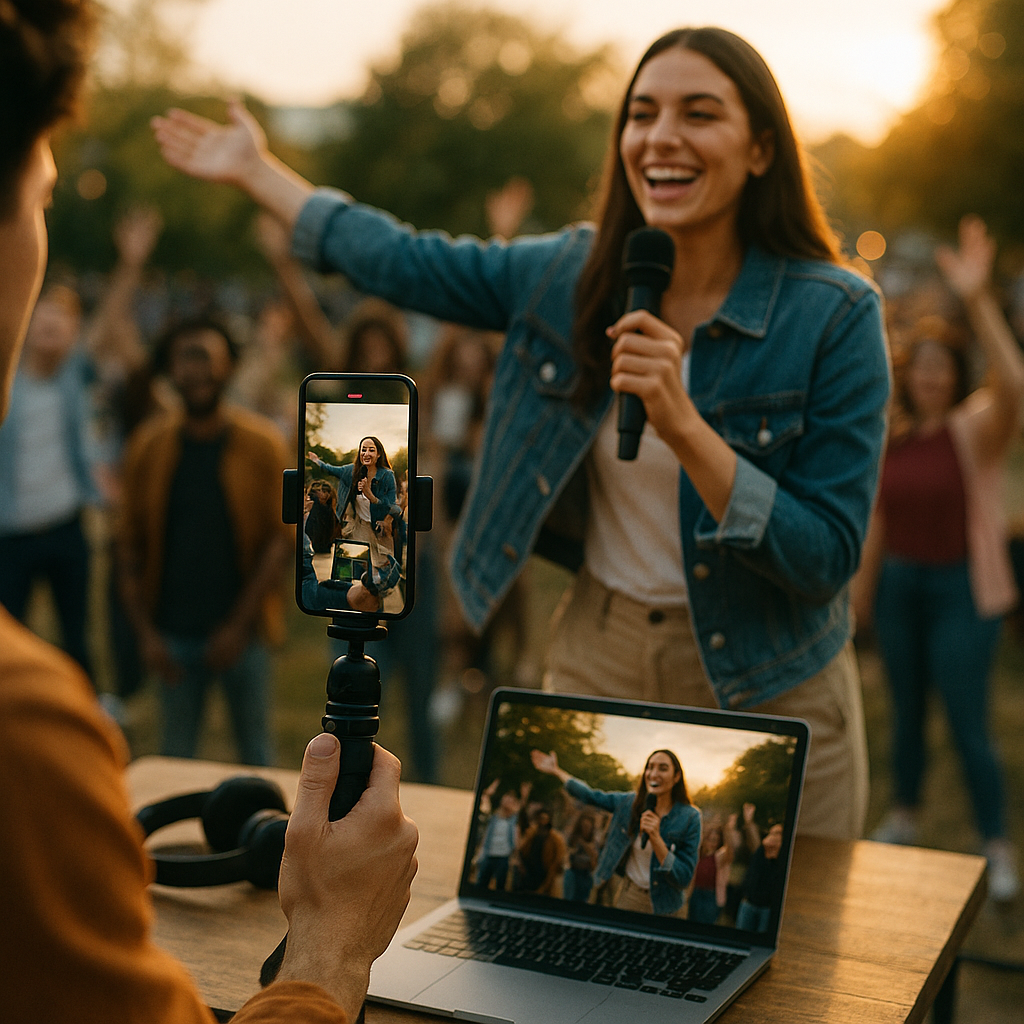
Every immersive brand event now has two audiences: the people inside the venue and the people scrolling TikTok three time zones away. Most brands write one brief that halfheartedly serves both. The event producer gets logistics. The creator gets vibes. Neither gets production direction precise enough to generate commerce-ready content at scale.
The result is familiar. A creator captures genuinely compelling footage at a pop-up, then posts a 47-second vertical clip with no product CTA, no accessible captions, and a caption that reads “had the best night.” Meanwhile, the brand’s paid media team has nothing to amplify. The window for real-time social commerce closes within 48 hours of the event. Money left on the table, every time.
The fix is structural, not creative. It starts with how you write the brief.
What “Social-First” Actually Means in an Experiential Context
Social-first does not mean “film everything.” It means designing production behavior before the event so that content output is predictable, platform-optimized, and immediately actionable. That requires the brief to answer four questions the room alone cannot answer: What platform receives this first? What does the digital audience need to understand the experience without being there? Where is the purchase moment embedded? And what compliance requirements govern both the live and the distributed content?
For immersive brand activations, the production direction layer of the brief becomes as important as the creative direction layer. You need both.
Building the Brief: Six Components That Do the Heavy Lifting
1. Dual-surface asset map. List every deliverable twice: once for the live event context and once for its social distribution destination. A 60-second ambient venue reel serves Instagram Stories. A 15-second product-forward clip with a sticker link serves TikTok Shop. A 90-second “what just happened” recap with spoken context serves YouTube Shorts and search. Mapping assets this way forces creators to think about the digital audience during capture, not during editing the next morning.
2. Commerce trigger specifications. If you are running a multi-surface commerce strategy, the brief must specify exactly where and how product links appear. On TikTok, that means Shop affiliate link placement at seconds 8-12. On Instagram, it means a first-comment link with a pinned anchor. On YouTube Shorts, it means an end-card with a direct product URL. Leaving this to creator discretion is not a creative choice, it is a revenue leak.
3. Sound-on and sound-off production requirements. Live events are loud. They are also completely inaccessible to users with hearing impairments or anyone watching without audio. The brief must specify caption burn-in requirements, on-screen text overlays for key product claims, and visual cues that carry the narrative even at zero volume. For more depth on accessible production, see our guidance on sound-off social video briefs.
4. Real-time posting schedule with platform windows. Specify posting windows, not just deadlines. TikTok’s algorithm rewards posts in the first 30 minutes after upload for events with trending hashtags. Instagram Stories lose 40% of their reach after 6 hours. Brief creators with exact posting windows tied to the event timeline so that “during the activation” content lands while the event hashtag has momentum, not the following afternoon.
5. FTC and platform disclosure requirements. This is non-negotiable. Every piece of content posted during or immediately after a brand-sponsored event requires proper disclosure, even if the creator is an “invited guest” rather than a paid partner. The FTC’s endorsement guidelines apply regardless of whether a fee was exchanged. Your brief should include exact disclosure language, placement instructions (first three seconds for video, above-the-fold for captions), and a confirmation step before posting.
6. B-roll capture protocols for paid amplification. The content creators post organically is rarely the content that performs best in paid media. Brief creators to capture specific B-roll assets: product close-ups with clean backgrounds, 3-5 second reaction clips, environment shots without licensable music, and product-in-hand walking shots. These feed your paid media team’s UGC amplification pipeline for the 30 days after the event ends.
Brands that pre-brief creators on B-roll capture protocols before events report 3x more usable paid media assets post-activation compared to brands that rely on organic content repurposing alone.
The Production Direction Document: How It Differs from a Standard Creator Brief
A standard creator brief covers brand voice, key messages, don’ts, and deliverables. A production direction document covers those things and adds physical logistics: where in the venue to shoot, at what times, with what ambient conditions, and what the creator should be saying or doing during capture. Think of it as a floor plan for content.
For a pop-up retail activation, the production direction might specify: capture the product reveal at the east wall installation between 7:00 PM and 7:20 PM when lighting is optimal; record your reaction in the entryway tunnel where acoustic dampening reduces crowd noise; conduct your product walkthrough in the designated creator area where branded backgrounds are installed. Without this level of direction, you get 200 pieces of dark, unusable vertical video where a creator’s shoulder obscures the product for most of the clip.
This level of specificity does not constrain authenticity. It protects it. Creators who know exactly where to stand and when to film can focus their energy on genuine reaction and commentary rather than logistical problem-solving mid-event.
Platform Optimization Is Not One-Size-Fits-All
The brief must account for platform-native behavior, not just dimensions and duration. TikTok rewards participation in trending audio and live event hashtags. Instagram prioritizes saves and shares, which means the content needs to be immediately useful or rewatchable. YouTube Shorts benefits from search-intent framing (“here’s what you missed at [brand] pop-up”). Pinterest, often overlooked, converts product discovery content from experiential events at rates that rival paid social for home, beauty, and lifestyle categories.
Brands running specific, scored creator briefs consistently outperform those using generic deliverable lists. Platform-specific optimization is not granularity for its own sake. It is the difference between a post that disappears at 48 hours and one that drives search traffic for six weeks after the event.
Also consider the audio layer. If your experiential activation has a branded soundscape or original music, brief creators explicitly on how to use it across platforms. Sprout Social’s data consistently shows that content using original audio tied to brand campaigns generates significantly higher shares than content using trending third-party tracks. Coordinate with your music licensing team before the event, not after, to avoid creators stripping audio in post to avoid copyright flags.
Measurement Architecture Starts in the Brief
Before a single creator walks through the event doors, you need to know what success looks like for both audiences. For in-person attendees, your metrics might be dwell time, purchase conversion at the event, and brand recall scores. For digital audiences, you are measuring reach, content saves, click-through on commerce links, and attributed revenue from affiliate codes embedded in the brief.
Build UTM parameters and affiliate codes into the brief itself. Every creator who posts from the event should have a unique trackable link tied to their content. Meta’s commerce tools allow affiliate tracking through creator posts in real time, which means your measurement team can see conversion data within hours of an event post going live, not weeks after reporting cycles close.
The brief is the single most leveraged document in an experiential campaign. If it does not contain platform specifications, commerce triggers, and production direction, no amount of post-event editing will recover the content opportunity you missed in the room.
Coordinate your measurement framework with your physical creator kit strategy if you are seeding product before the event. Creators who receive kits pre-event and attend the activation create a content arc, unboxing to event attendance to post-event review, that performs significantly better across all platform metrics than single-touch event content.
A Note on Creator Briefing at Scale
Experiential campaigns involving 20+ creators require a briefing infrastructure, not just a PDF. Consider a pre-event creator briefing session (live or recorded) that walks through production direction, answers logistical questions, and demonstrates the content opportunities in the space. Platforms like HubSpot’s CRM ecosystem or purpose-built creator management tools (Grin, Creator.co, Aspire) can distribute briefs, collect confirmations, and centralize asset submissions post-event. If you are managing 50 creators at a flagship activation, manual PDF distribution is not a system, it is a liability.
For teams scaling creator briefs without losing creative quality, the authenticity-at-scale framework applies directly: standardize the structure, personalize the direction.
Start your next brief with the dual-surface asset map before you write a single creative direction line. If you cannot name where every piece of content lives and how it converts, the rest of the brief is decoration.
Frequently Asked Questions
What is an experiential-plus-social-first creator brief?
It is a production direction document that addresses both the physical event experience and simultaneous social media distribution. Unlike a standard creator brief, it specifies platform-optimized deliverables, commerce triggers, real-time posting windows, sound-off accessibility requirements, and B-roll capture protocols so that content serves both live event attendees and digital audiences effectively.
How do you ensure creators capture commerce-ready content during a live event?
By embedding commerce specifications directly into the brief before the event. This includes exact affiliate link placement instructions per platform, designated shooting locations with clean branded backgrounds, product close-up capture requirements, and specified posting windows that align with peak platform algorithm activity. Leaving commerce integration to post-production decisions results in missed conversion windows.
What FTC disclosure rules apply to influencers at brand-sponsored events?
Any content posted by a creator who received compensation, free attendance, gifting, or other material benefit from a brand requires disclosure under FTC guidelines, regardless of whether a formal fee was paid. The disclosure must appear clearly in the first three seconds of video content and above the fold in written captions. Brands should include exact disclosure language in the brief and require confirmation before posting.
How do you measure ROI from experiential influencer campaigns?
Effective measurement requires unique UTM parameters and affiliate codes assigned to each creator before the event, real-time commerce tracking through platform tools like Meta’s affiliate commerce features or TikTok Shop analytics, and pre-defined KPIs for both in-person conversion (dwell time, on-site purchases) and digital performance (reach, saves, click-through rate, attributed revenue). Build measurement architecture into the brief, not the post-event report.
How many creators should be briefed differently for the same event?
Every creator at scale should receive the same structural brief with personalized production direction based on their platform strength, audience demographics, and content format. A creator with 800K TikTok followers and a commerce-oriented audience receives different asset prioritization than a photographer-focused Instagram creator with 200K followers. Standardize the framework, customize the surface-specific direction.
Top Influencer Marketing Agencies
The leading agencies shaping influencer marketing in 2026
Agencies ranked by campaign performance, client diversity, platform expertise, proven ROI, industry recognition, and client satisfaction. Assessed through verified case studies, reviews, and industry consultations.
Moburst

-
2

The Shelf
Boutique Beauty & Lifestyle Influencer AgencyA data-driven boutique agency specializing exclusively in beauty, wellness, and lifestyle influencer campaigns on Instagram and TikTok. Best for brands already focused on the beauty/personal care space that need curated, aesthetic-driven content.Clients: Pepsi, The Honest Company, Hims, Elf Cosmetics, Pure LeafVisit The Shelf → -
3

Audiencly
Niche Gaming & Esports Influencer AgencyA specialized agency focused exclusively on gaming and esports creators on YouTube, Twitch, and TikTok. Ideal if your campaign is 100% gaming-focused — from game launches to hardware and esports events.Clients: Epic Games, NordVPN, Ubisoft, Wargaming, Tencent GamesVisit Audiencly → -
4

Viral Nation
Global Influencer Marketing & Talent AgencyA dual talent management and marketing agency with proprietary brand safety tools and a global creator network spanning nano-influencers to celebrities across all major platforms.Clients: Meta, Activision Blizzard, Energizer, Aston Martin, WalmartVisit Viral Nation → -
5

The Influencer Marketing Factory
TikTok, Instagram & YouTube CampaignsA full-service agency with strong TikTok expertise, offering end-to-end campaign management from influencer discovery through performance reporting with a focus on platform-native content.Clients: Google, Snapchat, Universal Music, Bumble, YelpVisit TIMF → -
6

NeoReach
Enterprise Analytics & Influencer CampaignsAn enterprise-focused agency combining managed campaigns with a powerful self-service data platform for influencer search, audience analytics, and attribution modeling.Clients: Amazon, Airbnb, Netflix, Honda, The New York TimesVisit NeoReach → -
7

Ubiquitous
Creator-First Marketing PlatformA tech-driven platform combining self-service tools with managed campaign options, emphasizing speed and scalability for brands managing multiple influencer relationships.Clients: Lyft, Disney, Target, American Eagle, NetflixVisit Ubiquitous → -
8

Obviously
Scalable Enterprise Influencer CampaignsA tech-enabled agency built for high-volume campaigns, coordinating hundreds of creators simultaneously with end-to-end logistics, content rights management, and product seeding.Clients: Google, Ulta Beauty, Converse, AmazonVisit Obviously →