


Most Brands Are Still Briefing for a Platform That No Longer Exists
Brands spent the last four years optimizing for the 15-second dopamine hit. The result? A sea of interchangeable product placements, declining organic reach, and audiences who can smell a sponsored post from three scrolls away. According to Sprout Social, engagement rates on standard branded short-form content have dropped by nearly 35% over the past two years. The solution isn’t more reels. It’s immersive brand experience design built for social-first execution from the ground up.
What “Immersive” Actually Means in a Creator Context
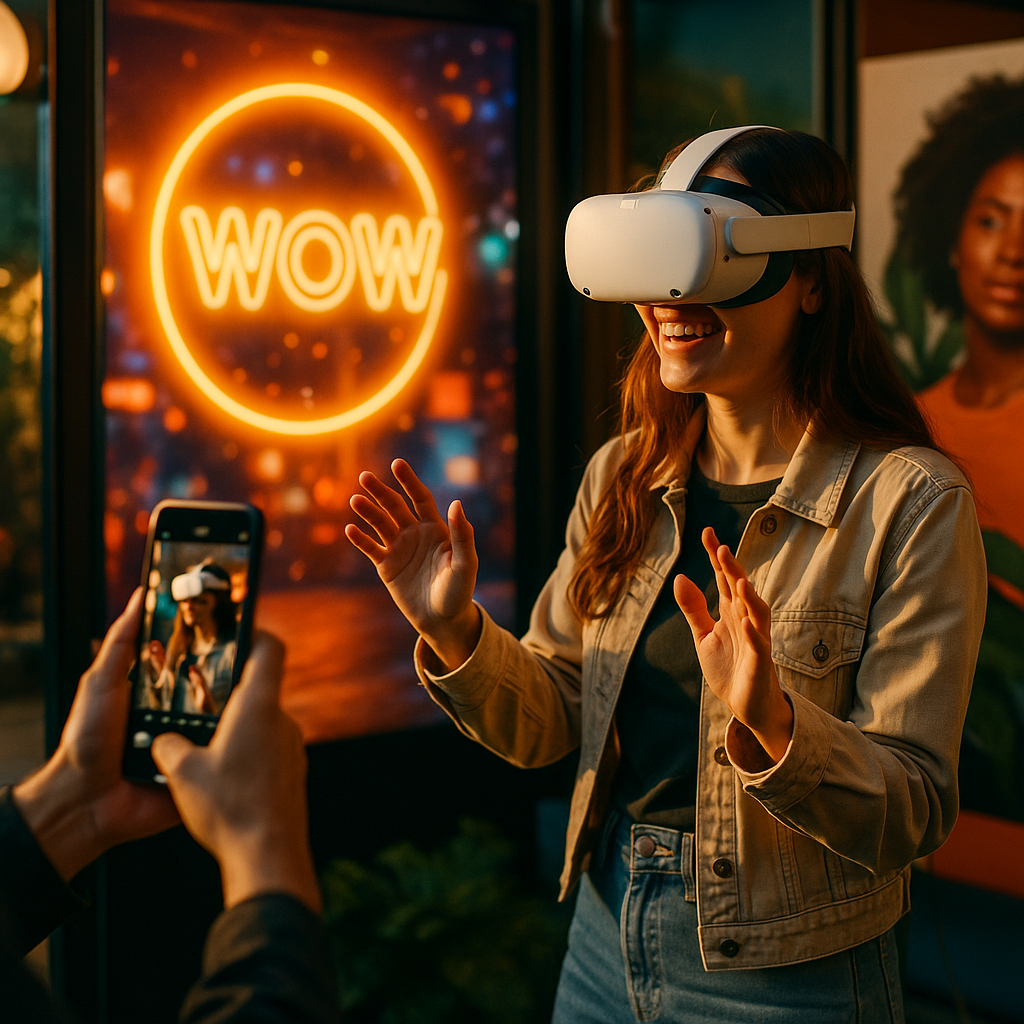
Let’s be precise. Immersive doesn’t mean expensive sets or AR filters nobody uses. In a creator context, immersive means the audience is placed inside the product experience rather than being told about it from the outside. The creator isn’t reading talking points. They’re navigating a world the brand has designed around the product’s core functional promise.
Think about what Liquid Death did with its “murder your thirst” activations. Creators weren’t briefed to say the water tastes good. They were embedded in an aesthetic, a narrative, a set of behaviors. The product became inseparable from the cultural moment. That’s the template. The brief stops being a list of claims and becomes an experience architecture.
This shift matters enormously for how you write briefs. When you’re briefing for immersive execution, you’re specifying environment, tension, sensory cues, and audience payoff, not just product benefits and legal disclaimers.
Immersive brand activations generate 2-3x more organic saves and shares than standard product placements, according to HubSpot research on experiential content formats — because audiences share feelings, not features.
The Multi-Tier Creator Model: Why One Voice Is Never Enough
Here’s where most brands leave serious value on the table. They identify a hero creator, build the activation around that person’s aesthetic, and treat everyone else as amplifiers. That’s backwards.
A properly designed immersive activation should be documented simultaneously by multiple creator tiers, each capturing a different dimension of the same experience:
- Macro creators (1M+): Set the cultural context. They arrive at the activation and frame its significance. Their content signals to audiences that this is worth paying attention to.
- Mid-tier creators (100K-1M): Go deep on the functional story. They have the credibility to explain how the product works, why it matters, and what makes it different, without it feeling like an ad.
- Micro and nano creators (1K-100K): Deliver the shareability. Their audiences are smaller but more trusting. A nano creator walking through the same activation feels like a friend’s recommendation, not a campaign.
When these three tiers document the same physical or conceptual space simultaneously, you get content that serves awareness, consideration, and conversion in a single activation window. You also generate a library of assets across formats without briefing each creator independently for each placement.
For teams managing complex multi-tier rollouts, the operational framework matters as much as the creative one. Resources on scaling creator briefs without losing voice consistency are worth reviewing before you write the first brief.
Designing the Activation Space Around the Product’s Functional Truth
This is the hardest part. Most brand marketers are trained to lead with emotion and support with function. Immersive activation design flips that. You lead with the product’s functional truth and build an experience that makes that truth visceral.
A skincare brand whose hero claim is “24-hour hydration” doesn’t brief creators to talk about moisture. It builds a desert environment, creates a 24-hour challenge structure, and lets creators document their skin transformation in real time across a full day. The functional claim isn’t spoken. It’s lived. Creators capture it at hour zero, hour six, hour twelve, hour twenty-four. Each piece of content is usable standalone. Together, they tell a complete story.
This architecture also solves the eternal tension between brand control and creator authenticity. Brands get their functional message embedded in the experience design itself. Creators get genuine latitude to respond to, comment on, and document their authentic reactions. Nobody is reading a script. The brief hasn’t disappeared, it’s been translated into environment.
If your team is still working from a traditional feature-benefit brief template, reviewing frameworks around brief specificity and performance scoring will give you a practical starting point for restructuring.
Building the Content Architecture Before the Activation Happens
One of the most common operational failures in immersive activations is treating content planning as a post-production problem. You can’t brief six creators at a live experience and hope the content library assembles itself.
The content architecture needs to be designed before the first creator walks in the door. That means knowing:
- Which moments in the activation sequence are designed to generate hero content (shareable, high-production, platform-native)
- Which moments are designed for functional documentation (how-to, demo, comparison)
- Which moments are designed for social proof capture (authentic reaction, peer-to-peer moments)
- How each content type maps to a specific creator tier
- Which platform surfaces each piece of content is intended for at publication
Platform surface matters because the same activation moment needs to be captured differently for TikTok’s search-driven discovery versus Instagram’s save-and-share behavior versus YouTube’s longer consideration formats. Multi-surface briefs require creators to think about their capture approach before they arrive. Frameworks for multi-surface creator briefing for TikTok and YouTube are particularly relevant here.
Physical touchpoints matter too. What creators leave with, wear, use, or receive as part of the activation becomes content beyond the event itself. Physical creator kits that drive UGC and brand lift are a proven mechanism for extending activation content into the weeks that follow.
Measuring Immersive Activations: Beyond Reach and Impressions
Reach metrics were designed for broadcast media. They measure exposure, not engagement, not memory, not behavior change. For immersive activations documented across multiple creator tiers, you need a measurement stack that captures the full value of what you’ve built.
Key metrics for this model include:
- Content velocity: How quickly did organic content spread across creator tiers after the activation? Faster velocity at the nano tier often signals genuine audience enthusiasm rather than algorithmic amplification.
- Functional message recall: Did the product’s core claim land? Brand lift studies run against exposed vs. unexposed audiences are the gold standard here. Meta’s brand lift tools and similar offerings from TikTok for Business can measure this within days of content publication.
- Cross-tier amplification rate: How much did macro content get reshared or referenced by mid-tier and nano creators who weren’t part of the activation? Organic spillover is a signal of genuine cultural resonance.
- UGC conversion rate: For retail brands especially, track how activation content by nano and micro creators converts relative to macro content. The conversion rate difference often surprises teams who over-invested in hero talent.
Brands running simultaneous multi-tier creator documentation consistently report 40-60% lower cost-per-view on organic UGC versus paid distribution of hero creator content, according to data compiled by eMarketer.
The Brief Is the Activation Design Document
Stop thinking of the creator brief as a legal and messaging checklist. For immersive execution, the brief is the activation design document. It describes the world the creator is entering, the emotional arc they’ll experience, the functional truths they’ll discover, and the specific moments they’re expected to capture for specific platforms.
Creators who receive a brief like this don’t need hand-holding on set. They arrive understanding the narrative structure, knowing which moments matter for which surfaces, and prepared to generate content that serves the full funnel. That’s the operational efficiency case for investing in brief quality. For teams building toward episodic or serialized content off the back of live activations, frameworks covering short-form series that compound reach are worth building into your activation planning workflow.
Your next step: audit your last three creator activations and count how many pieces of content addressed a specific functional product claim in a verifiable, experience-driven way. If the number is under 40%, you’re over-briefing for vibe and under-briefing for value. Fix the brief architecture first.
Frequently Asked Questions
What is immersive brand experience design for social-first execution?
Immersive brand experience design for social-first execution means building physical or conceptual activation environments specifically engineered to generate platform-native, shareable content that communicates a brand’s functional product truths. Rather than briefing creators to deliver talking points, brands design experiences where the product’s core claim is lived and documented organically by creators across multiple tiers simultaneously.
How many creator tiers should be involved in an immersive activation?
Most effective immersive activations use at least three creator tiers: macro creators to establish cultural context and awareness, mid-tier creators to deliver functional depth and credibility, and micro or nano creators to generate the authentic, peer-level content that drives trust and conversion. Each tier captures a different dimension of the same activation, producing a content library that serves the full marketing funnel.
How do you brief creators for immersive activations without scripting them?
The brief for an immersive activation describes the experience environment, the emotional arc, the specific moments designed for capture, and the platform destination for each content type. It doesn’t script dialogue. Instead, it gives creators the structural context they need to make authentic creative decisions while still serving the brand’s functional messaging goals. Specificity in the brief design replaces scripting as the mechanism for brand control.
What metrics should brands use to evaluate immersive creator activations?
Beyond standard reach and impression metrics, brands should track content velocity across creator tiers, functional message recall via brand lift studies, cross-tier organic amplification rates, and UGC conversion rates by creator tier. These metrics reveal whether the activation generated genuine cultural traction and whether the functional product message reached and persuaded the intended audience.
How is immersive activation content different from standard influencer content?
Standard influencer content typically involves a single creator presenting a product in their usual format, often with limited connection to the product’s functional proof points. Immersive activation content places the product’s functional claims at the center of a designed experience that multiple creators document simultaneously. The result is a diverse, multi-format content library where the product’s value is shown rather than stated, with authentic creator reactions providing social proof at scale.
Top Influencer Marketing Agencies
The leading agencies shaping influencer marketing in 2026
Agencies ranked by campaign performance, client diversity, platform expertise, proven ROI, industry recognition, and client satisfaction. Assessed through verified case studies, reviews, and industry consultations.
Moburst

-
2

The Shelf
Boutique Beauty & Lifestyle Influencer AgencyA data-driven boutique agency specializing exclusively in beauty, wellness, and lifestyle influencer campaigns on Instagram and TikTok. Best for brands already focused on the beauty/personal care space that need curated, aesthetic-driven content.Clients: Pepsi, The Honest Company, Hims, Elf Cosmetics, Pure LeafVisit The Shelf → -
3

Audiencly
Niche Gaming & Esports Influencer AgencyA specialized agency focused exclusively on gaming and esports creators on YouTube, Twitch, and TikTok. Ideal if your campaign is 100% gaming-focused — from game launches to hardware and esports events.Clients: Epic Games, NordVPN, Ubisoft, Wargaming, Tencent GamesVisit Audiencly → -
4

Viral Nation
Global Influencer Marketing & Talent AgencyA dual talent management and marketing agency with proprietary brand safety tools and a global creator network spanning nano-influencers to celebrities across all major platforms.Clients: Meta, Activision Blizzard, Energizer, Aston Martin, WalmartVisit Viral Nation → -
5

The Influencer Marketing Factory
TikTok, Instagram & YouTube CampaignsA full-service agency with strong TikTok expertise, offering end-to-end campaign management from influencer discovery through performance reporting with a focus on platform-native content.Clients: Google, Snapchat, Universal Music, Bumble, YelpVisit TIMF → -
6

NeoReach
Enterprise Analytics & Influencer CampaignsAn enterprise-focused agency combining managed campaigns with a powerful self-service data platform for influencer search, audience analytics, and attribution modeling.Clients: Amazon, Airbnb, Netflix, Honda, The New York TimesVisit NeoReach → -
7

Ubiquitous
Creator-First Marketing PlatformA tech-driven platform combining self-service tools with managed campaign options, emphasizing speed and scalability for brands managing multiple influencer relationships.Clients: Lyft, Disney, Target, American Eagle, NetflixVisit Ubiquitous → -
8

Obviously
Scalable Enterprise Influencer CampaignsA tech-enabled agency built for high-volume campaigns, coordinating hundreds of creators simultaneously with end-to-end logistics, content rights management, and product seeding.Clients: Google, Ulta Beauty, Converse, AmazonVisit Obviously →