


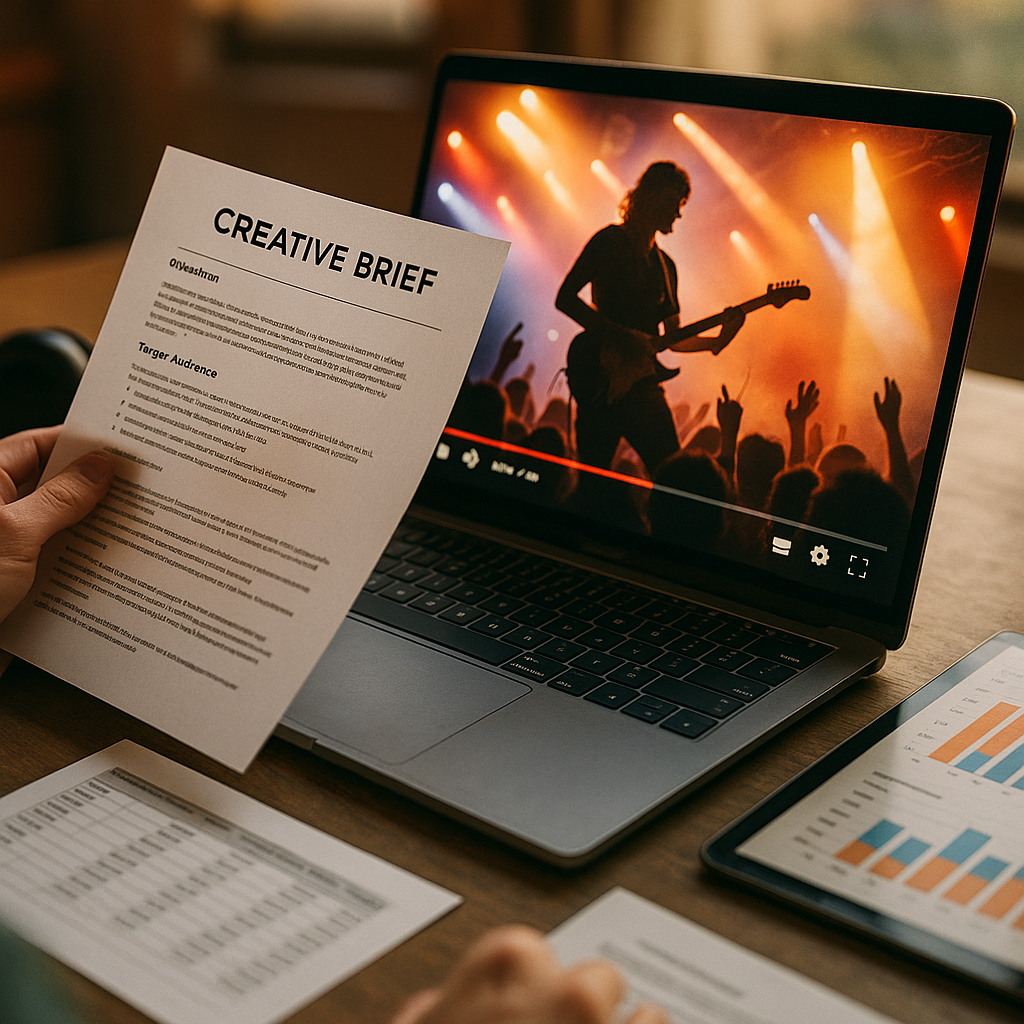
When Fortnite’s virtual Travis Scott concert drew 12 million concurrent viewers, most brand strategists filed it under “cool stunt.” A few started writing briefs. The virtual music festival as a brand-creator format has matured into a legitimate ROI vehicle, but only for teams that understand the operational complexity underneath the spectacle.
Why Brands Are Taking This Format Seriously Now
The numbers have caught up with the ambition. Statista data shows the virtual events market generating over $400 billion annually, and live entertainment formats consistently outperform static sponsored content on dwell time and brand recall. When you layer a creator’s existing audience trust onto a concert-style production, you get something that a display ad cannot replicate: sustained attention with emotional context.
Brands operating in beauty, spirits, gaming, and consumer tech have moved fastest. They’ve recognized that a virtual festival brief isn’t a content brief with a stage backdrop — it’s closer to a media production brief with sponsorship architecture attached.
A virtual music festival brief isn’t a content brief with a stage backdrop. It’s a media production with sponsorship architecture, rights agreements, and commerce attribution all running simultaneously.
The format also solves a real audience problem. Gen Z and older Gen Alpha consumers don’t just watch creators — they want to be in experiences with them. A well-produced virtual festival gives brands a cultural artifact that lives beyond the event window: replays, clips, UGC from attendees, and search-discoverable VOD content.
How the Brief Architecture Differs From Standard Creator Briefs
If your team is used to briefing tutorial content or haul formats, the virtual festival brief will feel like a different discipline. It’s multi-creator, multi-stage, and multi-surface by design. You’re not briefing one creator on one deliverable — you’re orchestrating several creators across a structured event timeline, each with defined roles, scripted integration windows, and individual compliance obligations.
Start with the event architecture before touching creative direction. Define: how many “stages” or content streams run simultaneously, which creators headline versus which open or host, and where the brand integration windows sit in the run-of-show. A brand integration at the 8-minute mark of a 45-minute set will perform very differently from a pre-show creator-hosted product moment. Map it like a media schedule, not a mood board.
For multi-creator coordination, scaling creator briefs without losing individual voice is the central challenge. Each creator needs enough brand guardrails to maintain message consistency while retaining the authentic energy that makes their audience show up.
The brief itself should include:
- Run-of-show document with timestamps for product integrations, verbal callouts, and on-screen overlays
- Visual brand standards for virtual stage design, lower-thirds, and branded environments
- Verbal and visual do/don’t lists specific to each creator’s stage persona
- Technical delivery specs covering resolution, streaming platform requirements, and latency tolerance
- Compliance language for FTC disclosure within a live-format context
That last point trips up even experienced teams. FTC guidelines require disclosure of material connections in real time during live content — a pinned chat message alone isn’t sufficient. Your brief must specify exactly how and when creators verbalize or display the disclosure, and this needs to be rehearsed, not improvised.
Production Standards: What “Immersive” Actually Requires
The word “immersive” gets thrown around in briefs without operational definition. Here’s what it actually requires at a production level if you want the experience to hold up.
For creator-produced virtual festivals, there are two viable production tiers. The first is a high-quality multi-camera livestream with branded virtual environments (green screen or real-world stage with branded overlays), professional audio mixing, and a live production director managing cuts and graphics. This is achievable with a $80,000–$200,000 production budget per event. The second tier adds real-time 3D environment rendering using platforms like Unreal Engine-based virtual production, interactive audience mechanics, and multi-platform simultaneous streaming. Budget territory: $400,000 and up.
Most brand-creator virtual festivals currently operate in the first tier with selective second-tier elements. The mistake brands make is specifying second-tier visual ambitions in the brief without allocating second-tier budget, then blaming the creator when the output looks like a webcam concert.
Your brief should specify minimum acceptable production standards: camera count, audio quality benchmarks (no echo, no clipping), internet redundancy requirements, and whether the creator is responsible for sourcing production or if the brand provides a production partner. Ambiguity here will cost you in post-production reshoots and brand safety incidents.
On the creative side, the integration windows need to feel native to the concert context. A creator pausing mid-set to read a scripted product line will tank engagement. Instead, brief around natural integration moments: pre-set product usage, backstage creator-hosted segments, branded “experience upgrades” for virtual attendees (like a branded virtual VIP lounge mechanic), and post-performance creator-to-audience moments. For guidance on building briefs that hold up inside entertainment formats, the framework around brand integration in scripted vertical content translates directly to this format.
Rights Architecture: The Layer Most Brands Skip
This is where legal and marketing need to be in the same room before the brief goes out.
A virtual music festival involves stacked rights: the creator’s performance rights, any featured artists’ sync and master rights, the virtual environment design rights if a third-party studio built the assets, audience recording rights if the stream is captured and redistributed, and the brand’s own IP if their product appears in any environment design. Miss one layer and you have content you can’t redistribute, a highlight reel you can’t run as paid media, or a VOD that gets claimed on YouTube before your campaign even launches.
Brief the rights requirements explicitly. Specify: the duration of usage rights (event window vs. 12-month VOD vs. perpetual), approved redistribution surfaces (brand’s owned channels, paid social, press use), whether the creator’s likeness can be used in post-event brand advertising, and who owns the virtual environment assets after the event. If you’re working with music, your agreement must address whether the creator is performing original music or covering existing tracks, because the latter requires licensing that the creator cannot grant you.
For teams building music-forward brand content at scale, understanding the rights architecture behind music video brand spots provides a useful foundation before you escalate to a full festival format.
Commerce Attribution in a Live Entertainment Context
The attribution question is hard, and anyone who tells you it’s simple is selling you a dashboard.
Virtual festivals drive purchase intent across multiple timeframes. Some conversions happen during the event (link-in-bio, shoppable overlays, chat-embedded discount codes). Others happen in the 72-hour post-event window as audiences consume clips and replays. And a long tail of brand search lift and organic traffic can persist for weeks. Your attribution model needs to account for all three windows, not just the last-click conversion during the stream.
Practical mechanics that actually work:
- Creator-specific promo codes with a time-bound event code and a 7-day extended redemption window
- Shoppable product overlays via platforms like TikTok LIVE Shopping or YouTube Live’s integrated product shelf
- Post-event email capture during registration (if ticketed) tied to a purchase journey sequence
- UTM-tagged replay links distributed by each creator to their individual audiences after the event
- Incrementality testing against a holdout audience for brand lift and search volume movement
The multi-surface complexity here connects directly to how you structure the creator brief across platforms. Teams that have worked through multi-surface creator briefs for TikTok Shop and YouTube will recognize the attribution logic — the festival format just adds a live event layer on top of it.
Virtual festival conversions don’t cluster at one moment. They spread across the live window, 72-hour replay period, and organic search tail. Build attribution to match that shape, not your standard campaign reporting cycle.
What a Successful Brief Looks Like in Practice
A brand in the premium energy drink category recently ran a four-creator virtual festival across YouTube and TikTok LIVE simultaneously. The brief specified a 90-minute run-of-show, three brand integration windows per creator (pre-set product moment, mid-set visual overlay, and post-set direct callout), a minimum production standard of two-camera setup with external audio, and 12-month VOD rights across all brand-owned channels.
Commerce attribution used creator-specific codes with a 14-day window, shoppable overlays during the final 20 minutes, and post-event email sequences for registered viewers. Brand lift measurement ran against a 15% holdout audience. The result: a 34% higher brand recall rate compared to their standard sponsored content benchmark, and top-of-funnel cost-per-engaged-viewer that came in below their paid social average.
The briefs for that campaign were detailed enough to function as production documents. Each creator received a 12-page brief with run-of-show, technical specs, compliance requirements, rights summary, and a one-page visual reference for the branded virtual environment. That level of specificity is not optional at this production tier. For teams building that kind of brief quality into standard practice, the approach to specificity over scale in creator briefs is worth reviewing before you start drafting.
Build your next virtual festival brief like a production contract with a creative license attached. Lock the rights before you pitch the concept, define production standards before you cast talent, and design your attribution model before you set a go-live date.
FAQs
What budget should a brand expect for a virtual music festival with creator talent?
Entry-level branded virtual festivals with professional production (multi-camera, branded overlays, live production support) typically require $80,000–$200,000 in production budget, separate from creator fees and media spend. More immersive formats using real-time 3D environments start at $400,000 and scale up depending on creator tier and platform distribution complexity.
How do FTC disclosure requirements apply to live virtual events?
The FTC requires creators to disclose material brand relationships in real time during live content. A pinned chat message alone is not considered adequate. Creators must verbally disclose the sponsorship at the start of their set and at any point where a brand integration occurs, and on-screen text overlays should reinforce this. Your brief must specify disclosure language and timing, and it should be rehearsed before the event goes live.
Who owns the virtual environment and stage design assets after the event?
Ownership depends entirely on the contractual agreements established before production begins. If a third-party studio builds the virtual environment, they retain IP unless the contract explicitly transfers ownership to the brand. Brands should negotiate for full asset transfer or a perpetual license covering future use, paid media deployment, and VOD redistribution before any production work starts.
How do you measure ROI for a virtual music festival campaign?
Effective measurement requires a multi-window attribution model covering the live event period, the 72-hour post-event replay window, and a longer brand search lift tail. Use creator-specific promo codes, UTM-tagged replay links, shoppable overlays during the live stream, and incrementality testing against a holdout audience to isolate genuine campaign lift from organic brand activity.
Can smaller brands run this format without blockbuster budgets?
Yes, with scope adjustments. A single-creator virtual concert with one brand integration stage, professional audio-video setup, and a shoppable link overlay can be executed for $30,000–$60,000 all-in, depending on creator tier. The rights and attribution architecture should follow the same rigorous approach regardless of budget scale — cutting corners on rights or measurement undermines ROI even on smaller executions.
Top Influencer Marketing Agencies
The leading agencies shaping influencer marketing in 2026
Agencies ranked by campaign performance, client diversity, platform expertise, proven ROI, industry recognition, and client satisfaction. Assessed through verified case studies, reviews, and industry consultations.
Moburst

-
2

The Shelf
Boutique Beauty & Lifestyle Influencer AgencyA data-driven boutique agency specializing exclusively in beauty, wellness, and lifestyle influencer campaigns on Instagram and TikTok. Best for brands already focused on the beauty/personal care space that need curated, aesthetic-driven content.Clients: Pepsi, The Honest Company, Hims, Elf Cosmetics, Pure LeafVisit The Shelf → -
3

Audiencly
Niche Gaming & Esports Influencer AgencyA specialized agency focused exclusively on gaming and esports creators on YouTube, Twitch, and TikTok. Ideal if your campaign is 100% gaming-focused — from game launches to hardware and esports events.Clients: Epic Games, NordVPN, Ubisoft, Wargaming, Tencent GamesVisit Audiencly → -
4

Viral Nation
Global Influencer Marketing & Talent AgencyA dual talent management and marketing agency with proprietary brand safety tools and a global creator network spanning nano-influencers to celebrities across all major platforms.Clients: Meta, Activision Blizzard, Energizer, Aston Martin, WalmartVisit Viral Nation → -
5

The Influencer Marketing Factory
TikTok, Instagram & YouTube CampaignsA full-service agency with strong TikTok expertise, offering end-to-end campaign management from influencer discovery through performance reporting with a focus on platform-native content.Clients: Google, Snapchat, Universal Music, Bumble, YelpVisit TIMF → -
6

NeoReach
Enterprise Analytics & Influencer CampaignsAn enterprise-focused agency combining managed campaigns with a powerful self-service data platform for influencer search, audience analytics, and attribution modeling.Clients: Amazon, Airbnb, Netflix, Honda, The New York TimesVisit NeoReach → -
7

Ubiquitous
Creator-First Marketing PlatformA tech-driven platform combining self-service tools with managed campaign options, emphasizing speed and scalability for brands managing multiple influencer relationships.Clients: Lyft, Disney, Target, American Eagle, NetflixVisit Ubiquitous → -
8

Obviously
Scalable Enterprise Influencer CampaignsA tech-enabled agency built for high-volume campaigns, coordinating hundreds of creators simultaneously with end-to-end logistics, content rights management, and product seeding.Clients: Google, Ulta Beauty, Converse, AmazonVisit Obviously →