


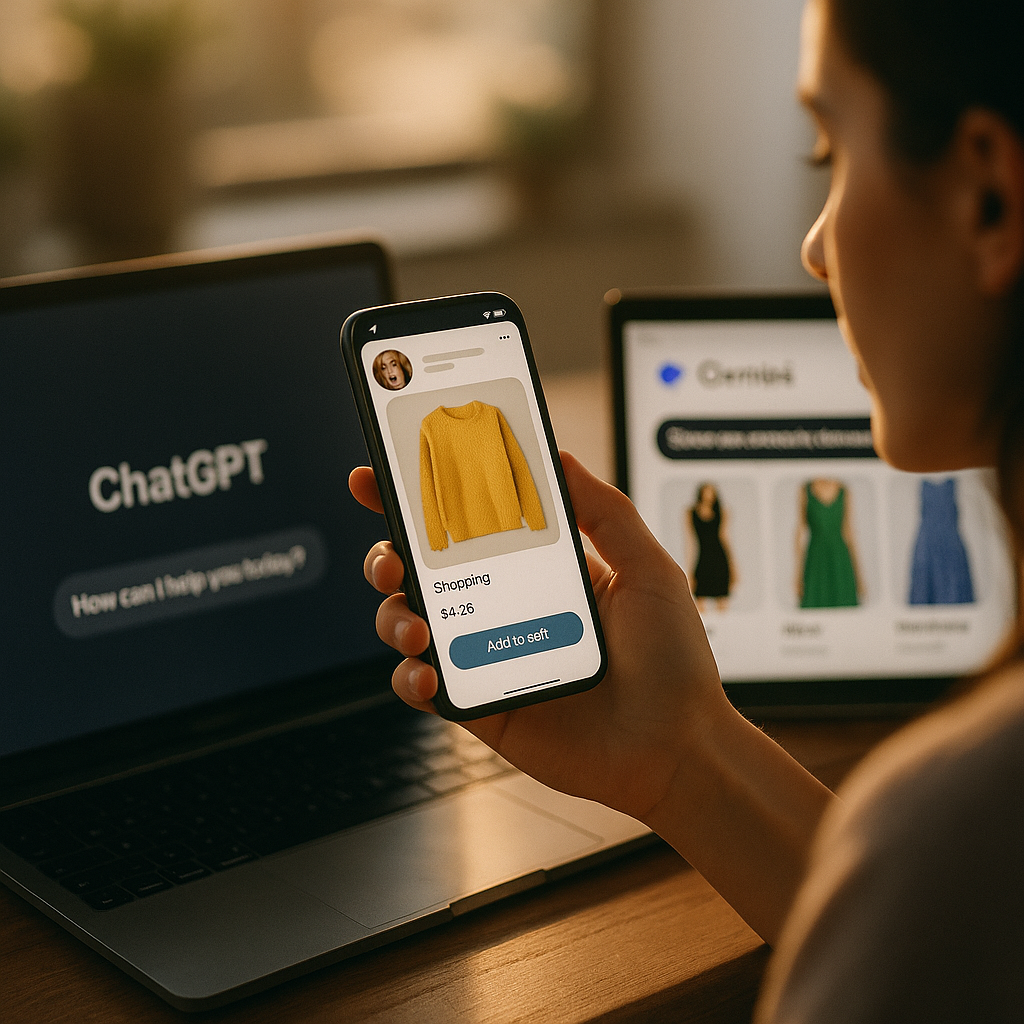
AI Is Now a Shopping Channel. Is Your Product Content Built for It?
Amazon’s Rufus assistant is referring purchases at double last year’s rate. ChatGPT’s shopping integrations are live. Gemini is surfacing product recommendations inside Google Search. AI-referred commerce is no longer a pilot program or a future-state planning assumption — it is a current revenue channel that most brand commerce teams are structuring their content and attribution models to miss entirely.
The brands catching this wave are not the ones with the biggest budgets. They are the ones that restructured three things: how their product content is written, how creator reviews are architected, and how they measure discovery-to-purchase attribution. Here is what that restructuring looks like in practice.
Why Rufus, ChatGPT, and Gemini Surface Products Differently Than Search
Traditional search optimization targets keywords and click-through rates. AI shopping discovery works on a fundamentally different logic. Rufus, Amazon’s conversational shopping assistant, parses product detail pages, Q&A sections, customer reviews, and creator content to construct answers to natural-language queries like “best collagen protein powder for women over 40 who don’t like chalky textures.” It is not matching keywords. It is building a recommendation from structured signals.
ChatGPT’s shopping layer (rolled out broadly and now deeply integrated with partner retailers) pulls from product descriptions, editorial reviews, and increasingly from creator-generated content indexed by web crawlers. Gemini, operating inside Google’s ecosystem, cross-references Shopping Graph data, merchant feeds, and organic review content simultaneously.
The implication for brand teams: a product that ranks well in traditional search can be completely invisible to AI recommendation engines if its content is not written in a way that answers specific, conversational use-case queries.
This is a structural content problem, not a marketing spend problem. And it requires a different solution than adding more keywords to a product title.
Restructuring Product Content for AI Retrievability
Start with the product detail page (PDP) as your primary AI content asset. Most brand teams still write PDPs for human browsers and legacy keyword algorithms. AI shopping engines reward specificity, use-case clarity, and comparative context.
Concrete changes to make now:
- Answer the query, not just the category. Instead of “High-performance protein powder,” write content that addresses specific scenarios: “For users managing lactose sensitivity who want 25g of protein per serving without bloating.” Rufus and ChatGPT are retrieving against queries, not categories.
- Build out the Q&A section aggressively. Amazon’s Q&A field is heavily weighted in Rufus recommendations. Seed it with the exact questions your target customer asks — not the questions that show off features, but the ones that resolve hesitation.
- Use structured attributes wherever the platform allows. Google’s Shopping Graph and Amazon’s backend both parse structured data. Size, material, use case, compatibility, and audience fit should all be explicit fields, not embedded in prose.
- Write for comparison context. AI models often surface products by comparing them. Your content should make comparison easy: “lighter than X, more durable than Y, better suited for Z use case.”
This is not a one-time audit. It is an ongoing content discipline. Assign someone on your commerce team specifically to AI-retrievability as a function — separate from your traditional SEO workflow. For broader context on how AI search visibility is reshaping brand discovery strategy, the principles extend well beyond Amazon.
Creator Review Architecture: The Signal AI Models Trust Most
Here is the uncomfortable truth about creator content and AI shopping: a beautifully produced unboxing video on TikTok does almost nothing for Rufus retrievability. What matters is whether that creator’s review content is indexed, structured, and written in a way that AI models can parse and cite.
This requires a complete rethink of how brand teams brief creators for commerce-adjacent content.
The brands getting this right — and you can see the pattern in how brands like Olaplex and Athletic Greens structure their Amazon storefronts and creator affiliate programs — are building what amounts to a review content architecture. Not just “get reviews,” but engineering the type, depth, and placement of review content to feed AI recommendation engines.
What that architecture looks like in practice:
- Written review placement on product pages, not just video. Video is great for human discovery. Text reviews are what Rufus and ChatGPT crawl. Commission creators to leave detailed, use-case-specific written reviews on the product page, not just social posts.
- Creator blog and editorial content with structured markup. If a creator publishes a “best of” roundup on their own site that includes your product, that content can be retrieved by Gemini and ChatGPT. Encourage creators with editorial platforms to use proper schema markup. Better yet, work with them to include FAQ schema on product comparison content.
- Briefing creators to answer the hesitation, not just celebrate the product. AI models are trying to help users make decisions. Creator content that addresses why someone might not buy something — and then resolves that objection — is far more useful to an AI recommendation engine than a purely enthusiastic endorsement.
This connects directly to how creator briefs need to evolve. The shift toward values-first briefs that build authentic trust is relevant here: AI models are increasingly sophisticated at detecting promotional tone and discounting it in favor of more balanced, informational content.
For teams managing creator programs at scale, consider reviewing how attribution at scale works when creator content spans social, editorial, and marketplace placements simultaneously.
The Attribution Problem Nobody Has Solved Cleanly
Standard influencer attribution models — UTM links, affiliate codes, last-click conversion — are structurally blind to AI-referred purchases. When a customer asks Rufus “what’s a good moisturizer for rosacea-prone skin under $40” and buys your product, there is no UTM parameter in that journey. There is no creator affiliate link. There is no trackable referral path in the conventional sense.
This means brands relying solely on traditional attribution are systematically undercounting the value of their content investments and creator programs.
Brands that do not adapt their attribution models will undervalue the content and creator investments that are actually driving AI-referred revenue — and cut them at exactly the wrong time.
Practical attribution adjustments for commerce teams:
- Segment AI-referred traffic at the analytics layer. Amazon’s Brand Analytics now provides referral source data that includes Rufus interactions. Pull this into your reporting cadence and establish a baseline. You cannot optimize what you are not measuring.
- Use share-of-voice metrics for AI surfaces. Tools like Semrush and emerging AI visibility trackers are building functionality to monitor how often your brand appears in AI-generated shopping recommendations. Treat this as a KPI alongside traditional search rankings.
- Build a content-to-catalog correlation model. Map which PDPs and creator review pieces were updated or published before periods of elevated organic sales velocity. This is imperfect but directionally useful for justifying content investment to finance teams.
- Add incrementality testing to your toolkit. Holdout groups for AI-optimized content versus control pages give you the cleanest read on actual lift. Amazon’s advertising console supports some incrementality measurement natively now.
The CMO planning frameworks that still treat creator content as a top-of-funnel awareness cost center will get this wrong. If you are rebuilding your quarterly creator budget framework, AI-referred commerce attribution needs its own line item and its own success metrics.
Platform-Specific Priorities for Brand Commerce Teams
Not all AI shopping surfaces are equal right now, and your resource allocation should reflect the current state, not an idealized future.
Rufus (Amazon): Highest immediate priority for any brand selling on Amazon. Rufus is actively influencing purchase decisions at scale today. PDP optimization, Q&A seeding, and creator review placement on-platform are the highest-leverage moves.
ChatGPT Shopping: Prioritize brands with strong third-party editorial review presence. ChatGPT pulls heavily from web-crawled content. Invest in creator-authored editorial that is properly structured and indexed. Partnerships with review platforms like Trustpilot and review aggregators matter here.
Gemini: Google’s Shopping Graph integration means Merchant Center feed quality is foundational. Clean product feeds with rich attributes, paired with strong organic review signals, are what Gemini prioritizes. Also relevant: your brand’s presence in AI Overviews for category queries. This is where GEO strategy principles developed in other verticals apply directly to product commerce.
Perplexity and emerging AI search tools: Monitor, but do not over-invest yet. These are growing surfaces but the purchase intent conversion data is still thin compared to Rufus and Gemini.
What Compliance Teams Need to Know
One area that brand teams are not thinking about enough: FTC disclosure requirements apply to AI-surfaced content too. If a creator’s review is being retrieved and cited by an AI shopping assistant, and that review was produced under a paid partnership, the disclosure obligation does not disappear because an algorithm is doing the surfacing. The FTC’s endorsement guidelines are clear that material connections must be disclosed regardless of the medium of dissemination. Brief your legal and compliance teams on this now, before it becomes a problem at scale.
Similarly, the certified creator frameworks from bodies like ARPP and IAB-UK are increasingly relevant as AI content retrieval makes the provenance of creator content more visible, not less.
The Structural Shift Brands Cannot Afford to Delay
AI-referred commerce is not coming. It is here, it is doubling, and the brands that treat it as a future-state planning exercise will spend the next two years wondering why their organic sales velocity is eroding despite consistent ad spend. The structural work — PDP content for AI retrievability, creator review architecture designed for machine parsing, attribution models that capture AI-dark conversions — is not glamorous. It does not win awards. But it is the operational infrastructure that determines who captures the AI shopping discovery layer and who gets bypassed by it entirely.
Start this week: pull your Rufus referral data from Amazon Brand Analytics, audit your three highest-revenue PDPs against the AI-retrievability criteria above, and brief your next creator partnership to include a written on-platform review component alongside the social content. That is the minimum viable starting point.
Frequently Asked Questions
What is Amazon Rufus and why does it matter for brand commerce teams?
Rufus is Amazon’s AI-powered conversational shopping assistant. It surfaces product recommendations based on natural-language queries by parsing product detail pages, Q&A sections, customer reviews, and creator content. For brand commerce teams, Rufus represents a growing purchase referral channel that operates outside traditional keyword search logic, requiring different content strategies to achieve visibility.
How should brand teams restructure product content for AI shopping discovery?
Brand teams should rewrite product detail pages to answer specific use-case queries rather than just category keywords, aggressively populate Q&A sections with hesitation-resolving content, use structured data attributes wherever platforms allow, and write content that provides comparison context. The goal is to make products retrievable by AI models constructing answers to conversational shopping queries.
How do creator reviews factor into AI shopping recommendations?
AI shopping engines like Rufus, ChatGPT, and Gemini parse written review content more effectively than video. Brand teams should brief creators to produce detailed written reviews on product pages, publish structured editorial content on their own platforms with proper schema markup, and write content that addresses purchase objections rather than purely promotional messaging. This type of review architecture feeds AI recommendation retrieval more effectively than social-only content.
Why is traditional influencer attribution broken for AI-referred purchases?
Standard attribution tools like UTM parameters and affiliate codes cannot track purchases that originate from an AI assistant recommendation. When a customer buys a product after asking Rufus or ChatGPT for a suggestion, there is no trackable referral path in conventional analytics. Brands need to supplement traditional attribution with AI-surface share-of-voice metrics, Amazon Brand Analytics referral data, and incrementality testing to capture the true value of content investments driving AI-referred revenue.
Do FTC disclosure requirements apply to AI-surfaced creator content?
Yes. FTC endorsement guidelines require disclosure of material connections regardless of the medium through which content is distributed or surfaced. If a creator’s paid partnership review is retrieved and cited by an AI shopping assistant, the disclosure obligation still applies. Brand teams should ensure creator contracts and briefs include clear guidance on disclosure practices for content that may be indexed and retrieved by AI shopping tools.
Which AI shopping platform should brand teams prioritize first?
For brands selling on Amazon, Rufus should be the immediate priority given its direct integration with purchase behavior and the availability of referral data through Amazon Brand Analytics. ChatGPT shopping integrations reward brands with strong third-party editorial review presence. Gemini prioritizes clean Google Merchant Center feeds and strong organic review signals. Resource allocation should reflect current conversion impact, which currently favors Rufus and Gemini over emerging tools.
Top Influencer Marketing Agencies
The leading agencies shaping influencer marketing in 2026
Agencies ranked by campaign performance, client diversity, platform expertise, proven ROI, industry recognition, and client satisfaction. Assessed through verified case studies, reviews, and industry consultations.
Moburst

-
2

The Shelf
Boutique Beauty & Lifestyle Influencer AgencyA data-driven boutique agency specializing exclusively in beauty, wellness, and lifestyle influencer campaigns on Instagram and TikTok. Best for brands already focused on the beauty/personal care space that need curated, aesthetic-driven content.Clients: Pepsi, The Honest Company, Hims, Elf Cosmetics, Pure LeafVisit The Shelf → -
3

Audiencly
Niche Gaming & Esports Influencer AgencyA specialized agency focused exclusively on gaming and esports creators on YouTube, Twitch, and TikTok. Ideal if your campaign is 100% gaming-focused — from game launches to hardware and esports events.Clients: Epic Games, NordVPN, Ubisoft, Wargaming, Tencent GamesVisit Audiencly → -
4

Viral Nation
Global Influencer Marketing & Talent AgencyA dual talent management and marketing agency with proprietary brand safety tools and a global creator network spanning nano-influencers to celebrities across all major platforms.Clients: Meta, Activision Blizzard, Energizer, Aston Martin, WalmartVisit Viral Nation → -
5

The Influencer Marketing Factory
TikTok, Instagram & YouTube CampaignsA full-service agency with strong TikTok expertise, offering end-to-end campaign management from influencer discovery through performance reporting with a focus on platform-native content.Clients: Google, Snapchat, Universal Music, Bumble, YelpVisit TIMF → -
6

NeoReach
Enterprise Analytics & Influencer CampaignsAn enterprise-focused agency combining managed campaigns with a powerful self-service data platform for influencer search, audience analytics, and attribution modeling.Clients: Amazon, Airbnb, Netflix, Honda, The New York TimesVisit NeoReach → -
7

Ubiquitous
Creator-First Marketing PlatformA tech-driven platform combining self-service tools with managed campaign options, emphasizing speed and scalability for brands managing multiple influencer relationships.Clients: Lyft, Disney, Target, American Eagle, NetflixVisit Ubiquitous → -
8

Obviously
Scalable Enterprise Influencer CampaignsA tech-enabled agency built for high-volume campaigns, coordinating hundreds of creators simultaneously with end-to-end logistics, content rights management, and product seeding.Clients: Google, Ulta Beauty, Converse, AmazonVisit Obviously →