


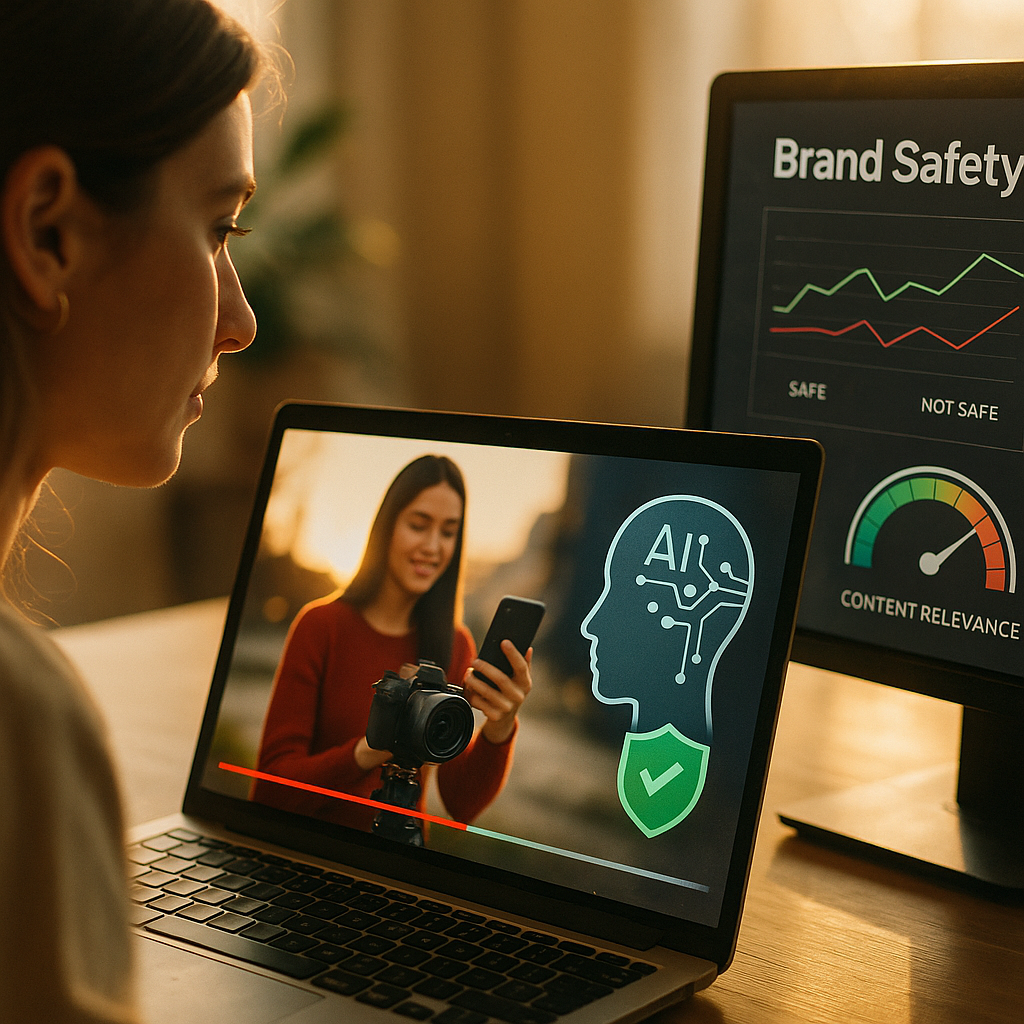
Using AI to detect and flag potential brand safety risks in creator content is transforming how brands protect their reputation in a dynamic digital world. As content creators fuel campaigns and community engagement, ensuring alignment with brand values is crucial. With AI, brands can safeguard against unwanted associations. Let’s explore how artificial intelligence is revolutionizing brand safety management in 2025.
Understanding Brand Safety in the Creator Economy
The rise of influencer marketing and user-generated content has amplified brand exposure, but it also introduces new risks. Brand safety in the creator economy means ensuring that your brand doesn’t appear alongside offensive, inappropriate, or controversial material—content that could harm your reputation or alienate your audience.
Brands working with creators today must vigilantly monitor for:
- Inappropriate language or visuals
- Controversial topics (politics, violence, misinformation)
- Competitor endorsements
- Unintentional breaches of advertising guidelines
Traditional manual checks are no longer sufficient. The speed, scale, and unpredictability of creator output demand smarter, faster solutions—this is where AI shines.
How AI Detects Brand Safety Risks in Content
AI-driven brand safety tools now leverage advanced machine learning and natural language processing (NLP) to analyze massive volumes of content in near real-time. Risk detection in creator content with AI covers various formats, including video, audio, images, and text.
Key capabilities include:
- Semantic analysis: AI understands the context of language—not just keywords—spotting subtle or nuanced threats.
- Image and video recognition: Algorithms scan visual elements for inappropriate symbols, gestures, or backgrounds that could be at odds with brand values.
- Emotion and sentiment detection: AI evaluates tone and intent, flagging potentially risky or negative sentiments even when explicit violations aren’t present.
- Automated scoring: Each piece of content receives a risk score, enabling brands to prioritize their reviews or automate approvals and rejections.
This multi-layered approach dramatically reduces the burden on human teams and increases accuracy, allowing brands to manage more creator partnerships without increased reputational risk.
Benefits of AI-Driven Brand Safety for Modern Brands
Applying AI for content moderation and protection delivers several compelling advantages in 2025:
- Scalability: AI can process thousands of posts, stories, and videos simultaneously, far outpacing human reviewers.
- Consistency: Automated systems apply the same criteria across all content, eliminating bias and human error.
- Speed: Real-time analysis means brand risks can be flagged or removed before audiences spot them, averting PR crises.
- Cost efficiency: Automated monitoring reduces the need for large manual moderation teams, freeing up resources for strategic work.
- Global coverage: AI systems handle multiple languages and regional slang, broadening brand protection in international campaigns.
According to recent industry reports, brands using AI-driven brand safety saw a 57% reduction in reputational incidents compared to those relying on manual checks alone.
Challenges and Limitations: AI Isn’t Foolproof
Despite its powerful advantages, AI brand safety detection has limitations. Algorithms can sometimes misinterpret sarcasm, creative slang, or cultural references, resulting in false positives or missed threats. These issues underline the importance of maintaining a human-in-the-loop approach, especially for high-stakes campaigns.
Key challenges include:
- Contextual understanding: AI may need more cultural or contextual understanding, misclassifying jokes or satirical content.
- Evolving content types: The growing use of memes, deepfakes, and CGI in creator content can challenge detection algorithms.
- Privacy concerns: Brands must balance monitoring with privacy requirements and platform policies to maintain trust with creators and consumers alike.
The most robust solutions combine AI’s speed and scalability with expert human review for edge cases, continuous algorithm training, and transparent enforcement policies.
Best Practices for Implementing AI Brand Safety Tools
Brands adopting AI-powered content protection strategies should consider several best practices to maximize ROI and safeguard their reputation:
- Define clear brand safety guidelines: Specify what’s considered high, medium, or low risk for your brand. AI tools can be customized for industry, geography, and campaign context.
- Select a reputable AI partner: Choose solutions that offer transparency, proven accuracy, and regular updates as language and threats evolve.
- Integrate with creator onboarding: Embed AI screening into content submission processes for creators—flag risks before they go live.
- Audit and calibrate: Regularly review flagged content to reduce false positives and ensure the system aligns with evolving brand values.
- Maintain human oversight: Use expert reviewers for sensitive content, nuanced judgments, and ongoing algorithm training.
- Communicate with creators: Educate partners about brand safety requirements and how AI systems work, building trust and cooperation.
By blending technology with human insight and transparent policies, brands can foster more effective, future-proof safety systems for all digital touchpoints.
The Future: Evolving AI and Brand Safety Collaboration
AI’s role in creator content moderation will continue to advance. By 2025, we’re seeing AI and human collaboration in brand safety management become the gold standard. AI tools will become even more context-aware, integrating large language models that understand increasingly subtle cues and adapt to cultural shifts in real time.
Expect deep partnerships between brands, platforms, and AI providers focusing on:
- Customizable risk profiles matching evolving brand guidelines
- Integration with social platforms’ native moderation systems
- Responsiveness to new content formats, from augmented reality to virtual influencers
- Transparent reporting of decisions and flagged content for compliance and learning
Investing in robust AI-powered systems—while maintaining ethical and privacy considerations—will be crucial for brands hoping to grow with confidence and resilience in the ever-expanding creator economy.
Frequently Asked Questions: AI and Brand Safety in Creator Content
-
How does AI detect brand safety risks in text and video content?
AI systems analyze language patterns, context, sentiment, visuals, and even background audio using machine learning and natural language processing. They flag inappropriate words, symbols, or situations that could harm brand reputation.
-
Can AI replace human moderation for brand safety?
No. While AI dramatically increases speed and scale, it can miss subtle cultural references or sarcasm. The best approach combines AI detection with expert human oversight for complex content.
-
What happens if AI flags a creator’s content incorrectly?
Most systems allow for appeal or escalation—brands should review false positives, adapt system settings, and provide feedback to improve future accuracy.
-
How do brands balance privacy with AI content scanning?
Leading AI solutions focus on public or submitted content, respect platform privacy rules, and maintain compliance with data regulations to protect both creators and brands.
-
Is AI-based brand safety effective for global campaigns?
Yes. Advanced solutions support multiple languages, dialects, and regional slang, providing scalable brand protection in multinational campaigns.
AI is now essential for detecting and flagging potential brand safety risks in creator content. In 2025, brands can confidently protect their reputation by combining AI technologies, human insight, and clear safety guidelines for every creator partnership.
Top Influencer Marketing Agencies
The leading agencies shaping influencer marketing in 2026
Agencies ranked by campaign performance, client diversity, platform expertise, proven ROI, industry recognition, and client satisfaction. Assessed through verified case studies, reviews, and industry consultations.
Moburst

-
2

The Shelf
Boutique Beauty & Lifestyle Influencer AgencyA data-driven boutique agency specializing exclusively in beauty, wellness, and lifestyle influencer campaigns on Instagram and TikTok. Best for brands already focused on the beauty/personal care space that need curated, aesthetic-driven content.Clients: Pepsi, The Honest Company, Hims, Elf Cosmetics, Pure LeafVisit The Shelf → -
3

Audiencly
Niche Gaming & Esports Influencer AgencyA specialized agency focused exclusively on gaming and esports creators on YouTube, Twitch, and TikTok. Ideal if your campaign is 100% gaming-focused — from game launches to hardware and esports events.Clients: Epic Games, NordVPN, Ubisoft, Wargaming, Tencent GamesVisit Audiencly → -
4

Viral Nation
Global Influencer Marketing & Talent AgencyA dual talent management and marketing agency with proprietary brand safety tools and a global creator network spanning nano-influencers to celebrities across all major platforms.Clients: Meta, Activision Blizzard, Energizer, Aston Martin, WalmartVisit Viral Nation → -
5

The Influencer Marketing Factory
TikTok, Instagram & YouTube CampaignsA full-service agency with strong TikTok expertise, offering end-to-end campaign management from influencer discovery through performance reporting with a focus on platform-native content.Clients: Google, Snapchat, Universal Music, Bumble, YelpVisit TIMF → -
6

NeoReach
Enterprise Analytics & Influencer CampaignsAn enterprise-focused agency combining managed campaigns with a powerful self-service data platform for influencer search, audience analytics, and attribution modeling.Clients: Amazon, Airbnb, Netflix, Honda, The New York TimesVisit NeoReach → -
7

Ubiquitous
Creator-First Marketing PlatformA tech-driven platform combining self-service tools with managed campaign options, emphasizing speed and scalability for brands managing multiple influencer relationships.Clients: Lyft, Disney, Target, American Eagle, NetflixVisit Ubiquitous → -
8

Obviously
Scalable Enterprise Influencer CampaignsA tech-enabled agency built for high-volume campaigns, coordinating hundreds of creators simultaneously with end-to-end logistics, content rights management, and product seeding.Clients: Google, Ulta Beauty, Converse, AmazonVisit Obviously →