


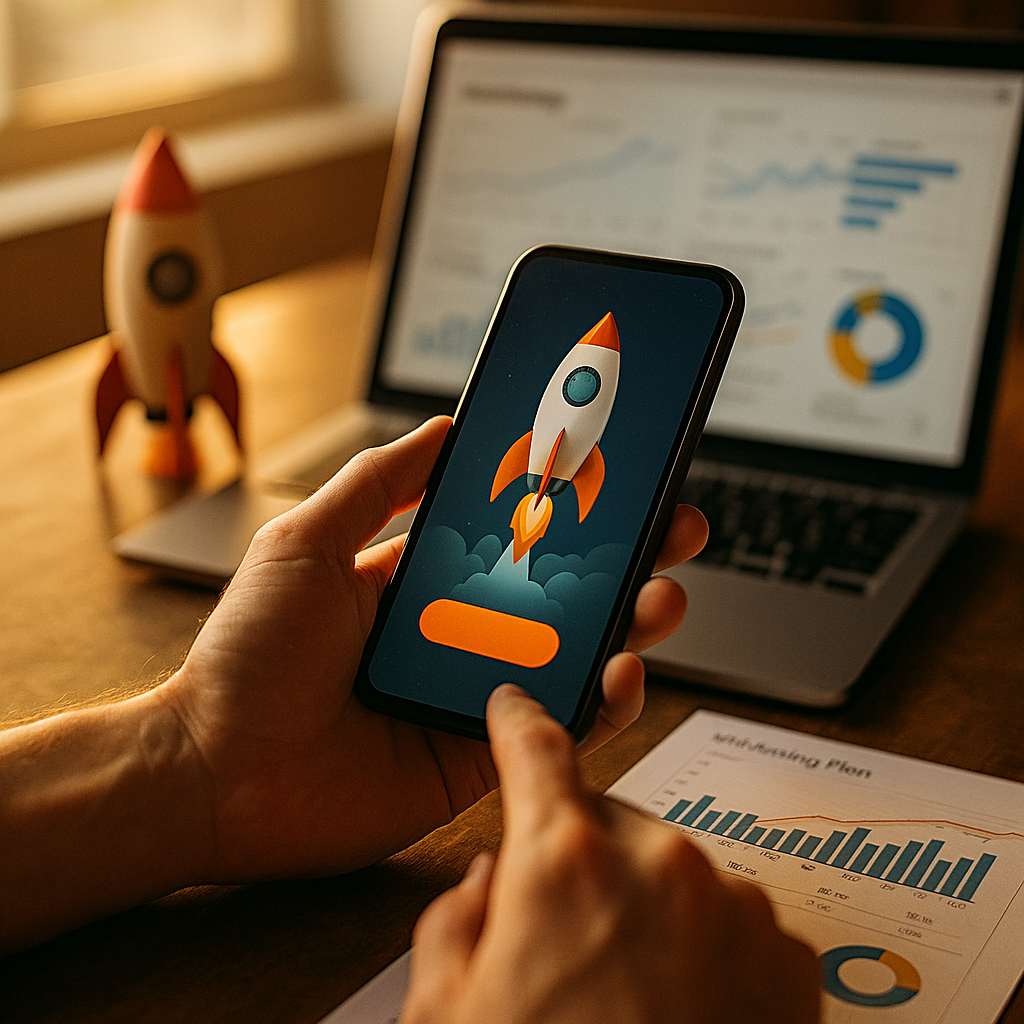
Launching a new app requires more than just development; you need a robust plan for success. In this guide, we’ll explain how to create a marketing strategy for a mobile app launch—from understanding your audience to post-launch analysis. Read on to discover actionable steps and expert insights for a winning app launch in 2025!
Understanding Your Target Audience for Mobile App Promotion
Effective marketing starts with in-depth user understanding. Identify who will benefit most from your app and why. Start by creating detailed user personas based on demographics, behaviors, pain points, and device preferences. Conduct surveys, review analytics, and examine competitors to spot market gaps. This groundwork ensures your mobile app promotion hits the right note with potential users and delivers authentic value.
- Leverage app store analytics and social listening tools to spot trending user needs.
- Map out user journeys to pinpoint the most engaging app features.
- Interview target users to get candid feedback on your app concept or prototype.
Understanding these insights will empower your marketing messaging and app positioning.
Building Your App Launch Branding and Messaging Strategy
Your app’s success hinges on first impressions. Develop clear, consistent branding and messaging that differentiates your app from competitors. Use compelling visuals—like logos, screenshots, and videos—to tell your story. Write value-driven messaging that communicates your unique selling proposition (USP). This is essential for any effective app launch branding strategy.
- Craft a memorable app name and visual identity suited to your target market.
- Write a concise, benefit-oriented app description for app stores and marketing material.
- Design engaging marketing collaterals: teaser videos, social media banners, press release templates, and influencer briefs.
Consistency and clarity across every platform will boost user trust and app recall.
Choosing the Best Mobile App Launch Channels
No single channel fits all. For an optimized mobile app launch campaign, diversify your efforts based on where your audience spends time online. Consider a mix of organic and paid media to increase reach and engagement, measuring results as you go.
- App Store Optimization (ASO): Prioritize relevant keywords in your app title and description, and encourage user reviews for higher rankings.
- Leverage social media marketing—Instagram Reels, TikTok, and YouTube Shorts—to generate buzz with short-form video teasers.
- Engage mobile app influencers who resonate with your target demographics for sponsored reviews or content collaborations.
- Explore paid channels such as search ads and social platforms for quick visibility.
- Submit your app to reputable tech blogs and news websites for early press coverage.
Integrating these channels improves your chances of both immediate installs and long-term retention.
Setting KPIs and Measuring Mobile App Launch Success
An actionable marketing plan includes quantifiable goals. Define clear key performance indicators (KPIs) such as downloads, active users, and average session times to track the real impact of your mobile app launch performance. Use advanced analytics and reporting tools to gain actionable insights and optimize your ongoing campaigns.
- Monitor metrics using platforms like Firebase Analytics or Mixpanel for detailed behavioral tracking.
- Set up real-time dashboards to visualize trends and identify growth bottlenecks promptly.
- Implement A/B testing for app store pages, creatives, and in-app experiences to improve conversions.
Frequent data reviews will keep your strategy nimble and results-driven in 2025’s fast-changing app landscape.
Driving User Engagement and Retention After Launch
Post-launch, success hinges on continued value delivery. Effective mobile app user engagement strategies build loyalty, turn users into advocates, and reduce churn.
- In-app onboarding: Guide users with tooltips and tutorials, highlighting key features early.
- Set up intelligent push notifications with personalized content and offers.
- Prompt for user ratings and feedback after positive in-app interactions.
- Launch referral programs that reward users for bringing friends.
- Continually roll out updates and new features, and keep users informed through your preferred channels.
Satisfied users are the backbone of organic growth and long-term profitability.
Post-Launch Analysis and Continuous Optimization
Successful mobile apps treat launch as a milestone, not an endpoint. Conduct thorough post-launch app analysis—review metrics, gather user feedback, and course-correct where necessary. Use these insights to inform marketing adjustments and even new feature development. Staying agile and user-focused ensures your app stays competitive throughout 2025 and beyond.
- Monitor user behavior for friction points and drop-off spots.
- Analyze review sentiment to pinpoint opportunities for improvement.
- Iterate on messaging, visuals, or feature sets to better match evolving user needs.
- Reinvest in high-performing marketing channels; pivot away from underperformers.
This cycle of analysis and optimization fuels sustained app growth.
FAQ: Marketing Strategy for Mobile App Launch
-
How early should I start marketing my app before launch?
Begin building awareness at least two to three months before launch. This allows time for audience research, content creation, influencer partnerships, and meaningful pre-launch buzz.
-
What is the most cost-effective channel for mobile app promotion?
App Store Optimization (ASO), social media, and influencer marketing are typically the most cost-effective. Focus your budget where your target users are most active for maximum ROI in 2025.
-
Which metrics define a successful app launch?
Key metrics include number of downloads, retention rates after seven and thirty days, daily active users (DAU), customer reviews, and user acquisition costs. Analyze these alongside qualitative feedback for a holistic view.
-
Should I use a soft launch before the full release?
Yes, a soft launch in select markets helps validate your features, UX, and marketing messages. Gather feedback, fix issues, and refine your launch strategy for the broadest impact.
-
How do I keep users engaged after download?
Employ effective onboarding, push notifications, in-app rewards, and regular content updates. Collect and act on user feedback to keep experiences fresh and relevant.
To create a winning marketing strategy for a mobile app launch in 2025, focus on deep user understanding, branding, channel selection, performance measurement, and ongoing optimization. Stay agile, listen to your users, and consistently deliver value for sustainable app growth and market success.
Top Influencer Marketing Agencies
The leading agencies shaping influencer marketing in 2026
Agencies ranked by campaign performance, client diversity, platform expertise, proven ROI, industry recognition, and client satisfaction. Assessed through verified case studies, reviews, and industry consultations.
Moburst

-
2

The Shelf
Boutique Beauty & Lifestyle Influencer AgencyA data-driven boutique agency specializing exclusively in beauty, wellness, and lifestyle influencer campaigns on Instagram and TikTok. Best for brands already focused on the beauty/personal care space that need curated, aesthetic-driven content.Clients: Pepsi, The Honest Company, Hims, Elf Cosmetics, Pure LeafVisit The Shelf → -
3

Audiencly
Niche Gaming & Esports Influencer AgencyA specialized agency focused exclusively on gaming and esports creators on YouTube, Twitch, and TikTok. Ideal if your campaign is 100% gaming-focused — from game launches to hardware and esports events.Clients: Epic Games, NordVPN, Ubisoft, Wargaming, Tencent GamesVisit Audiencly → -
4

Viral Nation
Global Influencer Marketing & Talent AgencyA dual talent management and marketing agency with proprietary brand safety tools and a global creator network spanning nano-influencers to celebrities across all major platforms.Clients: Meta, Activision Blizzard, Energizer, Aston Martin, WalmartVisit Viral Nation → -
5

The Influencer Marketing Factory
TikTok, Instagram & YouTube CampaignsA full-service agency with strong TikTok expertise, offering end-to-end campaign management from influencer discovery through performance reporting with a focus on platform-native content.Clients: Google, Snapchat, Universal Music, Bumble, YelpVisit TIMF → -
6

NeoReach
Enterprise Analytics & Influencer CampaignsAn enterprise-focused agency combining managed campaigns with a powerful self-service data platform for influencer search, audience analytics, and attribution modeling.Clients: Amazon, Airbnb, Netflix, Honda, The New York TimesVisit NeoReach → -
7

Ubiquitous
Creator-First Marketing PlatformA tech-driven platform combining self-service tools with managed campaign options, emphasizing speed and scalability for brands managing multiple influencer relationships.Clients: Lyft, Disney, Target, American Eagle, NetflixVisit Ubiquitous → -
8

Obviously
Scalable Enterprise Influencer CampaignsA tech-enabled agency built for high-volume campaigns, coordinating hundreds of creators simultaneously with end-to-end logistics, content rights management, and product seeding.Clients: Google, Ulta Beauty, Converse, AmazonVisit Obviously →