


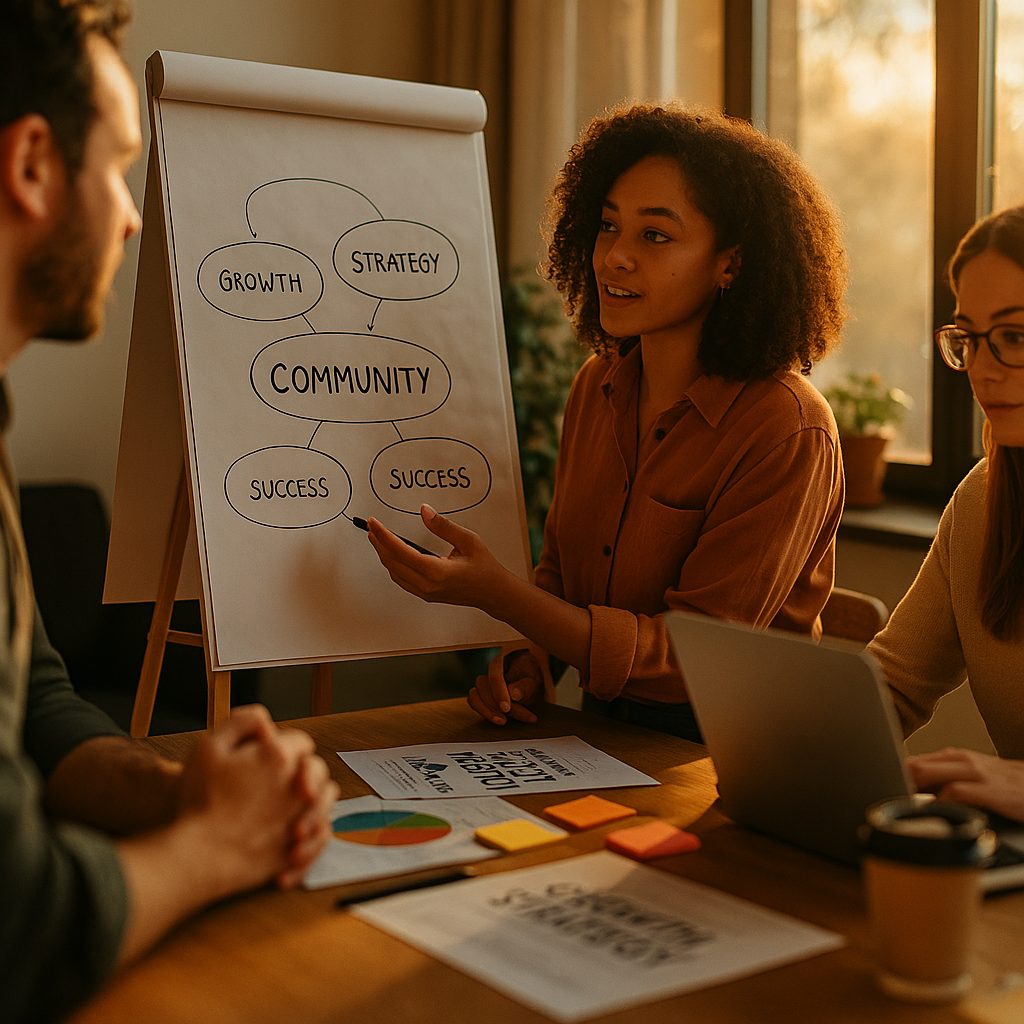
Building a strong brand in 2025 requires more than just exceptional products; you need authentic customer advocates driving your message. That’s why learning how to develop a community-led growth strategy for your brand is essential. This approach transforms audiences into engaged partners. Ready to unlock sustainable loyalty and expansion? Here’s how to make your community your growth engine.
What Is Community-Led Growth and Why Does It Matter?
Community-led growth strategy transforms your loyal customers and fans into active contributors to your brand’s purpose and expansion. Rather than relying solely on traditional marketing, this approach taps into communal energy, creating advocates who share feedback, generate content, and invite others. In a crowded digital market, it provides trustworthy recommendations and cultivates deeper relationships.
A community-led approach fosters open dialogue and ongoing involvement. According to a recent 2024 HubSpot survey, 79% of brands with a dedicated community report higher engagement, faster product feedback cycles, and increased referral rates. Clearly, investing in your community delivers benefits harder to achieve through paid channels alone.
Identifying and Understanding Your Ideal Community
Before inviting people to join your brand community, you must define your community audience. Start by analyzing your most engaged customers: Who actively comments, shares, or reviews your products? What values, interests, and concerns do they express?
- Segment Your Audience: Use demographic and psychographic data to group community members by interests or behaviors.
- Conduct Listening Sessions: Analyze social mentions, forum discussions, and reviews to identify key motivations and pain points.
- Create Personas: Develop detailed community member profiles to anticipate needs and preferences.
Making your community feel seen and heard sets the stage for authentic dialogue and ensures your strategy meets genuine needs.
Designing a Sustainable Community Engagement Plan
Once you know whom to invite, it’s time to build a community engagement framework tailored to your goals. Set clear objectives—brand advocacy, product co-creation, or marketplace education—that directly support business growth.
- Choose the Right Platforms: Pick accessible spaces—like branded forums, dedicated Slack channels, or social groups—where your audience naturally interacts.
- Set Community Guidelines: Outline expectations for respectful collaboration and contribution, fostering a safe, inclusive environment.
- Introduce Structured Activities: Organize regular virtual events, AMAs, contests, and feedback sessions to encourage ongoing participation.
- Empower Community Leaders: Identify enthusiastic members to act as moderators, content creators, or ambassadors.
Consistency fuels growth. By nurturing authentic connections, you position your brand as both host and facilitator—not just a seller.
Leveraging Insights and Feedback for Continuous Improvement
The most successful brand growth strategies are iterative. Your community offers a real-time source of product insights, customer sentiment, and innovative ideas. Implement structured feedback loops, such as:
- Pulse surveys and polls to gauge satisfaction
- Beta testing groups for new features or campaigns
- Regular feedback roundtables with influential members
Be transparent about how you implement feedback. When community members see their input reflected in updates, they’re more likely to remain engaged and champion your brand.
Recent studies show that brands integrating community-driven product development reduce time-to-market by up to 30% and see higher launch success rates. Listening empowers your audience—and keeps your brand agile in a rapidly evolving landscape.
Measuring the Impact of Your Community-Led Growth Strategy
To ensure your community-driven brand strategy drives concrete results, track clear performance metrics tied to business objectives. Essential KPIs include:
- Engagement rates: Forum activity, comment counts, event attendance
- Advocacy metrics: Referral rates, influencer mentions, user-generated content
- Retention indicators: Churn and renewal rates among community members
- Conversion and revenue impact: Attribution from community referrals or campaigns
Combining qualitative member stories with quantitative data allows you to refine your approach based on what your members value most. Regularly report achievements to the community, fostering a sense of shared progress and purpose.
Overcoming Common Challenges in Community-Led Growth
Launching a community-centered brand development initiative isn’t without hurdles. The most typical obstacles include slow adoption, inactive members, or internal resistance from teams unfamiliar with community programs.
- Onboarding and Education: Offer orientation sessions, tutorials, and ongoing support to maximize early adoption.
- Incentivize Participation: Recognize top contributors publicly, offer rewards, and create exclusive experiences to keep momentum high.
- Cross-functional Buy-In: Involve departments—product, marketing, and customer service—to leverage insights and demonstrate the impact across your organization.
Remember, authenticity is the foundation. Avoid over-commercializing your community. Let members see themselves as collaborators, not just consumers, and your brand will earn lasting loyalty and influence.
Conclusion: Make Community Your Competitive Advantage
Developing a community-led growth strategy for your brand unlocks authentic engagement, drives innovation, and strengthens loyalty. By investing in your community, you empower members to co-create and amplify your success. Ready to transform customers into true advocates? Start building your community, and position your brand for sustainable growth in 2025 and beyond.
Frequently Asked Questions
- What is a community-led growth strategy?
A community-led growth strategy centers on turning your brand’s audience into active participants who shape, promote, and support your business. It leverages shared values and engagement rather than pure advertising. - How do I find my ideal brand community members?
Analyze your most engaged customers, review audience data, and listen to their motivations online. Build detailed personas to target and invite those most likely to connect deeply with your brand’s purpose. - Which metrics should I monitor to track community success?
Track engagement (comments, shares, event attendance), advocacy (referrals, user content), retention, and impact on revenue. Qualitative feedback also reveals what community members truly value. - What are common pitfalls when building brand communities?
Brands often fail by treating communities as just another marketing channel or neglecting authentic engagement. Slow adoption or inactive forums can result from unclear goals or insufficient member empowerment. - Can small brands or startups benefit from community-led growth?
Absolutely. Small brands can build passionate, loyal communities that provide feedback and advocacy—accelerating growth with fewer resources by tapping into grassroots enthusiasm.
Top Influencer Marketing Agencies
The leading agencies shaping influencer marketing in 2026
Agencies ranked by campaign performance, client diversity, platform expertise, proven ROI, industry recognition, and client satisfaction. Assessed through verified case studies, reviews, and industry consultations.
Moburst

-
2

The Shelf
Boutique Beauty & Lifestyle Influencer AgencyA data-driven boutique agency specializing exclusively in beauty, wellness, and lifestyle influencer campaigns on Instagram and TikTok. Best for brands already focused on the beauty/personal care space that need curated, aesthetic-driven content.Clients: Pepsi, The Honest Company, Hims, Elf Cosmetics, Pure LeafVisit The Shelf → -
3

Audiencly
Niche Gaming & Esports Influencer AgencyA specialized agency focused exclusively on gaming and esports creators on YouTube, Twitch, and TikTok. Ideal if your campaign is 100% gaming-focused — from game launches to hardware and esports events.Clients: Epic Games, NordVPN, Ubisoft, Wargaming, Tencent GamesVisit Audiencly → -
4

Viral Nation
Global Influencer Marketing & Talent AgencyA dual talent management and marketing agency with proprietary brand safety tools and a global creator network spanning nano-influencers to celebrities across all major platforms.Clients: Meta, Activision Blizzard, Energizer, Aston Martin, WalmartVisit Viral Nation → -
5

The Influencer Marketing Factory
TikTok, Instagram & YouTube CampaignsA full-service agency with strong TikTok expertise, offering end-to-end campaign management from influencer discovery through performance reporting with a focus on platform-native content.Clients: Google, Snapchat, Universal Music, Bumble, YelpVisit TIMF → -
6

NeoReach
Enterprise Analytics & Influencer CampaignsAn enterprise-focused agency combining managed campaigns with a powerful self-service data platform for influencer search, audience analytics, and attribution modeling.Clients: Amazon, Airbnb, Netflix, Honda, The New York TimesVisit NeoReach → -
7

Ubiquitous
Creator-First Marketing PlatformA tech-driven platform combining self-service tools with managed campaign options, emphasizing speed and scalability for brands managing multiple influencer relationships.Clients: Lyft, Disney, Target, American Eagle, NetflixVisit Ubiquitous → -
8

Obviously
Scalable Enterprise Influencer CampaignsA tech-enabled agency built for high-volume campaigns, coordinating hundreds of creators simultaneously with end-to-end logistics, content rights management, and product seeding.Clients: Google, Ulta Beauty, Converse, AmazonVisit Obviously →