


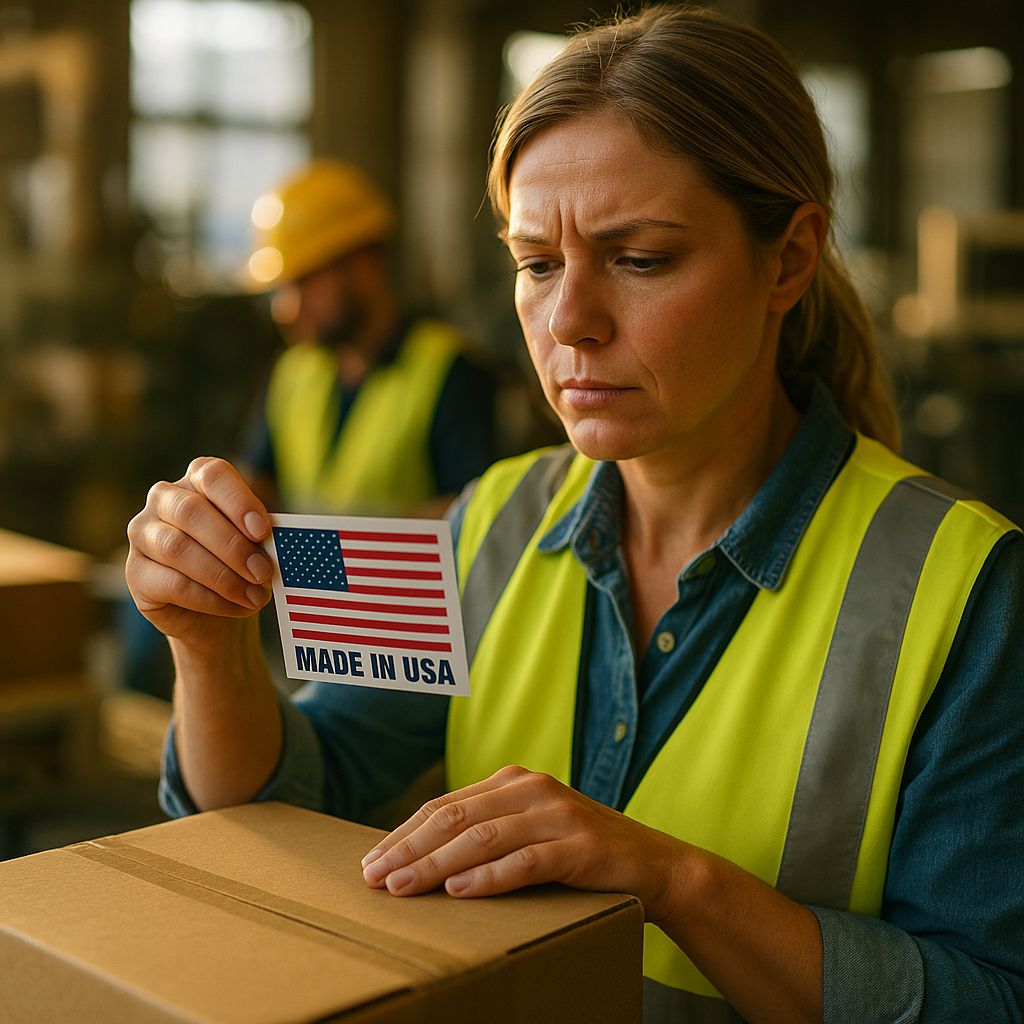
Understanding how to comply with “Made in” and country of origin labeling regulations is essential for legal and reputational reasons in the global marketplace. Navigating these complex regulations can be challenging, but with the right knowledge, you can avoid costly mistakes and build consumer trust. Let’s explore practical steps and expert strategies for compliance in 2025 and beyond.
Understanding Country of Origin Labeling Laws
Country of origin labeling laws require businesses to disclose the manufacturing origin of their products. These laws aim to ensure transparency, help consumers make informed choices, and support fair trade. In 2025, regulatory bodies like the U.S. Federal Trade Commission (FTC), European Union (EU), and other national agencies are actively updating their guidelines.
For example, the FTC mandates that products labeled “Made in USA” must be “all or virtually all” made in America. EU directives require that products imported from outside the Union clearly state their country of origin. Failure to comply can result in heavy fines, product recalls, and reputational damage. Companies must familiarize themselves with the regulations that apply in each target market.
Key Steps to Ensure “Made in” Labeling Compliance
Proper compliance with country of origin labeling starts with understanding the specifics of each regulation. Here’s how businesses can stay compliant:
- Determine the Country of Origin: Assess where a product underwent substantial transformation or where the last, significant manufacturing process occurred. This is especially crucial for multi-country supply chains.
- Evaluate Product Claims: If advertising your product as “Made in USA” or another country, verify that the claim is substantiated, following government-set criteria. Document your supply chain and keep detailed records.
- Apply Accurate Labels: Use durable, legible labels placed where consumers can find them easily. In the US, this is typically the product itself or its packaging.
- Keep Updated: Laws change. Appoint a compliance officer or legal advisor to track regulatory updates in all your target markets.
- Conduct Internal Audits: Regularly audit your product sourcing and labeling practices to ensure ongoing compliance and to catch any inadvertent mistakes before products reach consumers.
Important Differences in Global “Made in” Labeling Requirements
Complying with country of origin rules globally means understanding that each country may define “origin” differently. Here are some regional nuances in 2025:
- United States: “Made in USA” means all significant parts, processing, and labor originate in the US. Imported products must be labeled with their country of origin.
- European Union: The EU customs code focuses on “substantial transformation” — the point at which products receive their essential character.
- Canada: “Product of Canada” requires at least 98% Canadian content.
- Asia-Pacific: Countries like Australia and China have their own thresholds and penalties. Always check the latest local requirements before sale or import.
Knowing your target market’s labeling standards and customs documentation can prevent delays, fines, and even product seizures.
Best Practices for Documenting and Substantiating Origin Claims
To meet EEAT (Experience, Expertise, Authoritativeness, and Trustworthiness) standards and avoid regulatory scrutiny, documentation is critical. Here’s how to protect your business:
- Build a Traceable Supply Chain: Maintain clear records at every stage of production, from raw materials to final assembly.
- Retain Supplier Certifications: Collect and preserve documentation proving material origin and processing locations. This includes certificates of origin, invoices, and shipment records.
- Implement Digital Tracking: Use ERP or supply chain management software to automate data collection and maintain thorough compliance records.
- Conduct Supplier Audits: Regularly verify suppliers’ compliance and authenticity of supplied documentation.
- Provide Training: Educate staff about labeling laws and documentation expectations to reduce the risk of errors.
Meticulous recordkeeping demonstrates to regulators that your brand prioritizes compliance and ethical business practices.
Managing Risks and Penalties for Mislabeling
Noncompliance with country of origin labeling regulations can result in steep penalties. According to 2025 data, enforcement actions have increased worldwide, with authorities levying millions in fines against companies making false or misleading claims.
- Reputational Risk: Consumers are increasingly attentive to where products come from. Mislabeling can erode brand trust.
- Legal Penalties: Violations can include product confiscation, recalls, or import bans, and fines can reach up to several million dollars per incident.
- Corrective Actions: If you identify a mislabeling error, act swiftly. Notify regulators, revise product labels, and recall affected products if necessary. Transparent communication helps mitigate regulatory and public backlash.
Proactive risk management and a robust compliance strategy are the most effective ways to avoid costly enforcement actions.
Integrating Country of Origin Compliance Into E-Commerce and Digital Sales
In an increasingly digital marketplace, online country of origin labeling has become just as important as physical labels. For e-commerce in 2025:
- Ensure Online Accuracy: Product listings must state the country of origin clearly and truthfully. Avoid vague or potentially misleading phrases in product descriptions.
- Synchronize Information: The country of origin information on your website or e-commerce platform should exactly match the physical product labeling and documentation.
- Know Platform Rules: Leading e-commerce sites often have specific requirements for product labeling and substantiation. Stay updated with Amazon, Alibaba, and other platform guidelines.
- Prepare for Cross-Border Sales: As you expand internationally, align with each destination country’s online labeling requirements to avoid customs hold-ups or listing removals.
Embedding accurate, transparent origin information throughout the digital sales process protects consumer trust while keeping your brand legally compliant.
FAQs: “Made in” and Country of Origin Labeling Compliance
-
What qualifies a product as “Made in USA” in 2025?
The Federal Trade Commission requires that all significant parts, processing, and labor be of U.S. origin, with negligible foreign content. Consult FTC guidelines and retain supplier documentation for substantiation. -
How often should I audit my labeling practices?
Experts recommend at least annual audits, or more frequently if you change suppliers, launch new products, or target new markets. Timely audits minimize compliance risks and allow you to correct any issues proactively. -
Are penalties only financial?
No. Penalties can include import/export bans, product recalls, reputational harm, and loss of consumer trust, in addition to fines. -
Can digital-only sellers skip country of origin labeling?
No. E-commerce and digital channels are regulated just like physical stores. Online listings must disclose accurate origin information where consumers can easily find it. -
Is a product’s country of origin always where it’s assembled?
Not necessarily. Many jurisdictions use the “substantial transformation” test to determine origin, focusing on where the last significant manufacturing process occurred, not just assembly.
To comply with “Made in” and country of origin labeling regulations in 2025, know the laws, document every step of your supply chain, and proactively manage risk. A careful approach protects your brand, avoids legal pitfalls, and gives today’s informed consumers the transparency they demand.
Top Influencer Marketing Agencies
The leading agencies shaping influencer marketing in 2026
Agencies ranked by campaign performance, client diversity, platform expertise, proven ROI, industry recognition, and client satisfaction. Assessed through verified case studies, reviews, and industry consultations.
Moburst

-
2

The Shelf
Boutique Beauty & Lifestyle Influencer AgencyA data-driven boutique agency specializing exclusively in beauty, wellness, and lifestyle influencer campaigns on Instagram and TikTok. Best for brands already focused on the beauty/personal care space that need curated, aesthetic-driven content.Clients: Pepsi, The Honest Company, Hims, Elf Cosmetics, Pure LeafVisit The Shelf → -
3

Audiencly
Niche Gaming & Esports Influencer AgencyA specialized agency focused exclusively on gaming and esports creators on YouTube, Twitch, and TikTok. Ideal if your campaign is 100% gaming-focused — from game launches to hardware and esports events.Clients: Epic Games, NordVPN, Ubisoft, Wargaming, Tencent GamesVisit Audiencly → -
4

Viral Nation
Global Influencer Marketing & Talent AgencyA dual talent management and marketing agency with proprietary brand safety tools and a global creator network spanning nano-influencers to celebrities across all major platforms.Clients: Meta, Activision Blizzard, Energizer, Aston Martin, WalmartVisit Viral Nation → -
5

The Influencer Marketing Factory
TikTok, Instagram & YouTube CampaignsA full-service agency with strong TikTok expertise, offering end-to-end campaign management from influencer discovery through performance reporting with a focus on platform-native content.Clients: Google, Snapchat, Universal Music, Bumble, YelpVisit TIMF → -
6

NeoReach
Enterprise Analytics & Influencer CampaignsAn enterprise-focused agency combining managed campaigns with a powerful self-service data platform for influencer search, audience analytics, and attribution modeling.Clients: Amazon, Airbnb, Netflix, Honda, The New York TimesVisit NeoReach → -
7

Ubiquitous
Creator-First Marketing PlatformA tech-driven platform combining self-service tools with managed campaign options, emphasizing speed and scalability for brands managing multiple influencer relationships.Clients: Lyft, Disney, Target, American Eagle, NetflixVisit Ubiquitous → -
8

Obviously
Scalable Enterprise Influencer CampaignsA tech-enabled agency built for high-volume campaigns, coordinating hundreds of creators simultaneously with end-to-end logistics, content rights management, and product seeding.Clients: Google, Ulta Beauty, Converse, AmazonVisit Obviously →