


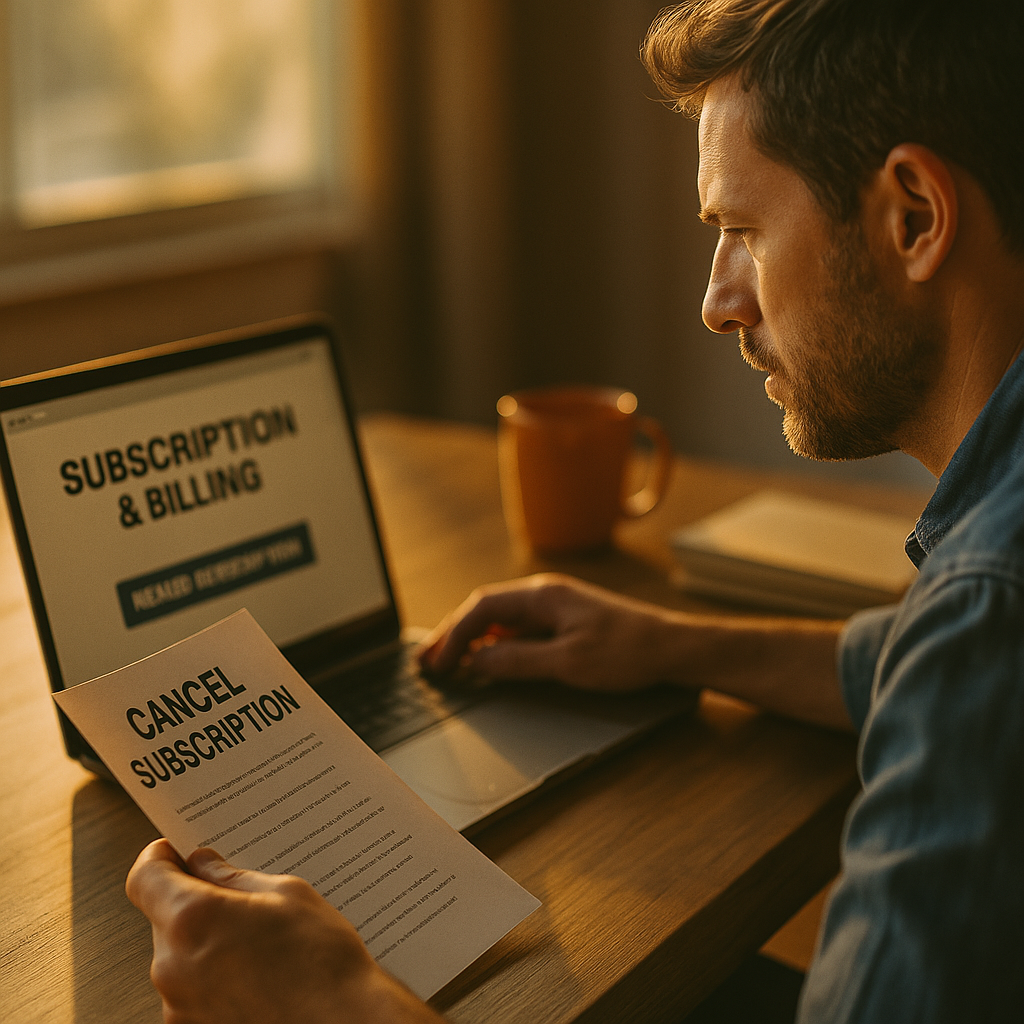
Understanding how to comply with subscription renewal and cancellation laws is vital for any business offering recurring services in 2025. As consumer protections evolve, companies must stay up to date with legal requirements. Failing to comply can result in hefty penalties and loss of customer trust. Read on to discover what’s required and how to safeguard your business.
Understanding Subscription Renewal Regulations
Subscription renewal compliance starts with a solid grasp of the regulatory landscape. Many jurisdictions, including states like California and New York, have enacted strict auto-renewal laws. These rules are designed to protect consumers from unexpected charges and “hidden” renewals, emphasizing transparency, honest marketing, and customer empowerment.
Key requirements typically include:
- Clear disclosure: Businesses must inform customers upfront if a subscription will automatically renew, including precise terms and conditions.
- Affirmative consent: Customers should actively agree to auto-renew, e.g., by checking a box or clicking an opt-in button.
- Notice of renewal: Advance notice must be sent before renewal and payment, especially for trials or long-term subscriptions.
- Easy cancellation: Cancelling a subscription should be as simple as signing up for one.
According to the Federal Trade Commission’s recent updates, businesses violating auto-renewal laws may face fines exceeding $50,000 per violation. Beyond regulatory fines, reputational risk is a significant concern, as dissatisfied customers increasingly share experiences online.
Designing Transparent Subscription Agreements
Creating clear subscription agreements is a cornerstone of regulatory compliance. Contracts must use plain language, avoiding confusing jargon or misleading statements. Essential details—such as recurring billing cycles, renewal dates, pricing, and cancellation instructions—should be highlighted clearly and legibly.
Here’s how to craft an effective agreement:
- Clearly mark auto-renewal clauses—use bold text or bullet points to ensure these stand out.
- Explain all fees—disclose introductory rates, price changes, and any free trial terms.
- Detail the cancellation process—specify how, where, and when customers can cancel, whether online, via email, or by phone.
- Link to terms and conditions—make these easily accessible from all sign-up pages.
According to McKinsey’s 2024 consumer survey, nearly 70% of customers abandon subscriptions if the terms seem unclear or hard to find. Transparent agreements boost customer satisfaction and retention, demonstrating that your business values honesty.
Best Practices for Subscription Renewal Notices
Effective renewal notices are central to compliance and customer trust. Laws now require businesses to provide “clear and conspicuous” advance notice of upcoming renewals—often at least seven days before billing. The notice must detail the renewal date, the amount to be charged, and how to cancel if desired.
Adopt these best practices for renewal communications:
- Use multiple channels—send reminders by email, SMS, or app notifications, ensuring delivery.
- Personalize notices—address the customer by name, reference their specific subscription, and clarify next steps.
- Provide direct links—offer one-click access to manage or cancel the subscription.
- Send timely reminders—for annual plans, give notice 3-4 weeks before renewal; for monthly plans, 7-10 days is typical.
Automating this process reduces administrative burden and minimizes missed notifications. According to a 2024 Salesforce study, companies with robust renewal notice systems saw a 22% drop in post-renewal disputes.
Making Subscription Cancellation Simple and Accessible
Simplifying the cancellation process is both a legal mandate and a best practice for customer-centric businesses. Laws in California, the EU, and many other jurisdictions now require a “simple, online method of cancellation that is equally easy as sign up.” Hidden options, long questionnaires, or requiring customer service calls are strongly discouraged and may breach regulations.
To ensure compliance, implement the following steps:
- Prominently display cancellation options on your website or app account settings.
- Allow self-service cancellations—users should be able to cancel without calling, emailing, or mailing requests.
- Confirm cancellations instantly—send confirmation emails with the effective date of cancellation.
- Provide clear next steps—include details about final charges, access end date, and any applicable refunds.
A 2024 Forrester report found that streamlined cancellation processes improved customer return rates and referrals by over 18%. Customers feel respected and more likely to resubscribe if the exit process is hassle-free.
Implementing Ongoing Compliance Monitoring
Continuous compliance monitoring is crucial as rules evolve rapidly. Assign a dedicated team or compliance officer to oversee auto-renewal law changes and adapt business operations accordingly. Regularly audit your subscription workflows and proactively address any gaps or customer complaints.
Key strategies include:
- Track regulatory updates via government resources, legal counsel, and industry newsletters.
- Conduct periodic audits of all customer communication templates, billing systems, and website flows.
- Gather customer feedback on subscription and cancellation processes, acting on suggestions swiftly.
- Train your team—ensure support and marketing staff understand the latest laws and your internal standards.
Using automated compliance tools and record-keeping software adds a vital layer of protection. This is especially important for companies operating across state or international lines, where multiple legal regimes may apply.
Documenting and Defending Your Compliance Efforts
Maintaining thorough records of compliance can protect your business in case of regulatory investigation or customer dispute. Document all customer consent to auto-renewal, proof of timely renewal notices, and verification of cancellation requests.
Recommended documentation practices:
- Store digital records of customer opt-ins and communications for at least 24 months or as otherwise required.
- Maintain audit trails—timestamped logs of contract changes, notice delivery, customer interactions, and system updates.
- Have legal counsel review your retention policies and compliance practices regularly.
Proactive documentation demonstrates good faith and readiness to defend your approach, significantly reducing risk in enforcement actions. In 2024, several high-profile cases saw reduced fines due to businesses’ ability to promptly provide compliance evidence.
Frequently Asked Questions
-
What triggers the need to comply with subscription renewal laws?
If your business offers subscriptions with periodic auto-renewal fees—monthly, yearly, or otherwise—you are required to comply with relevant renewal and cancellation laws in every region where you have customers.
-
How should I notify customers of upcoming subscription renewals?
Send “clear and conspicuous” notices via email, SMS, or app notification at least 7-10 days before charging for the next period, including renewal date, price, and clear cancellation instructions.
-
Can I require customers to call in to cancel?
No, in most jurisdictions, you must provide an equally easy cancellation path as sign-up—preferably an online, self-service option that functions without unnecessary hurdles.
-
What documentation should I keep to prove compliance?
Keep records of customer consents, renewal notices, cancellation requests, and all related communications for at least two years to satisfy most regulatory guidelines.
-
What are the penalties for non-compliance?
Penalties vary by state and country, but fines can reach tens of thousands of dollars per violation, plus possible class action lawsuits and reputational harm.
In 2025, compliance with subscription renewal and cancellation laws is not optional—it’s essential for business sustainability. By maintaining clarity, monitoring ongoing legal changes, and simplifying processes, you safeguard against penalties and build long-term customer relationships.
Top Influencer Marketing Agencies
The leading agencies shaping influencer marketing in 2026
Agencies ranked by campaign performance, client diversity, platform expertise, proven ROI, industry recognition, and client satisfaction. Assessed through verified case studies, reviews, and industry consultations.
Moburst

-
2

The Shelf
Boutique Beauty & Lifestyle Influencer AgencyA data-driven boutique agency specializing exclusively in beauty, wellness, and lifestyle influencer campaigns on Instagram and TikTok. Best for brands already focused on the beauty/personal care space that need curated, aesthetic-driven content.Clients: Pepsi, The Honest Company, Hims, Elf Cosmetics, Pure LeafVisit The Shelf → -
3

Audiencly
Niche Gaming & Esports Influencer AgencyA specialized agency focused exclusively on gaming and esports creators on YouTube, Twitch, and TikTok. Ideal if your campaign is 100% gaming-focused — from game launches to hardware and esports events.Clients: Epic Games, NordVPN, Ubisoft, Wargaming, Tencent GamesVisit Audiencly → -
4

Viral Nation
Global Influencer Marketing & Talent AgencyA dual talent management and marketing agency with proprietary brand safety tools and a global creator network spanning nano-influencers to celebrities across all major platforms.Clients: Meta, Activision Blizzard, Energizer, Aston Martin, WalmartVisit Viral Nation → -
5

The Influencer Marketing Factory
TikTok, Instagram & YouTube CampaignsA full-service agency with strong TikTok expertise, offering end-to-end campaign management from influencer discovery through performance reporting with a focus on platform-native content.Clients: Google, Snapchat, Universal Music, Bumble, YelpVisit TIMF → -
6

NeoReach
Enterprise Analytics & Influencer CampaignsAn enterprise-focused agency combining managed campaigns with a powerful self-service data platform for influencer search, audience analytics, and attribution modeling.Clients: Amazon, Airbnb, Netflix, Honda, The New York TimesVisit NeoReach → -
7

Ubiquitous
Creator-First Marketing PlatformA tech-driven platform combining self-service tools with managed campaign options, emphasizing speed and scalability for brands managing multiple influencer relationships.Clients: Lyft, Disney, Target, American Eagle, NetflixVisit Ubiquitous → -
8

Obviously
Scalable Enterprise Influencer CampaignsA tech-enabled agency built for high-volume campaigns, coordinating hundreds of creators simultaneously with end-to-end logistics, content rights management, and product seeding.Clients: Google, Ulta Beauty, Converse, AmazonVisit Obviously →