


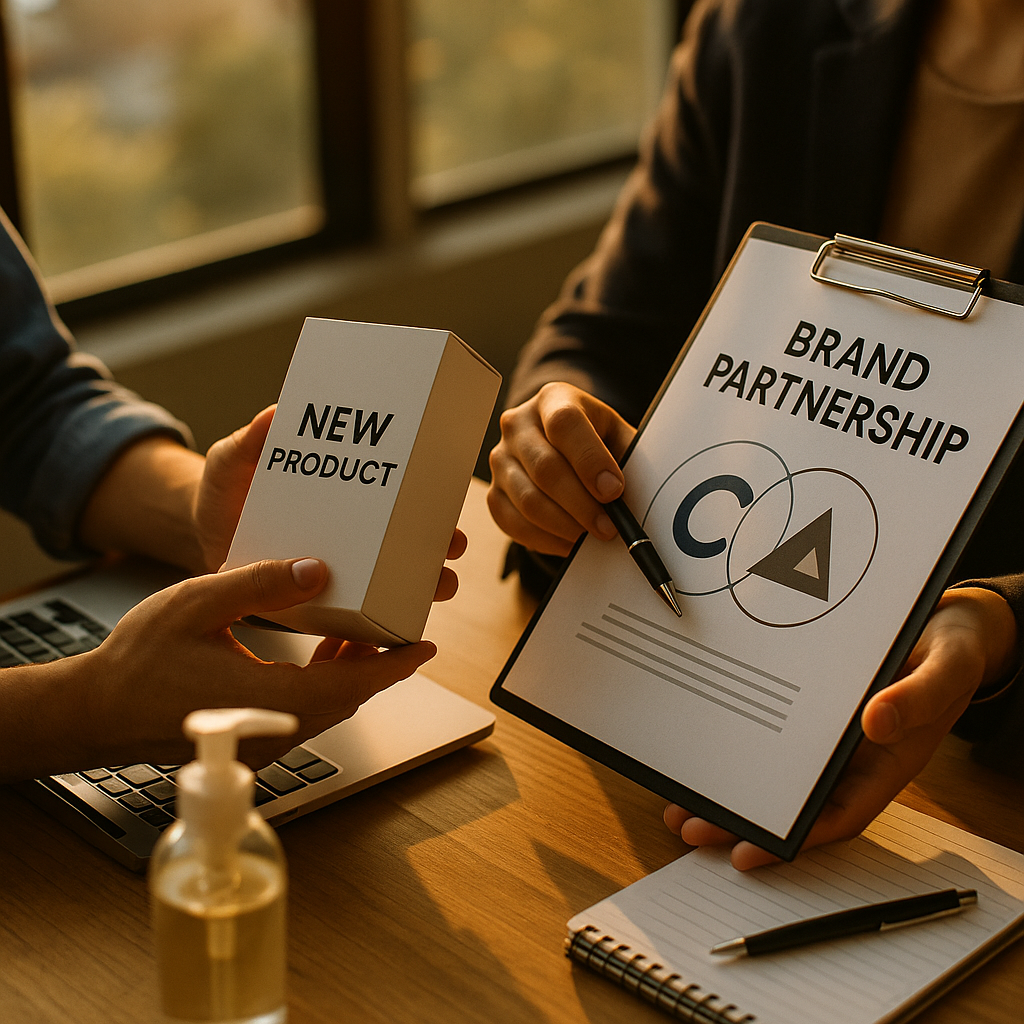
Mastering the art of the brand partnership that creates a new product or service is a powerful way to unlock fresh markets, spark innovation, and delight customers. But successful collaborations demand more than a handshake and logo swap. What sets truly effective co-created offerings apart from the rest? Read on to discover industry-winning strategies.
Understanding How Brand Partnerships Drive Product Innovation
Product innovation through brand collaborations is rewriting the rules for industry growth in 2025. Unlike standard sponsorship or co-marketing, these partnerships harness the strengths of each brand to develop something genuinely new—from co-branded consumer electronics to hybrid retail experiences. Research by McKinsey reveals that over 60% of companies leveraging partnerships for co-creation see revenue uplift and faster market adoption.
Brand partnerships for innovation work because they combine:
- Complementary expertise: Each brand brings unique skills, technologies, or audiences.
- Shared risk: Costs, research, and potential missteps can be split, lowering barriers to ambitious projects.
- Mutual credibility: Partners benefit from each other’s customer trust and market reputation.
When done right, a new product or service can ignite attention, open cross-industry opportunities, and build long-term loyalty. But what makes a strategic fit?
Choosing the Right Brand Partner: Strategy and Alignment
Strategic brand alliances don’t happen by accident. Experts emphasize the importance of fit beyond just audience overlap or brand “cool factor.” Successful partnerships align on:
- Shared values: Over 76% of consumers say value alignment is essential when supporting co-branded products (Edelman, 2025).
- Purpose: Do both partners aspire to innovate, solve a common problem, or disrupt similar industries?
- Capabilities: What unique technologies, resources, or teams do each partner bring?
- Market position: Reach should complement, not necessarily duplicate, to expand potential audiences without cannibalizing sales.
Due diligence is critical. Leading brands like Apple, LEGO, and Adidas vet partners for reputation, operational synergy, and long-term compatibility before embarking on co-creation projects. They also set up legal agreements that clarify responsibilities, intellectual property rules, and exit strategies to safeguard both parties.
From Idea to Launch: The Joint Innovation Process
The joint innovation process for launching a new product or service involves several collaborative phases, each essential to minimizing risk and maximizing impact. These typically include:
- Ideation Workshops: Structured sessions to brainstorm novel product or service concepts, often incorporating both brands’ creative and technical teams for cross-pollination of ideas.
- Market Validation: Rapid prototyping, focus groups, and A/B testing help gauge market interest, ensuring the concept resonates with real consumers.
- Product Development: Agile project management and frequent check-ins prevent silos and encourage shared accountability from both sides.
- Branding and Storytelling: Narrative consistency is crucial—experts recommend a single, integrated messaging strategy to avoid consumer confusion.
- Go-to-Market Execution: Joint launches, exclusive events, and digital campaigns supercharge initial demand, leveraging the collective networks of both brands.
Throughout, transparency, data sharing, and clear KPIs are non-negotiable. When both sides are invested in learning and iterating together, results improve dramatically.
Measuring the Success of a Co-Created Product or Service
Determining brand partnership success metrics is essential for learning and future improvement. While revenue and market share are key indicators, industry leaders look deeper. Consider these KPIs:
- Customer Acquisition and Retention: Did the partnership attract new buyers or strengthen loyalty?
- Earned Media and Social Buzz: Analyze share of voice, sentiment, and engagement compared to expectations.
- Innovation Impact: Which features, technologies, or customer experiences were truly new to the market?
- Scalability: Can the new offering be expanded or replicated in other segments or regions?
- Partnership Health: Ongoing NPS (Net Promoter Score) or qualitative feedback from both teams about the collaboration process itself.
According to Deloitte’s 2025 findings, brands that measure both hard and soft outcomes from co-creation double their chance of repeat partnership success.
Case Studies: Brand Partnerships That Delivered Unique Customer Value
Examining successful brand partnership case studies provides actionable insights for aspiring innovators. Recent standout examples include:
- LEGO & IKEA: This unique fusion of modular furniture and play led to a co-branded storage toy set, delighting families by merging two beloved brands’ strengths.
- Netflix & Headspace: Together, they launched a guided meditation series, merging streaming expertise with wellness to address a growing demand for mental health resources.
- Apple & Hermès: By combining luxury fashion with wearable technology, their co-created Apple Watch line continues to set industry standards for meaningful integration.
Each project focused on creating distinctive value that neither brand could achieve alone. Common themes? Deep mutual respect, clear communication, shared customer-first philosophy, and a relentless focus on user experience.
Best Practices and Pitfalls: What to Do—and Avoid—in Brand Co-Creation
Experts agree that brand co-creation best practices are vital to avoiding expensive missteps. Here’s what seasoned brands do right, and the pitfalls to dodge:
- Do: Align on a shared vision and customer benefit. If your combined product doesn’t solve a real problem or excite your audience, rethink the collaboration.
- Do: Invest in open communication. Weekly touchpoints and transparent dashboards keep everyone informed and accountable.
- Do: Empower cross-functional teams. Give members permission to challenge norms and blend expertise.
- Don’t: Underestimate integration complexity. Address technology, supply chain, and brand messaging compatibility early to avoid costly complications.
- Don’t: Rush the storytelling. A muddled message can confuse or alienate both audiences.
- Don’t: Ignore post-launch feedback. Successful partnerships remain agile and adapt rapidly based on real-world insight.
By learning from both triumphs and setbacks, your brand can unlock extraordinary results from its next collaborative launch.
FAQs: Brand Partnership That Creates a New Product or Service
-
What is a brand partnership that creates a new product or service?
This is a strategic collaboration where two or more brands jointly develop and launch a novel product or service, combining resources, expertise, and audience reach for greater impact. -
How do I find the right partner for co-creation?
Look for brands with complementary strengths, shared values, and similar standards for quality and customer experience. Vet potential partners for operational fit, reputation, and strategic alignment. -
How do we measure the success of a brand partnership?
Beyond sales, assess KPIs like customer retention, new user acquisition, earned media coverage, innovation achievements, and overall collaboration health. -
What risks are involved in brand co-creation?
Risks include brand dilution, IP disputes, misaligned goals, integration challenges, and customer confusion if messaging isn’t carefully managed. Clear communication and contracts help mitigate these risks. -
Can small businesses benefit from product co-creation partnerships?
Absolutely. Smaller brands may gain access to new markets, additional expertise, or unique technologies that would be challenging to develop independently.
Effective brand partnerships that create new products or services demand careful planning, strategic alignment, and collaborative execution. By focusing on customer value, open communication, and measurable outcomes, brands of all sizes can create groundbreaking solutions and robust business growth in 2025 and beyond.
Top Influencer Marketing Agencies
The leading agencies shaping influencer marketing in 2026
Agencies ranked by campaign performance, client diversity, platform expertise, proven ROI, industry recognition, and client satisfaction. Assessed through verified case studies, reviews, and industry consultations.
Moburst

-
2

The Shelf
Boutique Beauty & Lifestyle Influencer AgencyA data-driven boutique agency specializing exclusively in beauty, wellness, and lifestyle influencer campaigns on Instagram and TikTok. Best for brands already focused on the beauty/personal care space that need curated, aesthetic-driven content.Clients: Pepsi, The Honest Company, Hims, Elf Cosmetics, Pure LeafVisit The Shelf → -
3

Audiencly
Niche Gaming & Esports Influencer AgencyA specialized agency focused exclusively on gaming and esports creators on YouTube, Twitch, and TikTok. Ideal if your campaign is 100% gaming-focused — from game launches to hardware and esports events.Clients: Epic Games, NordVPN, Ubisoft, Wargaming, Tencent GamesVisit Audiencly → -
4

Viral Nation
Global Influencer Marketing & Talent AgencyA dual talent management and marketing agency with proprietary brand safety tools and a global creator network spanning nano-influencers to celebrities across all major platforms.Clients: Meta, Activision Blizzard, Energizer, Aston Martin, WalmartVisit Viral Nation → -
5

The Influencer Marketing Factory
TikTok, Instagram & YouTube CampaignsA full-service agency with strong TikTok expertise, offering end-to-end campaign management from influencer discovery through performance reporting with a focus on platform-native content.Clients: Google, Snapchat, Universal Music, Bumble, YelpVisit TIMF → -
6

NeoReach
Enterprise Analytics & Influencer CampaignsAn enterprise-focused agency combining managed campaigns with a powerful self-service data platform for influencer search, audience analytics, and attribution modeling.Clients: Amazon, Airbnb, Netflix, Honda, The New York TimesVisit NeoReach → -
7

Ubiquitous
Creator-First Marketing PlatformA tech-driven platform combining self-service tools with managed campaign options, emphasizing speed and scalability for brands managing multiple influencer relationships.Clients: Lyft, Disney, Target, American Eagle, NetflixVisit Ubiquitous → -
8

Obviously
Scalable Enterprise Influencer CampaignsA tech-enabled agency built for high-volume campaigns, coordinating hundreds of creators simultaneously with end-to-end logistics, content rights management, and product seeding.Clients: Google, Ulta Beauty, Converse, AmazonVisit Obviously →