


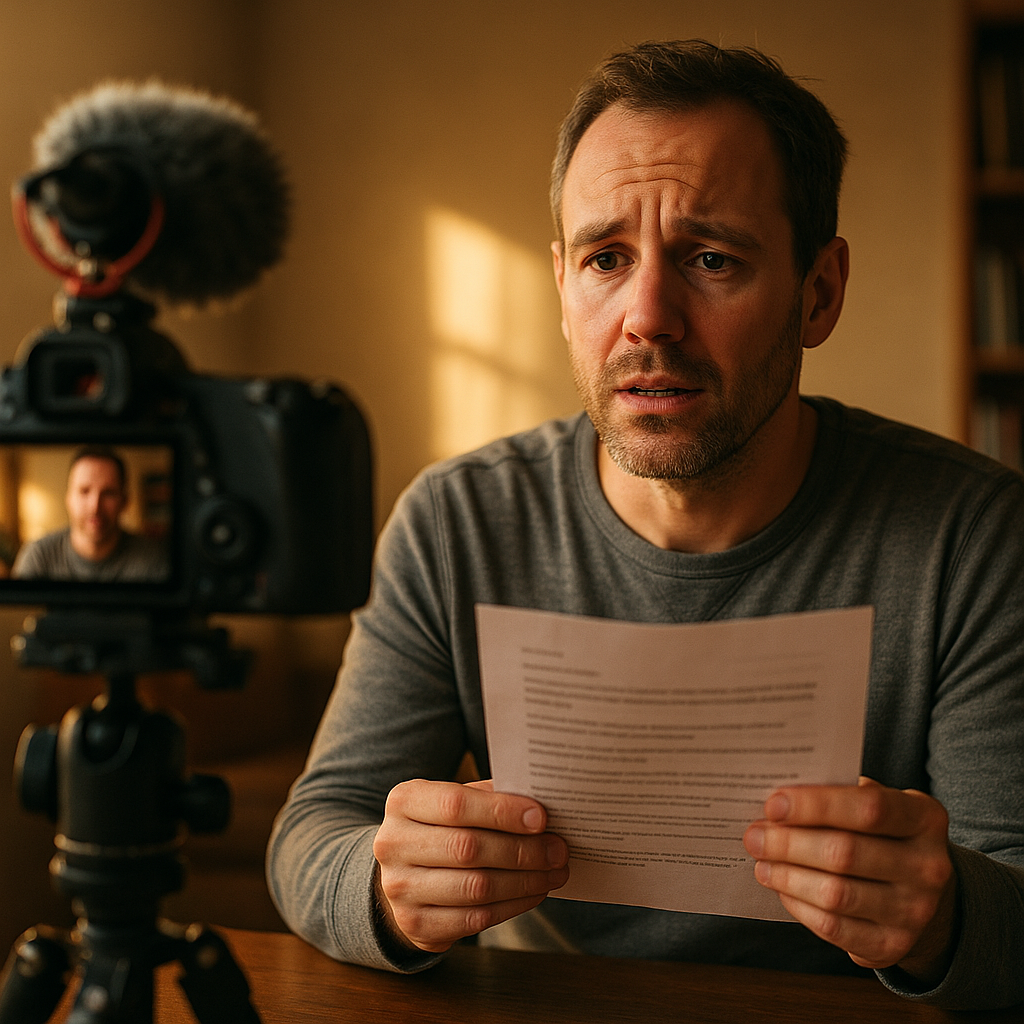
Seventy percent of consumers trust influencers more than traditional celebrity endorsements, according to recent creator economy research. But the format quietly outperforming polished brand content isn’t a creator at all. It’s the founder, camera shaking slightly, admitting something went wrong. The founder confessional video has become the highest-trust, lowest-cost format in the influencer marketing playbook, and most brands are still scripting it like a press release instead of a conversation.
What Exactly Is a Founder Confessional Video?
Strip away the jargon and it’s simple: a founder, on camera, talking directly to the audience about a mistake, a struggle, or a decision that didn’t go the way the brand hoped. No b-roll gloss. No voiceover narrator smoothing the edges. Just a person who built the thing, explaining why it’s imperfect and what they’re doing about it.
Think of the skincare founder admitting a product formulation flopped and had to be pulled. Or the apparel brand CEO explaining why a factory partnership fell apart mid-season. These aren’t PR disasters when scripted well. They’re trust deposits.
The confessional format works because it inverts the default assumption consumers hold about brands: that they’re hiding something. A founder who volunteers the flaw first removes the audience’s job of finding it.
This isn’t new psychology. It’s the same mechanism behind returns proof demo videos, where showing the messy part of the transaction builds more credibility than hiding it ever could. Confessional content just applies that logic to leadership instead of logistics.
h2>Why Vulnerability Converts Better Than Polish
Here’s the uncomfortable truth for brand teams raised on messaging frameworks and approved talking points: audiences have gotten extremely good at detecting scripted positivity. Sprout Social’s own consumer research has repeatedly shown that authenticity ranks above production value in what drives purchase consideration on social platforms. Gen Z and younger millennial buyers, in particular, treat corporate polish as a red flag rather than reassurance.
A confessional video works because it does three things a glossy ad can’t:
- It humanizes the decision-maker. Viewers stop seeing a logo and start seeing a person accountable for outcomes.
- It pre-empts skepticism. If the founder already named the flaw, there’s nothing left for a skeptical commenter to “expose.”
- It creates narrative stakes. A mistake implies a correction, and corrections are inherently more watchable than a steady state of “everything is great.”
Compare this to the dynamics in dupe versus original comparison content, where brands win by being honest about price and tradeoffs rather than pretending the comparison doesn’t exist. Confessional scripting is that same honesty applied one level up, to the people running the company rather than the product itself.
The Scripting Framework: Four Beats That Make It Work
Vulnerability on camera still needs structure. An unscripted ramble reads as unprepared, not authentic, and unprepared founders lose trust fast. The format that performs consistently across brand categories follows four beats.
- The admission. Open with the mistake or struggle in the first five seconds. No throat-clearing, no “so I wanted to talk about something.” Say what happened.
- The stakes. Explain briefly why it mattered, to customers, to the team, to the business. This is where the founder earns the audience’s attention rather than just their curiosity.
- The reckoning. What did the founder actually do once they realized the problem? This beat needs specificity: numbers, timelines, actual decisions, not vague reassurance.
- The forward look. Close with what’s different now and, ideally, an invitation (feedback, a DM, a comment) that keeps the conversation open rather than closing it with a bow.
That four-beat structure borrows heavily from the pacing logic used in transformation reveal videos, where the gap between “before” and “after” is the entire engine of shareability. Here, the transformation is reputational instead of physical, but the pacing principle holds: don’t rush the admission, and don’t linger past the resolution.
A Script Skeleton Worth Stealing
For teams building their first confessional brief, this bare-bones skeleton holds up across categories:
- “We messed up on [specific thing]. Here’s what happened.” (0 to 5 seconds)
- “This mattered because [impact on customer/team/product].” (5 to 15 seconds)
- “Here’s exactly what we changed.” (15 to 40 seconds)
- “If you’ve experienced this, tell me, I read every comment.” (closing 5 to 10 seconds)
Keep total runtime under a minute for feed placements. Confessional content lives or dies on pacing. Drag it past ninety seconds and the vulnerability starts to feel like a monologue rather than a moment.
Where This Format Can Backfire
Not every admission deserves a camera. This is the part brand teams skip, usually under pressure to “humanize the founder” without thinking through risk exposure.
Confessional videos backfire when the mistake involves active legal exposure, unresolved customer harm, or anything a regulator might later scrutinize. The FTC’s endorsement guidance already requires clear disclosure in paid or sponsored content, and a founder confessional that veers into unsubstantiated claims about fixes or outcomes can create compliance headaches well beyond a bad comment section. Legal review isn’t optional here. Treat the script the way you’d treat an earnings call statement, not a TikTok caption.
A good rule of thumb: if legal can’t sign off on the claim within the video, the video shouldn’t ship, no matter how good the hook is.
There’s also a repetition risk. Audiences can smell a “vulnerability format” being used as a growth tactic rather than a genuine disclosure. If every video from a founder is a new confession, the format curdles into performance. Use it sparingly, tied to real moments, not a content calendar slot that needs filling.
How Agencies Are Operationalizing This at Scale
For brands working with multiple creators or spokespeople, the confessional format raises an obvious operational question: how do you keep this consistent without making it feel manufactured? A few practices that are holding up well across teams managing this at scale:
- Brief the beats, not the words. Give founders the four-beat structure and the compliance guardrails, but let them use their own language. Over-scripted vulnerability reads as fake instantly.
- Film in one or two takes max. Polish kills the format’s core appeal. If a founder needs ten takes to say something true, the content isn’t ready yet.
- Pair with behind-the-scenes proof. A confessional about a manufacturing problem lands harder when followed by actual footage, similar to how behind the scenes clips use raw footage to substantiate claims rather than just asserting them.
- Track sentiment, not just views. Comment sentiment and saves matter more here than raw reach. A confessional that gets shared with “wow, respect” comments is doing its job even at modest view counts.
Some teams are also layering this into longer-form brand storytelling, using the confessional as episode one of a broader arc rather than a one-off. That approach mirrors the retention logic in episodic creator series, where a single moment of honesty becomes the hook that pulls viewers into a longer relationship with the brand’s story.
Measuring Whether It’s Actually Working
Standard influencer KPIs undersell this format. View count and CPM tell you reach, not trust. The metrics that actually matter for confessional content:
- Comment sentiment ratio. Positive-to-negative comment ratio, tracked manually or through social listening tools like those from Sprout Social, is the clearest early signal of whether the vulnerability landed or backfired.
- Save and share rate relative to views. Confessional content that resonates tends to get saved and shared at a higher rate per view than standard product content, because people pass it along as proof of character, not just product interest.
- Branded search lift. A spike in branded search within 48 to 72 hours of posting suggests the confession drove curiosity rather than suspicion.
- Repeat purchase or churn delta. For existing customers, track whether exposure to the video correlates with retention, especially for brands that had a real service failure to address.
If none of those move, the video didn’t fail creatively, it failed strategically. That usually means the mistake wasn’t significant enough to warrant a confession, or the resolution beat lacked specifics the audience could actually verify.
FAQs
Frequently Asked Questions
What makes a founder confessional video different from a standard brand apology?
A standard apology is typically reactive, issued after public pressure, and often written by a comms team. A founder confessional is proactive, delivered directly by a named individual, and scripted to build trust before a crisis forces the conversation.
How long should a founder confessional video be?
Most high-performing versions run under sixty seconds for social feeds. Longer formats, up to two or three minutes, can work for YouTube or owned channels where viewers have already opted in to deeper context.
Does this format require legal review before publishing?
Yes. Any claim about a fix, outcome, or resolution should be reviewed by legal or compliance before the video ships, particularly if the original issue involved customer harm, product safety, or regulatory exposure.
Can smaller brands use this format without a well-known founder?
Absolutely. The format depends on specificity and accountability, not fame. A small brand founder admitting a shipping delay or a sourcing mistake can build just as much trust as a recognizable CEO, sometimes more, because the audience isn’t filtering the message through existing brand perception.
How often should a brand use the confessional format?
Sparingly. This format loses its power if it’s used as a recurring content template rather than a response to a real event. Most brands see diminishing returns after more than two or three confessional videos per year.
Next step: pick one unresolved customer-facing mistake your brand has already acknowledged privately, draft it against the four-beat skeleton above, and run it through legal before it ever touches a camera. That’s how you turn a liability into the most trusted content in your brand’s library.
Top Influencer Marketing Agencies
The leading agencies shaping influencer marketing in 2026
Agencies ranked by campaign performance, client diversity, platform expertise, proven ROI, industry recognition, and client satisfaction. Assessed through verified case studies, reviews, and industry consultations.
Moburst

-
2

The Shelf
Boutique Beauty & Lifestyle Influencer AgencyA data-driven boutique agency specializing exclusively in beauty, wellness, and lifestyle influencer campaigns on Instagram and TikTok. Best for brands already focused on the beauty/personal care space that need curated, aesthetic-driven content.Clients: Pepsi, The Honest Company, Hims, Elf Cosmetics, Pure LeafVisit The Shelf → -
3

Audiencly
Niche Gaming & Esports Influencer AgencyA specialized agency focused exclusively on gaming and esports creators on YouTube, Twitch, and TikTok. Ideal if your campaign is 100% gaming-focused — from game launches to hardware and esports events.Clients: Epic Games, NordVPN, Ubisoft, Wargaming, Tencent GamesVisit Audiencly → -
4

Viral Nation
Global Influencer Marketing & Talent AgencyA dual talent management and marketing agency with proprietary brand safety tools and a global creator network spanning nano-influencers to celebrities across all major platforms.Clients: Meta, Activision Blizzard, Energizer, Aston Martin, WalmartVisit Viral Nation → -
5

The Influencer Marketing Factory
TikTok, Instagram & YouTube CampaignsA full-service agency with strong TikTok expertise, offering end-to-end campaign management from influencer discovery through performance reporting with a focus on platform-native content.Clients: Google, Snapchat, Universal Music, Bumble, YelpVisit TIMF → -
6

NeoReach
Enterprise Analytics & Influencer CampaignsAn enterprise-focused agency combining managed campaigns with a powerful self-service data platform for influencer search, audience analytics, and attribution modeling.Clients: Amazon, Airbnb, Netflix, Honda, The New York TimesVisit NeoReach → -
7

Ubiquitous
Creator-First Marketing PlatformA tech-driven platform combining self-service tools with managed campaign options, emphasizing speed and scalability for brands managing multiple influencer relationships.Clients: Lyft, Disney, Target, American Eagle, NetflixVisit Ubiquitous → -
8

Obviously
Scalable Enterprise Influencer CampaignsA tech-enabled agency built for high-volume campaigns, coordinating hundreds of creators simultaneously with end-to-end logistics, content rights management, and product seeding.Clients: Google, Ulta Beauty, Converse, AmazonVisit Obviously →