


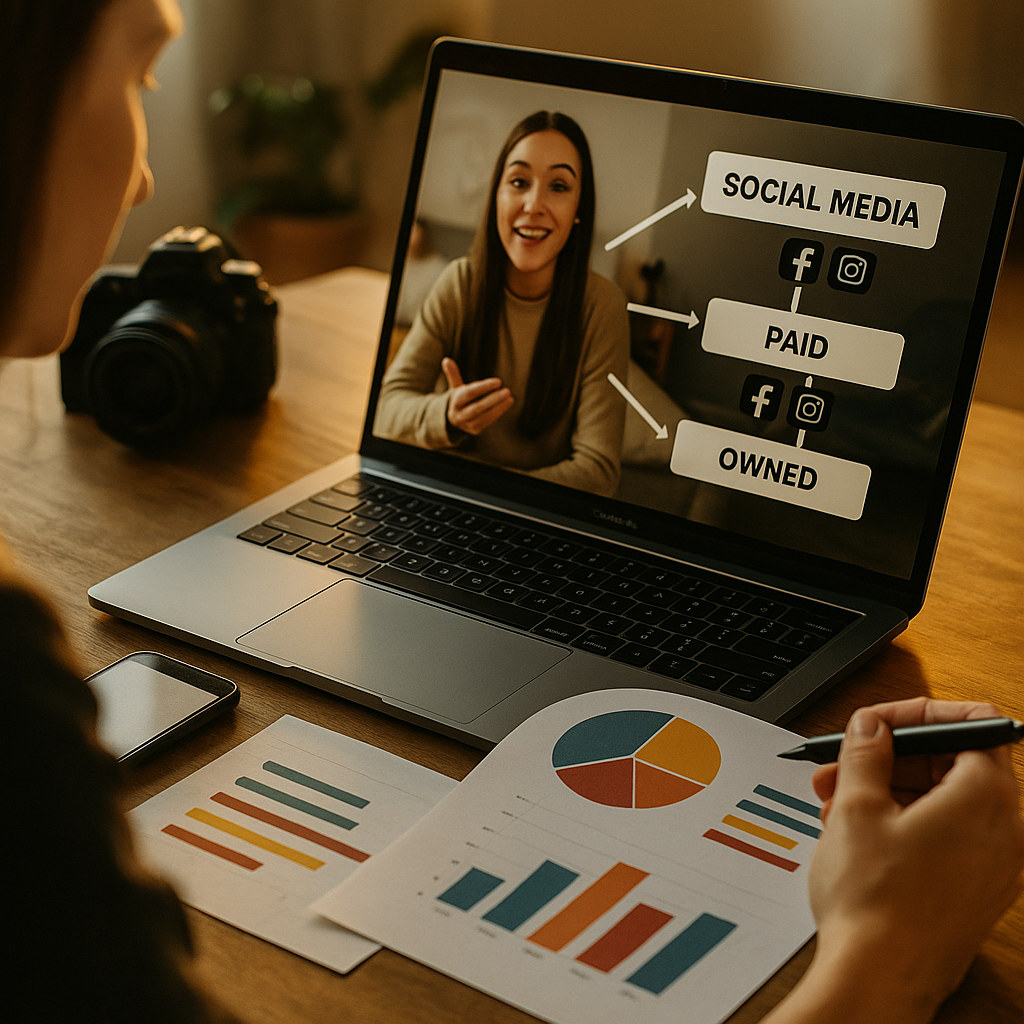
Here’s an uncomfortable truth: most brands pay to boost creator content the moment it’s live, before they know if it even works. That’s backwards, and it’s burning budget. Creator content distribution isn’t a single channel decision, it’s a sequence, and getting the order wrong is one of the quietest ways marketing teams waste spend in 2026.
Why Sequencing Beats “Post Everywhere at Once”
Most brand teams treat organic, paid, and owned as parallel tracks. Post the creator content natively, drop it into a paid campaign, repurpose it on the website, all in the same week. It feels efficient. It’s actually the opposite.
Sequencing means letting each channel do a specific job, in a specific order, so the data from one stage informs the spend on the next. Organic tells you what resonates. Paid scales what’s already proven. Owned extends the life of what’s already paid off. Skip the order and you’re amplifying guesses instead of signal.
Boosting creator content before it has organic engagement data is like scaling an ad before you’ve seen the click-through rate. You’re paying to find out, not paying because you know.
This isn’t just theory. Teams that build creator partnerships as owned media report meaningfully better retention on repurposed content than teams that treat every asset as disposable campaign fuel.
Stage One: Let Organic Do the Sorting
Organic is cheap. That’s the point. Use it as a filter, not a finish line. When a creator posts natively on TikTok, Instagram, or YouTube Shorts, you get real signal within 24 to 48 hours: saves, shares, comment sentiment, completion rate. None of that costs you a media dollar.
The mistake brands make is treating organic performance as a vanity metric instead of a gating mechanism. Set a threshold before the content goes live. Maybe it’s a 3x industry benchmark on watch time, or a save rate above your category median per Sprout Social’s benchmarking data. Whatever the number, decide it in advance, not after you’ve already fallen in love with the creative.
This is especially critical for nano and micro creator programs, where volume is high and individual asset performance varies wildly. If you’re running a nano creator fleet, you simply cannot afford to boost everything. Organic becomes your triage layer.
What Organic Signal Should You Actually Trust?
- Save rate: a stronger buying-intent signal than likes, particularly for considered purchases.
- Comment sentiment: not volume, actual sentiment. Ten skeptical comments beat a hundred emoji replies.
- Completion rate on video: especially past the three-second hook, where most scroll-away happens.
- Share-to-follower ratio: a proxy for whether content travels beyond the creator’s existing audience.
Vanity metrics like raw likes are noise. Don’t let them drive your paid decisions.
Stage Two: Paid Amplification, But Only for Proven Winners
Once organic has flagged a winner, paid’s job is simple: extend reach to audiences the creator’s organic footprint can’t touch. This is where whitelisting, spark ads, and boosted posts earn their keep, but only if you’re disciplined about which assets get the spend.
The ROI math here is straightforward and brutal. If you’re boosting unproven content, you’re essentially running a media test with creative you haven’t validated. If you’re boosting proven content, you’re compounding a result you already know works. Third party ad network KPIs should reflect this distinction: boosted spend needs its own line item and its own bar for success, separate from organic baseline performance.
Platform mechanics matter too. Meta’s whitelisting through Meta Business Suite and TikTok’s Spark Ads via TikTok Ads Manager let you run paid media directly from the creator’s handle, preserving authenticity signals that a brand-account repost loses. That authenticity, per multiple eMarketer consumer trust studies, directly correlates with higher click-through and lower cost per acquisition.
A validated organic winner, boosted through the creator’s own handle, consistently outperforms the same asset reposted from a brand account, often by a wide margin on cost per click.
How Much of Your Creator Budget Should Go to Amplification?
There’s no universal number, but a useful starting ratio for mid-market brands is reserving 20 to 30 percent of total creator program spend for paid amplification of validated winners, not for new creative tests. If you’re still working out the math, budgeting for always on creator programs covers how to structure that split without raiding other line items every quarter.
Agencies running programs for multiple brands sometimes lean on direct creator platforms to cut the markup on amplification management, freeing budget to actually spend on media rather than fees.
Stage Three: Owned Channels Are the Compounding Asset
This is the stage brands undervalue most. Once content has been validated organically and scaled with paid, it still has life left in it. Product pages, email campaigns, landing pages, even paid search assets can all reuse creator content, and the reuse rights should be negotiated at the contract stage, not renegotiated after the fact when legal realizes the usage terms don’t cover it.
Owned placement is where creator content stops being a campaign expense and starts being a durable asset. A well-performing UGC clip embedded on a product detail page doesn’t need a media budget to keep working. It sits there, converting, for as long as the page exists.
Teams building long-term equity around this model should look at how creator partnerships as owned media frames the contractual and rights-management side, because the sequencing only works if the usage rights were built for it from day one. Reusing creator video without planning for it upfront is how legal teams end up scrambling. For brands structuring briefs with reuse already in mind, reusable creative assets guidance is worth building into your creator brief template directly.
Where Owned Reuse Pays Off Fastest
- Product and category pages: UGC-style video next to the add-to-cart button consistently lifts conversion versus studio photography alone.
- Email nurture sequences: validated organic winners repurposed as email hero content reduce creative production costs for lifecycle marketing.
- Paid search and shopping ads: creator video as a Performance Max asset often outperforms brand-produced creative on click-through rate.
- Owned community and UGC galleries: building a self-reinforcing pipeline, something covered well in organic UGC pipeline strategies originally built for destination marketing but applicable broadly.
Building the Operational Workflow (Not Just the Theory)
Sequencing sounds clean on paper. Operationally, it requires a gate at each stage, and someone with authority to enforce it. This usually means a lightweight review checkpoint: content goes live organically, a marketer or analyst checks performance against the pre-set threshold at hour 24 and again at hour 72, and only then does it get routed to the paid team.
Brands running creator programs at scale often formalize this inside their creator org structure, assigning a specific role (sometimes called a content performance lead) whose entire job is making the organic-to-paid handoff decision. Without an owner, the gate doesn’t happen, and teams default back to boosting everything or nothing.
Compliance has to sit inside this workflow too, not bolt onto it afterward. Disclosure requirements don’t change because content moves from organic to paid, but the review burden does increase, since paid creative faces more regulatory scrutiny under FTC endorsement guidelines. Building a compliance review gate into the paid handoff stage, not just the initial publish stage, catches issues before they become ad account suspensions.
What About Multi-Market Programs?
Sequencing gets more complex across regions. A piece of creator content that’s a clear organic winner in the US market might underperform in the UK or EU due to cultural or regulatory differences, and vice versa. If you’re running campaigns across jurisdictions, don’t assume a single organic threshold applies everywhere. A multi market compliance framework helps standardize the gating logic while leaving room for regional performance variance, which matters even more once paid spend and owned asset localization enter the picture, something localizing UGC beyond translation addresses directly.
Measuring the Sequence, Not Just the Channels
If you measure organic, paid, and owned as separate silos, you’ll never prove the sequencing actually works. The real metric is velocity: how fast does a piece of content move from organic validation to paid scale to owned placement, and what’s the cumulative ROI across all three stages combined?
Track a single asset ID through its full lifecycle. Attribute organic engagement, paid media cost and return, and owned-channel conversion lift all to that same asset. Most marketing teams don’t do this because their martech stack separates organic social reporting, paid ad platforms, and web analytics into different dashboards. That’s a tooling problem worth solving, not an excuse to skip the measurement.
For finance stakeholders, this full-lifecycle view is also the clearest way to justify the program’s existence. Proving that sequencing improves blended ROI, not just per-channel metrics, is exactly the kind of argument that resonates in budget conversations, similar to how communications intelligence ROI gets framed for CFO audiences.
Next step: audit your last ten creator campaigns and check whether paid spend went to assets with proven organic performance or just whatever was scheduled that week. If it’s the latter, build a simple 24-hour organic gate before your next campaign, it costs nothing and it will change where your paid budget actually goes.
Frequently Asked Questions
What is channel sequencing in creator content distribution?
Channel sequencing means releasing creator content through organic, paid, and owned channels in a deliberate order rather than simultaneously, using performance data from each stage to decide investment in the next.
How long should content stay in the organic stage before paid amplification?
Most brands use a 24 to 72 hour window to gather enough engagement signal, though high-velocity platforms like TikTok may show clear winners within the first 24 hours.
Does sequencing slow down campaign timelines?
It adds a short review window but typically improves overall campaign ROI by preventing wasted paid spend on unproven creative, which offsets the added time.
Can small brands with limited budgets still use this model?
Yes. Smaller programs benefit even more from sequencing because they have less budget to waste on boosting content that was never going to perform.
What usage rights are needed for the owned channel stage?
Contracts should explicitly grant usage rights for website, email, and paid search placement, ideally negotiated upfront rather than added after content proves successful organically.
How does sequencing affect FTC disclosure compliance?
Disclosure requirements remain constant across stages, but paid amplification typically faces stricter platform-level ad review, so compliance checks should be repeated at the paid handoff, not just at initial publish.
Top Influencer Marketing Agencies
The leading agencies shaping influencer marketing in 2026
Agencies ranked by campaign performance, client diversity, platform expertise, proven ROI, industry recognition, and client satisfaction. Assessed through verified case studies, reviews, and industry consultations.
Moburst

-
2

The Shelf
Boutique Beauty & Lifestyle Influencer AgencyA data-driven boutique agency specializing exclusively in beauty, wellness, and lifestyle influencer campaigns on Instagram and TikTok. Best for brands already focused on the beauty/personal care space that need curated, aesthetic-driven content.Clients: Pepsi, The Honest Company, Hims, Elf Cosmetics, Pure LeafVisit The Shelf → -
3

Audiencly
Niche Gaming & Esports Influencer AgencyA specialized agency focused exclusively on gaming and esports creators on YouTube, Twitch, and TikTok. Ideal if your campaign is 100% gaming-focused — from game launches to hardware and esports events.Clients: Epic Games, NordVPN, Ubisoft, Wargaming, Tencent GamesVisit Audiencly → -
4

Viral Nation
Global Influencer Marketing & Talent AgencyA dual talent management and marketing agency with proprietary brand safety tools and a global creator network spanning nano-influencers to celebrities across all major platforms.Clients: Meta, Activision Blizzard, Energizer, Aston Martin, WalmartVisit Viral Nation → -
5

The Influencer Marketing Factory
TikTok, Instagram & YouTube CampaignsA full-service agency with strong TikTok expertise, offering end-to-end campaign management from influencer discovery through performance reporting with a focus on platform-native content.Clients: Google, Snapchat, Universal Music, Bumble, YelpVisit TIMF → -
6

NeoReach
Enterprise Analytics & Influencer CampaignsAn enterprise-focused agency combining managed campaigns with a powerful self-service data platform for influencer search, audience analytics, and attribution modeling.Clients: Amazon, Airbnb, Netflix, Honda, The New York TimesVisit NeoReach → -
7

Ubiquitous
Creator-First Marketing PlatformA tech-driven platform combining self-service tools with managed campaign options, emphasizing speed and scalability for brands managing multiple influencer relationships.Clients: Lyft, Disney, Target, American Eagle, NetflixVisit Ubiquitous → -
8

Obviously
Scalable Enterprise Influencer CampaignsA tech-enabled agency built for high-volume campaigns, coordinating hundreds of creators simultaneously with end-to-end logistics, content rights management, and product seeding.Clients: Google, Ulta Beauty, Converse, AmazonVisit Obviously →