


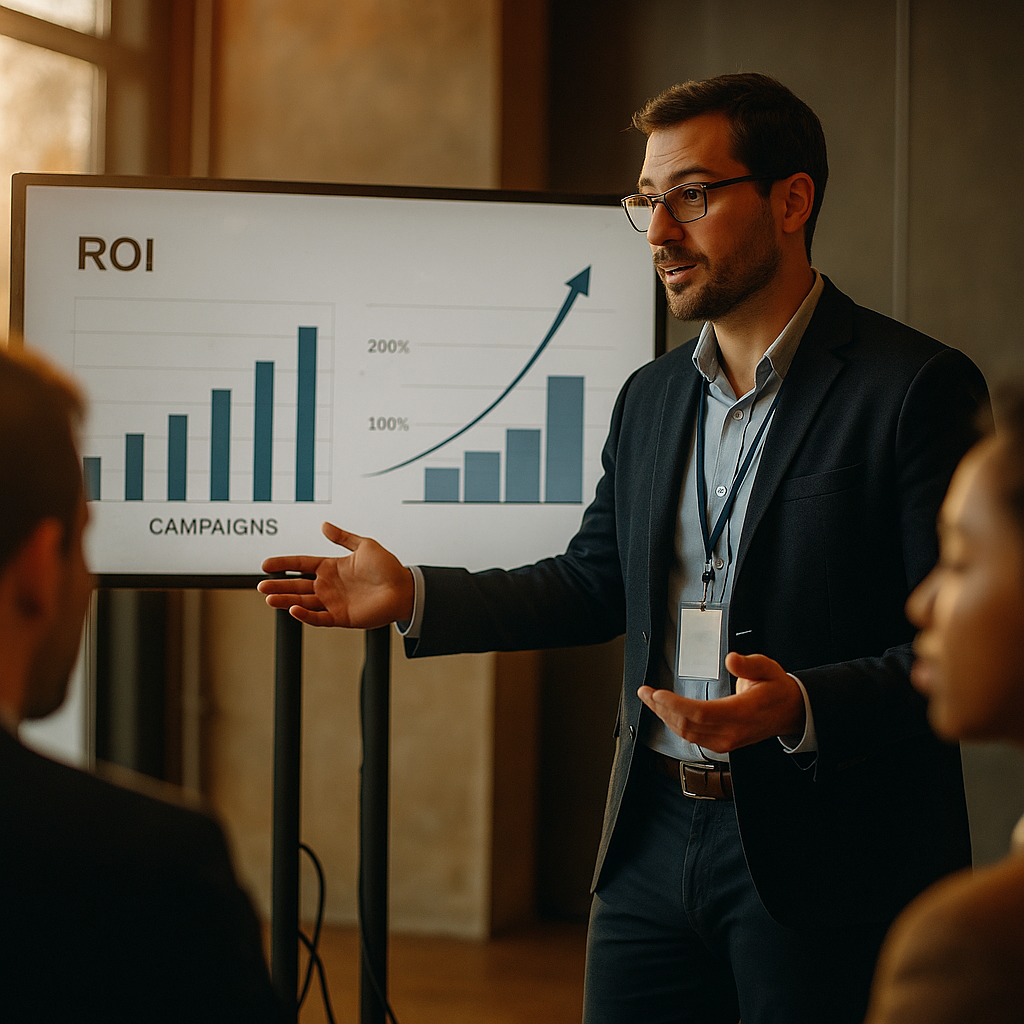
In this case study of a successful event marketing campaign that generated a positive ROI, you’ll discover how a strategic approach drove targeted attendance, boosted sales, and created lasting brand impact. Learn actionable tactics and data-backed insights to create memorable events that truly pay off. Curious how industry leaders turn live experiences into measurable ROI? Read on.
Strategic Event Planning: The Blueprint for Positive Event ROI
Before launching any event, the foundation for success lies in meticulous strategic event planning. The brand in our case study—a national retail technology provider—began by identifying a clear business goal: increase qualified leads for its new enterprise software suite and establish thought leadership among decision-makers.
Research and data analysis guided venue selection and timing. The team used survey feedback and CRM insights to choose a late Q2 date, when budgets were typically available, and selected an accessible downtown conference center.
- Audience targeting: Marketing personas focused on IT directors, procurement leaders, and CIOs at companies with 500+ employees.
- Budget allocation: 40% to digital promotion, 30% to in-person experience, 20% to content production, and 10% for follow-up campaigns.
- Event experience design: Blended keynote sessions, hands-on tech labs, expert Q&A, and peer networking to foster authentic engagement.
By planning with precision, every dollar invested was mapped to attainable outcomes. This alignment between objectives, audience, and spend maximized the likelihood of positive event ROI.
Audience Engagement: Driving Event Attendance Through Multi-Channel Promotion
Generating event attendance demands more than a single campaign blast. The team implemented a comprehensive multi-channel promotion strategy, leveraging data-driven audience engagement to steadily build anticipation and commitment.
- Email marketing: Segmented nurture tracks delivered custom invitations, content teasers, and speaker highlights, increasing email response rates by 23% compared to prior campaigns.
- Paid social advertising: LinkedIn and X (formerly Twitter) ads targeted by job title and industry. Conversion pixels allowed for real-time A/B testing and optimization.
- Influencer partnerships: Industry thought leaders were engaged as co-hosts, offering exclusive event previews and discount codes to their own networks, expanding reach by 40%.
- Website event hub: A dedicated landing page offered on-click agenda registration, FAQs, and value propositions tailored to ROI-minded executives.
Multi-channel efforts resulted in over 1,200 qualified registrants within six weeks—almost double the campaign’s projected goal. Audience engagement was continually measured and iteratively improved, ensuring no opportunity was left untapped.
Content Strategy: Delivering ROI-Focused Value at the Event
High-quality, relevant content solidified the campaign’s reputation and delivered tangible value to attendees—crucial for a successful event marketing campaign. The agenda was shaped around real-world challenges, showcasing customer success stories, live product demos, and expert panels on digital transformation ROI.
- Keynote sessions: Renowned C-suite leaders shared actionable tactics, generating post-event media coverage and organic social shares.
- Interactive workshops: Hands-on labs guided attendees using actual product data, allowing prospects to picture a direct business impact.
- Breakout discussions: Industry-specific roundtables connected participants with peers facing similar challenges, sparking high-value conversations.
All sessions prioritized actionable takeaways, with downloadable playbooks and on-demand video replays available exclusively to participants. Post-event surveys revealed 89% of attendees rated the educational content as ‘very useful’ for their organizations, validating the event’s perceived value and positive ROI.
Data-Driven Follow-Up: Capturing and Converting Qualified Leads
The success of an event marketing campaign is determined not just by attendance, but by what happens next. Capitalizing on data-driven follow-up, the marketing team launched a robust lead nurturing sequence:
- Personalized outreach: Automated workflows sent tailored thank-yous, presentation decks, and session highlights to attendees based on their interests and engagement levels.
- Sales enablement: Hot prospects—identified via session attendance, in-event poll responses, and app interactions—were assigned to senior sales reps within 24 hours.
- Content retargeting: Paid digital ads promoted free on-demand resources to registrants who hadn’t yet engaged with sales, ensuring the brand stayed top-of-mind.
- ROI reporting: Dashboards tracked lead status, opportunity pipeline movement, and revenue attribution directly tied back to the event.
This disciplined approach to follow-up resulted in a 36% conversion rate from leads to sales-qualified opportunities—triple the average in their sector. The team’s ability to quickly act on event intelligence was crucial to driving a positive ROI.
Results and Lessons: Achieving Positive Event ROI with Measurable Impact
The event marketing campaign delivered clear, quantifiable results. With total costs of $180,000 and attributed revenue of $731,000 (just nine weeks post-event), the ROI exceeded 300%—a remarkable benchmark for B2B enterprise events in 2025.
- Pipeline acceleration: The event generated 27 net-new enterprise deals and moved $2.1M in existing opportunities to the contract-negotiation stage.
- Extended brand impact: Attendee satisfaction scores led to a 17% uptick in brand favorability among previously neutral prospects.
- Replicable playbook: The company codified its winning event marketing process, enabling expansion into five new markets within the year.
Several lessons stood out:
- Success stems from aligning event content and experience with attendees’ ROI expectations.
- Data-driven multi-touch promotion and follow-up are essential for maximizing turnout and conversions.
- Continuous feedback loops improve outcomes for future events and campaigns.
Conclusion: The Future of Successful Event Marketing Campaigns
This case study demonstrates that a successful event marketing campaign generating positive ROI is the product of strategy, personalization, and measurement. By focusing on clear goals, targeted promotion, relevant content, and actionable follow-up, brands can turn any event into a powerful revenue engine. Invest in data and customer value—for truly profitable events.
FAQs: Event Marketing Campaigns and ROI
-
What is the average ROI for a B2B event marketing campaign in 2025?
In 2025, leading event marketing benchmarks show that average B2B event ROI ranges from 120%–150%. However, with the right targeting and follow-up, as seen in this case study, ROI can exceed 300%.
-
Which event marketing tactics most impact ROI?
Multi-channel outreach, tailored content experiences, real-time attendee engagement, and immediate post-event follow-up are proven to drive higher ROI for both virtual and in-person events.
-
How do you measure event marketing ROI accurately?
Track revenue directly attributable to the event, tie back pipeline data to attendee engagement, and calculate net profit over total investment. Use CRM and analytics dashboards for transparent reporting.
-
What are common mistakes that reduce event marketing ROI?
Poor audience targeting, insufficient follow-up, lack of actionable content, and failing to track results can all limit ROI. Proactive planning and measurement are key to avoiding these pitfalls.
-
Can event marketing work for smaller brands or budgets?
Absolutely. Even for modest budgets, a focused strategy—targeting the right audience, delivering genuine value, and prioritizing post-event follow-through—can yield positive ROI.
Top Influencer Marketing Agencies
The leading agencies shaping influencer marketing in 2026
Agencies ranked by campaign performance, client diversity, platform expertise, proven ROI, industry recognition, and client satisfaction. Assessed through verified case studies, reviews, and industry consultations.
Moburst

-
2

The Shelf
Boutique Beauty & Lifestyle Influencer AgencyA data-driven boutique agency specializing exclusively in beauty, wellness, and lifestyle influencer campaigns on Instagram and TikTok. Best for brands already focused on the beauty/personal care space that need curated, aesthetic-driven content.Clients: Pepsi, The Honest Company, Hims, Elf Cosmetics, Pure LeafVisit The Shelf → -
3

Audiencly
Niche Gaming & Esports Influencer AgencyA specialized agency focused exclusively on gaming and esports creators on YouTube, Twitch, and TikTok. Ideal if your campaign is 100% gaming-focused — from game launches to hardware and esports events.Clients: Epic Games, NordVPN, Ubisoft, Wargaming, Tencent GamesVisit Audiencly → -
4

Viral Nation
Global Influencer Marketing & Talent AgencyA dual talent management and marketing agency with proprietary brand safety tools and a global creator network spanning nano-influencers to celebrities across all major platforms.Clients: Meta, Activision Blizzard, Energizer, Aston Martin, WalmartVisit Viral Nation → -
5

The Influencer Marketing Factory
TikTok, Instagram & YouTube CampaignsA full-service agency with strong TikTok expertise, offering end-to-end campaign management from influencer discovery through performance reporting with a focus on platform-native content.Clients: Google, Snapchat, Universal Music, Bumble, YelpVisit TIMF → -
6

NeoReach
Enterprise Analytics & Influencer CampaignsAn enterprise-focused agency combining managed campaigns with a powerful self-service data platform for influencer search, audience analytics, and attribution modeling.Clients: Amazon, Airbnb, Netflix, Honda, The New York TimesVisit NeoReach → -
7

Ubiquitous
Creator-First Marketing PlatformA tech-driven platform combining self-service tools with managed campaign options, emphasizing speed and scalability for brands managing multiple influencer relationships.Clients: Lyft, Disney, Target, American Eagle, NetflixVisit Ubiquitous → -
8

Obviously
Scalable Enterprise Influencer CampaignsA tech-enabled agency built for high-volume campaigns, coordinating hundreds of creators simultaneously with end-to-end logistics, content rights management, and product seeding.Clients: Google, Ulta Beauty, Converse, AmazonVisit Obviously →