


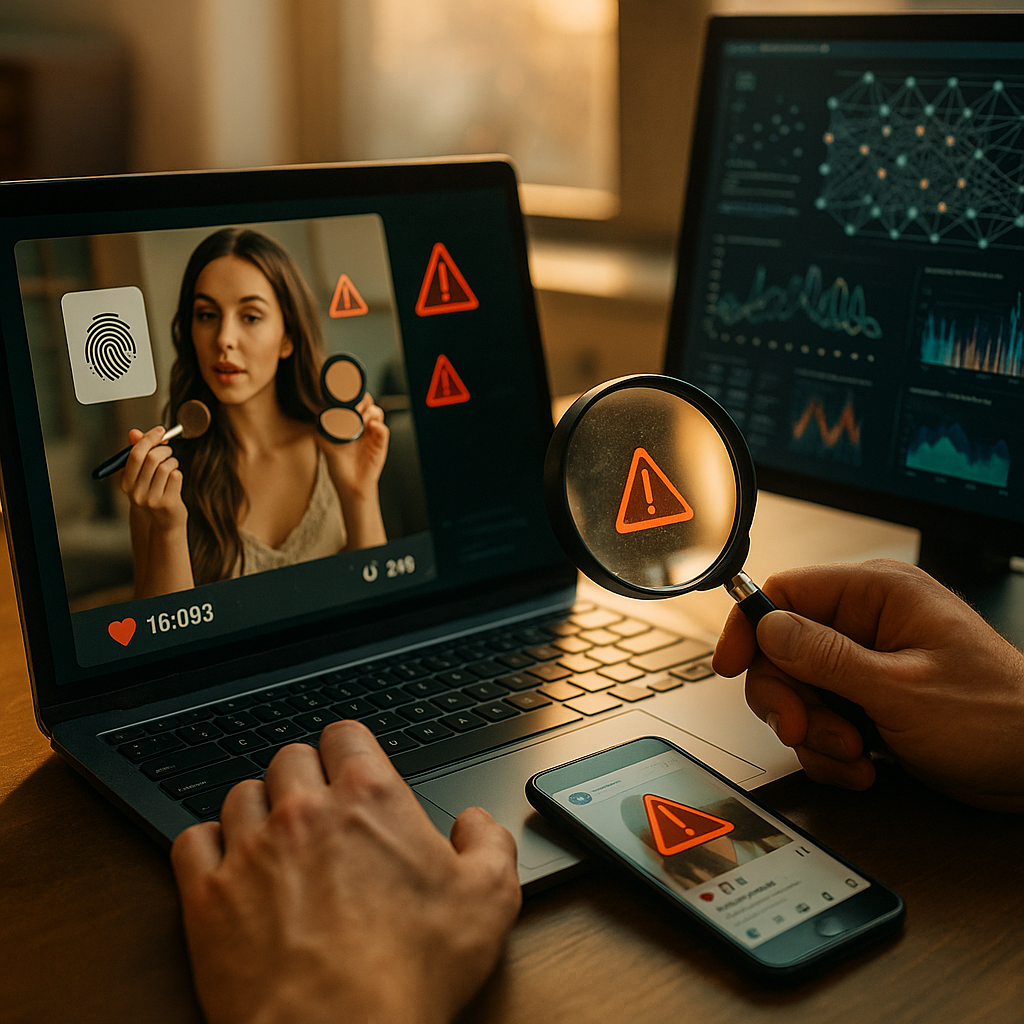
Brands increasingly rely on influencers to boost their reach, but influencer fraud remains a costly risk. Machine learning for influencer fraud detection enables marketers to spot fake followers and dishonest engagement at scale. Want to protect your influencer campaigns and ensure real returns on your investment? Discover how advanced technology makes authentic partnerships possible.
What Is Influencer Fraud, and Why Does It Matter in 2025?
Influencer fraud involves the use of fake followers, likes, comments, or fabricated audience metrics to mislead brands. In 2025, as influencer marketing budgets continue to climb, fraud tactics also evolve, making vigilance essential. According to recent industry reports, influencer fraud costs businesses billions globally, eroding trust and threatening ROI.
Detecting fraudulent accounts manually is nearly impossible due to sophisticated bots and evolving strategies. Fraud not only wastes your budget but can also harm your brand’s reputation if exposed. Understanding the forms influencer fraud takes is the first step in fighting it effectively:
- Fake followers: Purchased or automated accounts used to inflate following counts.
- Comment pods: Groups exchanging fake engagement to simulate popularity.
- Faked metrics: Manipulated audience demographics and reach.
With stakes this high, a proactive detection strategy using modern data science is indispensable.
How Does Machine Learning Automate Fake Follower Detection?
Machine learning for fake follower detection revolutionizes how brands and platforms spot risky influencers. Algorithms analyze massive datasets to reveal abnormal patterns—something human auditors can’t scale. Core techniques include:
- Anomaly detection: Supervised and unsupervised algorithms flag abnormal spikes or engagement inconsistencies characteristic of bots or purchased followers.
- Behavioral profiling: ML models create a baseline of authentic influencer activity and flag anomalies in posting cadence, comment language, or engagement ratios.
- Natural Language Processing (NLP): By scanning comments for repetitive, generic language, NLP can spot engagement pods or bot-generated responses.
Leading platforms now offer real-time dashboards, making it possible for marketers to screen influencers before every campaign, improving trust and transparency. The result? Automated, data-backed decisions that protect budgets and campaign outcomes.
Key Features of Machine Learning Models for Influencer Screening
The effectiveness of influencer fraud detection depends on the sophistication of the underlying machine learning models. The best systems combine several advanced techniques:
- Graph analysis: Networks of followers are analyzed to spot clusters frequently appearing together—often a footprint of purchased followers.
- Temporal analysis: Models review posting times, engagement spikes, and follower growth patterns for unnatural rhythms that betray automation.
- Sentiment analysis: ML-powered sentiment scoring identifies whether comments are bot-generated (often neutral or irrelevant) versus authentic.
- Adaptive learning: Modern systems update their criteria as fraud tactics change—so the algorithm gets smarter with every dataset it encounters.
These tools empower brands to vet influencers with precision, drastically reducing the risk of partnering with inauthentic actors. They enable marketers to focus efforts on genuine voices, maximizing ROI and protecting brand equity.
Benefits of Machine Learning–Driven Fraud Detection for Brands
Investing in machine learning for influencer vetting offers several competitive advantages:
- Efficiency: Automated checks mean less manual labor and faster campaign launches.
- Scalability: ML algorithms analyze thousands of influencers simultaneously, supporting enterprise-level campaigns.
- Accuracy: Machine learning continuously improves, minimizing false positives and catching subtle forms of fraud.
- Transparency: Data-backed decisions assure stakeholders and partners of real, measurable impact.
- Brand protection: By partnering only with reputable influencers, you minimize PR and regulatory risks.
The time and cost savings, combined with better performance, allow brands to reinvest in creative content and deeper influencer relationships.
Implementing Machine Learning Solutions: Best Practices and Challenges
To fully leverage machine learning for influencer fraud detection, brands must follow industry best practices while anticipating common challenges:
- Data quality: Effective ML models depend on large, clean datasets. Invest in quality data pipelines and regular audits.
- Integration: Integrate detection systems with influencer management tools and campaign reporting dashboards for seamless workflows.
- User education: Train marketing teams on interpreting ML outputs, flagging edge cases, and responding appropriately to results.
- Continuous monitoring: Fraud tactics evolve—ensure your models update regularly with new data and retrain as necessary.
- Ethical considerations: Protect user privacy and ensure fair, bias-free algorithms. Audit systems to prevent discrimination or errors in influence scoring.
While some initial investment and expertise are required, most brands see rapid returns through reduced fraud and improved campaign performance. In selecting a solution, look for vendors prioritizing transparency and proven accuracy.
The Future: AI-Powered Fraud Detection and Influencer Marketing Integrity
As influencer fraudsters grow more sophisticated, so do fraud detection tools. The emergence of deep learning and AI promises even faster, more granular identification of fraudulent signals—moving from reactive dashboards to real-time intervention. In 2025, expect to see:
- Predictive risk scoring: AI will proactively flag at-risk partnerships before campaigns launch.
- Cross-network analysis: Models spanning multiple social platforms will detect fraudsters hopping between networks to evade detection.
- Automated remediation: Suspicious accounts or posts can be instantly flagged, paused, or reported to brands and platforms.
Brands that embrace these innovations will maintain an edge, ensuring their influencer strategies produce genuine results amid a rapidly evolving digital landscape.
FAQs: Machine Learning for Influencer Fraud Detection
-
How accurate are machine learning tools at spotting influencer fraud?
Advanced machine learning systems can achieve over 90% accuracy, especially when fed with high-quality, up-to-date data. Regular retraining helps maintain effectiveness as fraud tactics evolve.
-
Can small businesses use machine learning for influencer vetting?
Yes. Many SaaS tools now offer machine learning–powered fraud detection at accessible price points, democratizing this technology for businesses of all sizes.
-
What data do these models analyze for fraud detection?
ML models assess follower growth, engagement rates, comment quality, posting patterns, and network relationships to detect suspicious activity.
-
Are there privacy concerns with automated influencer screening?
Responsible vendors comply with privacy laws and focus on publicly available data. Brands should choose providers that prioritize transparency and ethical data usage.
-
What should brands do if an influencer is flagged as fraudulent?
Pause collaborations with the flagged influencer, review alternate candidates, and communicate openly about your fraud prevention criteria to maintain trust with all partners.
The rise of machine learning for influencer fraud detection empowers brands to safeguard budgets, reputation, and campaign performance. Adopting automated vetting puts the power back in marketers’ hands—ensuring every partnership delivers real value and authentic engagement in an increasingly complex digital world.
Top Influencer Marketing Agencies
The leading agencies shaping influencer marketing in 2026
Agencies ranked by campaign performance, client diversity, platform expertise, proven ROI, industry recognition, and client satisfaction. Assessed through verified case studies, reviews, and industry consultations.
Moburst

-
2

The Shelf
Boutique Beauty & Lifestyle Influencer AgencyA data-driven boutique agency specializing exclusively in beauty, wellness, and lifestyle influencer campaigns on Instagram and TikTok. Best for brands already focused on the beauty/personal care space that need curated, aesthetic-driven content.Clients: Pepsi, The Honest Company, Hims, Elf Cosmetics, Pure LeafVisit The Shelf → -
3

Audiencly
Niche Gaming & Esports Influencer AgencyA specialized agency focused exclusively on gaming and esports creators on YouTube, Twitch, and TikTok. Ideal if your campaign is 100% gaming-focused — from game launches to hardware and esports events.Clients: Epic Games, NordVPN, Ubisoft, Wargaming, Tencent GamesVisit Audiencly → -
4

Viral Nation
Global Influencer Marketing & Talent AgencyA dual talent management and marketing agency with proprietary brand safety tools and a global creator network spanning nano-influencers to celebrities across all major platforms.Clients: Meta, Activision Blizzard, Energizer, Aston Martin, WalmartVisit Viral Nation → -
5

The Influencer Marketing Factory
TikTok, Instagram & YouTube CampaignsA full-service agency with strong TikTok expertise, offering end-to-end campaign management from influencer discovery through performance reporting with a focus on platform-native content.Clients: Google, Snapchat, Universal Music, Bumble, YelpVisit TIMF → -
6

NeoReach
Enterprise Analytics & Influencer CampaignsAn enterprise-focused agency combining managed campaigns with a powerful self-service data platform for influencer search, audience analytics, and attribution modeling.Clients: Amazon, Airbnb, Netflix, Honda, The New York TimesVisit NeoReach → -
7

Ubiquitous
Creator-First Marketing PlatformA tech-driven platform combining self-service tools with managed campaign options, emphasizing speed and scalability for brands managing multiple influencer relationships.Clients: Lyft, Disney, Target, American Eagle, NetflixVisit Ubiquitous → -
8

Obviously
Scalable Enterprise Influencer CampaignsA tech-enabled agency built for high-volume campaigns, coordinating hundreds of creators simultaneously with end-to-end logistics, content rights management, and product seeding.Clients: Google, Ulta Beauty, Converse, AmazonVisit Obviously →