


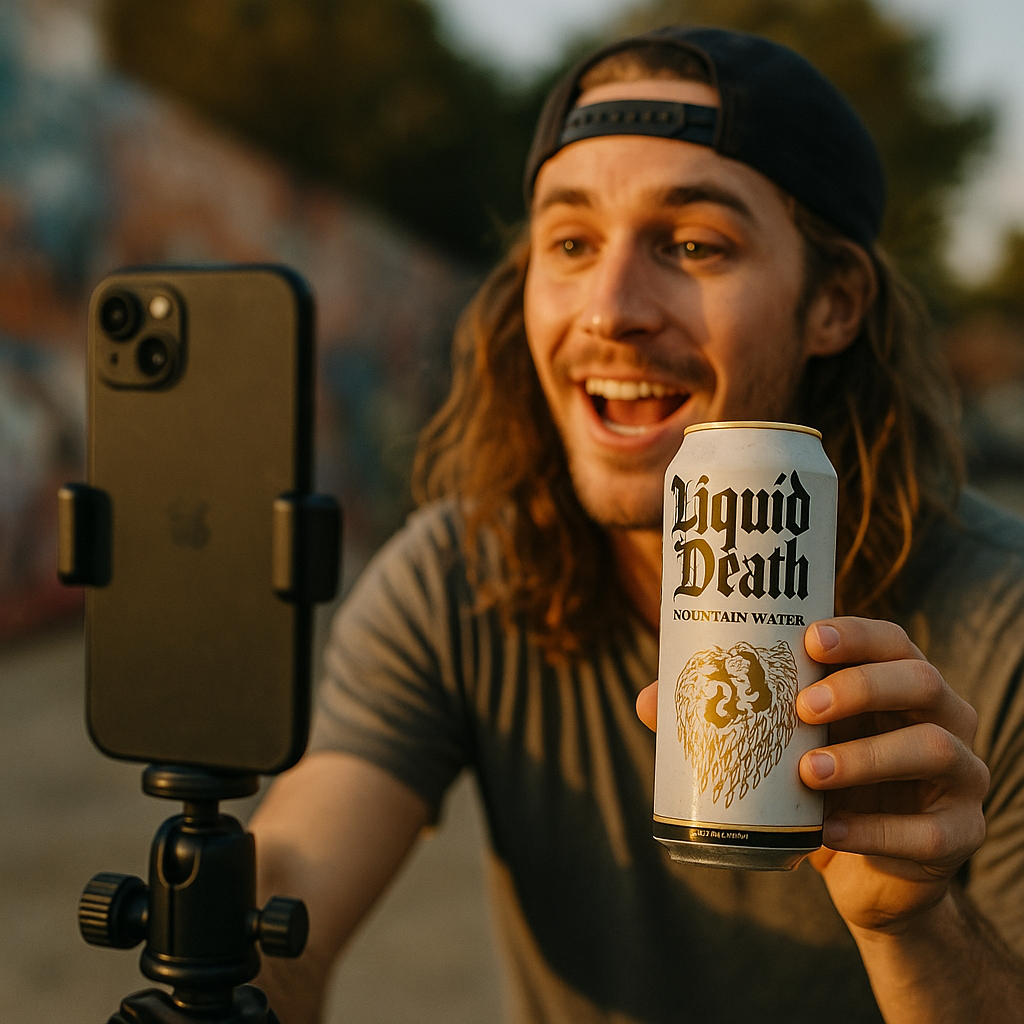
How Liquid Death built a cult following through unconventional influencer tactics is one of today’s most fascinating brand stories. Its explosive ascent in the competitive beverage space flipped marketing conventions on their heads. Let’s break down how bold influencer strategies, unexpected partnerships, and viral storytelling propelled a canned water startup into a global phenomenon.
The Rise of Liquid Death: From Parody to Powerhouse Brand
Liquid Death wasn’t born in a boardroom but started as a viral joke. In a market saturated with wellness-focused water brands, Liquid Death’s founders wanted to parody the “extreme” marketing tactics seen in energy drinks. Their canned mountain water, wrapped in edgy, punk-metal branding, initially raised eyebrows. Yet, by 2025, the company had achieved remarkable growth—landing on major supermarket shelves and partnering with artists, athletes, and even environmental causes.
According to industry analysts, the brand’s distinctive voice and reverse-psychology humor helped it stand out. Founder Mike Cessario described the mission as “making health and sustainability cool.” By embracing irreverence and social commentary, Liquid Death attracted a loyal cult following, especially among Gen Z and millennials seeking authenticity.
Unconventional Influencer Marketing: More Than Just Endorsements
Liquid Death’s influencer approach broke away from transactional sponsored posts. Rather than simply paying popular creators to hold a can, the brand collaborated with them on wild, culturally relevant stunts. This type of influencer marketing felt organic, amplifying authenticity while encouraging creators to push boundaries.
- Co-Creation: Influencers helped develop content, launch limited-edition merch, and even participate in product design decisions. This involvement led to viral moments, such as the “Murder Your Thirst” campaign—making fans feel like insiders, not just customers.
- Reverse Psychology: The brand famously used messaging such as “Don’t buy this” and “It’s just water,” turning standard selling points upside down. Influencers echoed this irreverence, generating curiosity and laughter.
- Integrated Storytelling: Instead of isolated shout-outs, partnerships synchronized with broader narratives around environmentalism, creativity, and rebellion.
This unique approach resonated with online communities and helped Liquid Death’s influencer campaigns routinely outpace traditional beverage brands in engagement, as shown by their massive social share-of-voice in 2025 digital marketing reports.
Building Loyalty: Community-First, Not Customer-First
Success for Liquid Death wasn’t only about selling cans of water. The company prioritized building a tribe united by shared values and inside jokes. Their social media was less a platform for advertisements and more a gathering place for fans to rally around creative content and humor.
- Rewarding True Fans: The “Country Club,” a paid membership program, offers exclusive merch drops, early access, and community events, fostering a strong sense of belonging.
- User-Generated Content: Fans are encouraged to remix Liquid Death assets, create memes, and share their own stories. The brand regularly reposts fan creations, making supporters celebrities in their own right.
- Relentless Transparency: Unlike many brands, Liquid Death leans into honest conversations—openly discussing its carbon footprint, packaging, and environmental initiatives, winning credibility rather than just attention.
By treating consumers as core members of the movement, Liquid Death cultivates advocates who proudly amplify its message across platforms.
Viral Partnerships: Collaborating Beyond Traditional Influencers
Liquid Death’s collaborations have defied industry norms. While many beverage brands align with mainstream celebrities, Liquid Death chooses unexpected partners: punk bands, tattoo artists, pro wrestlers, and internet pranksters. In 2025, the brand pushed further by working with visual artists to create limited-edition cans and launching interactive AR campaigns with online creators.
These partnerships are more than product placements. Some notable tactics include:
- Cause-Driven Collaborations: For every can sold, a portion goes to fighting plastic pollution. The brand partners with environmental nonprofits—turning purchases into activism.
- Cultural Crossovers: Limited runs with streetwear brands and digital art collectives capture the overlap between beverage culture, fashion, and the creative underground.
- Edgy Humor: Campaigns like the infamous “Selling Your Soul” contest, where participants signed humorous contracts for exclusive merch, made headlines and viral videos.
By aligning with trendsetters and cultural disruptors, Liquid Death maintains an aura of exclusivity and rebel cool—qualities difficult for legacy competitors to replicate.
Data-Driven Growth: How Analytics Informed Influencer Campaigns
Behind the humor and hype, data powers Liquid Death’s influencer strategies. The brand uses sophisticated analytics to monitor what resonates with different audiences, optimize campaign timing, and identify rising digital stars before they go mainstream.
Their team leverages social listening tools to analyze:
- Engagement Patterns: Which formats drive the most shares, comments, and follow-on content?
- Sentiment Analysis: How are campaigns perceived—funny, offensive, or inspiring?
- Micro-Influencer Impact: Many successful initiatives start with niche creators whose followings fiercely trust their recommendations.
This agile, experimental mindset allows Liquid Death to iterate rapidly. The brand kills off ideas that don’t work, adjusting its influencer collaborations to stay ahead of trends—something established beverage giants are often too risk-averse to try.
The Future of Beverage Marketing: Lessons from Liquid Death
What can brands of all sizes learn from how Liquid Death built a cult following through unconventional influencer tactics?
- Authenticity wins: Audiences, especially younger consumers, crave brands that act like people, not corporations. The brand’s unapologetic voice sets it apart from copycats.
- Value community over reach: A passionate, engaged fan base is more valuable than chasing vanity metrics.
- Experiment boldly: Audacious stunts and iterative influencer partnerships can create viral waves that money alone can’t buy.
- Use data, not guesswork: Every unconventional idea is tested, analyzed, and adapted based on real consumer responses.
As the beverage industry evolves, Liquid Death’s blueprint is now studied far beyond water marketing. It’s changing how brands approach influence, community, and culture itself.
Frequently Asked Questions
-
How did Liquid Death’s influencer strategy differ from typical beverage brands?
Liquid Death prioritized co-creation, humor, and authentic partnerships over traditional sponsored posts. Influencers helped drive content and campaigns, reinforcing the brand’s rebellious and community-first identity. -
What are Liquid Death’s most famous influencer campaigns?
Key campaigns include the “Murder Your Thirst” content series, cause-driven collaborations for environmental action, and viral stunts like the “Selling Your Soul” contest and limited-edition can drops with artists. -
Why do fans consider Liquid Death a cult brand?
The brand’s transparent, tongue-in-cheek marketing, member-driven community, exclusive events, and irreverent influencer tactics all foster deep loyalty uncommon for packaged goods companies. -
Can other brands replicate Liquid Death’s success?
While some strategies can be adapted, the key is authenticity: brands must understand their audience, experiment boldly, and build real relationships instead of copying surface-level stunts.
Liquid Death’s explosive growth proved that bold influencer tactics, raw authenticity, and relentless focus on community can build cult loyalty in even the most competitive industries. For brands seeking to break through today’s crowded digital landscape, the lesson is clear: dare to be radically different—and invite your fans along for the ride.
Top Influencer Marketing Agencies
The leading agencies shaping influencer marketing in 2026
Agencies ranked by campaign performance, client diversity, platform expertise, proven ROI, industry recognition, and client satisfaction. Assessed through verified case studies, reviews, and industry consultations.
Moburst

-
2

The Shelf
Boutique Beauty & Lifestyle Influencer AgencyA data-driven boutique agency specializing exclusively in beauty, wellness, and lifestyle influencer campaigns on Instagram and TikTok. Best for brands already focused on the beauty/personal care space that need curated, aesthetic-driven content.Clients: Pepsi, The Honest Company, Hims, Elf Cosmetics, Pure LeafVisit The Shelf → -
3

Audiencly
Niche Gaming & Esports Influencer AgencyA specialized agency focused exclusively on gaming and esports creators on YouTube, Twitch, and TikTok. Ideal if your campaign is 100% gaming-focused — from game launches to hardware and esports events.Clients: Epic Games, NordVPN, Ubisoft, Wargaming, Tencent GamesVisit Audiencly → -
4

Viral Nation
Global Influencer Marketing & Talent AgencyA dual talent management and marketing agency with proprietary brand safety tools and a global creator network spanning nano-influencers to celebrities across all major platforms.Clients: Meta, Activision Blizzard, Energizer, Aston Martin, WalmartVisit Viral Nation → -
5

The Influencer Marketing Factory
TikTok, Instagram & YouTube CampaignsA full-service agency with strong TikTok expertise, offering end-to-end campaign management from influencer discovery through performance reporting with a focus on platform-native content.Clients: Google, Snapchat, Universal Music, Bumble, YelpVisit TIMF → -
6

NeoReach
Enterprise Analytics & Influencer CampaignsAn enterprise-focused agency combining managed campaigns with a powerful self-service data platform for influencer search, audience analytics, and attribution modeling.Clients: Amazon, Airbnb, Netflix, Honda, The New York TimesVisit NeoReach → -
7

Ubiquitous
Creator-First Marketing PlatformA tech-driven platform combining self-service tools with managed campaign options, emphasizing speed and scalability for brands managing multiple influencer relationships.Clients: Lyft, Disney, Target, American Eagle, NetflixVisit Ubiquitous → -
8

Obviously
Scalable Enterprise Influencer CampaignsA tech-enabled agency built for high-volume campaigns, coordinating hundreds of creators simultaneously with end-to-end logistics, content rights management, and product seeding.Clients: Google, Ulta Beauty, Converse, AmazonVisit Obviously →