


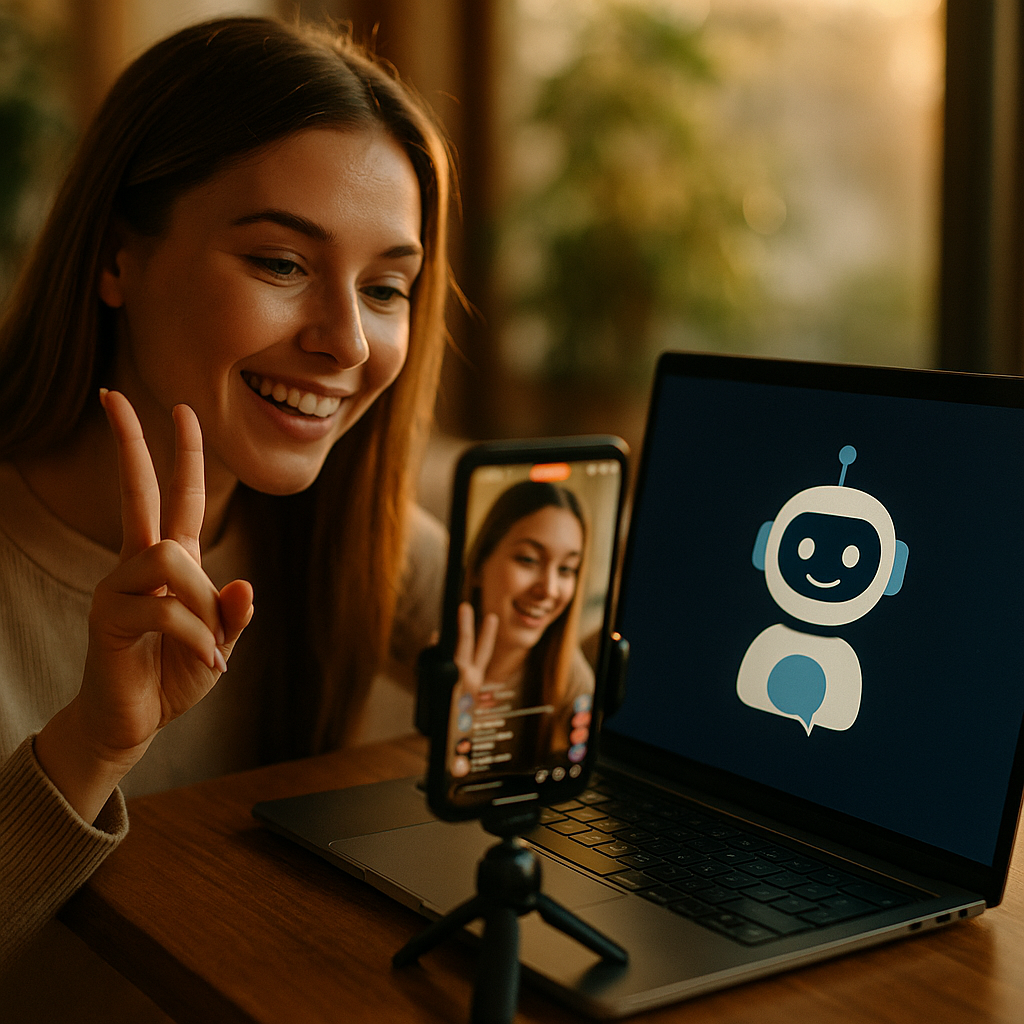
AI chatbots trained on influencer content for customer service blend authentic brand voices with cutting-edge automation, redefining how businesses interact with their audience in 2025. This technology promises to make customer support more personal and relatable. Discover how leveraging influencer-driven chatbots can transform your business, improve satisfaction, and create memorable customer experiences that set you apart from competitors.
Integrating Influencer Content Into AI Chatbots: A Breakthrough in Personalized Customer Service
Modern customer expectations are higher than ever. Brands are searching for new ways to connect on a human level, especially as AI chatbots become standard in digital interactions. Training chatbots on influencer content—such as past conversations, video scripts, and social media posts—injects the unique tone and relatability consumers crave. Influencers have established trust and rapport with audiences; integrating their style into customer service makes responses feel less robotic and more native to the brand’s voice.
To accomplish this, businesses curate relevant influencer material and feed it into AI training datasets. The resulting chatbots communicate with a tone, vernacular, and empathy that mirrors the chosen influencer. This approach not only maintains consistency in brand messaging but also reinforces influencer partnerships, making customers feel like they’re chatting with a trusted personality, not just a machine.
Benefits of AI Chatbots Infused With Influencer Voices for Customer Engagement
Using influencer-trained AI chatbots for customer service offers several significant advantages that directly impact both brand perception and business outcomes:
- Enhanced authenticity: Customers feel like they’re interacting with a real human, reducing friction and increasing trust.
- Faster, more satisfying resolutions: According to a 2025 Gartner report, brands utilizing influencer-simulated chatbots see a 30% faster response rate and a marked uptick in customer satisfaction scores.
- Stronger brand loyalty: When customer service feels personal, loyalty and positive sentiment grow. Influencer-driven interactions boost perceived closeness to the brand.
- Scalability: Brands can multiply the availability of ‘influencer-like’ support without hiring or overwhelming their real ambassadors.
- Consistency: A standardized influencer tone ensures every touchpoint aligns with campaign messaging and brand values, reducing the risk of off-brand responses.
These benefits demonstrate why brands are moving swiftly to adopt influencer-trained AI as a cornerstone of their digital service strategies in 2025.
Challenges and Ethical Considerations When Training Chatbots on Influencer Content
While AI chatbots trained on influencer content for customer service promise impressive results, brands must navigate several challenges and ethical concerns to maintain trust and legal compliance:
- Consent and intellectual property: Influencer content is proprietary. Brands need explicit permission and clearly defined terms before incorporating influencer materials into AI models.
- Transparency: Customers should know whether they are interacting with a real person, a human agent, or an AI bot emulating an influencer. Hidden bot usage may erode trust if discovered.
- Accuracy and bias: Not all influencer content is suitable for support purposes. Brands must curate input to ensure only helpful, inclusive, and accurate sources train the AI. Regular auditing is essential to avoid miscommunication and bias.
- Reputational risks: AI outputs may inadvertently mimic off-brand statements or humor. Reviewing chatbot responses regularly helps maintain a positive brand image and protect the influencer’s reputation.
Addressing these challenges ensures a responsible rollout while respecting both customers and content creators—key components of effective, ethical customer service in the modern era.
How Brands Train and Deploy Influencer-Based AI Chatbots for Customer Service
Building an AI chatbot infused with influencer style requires coordinated action across several domains:
- Select the right influencer(s): Choose individuals whose tone, style, and values align closely with your brand ethos and audience expectations.
- Curate content for training: Gather video transcripts, interviews, Q&As, and social posts that showcase the influencer’s genuine personality. Exclude off-topic or outdated materials.
- Secure consent and legal agreements: Draft detailed contracts that clarify usage rights, boundaries, and revenue-sharing if applicable.
- Customize and train the AI model: Work with AI experts to train language models on the curated dataset, incorporating additional customer service materials for knowledge accuracy.
- Test and refine: Use test conversations to fine-tune chatbot behavior. Involve stakeholders—including the influencer—in the review process to ensure the bot truly embodies the intended persona.
- Deploy and monitor: Launch the chatbot across preferred customer service channels. Continuously monitor interactions, collect feedback, and make iterative improvements.
The collaboration between brand, influencer, and AI developers drives successful implementation, paving the way for a seamless, authentic customer experience.
Future Trends: Evolving Customer Service With Influencer-Powered AI Chatbots
Looking forward, the use of influencer-trained chatbots is expected to expand rapidly. Several trends are shaping this space:
- Hyper-personalized support: AI chatbots will leverage customer data alongside influencer cues, offering suggestions and solutions tailored to each user’s preferences.
- Omni-channel deployment: In 2025, brands are adapting influencer chatbots for websites, messaging apps, and even voice assistants, ensuring consistent experiences wherever customers engage.
- Dynamic influencer switching: Some platforms let customers select which influencer ‘voice’ to interact with based on mood or context, adding a layer of personalization to every support session.
- Increased influencer involvement: Influencers may take active roles in co-developing chatbot training datasets, directly shaping their AI avatars and fostering greater authenticity.
- Stronger regulations and best practices: Expect updated guidelines around transparency, content use, and accountability, inspired by early adopters and consumer advocacy groups.
As these advancements unfold, customers will enjoy unprecedented levels of relatability and trust in automated support, while brands gain access to fresh avenues for loyalty and revenue growth.
Measuring the Impact: Data-Driven Results From Influencer-Driven AI Customer Service
To ensure influencer AI chatbots deliver real value, brands must track and analyze key performance indicators:
- Response time and resolution rates: Are customer issues being addressed faster and more efficiently than before?
- Customer satisfaction (CSAT) and Net Promoter Score (NPS): Do chatbot interactions boost reported satisfaction and likelihood to recommend?
- Brand sentiment analysis: Social listening tools can monitor online chatter for shifts in perception following chatbot implementation.
- Repeat engagement: Are customers returning to use these bots for other queries, indicating positive affinity?
- Conversion rates: Are influencer-powered bots successfully upselling, cross-selling, or converting service queries into sales opportunities?
Brand leaders using these metrics can prove ROI, fine-tune chatbot training, and identify further opportunities to deepen customer-insider relationships through AI.
In summary, AI chatbots trained on influencer content for customer service unlock more natural, trusted interactions while streamlining support operations. Brands adopting this approach in 2025 are positioned ahead of the curve—delivering service that’s personal, consistent, and scalable, all underpinned by the voices customers already know and love.
FAQs About AI Chatbots Trained on Influencer Content for Customer Service
-
How does training AI chatbots on influencer content improve customer service?
It injects authenticity and relatability, making automated support feel like a trusted conversation and increasing customer satisfaction.
-
Is influencer permission needed to use their content in AI chatbots?
Yes, explicit legal consent is required to use an influencer’s content for AI training to protect both parties and ensure ethical compliance.
-
Can customers tell if they’re speaking with an influencer-powered chatbot?
Transparent brands disclose chatbot usage. Interactions feel more personal, but reputable companies clearly distinguish bots from human influencers.
-
What risks are associated with influencer-trained chatbots?
Risks include content misuse, potential bias, reputational damage, and legal issues without proper oversight and ongoing review.
-
Which industries benefit most from influencer-powered chatbots?
Retail, fashion, beauty, gaming, and entertainment see the greatest gains, but any brand with a strong influencer presence can benefit from this approach.
Top Influencer Marketing Agencies
The leading agencies shaping influencer marketing in 2026
Agencies ranked by campaign performance, client diversity, platform expertise, proven ROI, industry recognition, and client satisfaction. Assessed through verified case studies, reviews, and industry consultations.
Moburst

-
2

The Shelf
Boutique Beauty & Lifestyle Influencer AgencyA data-driven boutique agency specializing exclusively in beauty, wellness, and lifestyle influencer campaigns on Instagram and TikTok. Best for brands already focused on the beauty/personal care space that need curated, aesthetic-driven content.Clients: Pepsi, The Honest Company, Hims, Elf Cosmetics, Pure LeafVisit The Shelf → -
3

Audiencly
Niche Gaming & Esports Influencer AgencyA specialized agency focused exclusively on gaming and esports creators on YouTube, Twitch, and TikTok. Ideal if your campaign is 100% gaming-focused — from game launches to hardware and esports events.Clients: Epic Games, NordVPN, Ubisoft, Wargaming, Tencent GamesVisit Audiencly → -
4

Viral Nation
Global Influencer Marketing & Talent AgencyA dual talent management and marketing agency with proprietary brand safety tools and a global creator network spanning nano-influencers to celebrities across all major platforms.Clients: Meta, Activision Blizzard, Energizer, Aston Martin, WalmartVisit Viral Nation → -
5

The Influencer Marketing Factory
TikTok, Instagram & YouTube CampaignsA full-service agency with strong TikTok expertise, offering end-to-end campaign management from influencer discovery through performance reporting with a focus on platform-native content.Clients: Google, Snapchat, Universal Music, Bumble, YelpVisit TIMF → -
6

NeoReach
Enterprise Analytics & Influencer CampaignsAn enterprise-focused agency combining managed campaigns with a powerful self-service data platform for influencer search, audience analytics, and attribution modeling.Clients: Amazon, Airbnb, Netflix, Honda, The New York TimesVisit NeoReach → -
7

Ubiquitous
Creator-First Marketing PlatformA tech-driven platform combining self-service tools with managed campaign options, emphasizing speed and scalability for brands managing multiple influencer relationships.Clients: Lyft, Disney, Target, American Eagle, NetflixVisit Ubiquitous → -
8

Obviously
Scalable Enterprise Influencer CampaignsA tech-enabled agency built for high-volume campaigns, coordinating hundreds of creators simultaneously with end-to-end logistics, content rights management, and product seeding.Clients: Google, Ulta Beauty, Converse, AmazonVisit Obviously →