


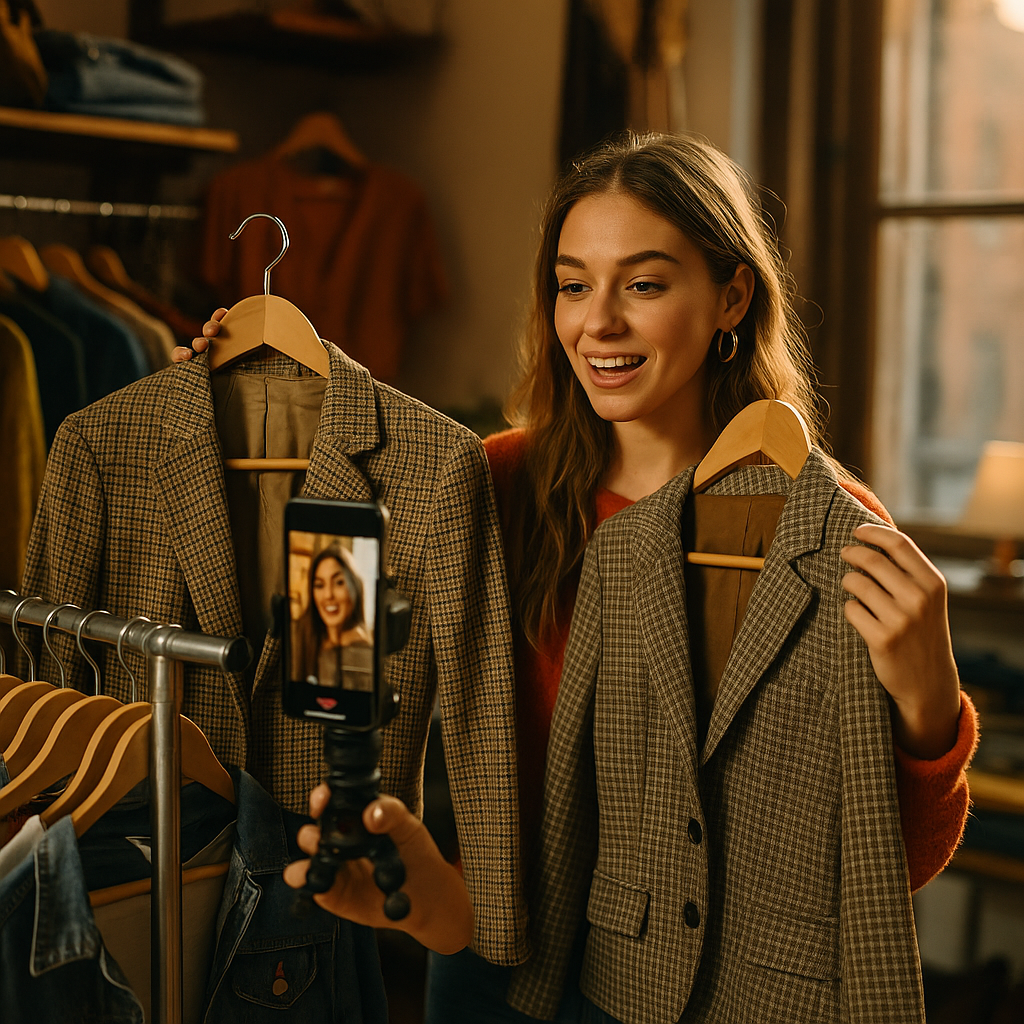
Depop created a fashion resale movement through influencers, transforming how Gen Z and millennials shop for clothing. Once a niche platform, it is now synonymous with secondhand style and sustainability. But how did Depop leverage influencers to fuel this shift? Let’s dive into the story behind this digital fashion phenomenon.
The Rise of Depop and the Vintage Clothing Trend
Depop’s emergence aligns perfectly with the rising demand for vintage and secondhand clothing. Since its inception, Depop has focused on mobile-friendly, social shopping—engaging users aged 16–25 who crave authenticity and individuality in their wardrobes. Vintage clothing trend is more than recycling; it’s about crafting a distinctive personal style and supporting circular fashion.
According to ThredUp’s 2024 Resale Report, the secondhand apparel market has grown more than 40% since 2022, and platforms like Depop are central to this expansion. Depop enables users to buy, sell, and discover pre-loved items with the casual ease of scrolling social media, making thrift shopping accessible worldwide.
Influencer Marketing’s Role in Depop’s Success
Depop’s approach to influencer marketing is unique. Instead of only targeting large-scale celebrities, the brand collaborated with micro-influencers—real users with stylized shops and loyal followers. This strategy leverages influencer marketing for resale platforms, tapping into buyers’ desire for authenticity and connection.
Success stories of top sellers like @internetgirl and @soldnottold demonstrate that customers are drawn to curated shops with a consistent aesthetic. These sellers built brands around themselves, inspiring their communities and making resale fashionable. In 2024, Depop announced that influencer-driven shops generate up to three times more repeat customers than unbranded listings. These influencers also educate followers about conscious consumption, amplifying messaging about resale’s environmental benefits.
Depop’s Social Features: From Followers to Fashion Communities
Unlike traditional ecommerce sites, Depop operates as a social marketplace. Its feed, likes, comments, and private messaging foster fashion communities on Depop—where buyers interact directly with sellers. This sense of community sets Depop apart and intensifies brand loyalty.
Peer reviews and genuine user photos boost trust, while “shop your feed” recommendations echo personalized social media algorithms. Many influencers run challenges or style edits, encouraging creativity and engagement. Depop even spotlights top creators and seasonal trends, giving users a reason to return. As a result, 70% of active users report Depop as their top destination for discovering emerging fashion trends.
Gen Z’s Drive for Sustainability and Self-Expression
Depop’s model resonates with a generation prioritizing eco-consciousness and self-identity. Sustainable fashion and self-expression are now driving factors in shopping behavior. Gen Z, in particular, seeks unique pieces and prefers brands aligned with sincere values.
Depop amplifies these values by empowering sellers to tell stories behind each piece and buyers to express individuality through one-of-a-kind items. Recent surveys indicate that 85% of Depop users consider environmental impact before making a purchase. By linking resale to sustainability and identity, Depop positions itself not only as a marketplace, but as a cultural hub.
The “Depop Look”: How Style Influencers Shape Trends
A search for #DepopLook on social media reveals a distinctive aesthetic—colorful, playful, often characterized by Y2K revival and eclectic accessories. Depop style influencers have become tastemakers, with their curated “drops” routinely selling out and inspiring TikTok styling videos.
Unlike fast fashion hauls, Depop’s influencers spotlight craftsmanship, upcycling, and personal curation. In 2025, Depop predicts that niche styles like cottagecore, gorpcore, and maximalist vintage will continue to thrive because of influencer-driven communities. Brands outside the resale space now collaborate with Depop tastemakers for limited-edition collections, recognizing their impact on youth fashion and shopping habits.
The Future of Fashion Resale: Lessons from Depop
Depop’s journey demonstrates that blending influencer-powered resale with a community-driven platform model can redefine an industry. As the fashion resale movement grows, brands must prioritize transparency, platform trust, and values-led marketing to succeed.
Depop’s open lines of communication, transparent transactions, and influencer partnerships position it as a bellwether for sustainable fashion platforms. As environmental and economic pressures mount, fashion resale will play an increasingly central role in global consumer behavior.
Depop’s use of influencers to spark the global fashion resale movement shows the power of community and authenticity. As secondhand shopping becomes mainstream, brands that empower creators and connect consumers will lead the way in reshaping sustainable fashion.
FAQs on Depop and Fashion Resale Influencer Marketing
-
How did influencers help Depop grow?
Influencers established trust, showcased personal style, and created cult followings for their curated shops, making resale cool and building brand loyalty from engaged audiences.
-
What makes Depop different from traditional resale sites?
Depop adds a social layer, enabling discovery through influencer shops and fostering fashion communities, while also prioritizing sustainable, individualistic fashion.
-
Can anyone become an influencer on Depop?
Yes. Depop encourages users to build personal brands, share styling tips, and engage with followers. Consistency and originality help sellers grow into influencer status.
-
Is Depop’s resale model sustainable?
Depop promotes reuse, resale, and conscious consumption, reducing landfill waste and promoting circular fashion, making it one of the most sustainable platforms for clothing resale in 2025.
-
What trends are big on Depop in 2025?
Niche aesthetics like Y2K revival, cottagecore, and upcycled fashion are highly popular, driven by influencer-led communities setting the trend agenda.
Top Influencer Marketing Agencies
The leading agencies shaping influencer marketing in 2026
Agencies ranked by campaign performance, client diversity, platform expertise, proven ROI, industry recognition, and client satisfaction. Assessed through verified case studies, reviews, and industry consultations.
Moburst

-
2

The Shelf
Boutique Beauty & Lifestyle Influencer AgencyA data-driven boutique agency specializing exclusively in beauty, wellness, and lifestyle influencer campaigns on Instagram and TikTok. Best for brands already focused on the beauty/personal care space that need curated, aesthetic-driven content.Clients: Pepsi, The Honest Company, Hims, Elf Cosmetics, Pure LeafVisit The Shelf → -
3

Audiencly
Niche Gaming & Esports Influencer AgencyA specialized agency focused exclusively on gaming and esports creators on YouTube, Twitch, and TikTok. Ideal if your campaign is 100% gaming-focused — from game launches to hardware and esports events.Clients: Epic Games, NordVPN, Ubisoft, Wargaming, Tencent GamesVisit Audiencly → -
4

Viral Nation
Global Influencer Marketing & Talent AgencyA dual talent management and marketing agency with proprietary brand safety tools and a global creator network spanning nano-influencers to celebrities across all major platforms.Clients: Meta, Activision Blizzard, Energizer, Aston Martin, WalmartVisit Viral Nation → -
5

The Influencer Marketing Factory
TikTok, Instagram & YouTube CampaignsA full-service agency with strong TikTok expertise, offering end-to-end campaign management from influencer discovery through performance reporting with a focus on platform-native content.Clients: Google, Snapchat, Universal Music, Bumble, YelpVisit TIMF → -
6

NeoReach
Enterprise Analytics & Influencer CampaignsAn enterprise-focused agency combining managed campaigns with a powerful self-service data platform for influencer search, audience analytics, and attribution modeling.Clients: Amazon, Airbnb, Netflix, Honda, The New York TimesVisit NeoReach → -
7

Ubiquitous
Creator-First Marketing PlatformA tech-driven platform combining self-service tools with managed campaign options, emphasizing speed and scalability for brands managing multiple influencer relationships.Clients: Lyft, Disney, Target, American Eagle, NetflixVisit Ubiquitous → -
8

Obviously
Scalable Enterprise Influencer CampaignsA tech-enabled agency built for high-volume campaigns, coordinating hundreds of creators simultaneously with end-to-end logistics, content rights management, and product seeding.Clients: Google, Ulta Beauty, Converse, AmazonVisit Obviously →