


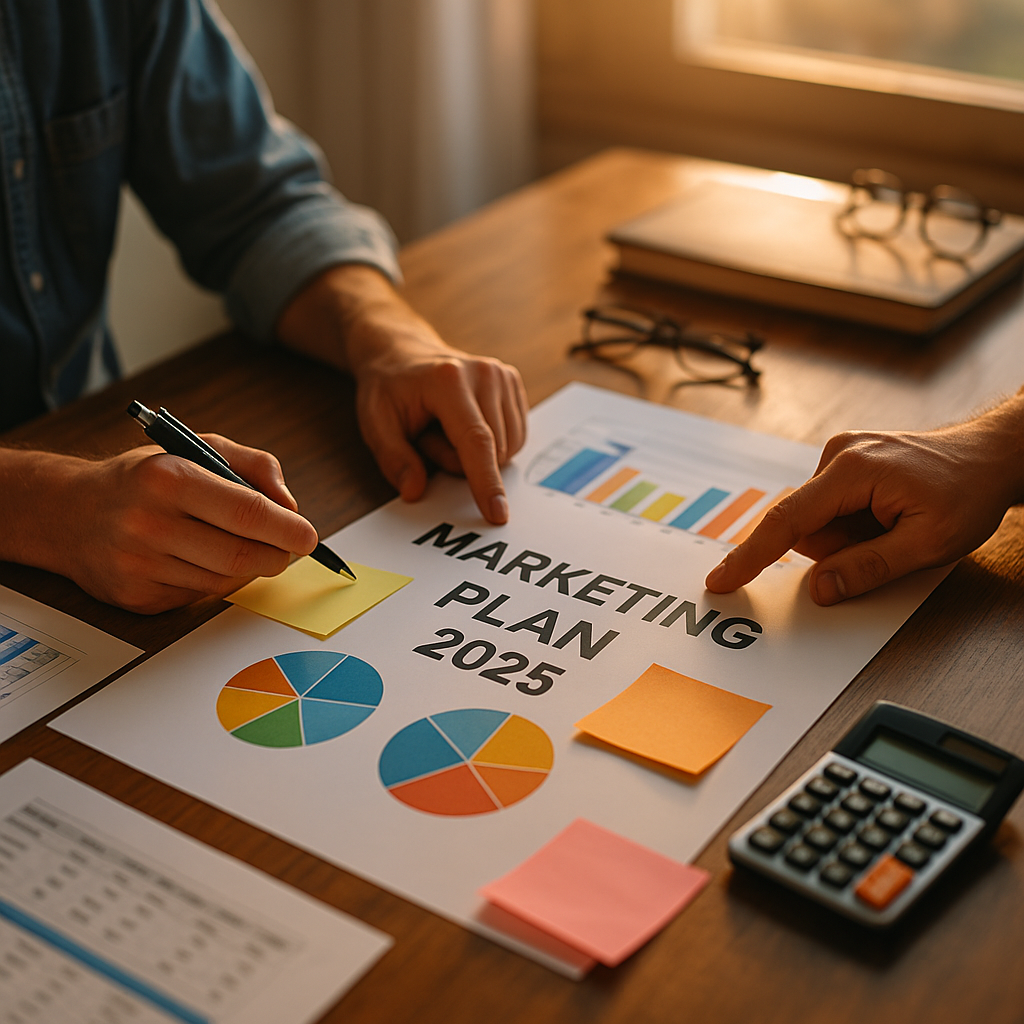
Building a marketing plan that is both proactive and budget-conscious is crucial for long-term business success in 2025’s competitive landscape. By combining strategic foresight with careful financial management, marketers can outpace challenges and maximize ROI. Discover actionable steps and expert insights to craft a high-performing, cost-effective marketing plan that positions your brand for sustained growth.
Understanding Proactive Marketing Strategies
In a fast-evolving market, proactive marketing strategies help businesses anticipate trends, address customer needs before they arise, and pivot quickly in response to disruptions. Rather than simply reacting to events, proactive marketers invest in industry research, customer feedback, and predictive analytics to inform every decision.
- Trend Analysis: Analyze industry reports and monitor competitor activity with tools like Google Trends and SEMrush to predict shifts and adapt early.
- Customer Engagement: Employ surveys and social listening in 2025’s omnichannel environment to gain real-time feedback and anticipate future demands.
- Scenario Planning: Develop contingency plans for various market outcomes, ensuring your strategy stays one step ahead of potential obstacles.
A proactive approach not only helps safeguard your marketing budget but also lets you seize new opportunities ahead of your competition.
Setting Clear Goals with a Marketing Budget Template
One of the cornerstones of a budget-conscious marketing plan is clear goal-setting supported by an effective marketing budget template. Specific, measurable, achievable, relevant, and time-bound (SMART) goals drive resource allocation and campaign priorities.
- Define Objectives: Align marketing goals with overall business objectives, like increasing qualified leads by 25% or boosting customer retention by 10% in 2025.
- Quantify Results: Assign KPIs, such as cost-per-lead or customer lifetime value, to monitor ongoing performance.
- Allocate Resources: A budget template helps you compare estimated costs with expected ROI across channels like social media, email, SEO, and paid ads.
Regular reviews ensure your spending stays aligned with your goals, making it easier to adjust campaigns as performance data comes in.
Crafting a Data-Driven Digital Marketing Approach
Digital marketing lies at the heart of most budget-conscious strategies in 2025. Leveraging data ensures every dollar is accounted for and delivers measurable value. Utilize data-driven insights to guide channel selection, audience targeting, and messaging.
- Channel Prioritization: Use analytics tools to determine which platforms—such as LinkedIn, Instagram, or YouTube—yield the best engagement and conversion rates.
- Segmentation: Segment your audience based on behavior, geography, and demographics to deliver personalized content that makes every interaction count.
- Performance Tracking: Collect data in real-time and measure against benchmarks. Use A/B testing to optimize campaigns without overspending.
A data-driven approach minimizes waste, maximizes reach, and allows marketers to make fast, informed adjustments.
Maximizing ROI with Cost-Effective Marketing Tactics
Balancing effectiveness and affordability is key when choosing marketing tactics. Marketers in 2025 are increasingly turning to high-impact, low-cost channels for greater ROI, especially when working within tight budgets.
- Content Marketing: Invest in evergreen content like blogs, videos, and infographics. A single high-quality article can drive traffic and engagement for years.
- Email Marketing: With strong list segmentation and personalized automation, email remains one of the highest-performing channels for return on investment.
- Partnerships and Influencers: Collaborate with micro-influencers or complimentary brands for mutual promotion, expanding reach without significant spend.
- Retargeting Campaigns: Retargeting past visitors increases conversions at a fraction of the cost of new customer acquisition.
Applying these tactics lets you concentrate spend where results are strongest, supporting both proactive planning and budget-conscious execution.
Measuring Success and Optimizing Your Marketing Plan
Continuous measurement and optimization are vital components of a proactive and budget-conscious marketing strategy. Regularly reviewing performance data and incorporating lessons learned ensures resources are always deployed for maximum impact.
- Monitor KPIs Consistently: Track website analytics, conversion rates, and campaign performance across all channels using platforms like Google Analytics 4 and HubSpot.
- Analyze and Adjust: Identify underperforming tactics and redistribute budget to channels showing higher ROI in real-time.
- Iterate and Improve: Use test-and-learn cycles—whether with ad copy, landing pages, or email sequences—to continuously refine your marketing approach.
Systematically optimizing your plan ensures you get the greatest possible value, while remaining agile and prepared for any market changes.
Building Team Collaboration for Marketing Efficiency
Strong team collaboration is the engine that powers a successful marketing plan, especially as remote and hybrid work become standard practice in 2025. Clear processes, defined roles, and the right tools improve efficiency and control costs.
- Centralized Communication: Platforms like Slack, Asana, or Monday.com ensure that teams stay aligned and can quickly respond to new opportunities.
- Knowledge Sharing: Foster a culture of data and insight sharing to minimize redundancy and amplify results from successful experiments.
- Outsourcing and Automation: Use freelancers or agencies for specialized tasks and invest in automation to reduce manual workload without increasing headcount.
A collaborative approach enhances both proactivity and budget discipline, ensuring everyone works toward shared strategic goals.
FAQs: Building a Proactive and Budget-Conscious Marketing Plan
-
What is a proactive marketing plan?
A proactive marketing plan anticipates market changes, sets clear objectives, and designs strategies ahead of trends, rather than simply reacting to competitors or events.
-
How can I create a marketing budget for a small business?
Align your budget with business goals, prioritize channels by potential ROI, use free or low-cost tools, and review spending monthly to stay on track and maximize results.
-
Which digital marketing channels offer the best ROI in 2025?
Content marketing, email campaigns, and strategic partnerships continue to offer the highest returns with relatively low investment, especially when grounded in solid data analysis.
-
How often should I review and update my marketing plan?
Review your plan at least quarterly, but monitor key performance indicators in real-time to identify and act on improvement opportunities as they arise.
-
What are the biggest mistakes to avoid when building a marketing plan?
Avoid rigid annual plans, ignoring data insights, underestimating digital channels, or trying to do everything at once. Focus, flexibility, and regular optimization are key.
Building a marketing plan that is both proactive and budget-conscious positions your business for steady growth and adaptability. By focusing on clear goals, data-driven tactics, and collaborative efficiency, you can stretch your marketing dollars further while consistently outperforming the competition.
Top Influencer Marketing Agencies
The leading agencies shaping influencer marketing in 2026
Agencies ranked by campaign performance, client diversity, platform expertise, proven ROI, industry recognition, and client satisfaction. Assessed through verified case studies, reviews, and industry consultations.
Moburst

-
2

The Shelf
Boutique Beauty & Lifestyle Influencer AgencyA data-driven boutique agency specializing exclusively in beauty, wellness, and lifestyle influencer campaigns on Instagram and TikTok. Best for brands already focused on the beauty/personal care space that need curated, aesthetic-driven content.Clients: Pepsi, The Honest Company, Hims, Elf Cosmetics, Pure LeafVisit The Shelf → -
3

Audiencly
Niche Gaming & Esports Influencer AgencyA specialized agency focused exclusively on gaming and esports creators on YouTube, Twitch, and TikTok. Ideal if your campaign is 100% gaming-focused — from game launches to hardware and esports events.Clients: Epic Games, NordVPN, Ubisoft, Wargaming, Tencent GamesVisit Audiencly → -
4

Viral Nation
Global Influencer Marketing & Talent AgencyA dual talent management and marketing agency with proprietary brand safety tools and a global creator network spanning nano-influencers to celebrities across all major platforms.Clients: Meta, Activision Blizzard, Energizer, Aston Martin, WalmartVisit Viral Nation → -
5

The Influencer Marketing Factory
TikTok, Instagram & YouTube CampaignsA full-service agency with strong TikTok expertise, offering end-to-end campaign management from influencer discovery through performance reporting with a focus on platform-native content.Clients: Google, Snapchat, Universal Music, Bumble, YelpVisit TIMF → -
6

NeoReach
Enterprise Analytics & Influencer CampaignsAn enterprise-focused agency combining managed campaigns with a powerful self-service data platform for influencer search, audience analytics, and attribution modeling.Clients: Amazon, Airbnb, Netflix, Honda, The New York TimesVisit NeoReach → -
7

Ubiquitous
Creator-First Marketing PlatformA tech-driven platform combining self-service tools with managed campaign options, emphasizing speed and scalability for brands managing multiple influencer relationships.Clients: Lyft, Disney, Target, American Eagle, NetflixVisit Ubiquitous → -
8

Obviously
Scalable Enterprise Influencer CampaignsA tech-enabled agency built for high-volume campaigns, coordinating hundreds of creators simultaneously with end-to-end logistics, content rights management, and product seeding.Clients: Google, Ulta Beauty, Converse, AmazonVisit Obviously →