


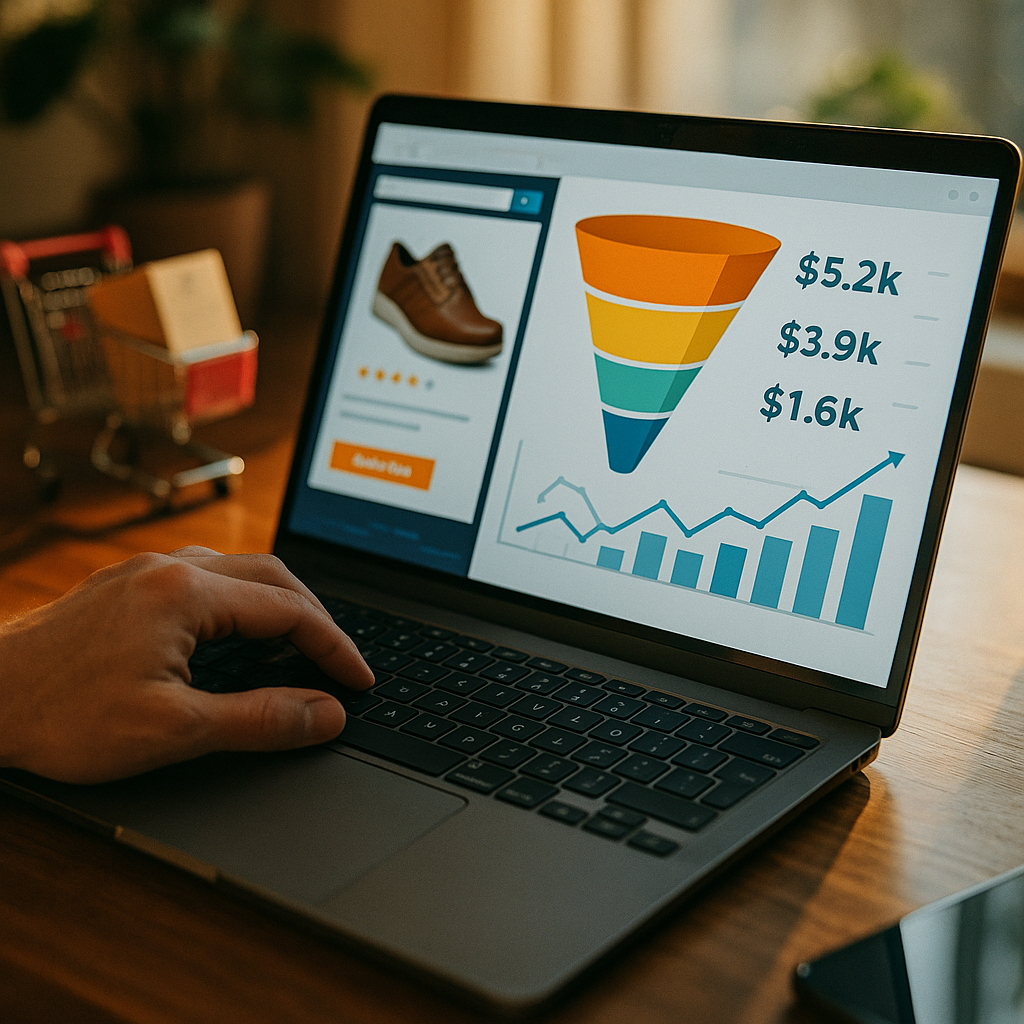
Using AI to analyze and optimize your e-commerce conversion funnel is revolutionizing how online retailers increase sales and customer satisfaction. Artificial intelligence enables a level of insight and automation once unimaginable. If you want to dramatically boost your store’s performance in 2025, understanding AI’s critical role in funnel optimization is more vital than ever.
Understanding the E-commerce Conversion Funnel with AI
The e-commerce conversion funnel describes the journey customers take from landing on your site to completing a purchase. Common stages include awareness, consideration, intent, and conversion. Analyzing this funnel with AI offers unprecedented granularity, using machine learning to detect drop-off points, friction zones, and behavioral patterns that traditional analytics often miss. In today’s data-driven market, AI-driven funnel analysis isn’t just a competitive advantage—it’s the foundation for sustained growth.
Leveraging AI for Data-Driven Funnel Insights
AI for e-commerce funnel analysis harnesses advanced algorithms to process vast amounts of data in real time. Through deep learning and predictive modeling, AI identifies which pages, products, and user interactions most influence your conversion rate. Sophisticated tools can automatically segment visitors by traffic source, device type, or behavioral patterns, revealing actionable insights. Top e-commerce platforms now integrate AI-based analytics natively, allowing merchants to:
- Automate A/B testing: AI continuously tests variations of landing pages, product listings, and checkout flows to optimize performance.
- Pinpoint bottlenecks: Machine learning flags stages where customers abandon carts, highlighting precisely where improvement will have the greatest impact.
- Generate predictive insights: AI predicts which visitors are most likely to convert and why, enabling targeted intervention at every funnel stage.
Optimizing On-Site Experiences with AI Recommendations
Boosting conversion isn’t just about identifying weak points—it’s about actively improving the customer journey. AI-powered recommendation engines personalize shopping experiences in real time. By analyzing behavior, preferences, and purchase history, these systems surface products, content, and offers tailored to each visitor:
- Dynamic product recommendations: Increase average order value by presenting relevant cross-sells and up-sells.
- Personalized content: Show blog posts, guides, or reviews most likely to educate and persuade a specific user segment.
- Tailored incentives: Use AI to offer smart discounts or loyalty perks to fence-sitting shoppers who need an extra push to convert.
Leading brands in 2025 report up to 30% higher conversion rates after implementing AI-driven personalization, according to recent industry surveys.
Enhancing the Checkout Funnel with AI Automation
The checkout process remains a notorious stumbling block for online retailers. Complex forms, hidden costs, and lack of payment options can all sabotage conversions. AI now streamlines the checkout experience by:
- Auto-filling customer information: Reducing friction and making repeat purchases effortless.
- Fraud detection: Real-time machine learning algorithms instantly flag suspicious transactions, boosting security without adding steps for legitimate buyers.
- Optimal payment gateway selection: AI analyzes conversion data by payment method, automatically prioritizing those with the highest completion rates for each customer segment.
Recent case studies highlight up to 18% decreases in cart abandonment rates when AI-powered checkout automation is used, underscoring its direct impact on revenue optimization.
Continuous Funnel Optimization: Monitoring and Iteration with AI
Unlike traditional analytics, AI-driven tools don’t simply report results—they adapt and improve over time. By constantly monitoring funnel performance, AI systems can:
- Detect emerging patterns or shifts in customer behavior.
- Automatically implement micro-optimizations, like adjusting copy, layout, or timing of offers.
- Flag anomalies before they become major revenue leaks, such as a sudden increase in checkout errors or bounce rates.
AI’s adaptive capabilities ensure your e-commerce funnel is optimized not just once but continually, providing a resilient framework in the face of changing market conditions or consumer preferences.
Building Trust and Transparency: Addressing Customer Concerns with AI
Trust is essential in any online transaction, and AI’s role extends to fostering this confidence. Transparent use of AI in personalization and automation, coupled with robust data privacy protections, reassures users. For example:
- Ethical AI deployment: Make it clear how AI is used, ensuring recommendations and offers are unbiased and user data is protected.
- Explaining AI decisions: Offer users simple explanations for why they see certain products or receive specific offers, building transparency.
- Respecting privacy: Adhere to all relevant data protection standards and communicate data practices clearly.
Building this trust doesn’t just protect your brand—it boosts customer loyalty, increasing lifetime value and conversion rates alike.
FAQs: Using AI to Analyze and Optimize Your E-commerce Conversion Funnel
-
How does AI improve the e-commerce conversion funnel?
AI automates data analysis, identifies bottlenecks, recommends optimizations, and personalizes the customer experience. This leads to higher conversion rates and increased sales.
-
What kind of data does AI analyze in a conversion funnel?
AI processes behavioral data, source data, device information, session recordings, past purchases, and interactions throughout the funnel to surface actionable insights.
-
Can AI help reduce cart abandonment rates?
Yes, AI-powered checkout optimization and personalized interventions have consistently shown to lower cart abandonment by making checkout smoother and more relevant to each user.
-
What are the best practices for ethical AI use in e-commerce?
Be transparent about how AI is used, protect customer data, explain AI-driven recommendations, and ensure your algorithms are fair and unbiased.
-
Is AI suitable for small and medium-sized e-commerce businesses?
Absolutely. Today’s user-friendly AI tools can be implemented at any scale, offering SMBs powerful insights and optimizations once only available to large enterprises.
Using AI to analyze and optimize your e-commerce conversion funnel transforms raw data into increased revenue and happier customers. Those who embrace AI-driven funnel optimization in 2025 will outpace competitors, foster deeper loyalty, and ensure their e-commerce strategy remains future-ready and resilient.
Top Influencer Marketing Agencies
The leading agencies shaping influencer marketing in 2026
Agencies ranked by campaign performance, client diversity, platform expertise, proven ROI, industry recognition, and client satisfaction. Assessed through verified case studies, reviews, and industry consultations.
Moburst

-
2

The Shelf
Boutique Beauty & Lifestyle Influencer AgencyA data-driven boutique agency specializing exclusively in beauty, wellness, and lifestyle influencer campaigns on Instagram and TikTok. Best for brands already focused on the beauty/personal care space that need curated, aesthetic-driven content.Clients: Pepsi, The Honest Company, Hims, Elf Cosmetics, Pure LeafVisit The Shelf → -
3

Audiencly
Niche Gaming & Esports Influencer AgencyA specialized agency focused exclusively on gaming and esports creators on YouTube, Twitch, and TikTok. Ideal if your campaign is 100% gaming-focused — from game launches to hardware and esports events.Clients: Epic Games, NordVPN, Ubisoft, Wargaming, Tencent GamesVisit Audiencly → -
4

Viral Nation
Global Influencer Marketing & Talent AgencyA dual talent management and marketing agency with proprietary brand safety tools and a global creator network spanning nano-influencers to celebrities across all major platforms.Clients: Meta, Activision Blizzard, Energizer, Aston Martin, WalmartVisit Viral Nation → -
5

The Influencer Marketing Factory
TikTok, Instagram & YouTube CampaignsA full-service agency with strong TikTok expertise, offering end-to-end campaign management from influencer discovery through performance reporting with a focus on platform-native content.Clients: Google, Snapchat, Universal Music, Bumble, YelpVisit TIMF → -
6

NeoReach
Enterprise Analytics & Influencer CampaignsAn enterprise-focused agency combining managed campaigns with a powerful self-service data platform for influencer search, audience analytics, and attribution modeling.Clients: Amazon, Airbnb, Netflix, Honda, The New York TimesVisit NeoReach → -
7

Ubiquitous
Creator-First Marketing PlatformA tech-driven platform combining self-service tools with managed campaign options, emphasizing speed and scalability for brands managing multiple influencer relationships.Clients: Lyft, Disney, Target, American Eagle, NetflixVisit Ubiquitous → -
8

Obviously
Scalable Enterprise Influencer CampaignsA tech-enabled agency built for high-volume campaigns, coordinating hundreds of creators simultaneously with end-to-end logistics, content rights management, and product seeding.Clients: Google, Ulta Beauty, Converse, AmazonVisit Obviously →