


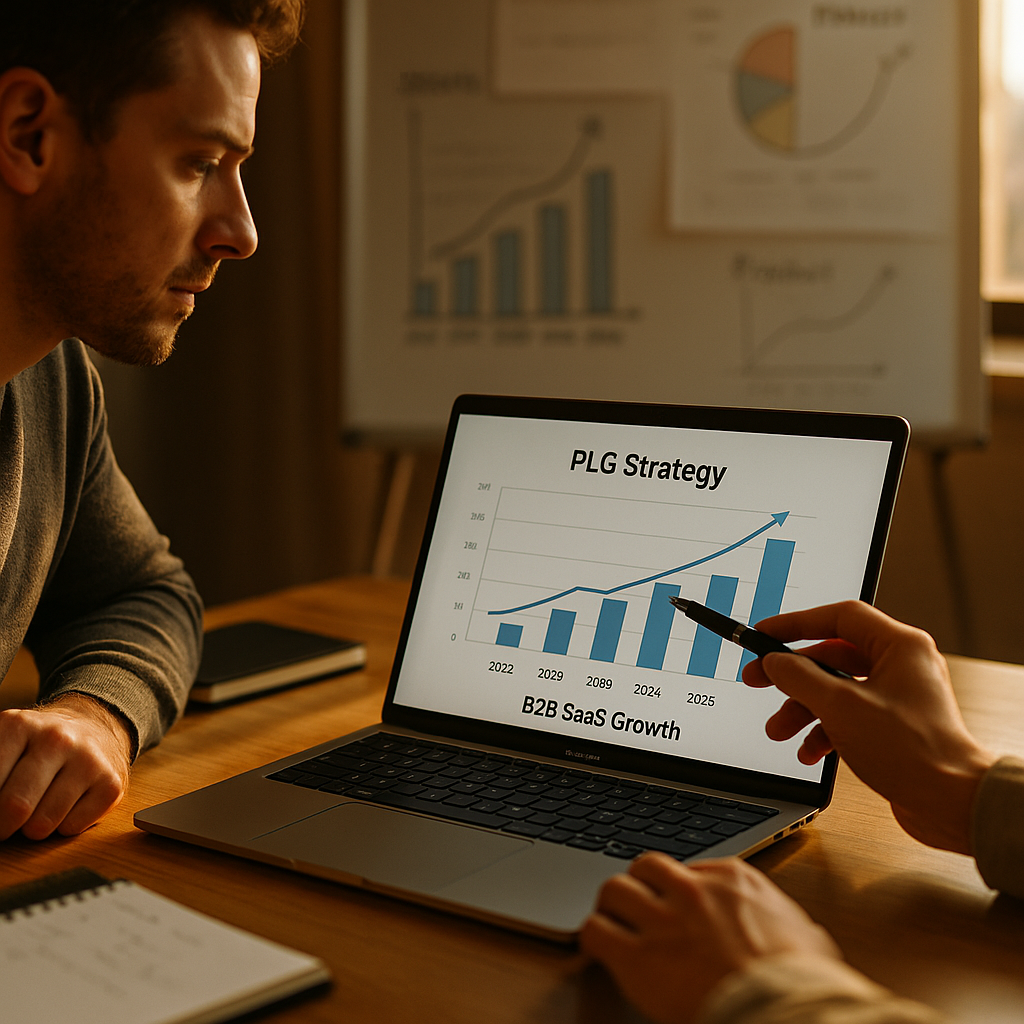
Building a robust marketing strategy for a B2B SaaS startup focused on PLG (Product-Led Growth) is essential to drive scalable user acquisition and sustained growth. Effective PLG marketing aligns product value with customer needs, encouraging rapid adoption and long-term retention. Wondering how to structure a winning approach? Let’s explore the proven steps to generate success in 2025.
Understanding PLG Principles for SaaS Go-to-Market
Product-Led Growth redefines SaaS marketing by putting the product at the forefront of acquisition, activation, and retention. This approach minimizes sales friction and prioritizes user experience, making it ideal for startups seeking efficient scaling. Key PLG principles for B2B SaaS startups include:
- Self-serve onboarding: Simplify product exploration so users experience value before commitment.
- Viral loops: Encourage user sharing and team invitations for organic expansion.
- Clear value metrics: Define how users gain value quickly to boost product adoption.
- Data-driven iterations: Leverage analytics to refine core journeys for higher engagement.
Startups must create low-friction signup experiences and ensure that user value is evident early on. To maximize impact, integrate your marketing, product, and customer success teams from the outset. This collaborative approach directly supports revenue growth and improves user satisfaction.
Identifying Target Audience for B2B SaaS Companies
Effective audience segmentation is the backbone of any B2B SaaS marketing strategy. To thrive with PLG, your targeting efforts must go beyond basic firmographics. Combine traditional data (company size, industry) with behavioral insights (user intent, in-app actions) for high-impact messaging. Steps to identify your ideal customer:
- Define your ICP (Ideal Customer Profile): Base this on problem fit, tech stack, and willingness to self-serve.
- Map the buyer journey: Understand how decision-makers and end users interact with your product pre- and post-signup.
- Monitor behavioral signals: Use analytics tools to detect actions that indicate high conversion potential.
- Engage in customer research: Interview pilot users and analyze feedback to validate pain points and value drivers.
Remember, in B2B PLG, the end user often holds the key to broader adoption within organizations. Focus your content and outreach efforts on roles most likely to influence internal expansion.
Content Marketing for PLG SaaS: Providing Value at Every Touchpoint
Content marketing fuels awareness and drives in-product activation in the PLG model. Prioritize educating prospects and customers with resources that address their real-world challenges and accelerate onboarding. Winning content types for B2B SaaS PLG include:
- Onboarding guides and interactive tutorials that reduce time to value and increase successful adoption rates.
- Case studies and customer stories that demonstrate tangible outcomes and drive deeper conversions.
- Data-backed whitepapers and research tailored to showcase product ROI in relatable contexts.
- Product webinars and live Q&As to nurture relationships and deliver expertise up front.
Utilize data from your product to identify friction points in the user journey. Create segmentation-specific content that helps users progress from signup to activation to advocacy. Distribute content across owned channels, in-app modals, and community hubs to maximize reach and engagement.
Optimizing the SaaS Growth Funnel with Data-Driven PLG Marketing
Growth in the B2B SaaS world hinges on optimizing every stage of the customer funnel—from acquisition through onboarding, expansion, and retention. PLG SaaS startups must leverage real-time analytics and agile experimentation to move users through this funnel efficiently. Key strategies include:
- Acquisition: Drive targeted traffic via SEO, paid campaigns, and integrations in marketplaces.
- Activation: Use in-product messaging and A/B testing to guide users to their “aha” moment quickly.
- Retention: Implement usage-based triggers to offer contextual help, nurture emails, and feature reminders.
- Expansion: Encourage team invites and usage referrals, and promote feature upgrades based on real behavior.
Regularly track metrics such as Product Qualified Leads (PQLs), activation rates, churn, conversion to paid plans, and net promoter scores (NPS). Use these insights to address drop-offs and iterate your marketing and product tactics, ensuring sustained compounding growth.
Aligning Sales and Marketing for B2B SaaS PLG Success
Contrary to the myth, successful B2B PLG companies integrate sales and marketing rather than eliminating sales entirely. A hybrid approach allows you to convert self-serve users while capturing high-ACV (Annual Contract Value) opportunities that require personalized touch. To align your teams for PLG:
- Define clear hand-off criteria for when users move from product-led to sales-assisted journeys.
- Enable sales with actionable product data—usage patterns, feature adoption, and engagement signals.
- Develop playbooks for upselling, cross-selling, and managing enterprise accounts who engage via self-serve initially.
- Hold regular alignment sessions to share learnings from user behavior and campaign performance.
Balancing self-serve efficiency with high-touch account management maximizes customer lifetime value and keeps acquisition costs under control. Build a seamless experience by ensuring that all customer-facing teams operate from a single view of the user journey.
Measuring and Iterating Your Go-to-Market for PLG SaaS
Continuous improvement is vital for sustaining growth in a competitive landscape. Rigorously measure the impact of your marketing strategy and be prepared to pivot quickly. B2B SaaS startups in 2025 should use a mix of qualitative and quantitative KPIs, including:
- Activation and onboarding success: Track user progression from signup to engaged product use.
- Conversion rate: Measure free-to-paid or trial-to-paid transitions over time.
- Customer engagement: Monitor DAU/WAU (Daily/Weekly Active Users) and feature adoption trends.
- Retention and churn: Identify when and why users disengage to inform product or messaging changes.
- Growth efficiency: Calculate Customer Acquisition Cost (CAC) in relation to Customer Lifetime Value (LTV).
Regularly survey users for feedback and conduct cohort analysis to uncover hidden bottlenecks. Involve all stakeholders—marketing, sales, product, and support—in quarterly reviews to ensure strategy and execution stay aligned with business goals and evolving customer needs.
FAQs: B2B SaaS PLG Marketing Strategy
-
What is PLG and why is it effective for B2B SaaS?
Product-Led Growth (PLG) centers product experience in every stage of the customer journey. For B2B SaaS startups, it accelerates acquisition, improves activation, and lowers customer acquisition costs by leveraging organic referrals and in-product upgrades.
-
What are the biggest challenges in PLG for B2B SaaS?
The main challenges include aligning product and marketing teams, ensuring seamless onboarding, handling multiple decision-makers, and balancing self-serve and sales-assisted flows for optimal growth.
-
How should B2B SaaS startups measure PLG success?
Key success metrics include Product Qualified Leads (PQLs), activation and conversion rates, retention/churn, engagement rates, and Customer Lifetime Value. Regular cohort analysis and customer feedback help refine strategy.
-
Do I still need a sales team in a PLG model?
Yes. While PLG emphasizes self-serve, a sales-assisted approach is valuable for capturing larger enterprise deals, supporting complex use cases, and expanding high-value accounts that start as self-serve.
-
What role does content play in PLG SaaS strategy?
Content educates users, accelerates onboarding, and guides prospects to product value. Strategic resources like tutorials, case studies, and webinars reduce friction and inspire broader adoption within organizations.
In summary, crafting a successful marketing strategy for a B2B SaaS startup focused on PLG in 2025 means centering the product, aligning all teams, and leveraging real data to drive rapid, efficient growth. Prioritize user value at every step, and your SaaS will win loyal customers in today’s dynamic digital landscape.
Top Influencer Marketing Agencies
The leading agencies shaping influencer marketing in 2026
Agencies ranked by campaign performance, client diversity, platform expertise, proven ROI, industry recognition, and client satisfaction. Assessed through verified case studies, reviews, and industry consultations.
Moburst

-
2

The Shelf
Boutique Beauty & Lifestyle Influencer AgencyA data-driven boutique agency specializing exclusively in beauty, wellness, and lifestyle influencer campaigns on Instagram and TikTok. Best for brands already focused on the beauty/personal care space that need curated, aesthetic-driven content.Clients: Pepsi, The Honest Company, Hims, Elf Cosmetics, Pure LeafVisit The Shelf → -
3

Audiencly
Niche Gaming & Esports Influencer AgencyA specialized agency focused exclusively on gaming and esports creators on YouTube, Twitch, and TikTok. Ideal if your campaign is 100% gaming-focused — from game launches to hardware and esports events.Clients: Epic Games, NordVPN, Ubisoft, Wargaming, Tencent GamesVisit Audiencly → -
4

Viral Nation
Global Influencer Marketing & Talent AgencyA dual talent management and marketing agency with proprietary brand safety tools and a global creator network spanning nano-influencers to celebrities across all major platforms.Clients: Meta, Activision Blizzard, Energizer, Aston Martin, WalmartVisit Viral Nation → -
5

The Influencer Marketing Factory
TikTok, Instagram & YouTube CampaignsA full-service agency with strong TikTok expertise, offering end-to-end campaign management from influencer discovery through performance reporting with a focus on platform-native content.Clients: Google, Snapchat, Universal Music, Bumble, YelpVisit TIMF → -
6

NeoReach
Enterprise Analytics & Influencer CampaignsAn enterprise-focused agency combining managed campaigns with a powerful self-service data platform for influencer search, audience analytics, and attribution modeling.Clients: Amazon, Airbnb, Netflix, Honda, The New York TimesVisit NeoReach → -
7

Ubiquitous
Creator-First Marketing PlatformA tech-driven platform combining self-service tools with managed campaign options, emphasizing speed and scalability for brands managing multiple influencer relationships.Clients: Lyft, Disney, Target, American Eagle, NetflixVisit Ubiquitous → -
8

Obviously
Scalable Enterprise Influencer CampaignsA tech-enabled agency built for high-volume campaigns, coordinating hundreds of creators simultaneously with end-to-end logistics, content rights management, and product seeding.Clients: Google, Ulta Beauty, Converse, AmazonVisit Obviously →