


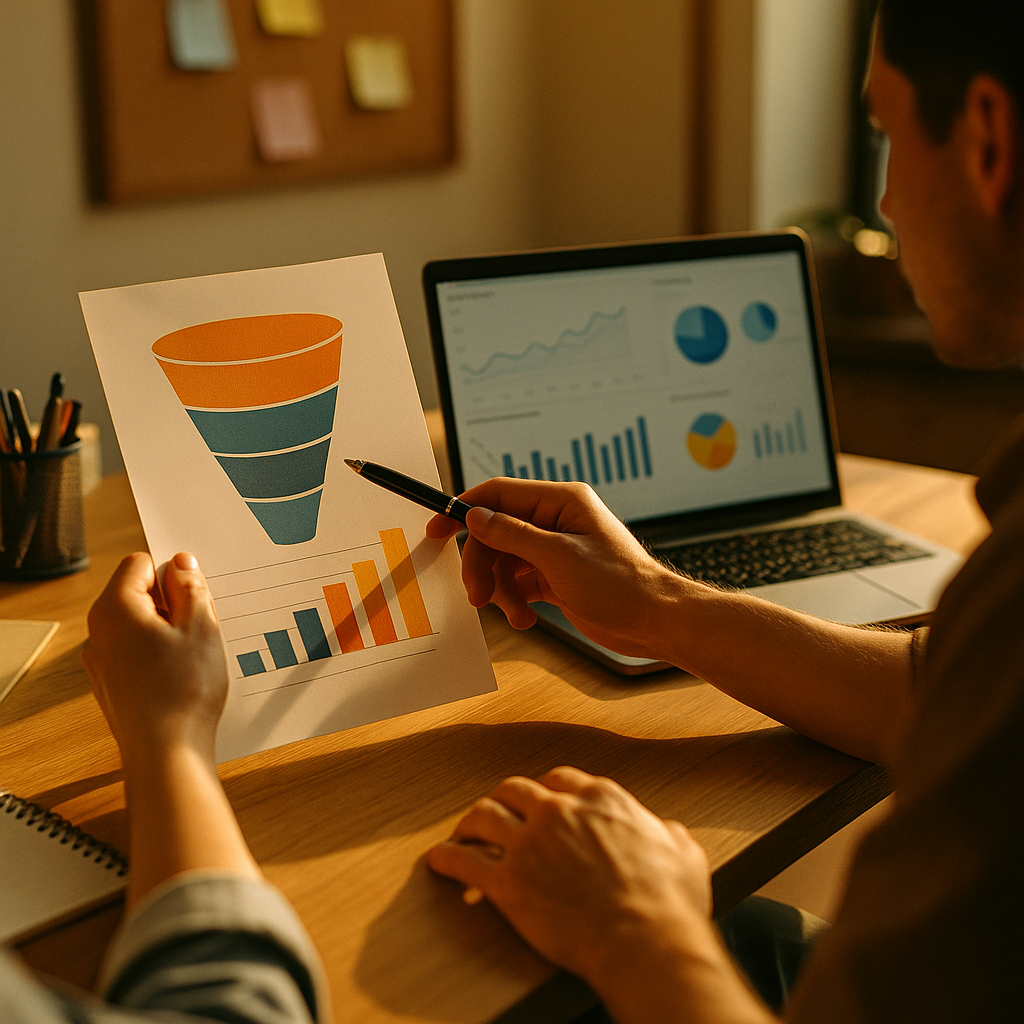
Building high-performing content funnels is the cornerstone of any successful digital marketing strategy in 2025. With advanced automation and data tools, marketers now reach and nurture audiences more effectively than ever before. But what strategies actually separate high-performing funnels from those that merely exist? Let’s unlock the secrets to actionable and sustainable content funnel success.
Understanding Content Funnels in Digital Marketing
To leverage content funnel strategy effectively, it’s essential to grasp what a funnel represents. At its core, a content funnel maps every stage of the customer’s journey, turning casual visitors into committed advocates. The typical funnel breaks down into three main stages:
- Top of Funnel (TOFU): Awareness—engaging broad audiences and introducing problems and solutions with educational content.
- Middle of Funnel (MOFU): Consideration—offering in-depth resources (eBooks, webinars) to nurture interest and address objections.
- Bottom of Funnel (BOFU): Conversion—persuading prospects to take action through case studies, testimonials, and tailored offers.
High-performing content funnels do not treat these stages as isolated silos; instead, they create seamless pathways, aligning messaging and calls-to-action with each phase. In 2025, brands that customize each step achieve higher retention and conversion rates—according to a Content Marketing Institute survey, brands with documented funnels see a 60% greater conversion rate than those without.
Planning Content That Drives Conversion and Engagement
Effective conversion-focused content planning hinges on in-depth audience research and planning every asset for its exact role in the journey. Here’s how to ensure your funnel thrives:
- Define Audience Personas: Use updated analytics and first-party data to understand demographics, behaviors, pain points, and motivators.
- Map the Buyer’s Journey: Align each piece of content with your persona’s stage-specific needs and questions.
- Set Measurable Goals: Goals at every stage—such as newsletter signups (TOFU), webinar attendance (MOFU), or free trial requests (BOFU)—keep your team focused and allow for precise optimization.
- Integrate SEO: Conduct current keyword research for each stage to maximize organic reach and drive qualified traffic.
- Emphasize Value & Trust: Google’s EEAT (Experience, Expertise, Authoritativeness, and Trustworthiness) framework should inform your content, ensuring accuracy and helpfulness in every resource.
Collaborate closely between marketing, sales, and customer success teams to identify the highest-impact topics and address audience concerns promptly.
Creating Engaging, Stage-Specific Funnel Content
Developing engaging funnel content for 2025 calls for relevance, authenticity, and a mix of media formats. Here’s how to supercharge each stage:
- TOFU: Create blog articles, infographics, videos, and social media posts that answer common early-stage questions. Use compelling storytelling and credible sources to establish your authority. Interactive quizzes and short-form video content are outperforming static formats in engagement, per recent HubSpot trends.
- MOFU: Offer in-depth guides, comparison charts, case studies, and webinars that help prospects dig deeper and clarify their choices. Include real user data and testimonials to bolster trust—using first-party or UGC (user-generated content) wherever possible.
- BOFU: Provide demos, trials, consultations, personalized landing pages, and ROI calculators. Optimize calls to action to match your persona’s readiness; test language and design regularly for conversion gains.
Ensure every content asset links naturally to the next stage. For instance, a blog post (TOFU) should end with a soft CTA inviting readers to an in-depth guide (MOFU), smoothly shepherding qualified leads down the funnel.
Optimizing Tech Stack and Automation for Funnel Performance
Modern content funnel automation increases efficiency, reduces manual errors, and personalizes user experiences at scale. As of 2025, the top-performers rely on smart integrations between CRM systems, marketing automation platforms, AI-driven analytics, and personalization tools. Here’s how to maximize your stack:
- Choose Integrated Platforms: Invest in CMS and marketing software that allow seamless, cross-channel content distribution and tracking.
- Personalize Content: Use behavioral triggers and AI to deliver the right message at the right stage—think personalized email drips and website content tailored to user segments.
- Automate Nurturing: Set up workflows that guide users along the funnel: for example, auto-enrolling new blog subscribers into a relevant email nurture series.
- Monitor and Iterate: Leverage real-time analytics and A/B testing to measure performance. Smart dashboards provide early warnings when drop-off rates rise, ensuring rapid response and improvement.
Not all automation is equal: ensure that every touchpoint maintains a human tone and genuine helpfulness, core to Google’s EEAT guidelines.
Measuring, Analyzing, and Iterating Funnel Performance
Success depends on continuous content funnel analytics. EEAT demands both accuracy and regular relevance checks, so ongoing measurement is critical:
- Define Key Metrics: Track traffic, engagement (time on page, scroll depth), conversion rates by stage, lead quality, and sales outcomes.
- Use Attribution Modeling: Modern analytics allow deeper visibility—see which assets contribute most to conversions at each stage, guiding where to focus further investment.
- Collect Feedback: Deploy on-page surveys or conversational AI to capture user insights, improving content resonance and funnel flow.
- Act on Data: Regularly conduct content audits. Retire or refresh underperforming assets, and double down on what’s driving engagement and sales.
Data is only relevant if it drives decision-making. Prioritize agility—brands most willing to test and adapt their funnels report the highest year-over-year growth (HubSpot, 2025).
Best Practices and EEAT: Gaining Audience Trust
High-performing content funnels establish long-term trust by aligning with Google’s EEAT principles. Here’s how to ensure your funnel exceeds expectations:
- Showcase Expertise: Feature bylines for subject matter experts, reference up-to-date statistics, and cite industry leaders (with clear links and dates referenced).
- Provide Real Experience: Include case studies, testimonials, or before-and-after results—demonstrating positive experiences from real users.
- Build Authoritativeness: Gain quality backlinks, collaborate with respected partners, and maintain a consistent brand presence on reputable platforms and social media.
- Prioritize Trustworthiness: Display privacy badges, deliver on promises, and respond thoughtfully to feedback and user comments—across every funnel stage.
In 2025, content quality alone isn’t enough. Trust-mined strategies, transparency, and constant educational value will propel your funnel ahead of competitors.
FAQs: Building High-Performing Content Funnels
-
What is a content funnel?
A content funnel is a structured sequence of content that guides prospects from first awareness through consideration to conversion—nurturing engagement at every step for maximum ROI.
-
How do you measure funnel performance in 2025?
Track metrics such as traffic by source, conversion rates at each stage, engagement scores, lead quality, and ultimately, sales and revenue impact. Leverage AI-powered analytics for deep attribution insights.
-
How do Google’s EEAT guidelines affect funnel content?
EEAT demands well-researched, expert, accurate, and trustworthy content. It’s essential for ranking, converting, and retaining your audience. Always cite credible sources, update data, and maintain a transparent approach throughout your funnel.
-
Can automation replace human effort in content funnels?
Automation boosts efficiency and scalability but cannot fully replace human creativity, empathy, or nuanced user understanding. The best results in 2025 come from a balanced approach—leveraging automation where appropriate while keeping the human touch.
-
What are the biggest mistakes in building content funnels?
Common mistakes include neglecting audience research, producing content without clear funnel alignment, underutilizing analytics, over-relying on automation, and ignoring the importance of trust and authority.
In summary, building high-performing content funnels in 2025 requires deep audience insights, stage-specific value, advanced automation, and strict adherence to EEAT best practices. Prioritize continuous measurement and trust-focused content to turn your digital funnel into a proven, scalable growth engine for your business.
Top Influencer Marketing Agencies
The leading agencies shaping influencer marketing in 2026
Agencies ranked by campaign performance, client diversity, platform expertise, proven ROI, industry recognition, and client satisfaction. Assessed through verified case studies, reviews, and industry consultations.
Moburst

-
2

The Shelf
Boutique Beauty & Lifestyle Influencer AgencyA data-driven boutique agency specializing exclusively in beauty, wellness, and lifestyle influencer campaigns on Instagram and TikTok. Best for brands already focused on the beauty/personal care space that need curated, aesthetic-driven content.Clients: Pepsi, The Honest Company, Hims, Elf Cosmetics, Pure LeafVisit The Shelf → -
3

Audiencly
Niche Gaming & Esports Influencer AgencyA specialized agency focused exclusively on gaming and esports creators on YouTube, Twitch, and TikTok. Ideal if your campaign is 100% gaming-focused — from game launches to hardware and esports events.Clients: Epic Games, NordVPN, Ubisoft, Wargaming, Tencent GamesVisit Audiencly → -
4

Viral Nation
Global Influencer Marketing & Talent AgencyA dual talent management and marketing agency with proprietary brand safety tools and a global creator network spanning nano-influencers to celebrities across all major platforms.Clients: Meta, Activision Blizzard, Energizer, Aston Martin, WalmartVisit Viral Nation → -
5

The Influencer Marketing Factory
TikTok, Instagram & YouTube CampaignsA full-service agency with strong TikTok expertise, offering end-to-end campaign management from influencer discovery through performance reporting with a focus on platform-native content.Clients: Google, Snapchat, Universal Music, Bumble, YelpVisit TIMF → -
6

NeoReach
Enterprise Analytics & Influencer CampaignsAn enterprise-focused agency combining managed campaigns with a powerful self-service data platform for influencer search, audience analytics, and attribution modeling.Clients: Amazon, Airbnb, Netflix, Honda, The New York TimesVisit NeoReach → -
7

Ubiquitous
Creator-First Marketing PlatformA tech-driven platform combining self-service tools with managed campaign options, emphasizing speed and scalability for brands managing multiple influencer relationships.Clients: Lyft, Disney, Target, American Eagle, NetflixVisit Ubiquitous → -
8

Obviously
Scalable Enterprise Influencer CampaignsA tech-enabled agency built for high-volume campaigns, coordinating hundreds of creators simultaneously with end-to-end logistics, content rights management, and product seeding.Clients: Google, Ulta Beauty, Converse, AmazonVisit Obviously →