


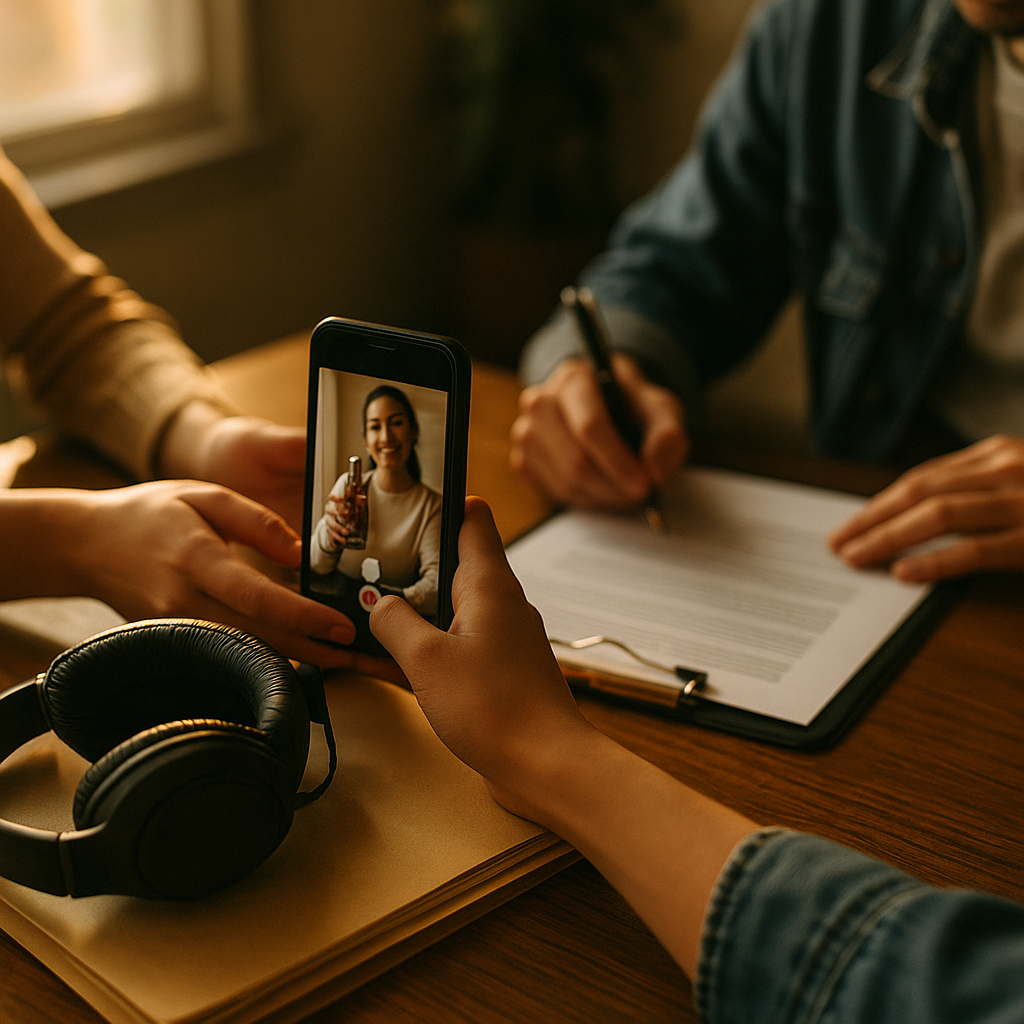
Music licensing for user-generated content campaigns is critical for brands seeking to harness creativity and social reach while staying compliant. This guide offers clear steps to source, license, and use music legally in UGC campaigns, helping you avoid infringement, enhance engagement, and safeguard your reputation. Ready to make your campaign sound as good as it looks? Let’s dive in.
Understanding the Basics of Music Licensing for Social Media Campaigns
Music licensing in user-generated content (UGC) campaigns involves obtaining legal permission to use a song or piece of music in videos, reels, stories, and other dynamic content created by your audience. Since platforms like Instagram, TikTok, and YouTube continually tighten copyright enforcement, any unlicensed use may lead to muted audio, blocked posts, or legal claims.
The two main types of music rights you must clear are:
- Master rights – for the actual recording
- Publishing rights – for the composition, including lyrics and melody
Licensing ensures creators, composers, and rights holders are compensated, and protects your brand from costly takedowns or penalties.
Why Music Licensing Matters in UGC Campaigns
In 2025, UGC campaigns remain among the most effective tools for authentic brand storytelling. According to a Statista survey last quarter, 78% of marketers rank music as a top engagement factor in social content. Yet unlicensed music exposes brands and creators to significant risks:
- Copyright infringement: Using music without proper clearance violates rights and may result in lawsuits or settlement fees.
- Platform penalties: Social platforms can remove or mute posts with unauthorized music, limiting campaign reach and impact.
- Loss of trust: Audiences expect brands to respect creators—failing in this area can damage reputation and credibility.
Proactive licensing not only builds trust but also opens up broader creative options for participants in your campaign.
How to Choose the Right Type of Music License for Your Needs
Before launching a UGC campaign, it’s essential to match the license type to your intended use. Options include:
- Direct licensing: Negotiate directly with rights holders for unique tracks or original music.
- Royalty-free libraries: Purchase music with broad usage rights—perfect for scalable campaigns and multiple content creators.
- Custom arrangements: Commission music specifically tailored for your campaign, ensuring exclusive rights and brand alignment.
Always verify that the license allows for commercial use, multiple uploads, and, if necessary, modifications or editing to fit different content styles.
Best Practices for Securing Music Licenses in UGC Campaigns
Leading legal experts and campaign managers stress a structured approach to music licensing:
- Audit your music choices: Identify all tracks under consideration and verify their ownership and availability for licensing.
- Use reliable music libraries: Platforms like Epidemic Sound and Artlist provide pre-cleared music for commercial UGC, saving administrative headaches.
- Provide clear guidelines: Brief your UGC contributors with a list of approved tracks and detailed instructions to prevent unintentional violations.
- Document every license: Store proofs of purchase or agreements for each music track as evidence in case of disputes.
Transparency and proactive management reduce the chances of content being flagged, ensuring smooth campaign execution.
Managing Rights and Tracking Usage in Ongoing Campaigns
As UGC campaigns scale, keeping tabs on music usage becomes more complex. Smart brands establish workflows to:
- Monitor submissions: Use automated tools to track music in submitted content and flag any unapproved tracks.
- Educate contributors: Regularly update your community on music licensing rules, especially when launching new campaign phases or platforms.
- Renew or extend licenses: If your campaign is ongoing or content may be reused, secure appropriate durations for your music licenses up front.
Investing in rights management ensures continued compliance, even as your campaign gains traction and reaches new audiences.
Top Resources and Tools for Music Licensing in 2025
The sheer number of licensing platforms and tools available can be overwhelming. These trusted solutions enable streamlined, cost-effective licensing:
- Epidemic Sound: New UGC-specific licenses for brands and agencies.
- Artlist: Multi-platform clearances, searchable by mood, genre, and duration.
- Musicbed: Access to indie artists and simple commercial options.
- Audiosocket: Affordable micro-licenses and rapid customer support.
Leverage these platforms to ensure your UGC shines and stays protected, while supporting music creators who power your content ecosystem.
Securing proper music licensing for user-generated content campaigns isn’t just a legal necessity—it’s a brand-building investment. Understand the rules, equip your creators, and choose high-quality tracks so your next campaign can engage audiences and grow confidently in 2025 and beyond.
FAQs: Music Licensing for User-Generated Content Campaigns
-
Do I need a license for every song used in UGC campaigns?
Yes. Each song used, regardless of length, must be properly licensed for commercial and online use. Don’t assume personal or “fair use” licenses will protect your brand.
-
Can participants use popular chart music in branded UGC?
Generally, no. Popular tracks require complex, often expensive clearances from both the label and publisher. Instead, use pre-cleared library music or commission custom tracks.
-
What happens if I use unlicensed music accidentally?
Platforms may remove your content, mute the audio, or even issue copyright strikes. Legal claims from rights holders are possible. Immediate removal and corrective action are recommended.
-
Is royalty-free music always safe?
It depends. Always check the license terms to ensure coverage for commercial, public, and derivative uses. Some “royalty-free” music may have restrictions or require attribution.
-
How can I educate my UGC contributors about music licensing?
Provide clear campaign guidelines, approved song lists, and brief video explainers. Ongoing communication ensures participants stay informed as licensing rules or campaign needs evolve.
Top Influencer Marketing Agencies
The leading agencies shaping influencer marketing in 2026
Agencies ranked by campaign performance, client diversity, platform expertise, proven ROI, industry recognition, and client satisfaction. Assessed through verified case studies, reviews, and industry consultations.
Moburst

-
2

The Shelf
Boutique Beauty & Lifestyle Influencer AgencyA data-driven boutique agency specializing exclusively in beauty, wellness, and lifestyle influencer campaigns on Instagram and TikTok. Best for brands already focused on the beauty/personal care space that need curated, aesthetic-driven content.Clients: Pepsi, The Honest Company, Hims, Elf Cosmetics, Pure LeafVisit The Shelf → -
3

Audiencly
Niche Gaming & Esports Influencer AgencyA specialized agency focused exclusively on gaming and esports creators on YouTube, Twitch, and TikTok. Ideal if your campaign is 100% gaming-focused — from game launches to hardware and esports events.Clients: Epic Games, NordVPN, Ubisoft, Wargaming, Tencent GamesVisit Audiencly → -
4

Viral Nation
Global Influencer Marketing & Talent AgencyA dual talent management and marketing agency with proprietary brand safety tools and a global creator network spanning nano-influencers to celebrities across all major platforms.Clients: Meta, Activision Blizzard, Energizer, Aston Martin, WalmartVisit Viral Nation → -
5

The Influencer Marketing Factory
TikTok, Instagram & YouTube CampaignsA full-service agency with strong TikTok expertise, offering end-to-end campaign management from influencer discovery through performance reporting with a focus on platform-native content.Clients: Google, Snapchat, Universal Music, Bumble, YelpVisit TIMF → -
6

NeoReach
Enterprise Analytics & Influencer CampaignsAn enterprise-focused agency combining managed campaigns with a powerful self-service data platform for influencer search, audience analytics, and attribution modeling.Clients: Amazon, Airbnb, Netflix, Honda, The New York TimesVisit NeoReach → -
7

Ubiquitous
Creator-First Marketing PlatformA tech-driven platform combining self-service tools with managed campaign options, emphasizing speed and scalability for brands managing multiple influencer relationships.Clients: Lyft, Disney, Target, American Eagle, NetflixVisit Ubiquitous → -
8

Obviously
Scalable Enterprise Influencer CampaignsA tech-enabled agency built for high-volume campaigns, coordinating hundreds of creators simultaneously with end-to-end logistics, content rights management, and product seeding.Clients: Google, Ulta Beauty, Converse, AmazonVisit Obviously →