


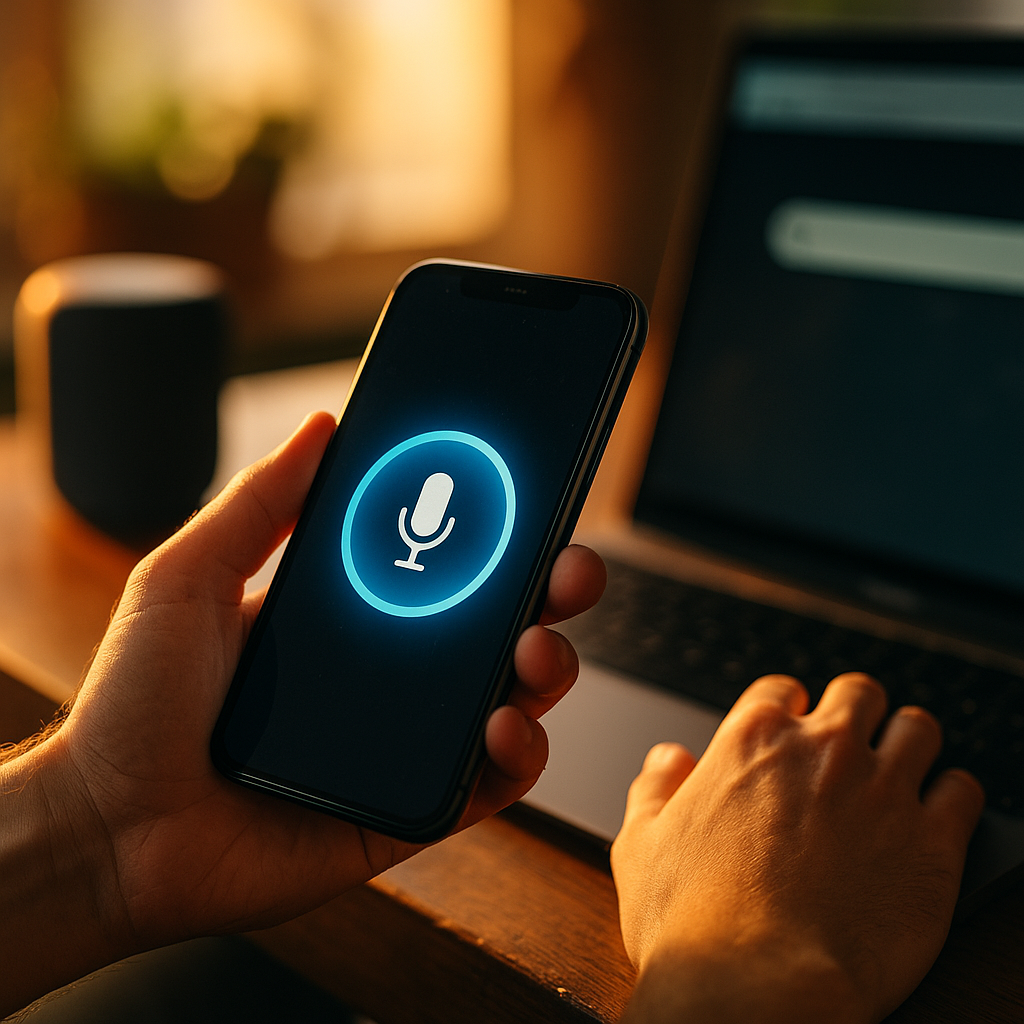
Voice search has rapidly transformed the way users access information, making it vital for marketers to adapt their content strategy for evolving search behaviors. As voice-enabled devices surge in popularity in 2025, understanding the future of voice search can help businesses stay relevant. Discover how to futureproof your content and capture this new wave of digital demand.
How Voice Search Technology Is Shaping Search Behavior
Thanks to AI-driven assistants like Siri, Alexa, and Google Assistant, voice search technology has become increasingly accurate and accessible. Recent data shows that over 60% of consumers now use voice search on smartphones, wearables, and smart speakers at least once per day. This widespread adoption is transforming the way users interact with search engines.
Voice searches tend to be longer, more conversational, and often locally oriented. Instead of typing, “best pizza near me,” people say, “What’s the best pizza place open right now near my location?” These natural language queries demand a different approach to content creation. As a result, marketers must analyze and respond to distinct intent patterns driven by voice-enabled queries.
In addition, voice assistants increasingly use artificial intelligence to interpret nuances in speech, dialect, and context. This progression demands high-quality, relevant content that answers the user’s question quickly and in a conversational tone. Ignoring these trends risks falling behind as search behaviors continue to shift.
Optimizing Content Strategy for Voice Search
The impact of voice search on content strategy is profound. To capture traffic from voice queries in 2025, brands must rethink conventional SEO tactics. Here are key strategies to adopt:
- Focus on conversational keywords: Use long-tail and natural language phrases, mirroring how people speak rather than how they type.
- Answer questions directly: Voice searches are often queries such as “how,” “what,” “where,” and “why.” Incorporate concise answers, FAQs, and structured snippets into your content.
- Prioritize local SEO: Optimize Google Business profiles and local landing pages, as many voice searches deliver local results.
- Enhance page speed and mobile usability: Ensure content loads quickly and is easy to access across devices, as most voice searches occur on mobile platforms.
- Implement structured data: Use schema markup to help search engines understand your content and improve the probability of being featured as a voice answer.
Adapting content in these ways not only helps capture voice traffic but also boosts visibility in conventional search results. Voice optimization and traditional SEO increasingly overlap, amplifying the need for a holistic approach.
Adapting to Conversational Search Queries
One of the biggest shifts brought by voice search is the rise of conversational search queries. Users now expect direct, friendly, and precise answers in their natural speech patterns. Content creators must embrace this change by employing:
- Conversational tone: Author articles in an approachable and human style, using active voice and direct address where appropriate.
- Question-driven structure: Break up content into sections that mirror the most likely queries—using headings phrased as questions and concise, factual answers beneath them.
- Rich answer boxes: Target featured snippets (also called “position zero”) by answering questions at the beginning of each section in 40-60 words, perfect for voice readouts.
In 2025, Google’s algorithms continue to prioritize user experience, favoring content that demonstrates expertise and authority while being clear and helpful. Publishing with the user’s spoken intent in mind not only meets these demands but also boosts engagement and retention by delivering precisely what searchers seek.
EEAT and the Importance of Authoritative Content
With the prominence of Google’s EEAT (Experience, Expertise, Authoritativeness, Trustworthiness) guidelines, the bar for ranking in voice search is higher than ever. Voice assistants prefer content they can trust—meaning factual accuracy, transparent authorship, and proven expertise are non-negotiable.
To establish authority for voice SEO:
- Cite credible sources: Reference recent data, peer-reviewed studies, or industry experts where relevant. This enhances your perceived trustworthiness.
- Showcase author expertise: Include author bios with credentials and experience related to your topic.
- Update content regularly: Keep information current and accurate to signal reliability to both users and AI models.
- Prioritize user safety and privacy: Address how user data is handled on your website, especially in industries like health, finance, or local services.
EEAT-compliant content stands a better chance of being selected as the “voice answer” read aloud by search assistants, helping you capture authority and brand recognition in the conversational web landscape.
Local Search and Voice Assistants: A Powerful Duo
Location-based search is booming, propelled by the harmony between voice assistants and mobile devices. In 2025, over half of all voice searches have local intent, from “nearest gas station” to “best gluten-free bakery near me.” Capitalizing on this trend requires a robust local content strategy:
- Claim and optimize local listings: Keep your business hours, location, services, and contact information up to date on Google Business, Apple Maps, and similar platforms.
- Encourage and respond to reviews: High-quality, recent user reviews build trust within both traditional and voice search ecosystems.
- Use local keywords and geotargeted content: Highlights in your copy, meta tags, and FAQs boost your visibility for in-the-moment searches.
- Fast-loading, mobile-friendly pages: Since most local voice searches happen on the go, frictionless access is crucial for conversion.
A tight alignment between local search optimization and voice search readiness ensures your brand answers the exact needs of consumers at the right time—often when they’re most likely to act or purchase.
The Future Outlook: AI, Personalization, and Multimodal Search
Looking ahead, artificial intelligence drives deeper personalization in voice search results. Intelligent assistants learn user preferences, intent, and even tone, customizing answers accordingly. For brands, this means creating content responsive to an individual’s needs—not just a generic audience.
Another rising trend is the shift toward multimodal search, where users blend voice, visuals, and text to interact with search engines—for example, snapping a photo while asking, “Where can I buy this?” To stay ahead, businesses should:
- Incorporate visual content that is descriptive and accessible alongside written copy.
- Use structured data and rich media to help AI interpret and connect information.
- Deliver consistent, high-quality experiences across all device types and interfaces.
The future of voice search requires a flexible, technology-savvy content strategy. By blending these approaches, you’ll be prepared to meet changing search behaviors in 2025 and beyond.
FAQs: Voice Search and Content Strategy
-
How does voice search impact traditional SEO?
Voice search doesn’t replace traditional SEO; it enhances it. Tactics like keyword optimization, structured data, and fast mobile experiences remain crucial. However, voice search necessitates a shift toward conversational language and direct answers, helping sites rank for both typed and spoken queries.
-
What are the best ways to optimize my content for voice search?
Focus on question-based sections, natural language keywords, and concise answers. Use schema markup, update your Google Business profile, and ensure mobile accessibility. Provide expertise-driven, user-first content to stand out in voice search results.
-
Why is local SEO important for voice search?
Most voice searches have local intent—users are seeking services or information relevant to their immediate area. Optimizing local listings and content ensures your brand appears in voice assistant recommendations during high-intent moments.
-
Will voice search continue to grow in the future?
Yes. As smart speakers, mobile devices, and in-car systems become more integrated, voice search adoption is set to rise. Advances in AI and multimodal search will further expand how and where users conduct voice searches in daily life.
-
How do I futureproof my content strategy for voice search?
Prioritize helpful, expert content that answers real user questions. Stay current on voice technology trends, regularly update your strategy, and embrace cross-channel optimization—web, mobile, local, and beyond—to adapt as search habits evolve.
The future of voice search is here, reshaping how brands connect with audiences. By aligning your content strategy with conversational, local, and AI-driven trends, you’ll not only meet today’s standards but also outpace your competitors in tomorrow’s digital marketplace. Voice optimization is your path to enduring SEO success in 2025 and beyond.
Top Influencer Marketing Agencies
The leading agencies shaping influencer marketing in 2026
Agencies ranked by campaign performance, client diversity, platform expertise, proven ROI, industry recognition, and client satisfaction. Assessed through verified case studies, reviews, and industry consultations.
Moburst

-
2

The Shelf
Boutique Beauty & Lifestyle Influencer AgencyA data-driven boutique agency specializing exclusively in beauty, wellness, and lifestyle influencer campaigns on Instagram and TikTok. Best for brands already focused on the beauty/personal care space that need curated, aesthetic-driven content.Clients: Pepsi, The Honest Company, Hims, Elf Cosmetics, Pure LeafVisit The Shelf → -
3

Audiencly
Niche Gaming & Esports Influencer AgencyA specialized agency focused exclusively on gaming and esports creators on YouTube, Twitch, and TikTok. Ideal if your campaign is 100% gaming-focused — from game launches to hardware and esports events.Clients: Epic Games, NordVPN, Ubisoft, Wargaming, Tencent GamesVisit Audiencly → -
4

Viral Nation
Global Influencer Marketing & Talent AgencyA dual talent management and marketing agency with proprietary brand safety tools and a global creator network spanning nano-influencers to celebrities across all major platforms.Clients: Meta, Activision Blizzard, Energizer, Aston Martin, WalmartVisit Viral Nation → -
5

The Influencer Marketing Factory
TikTok, Instagram & YouTube CampaignsA full-service agency with strong TikTok expertise, offering end-to-end campaign management from influencer discovery through performance reporting with a focus on platform-native content.Clients: Google, Snapchat, Universal Music, Bumble, YelpVisit TIMF → -
6

NeoReach
Enterprise Analytics & Influencer CampaignsAn enterprise-focused agency combining managed campaigns with a powerful self-service data platform for influencer search, audience analytics, and attribution modeling.Clients: Amazon, Airbnb, Netflix, Honda, The New York TimesVisit NeoReach → -
7

Ubiquitous
Creator-First Marketing PlatformA tech-driven platform combining self-service tools with managed campaign options, emphasizing speed and scalability for brands managing multiple influencer relationships.Clients: Lyft, Disney, Target, American Eagle, NetflixVisit Ubiquitous → -
8

Obviously
Scalable Enterprise Influencer CampaignsA tech-enabled agency built for high-volume campaigns, coordinating hundreds of creators simultaneously with end-to-end logistics, content rights management, and product seeding.Clients: Google, Ulta Beauty, Converse, AmazonVisit Obviously →