


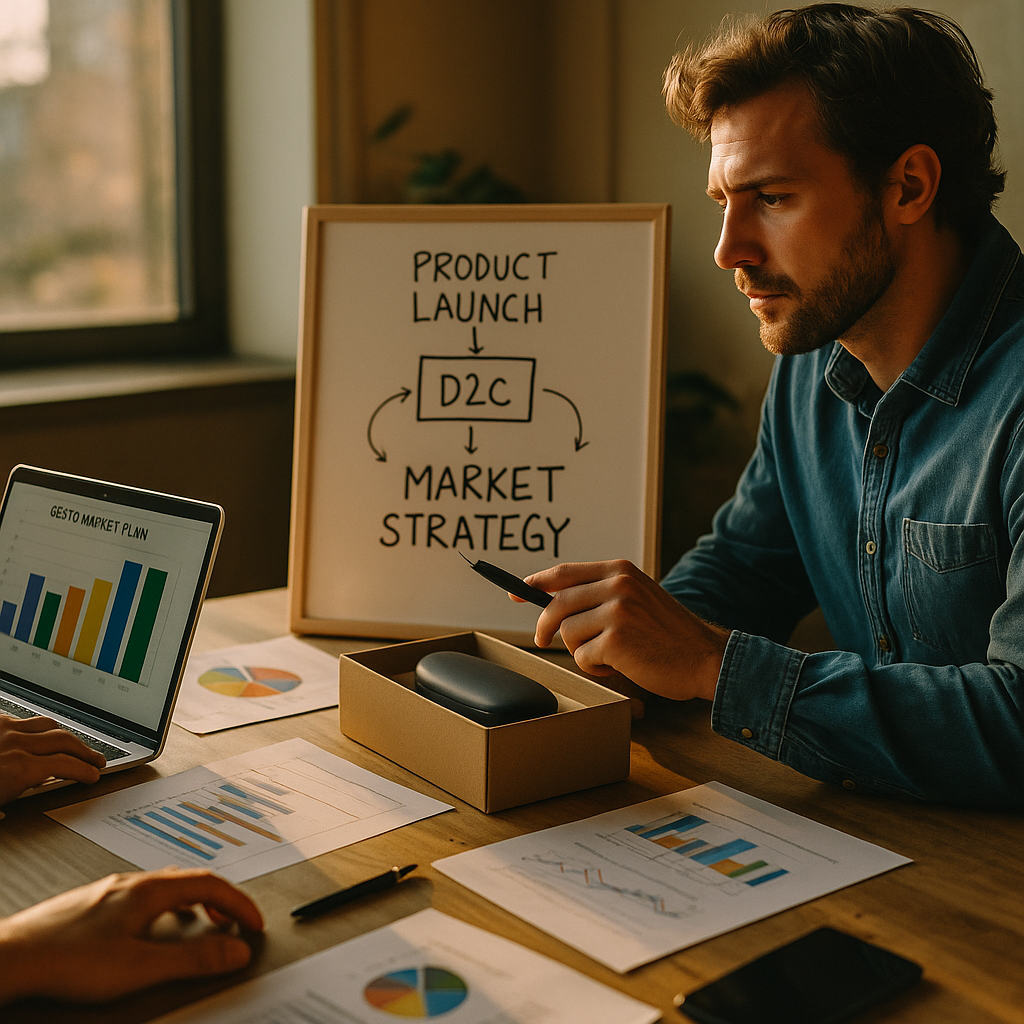
Launching a new product line can redefine a D2C brand’s growth trajectory, but without a robust go-to-market plan, even the best innovations struggle to succeed. Knowing how to create a go-to-market plan for a D2C brand launching a new product line is essential in today’s fiercely competitive landscape. Ready to set your next launch up for maximum impact?
Understanding Your Target Audience and D2C Market Trends
Knowing your audience goes beyond demographics; it’s about understanding their motivations, needs, and preferences. According to a 2025 McKinsey report, D2C success hinges on hyper-targeted offerings, with 72% of growth attributed to brands tailoring products and messaging. Start by:
- Researching customer pain points: Use surveys, social listening, and customer interviews to learn what matters most.
- Analyzing purchasing behaviors: Leverage analytics to explore when, where, and why customers buy.
- Tracking D2C market trends: Monitor emerging channels—like live shopping and micro-influencer partnerships—which are reshaping the 2025 ecommerce landscape.
By investing in your understanding of the audience, you set a foundation for the rest of your go-to-market strategy—ensuring alignment between what you offer and what your ideal customers seek.
Crafting a Unique Value Proposition for Product Differentiation
Standing out in the crowded D2C ecosystem requires a clear value proposition, especially when launching a new product line. With 68% of D2C shoppers in 2025 stating they prioritize unique brand experiences over price, differentiation is no longer optional—it’s essential. Consider these steps:
- Articulate the core benefit: What problem does your new product line solve that others don’t?
- Communicate tangible outcomes: Highlight specific results and improvements customers can expect.
- Leverage testimonials and early feedback: Use pilot launches or beta testers to build trust and credibility.
Your value proposition should resonate emotionally and rationally. Ensure messaging is consistent across every touchpoint, from your ecommerce site to your email campaigns.
Channel Strategy and Omnichannel Marketing Execution
To maximize reach for a new product line, D2C brands must design a channel strategy that matches their audience’s shopping habits and digital behaviors. The 2025 Salesforce State of Commerce report highlighted that brands who engaged customers across at least three channels saw a 36% higher customer lifetime value. Steps for success include:
- Evaluate channel fit: Identify which platforms—such as Instagram, TikTok, or brand-owned channels—align with your audience.
- Create integrated campaigns: Orchestrate product teasers, influencer collaborations, and cross-promotions to generate buzz before launch.
- Optimize for direct sales: Ensure the path to purchase is seamless, frictionless, and mobile-first—key for D2C audiences in 2025.
Remember, omnichannel isn’t just about being everywhere; it’s about being present where your customers are most engaged and offering a unified, enjoyable experience at every touchpoint.
Pricing and Positioning Strategies for Profitability
Getting your pricing and positioning right is critical when launching a D2C product line. In 2025, transparent pricing and value-driven positioning are significant purchasing motivators. Consider this approach:
- Analyze competitor pricing: Audit the pricing structures of direct competitors and identify white spaces for value-based differentiation.
- Test pricing tiers: A/B test different pricing options, bundles, or subscription models during soft launch phases.
- Highlight unique brand values: Today’s consumers expect brands to stand for something, so embed sustainable or community-focused messaging into your product positioning.
Remember, true profitability isn’t about being the cheapest—it’s about delivering clear value that justifies the price, reinforced by your marketing communications and customer experiences.
Measuring Launch Success and Iterating Rapidly
The post-launch phase is just as important as the buildup. To know if your go-to-market plan is working, establish clear KPIs aligned with your objectives. Common D2C launch metrics for 2025 include:
- Acquisition and conversion rates: Track sign-ups, pre-orders, and purchase rates across all channels.
- Customer feedback and Net Promoter Score (NPS): Collect and analyze real-user feedback to surface improvement opportunities.
- Churn and retention rates: Monitor repeat purchases and engagement to assess long-term viability.
Leverage real-time analytics to quickly spot trends and make data-backed adjustments. Rapid iteration—whether in product features, marketing messages, or channel focus—enables D2C brands to thrive post-launch and foster customer loyalty.
Conclusion: Setting Your D2C Brand Up for Go-to-Market Success
In 2025, the D2C space demands precision, agility, and relentless customer focus. By understanding your audience, crafting a compelling value proposition, executing omnichannel strategies, ensuring effective pricing, and embracing rapid iteration, you can create a go-to-market plan that drives real growth for your new product line. Stay data-driven—your brand’s next success story starts with your launch strategy.
FAQs: Go-to-Market Plans for D2C Product Launches
-
What is a go-to-market plan for a D2C brand?
A go-to-market plan is a detailed roadmap outlining how a D2C brand will introduce a product to customers, covering audience targeting, marketing, sales channels, pricing, and post-launch metrics to drive success.
-
How do D2C brands find their target audience when launching a new product?
Brands use customer research, data analytics, and industry insights to define and segment their target audience, ensuring messaging and product fit align with real customer needs and preferences.
-
What’s the best channel for launching a D2C product in 2025?
The best channel depends on the brand’s specific audience. In 2025, Instagram, TikTok, and branded mobile-optimized sites dominate, but success comes from integrated campaigns across multiple channels where your audience is most active.
-
How should a D2C brand measure the success of a new product launch?
Track KPIs such as sales conversions, customer acquisition cost, repeat purchase rate, and customer feedback (like NPS). Real-time analytics platforms can help optimize strategies quickly post-launch.
-
Why is differentiation important in a D2C go-to-market plan?
Differentiation allows a D2C product to stand out in a crowded market, attract specific customer segments, and justify premium pricing—crucial for long-term growth and customer loyalty.
Top Influencer Marketing Agencies
The leading agencies shaping influencer marketing in 2026
Agencies ranked by campaign performance, client diversity, platform expertise, proven ROI, industry recognition, and client satisfaction. Assessed through verified case studies, reviews, and industry consultations.
Moburst

-
2

The Shelf
Boutique Beauty & Lifestyle Influencer AgencyA data-driven boutique agency specializing exclusively in beauty, wellness, and lifestyle influencer campaigns on Instagram and TikTok. Best for brands already focused on the beauty/personal care space that need curated, aesthetic-driven content.Clients: Pepsi, The Honest Company, Hims, Elf Cosmetics, Pure LeafVisit The Shelf → -
3

Audiencly
Niche Gaming & Esports Influencer AgencyA specialized agency focused exclusively on gaming and esports creators on YouTube, Twitch, and TikTok. Ideal if your campaign is 100% gaming-focused — from game launches to hardware and esports events.Clients: Epic Games, NordVPN, Ubisoft, Wargaming, Tencent GamesVisit Audiencly → -
4

Viral Nation
Global Influencer Marketing & Talent AgencyA dual talent management and marketing agency with proprietary brand safety tools and a global creator network spanning nano-influencers to celebrities across all major platforms.Clients: Meta, Activision Blizzard, Energizer, Aston Martin, WalmartVisit Viral Nation → -
5

The Influencer Marketing Factory
TikTok, Instagram & YouTube CampaignsA full-service agency with strong TikTok expertise, offering end-to-end campaign management from influencer discovery through performance reporting with a focus on platform-native content.Clients: Google, Snapchat, Universal Music, Bumble, YelpVisit TIMF → -
6

NeoReach
Enterprise Analytics & Influencer CampaignsAn enterprise-focused agency combining managed campaigns with a powerful self-service data platform for influencer search, audience analytics, and attribution modeling.Clients: Amazon, Airbnb, Netflix, Honda, The New York TimesVisit NeoReach → -
7

Ubiquitous
Creator-First Marketing PlatformA tech-driven platform combining self-service tools with managed campaign options, emphasizing speed and scalability for brands managing multiple influencer relationships.Clients: Lyft, Disney, Target, American Eagle, NetflixVisit Ubiquitous → -
8

Obviously
Scalable Enterprise Influencer CampaignsA tech-enabled agency built for high-volume campaigns, coordinating hundreds of creators simultaneously with end-to-end logistics, content rights management, and product seeding.Clients: Google, Ulta Beauty, Converse, AmazonVisit Obviously →