


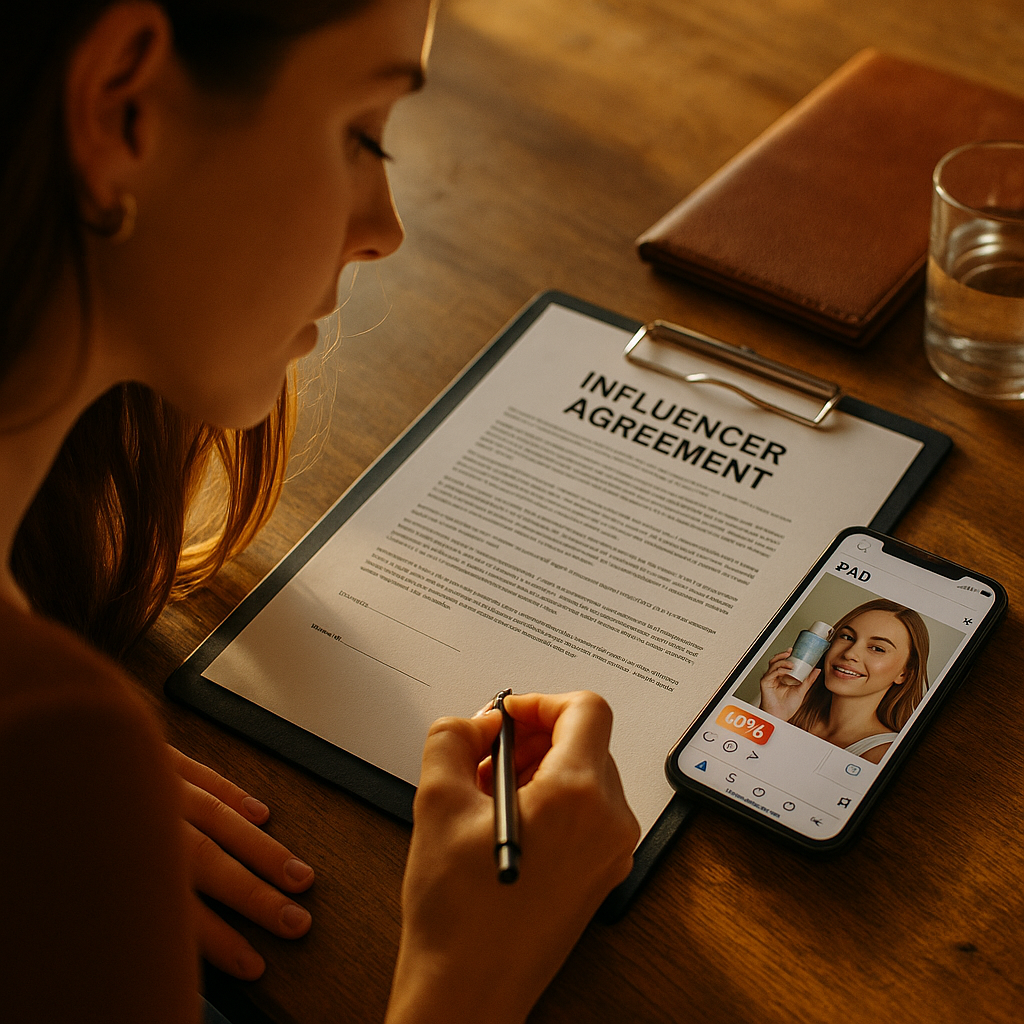
Drafting an influencer agreement covering usage rights for paid ads is essential in today’s digital marketing landscape. A well-constructed agreement protects both parties, clarifies expectations, and ensures compliance. If you’re unsure how to navigate commercial rights and ad usage, this guide will help you create clear, enforceable contracts that build trust—and results.
Defining Influencer Usage Rights in Paid Ads Contracts
Understanding usage rights is foundational for influencer marketing agreements. Usage rights dictate how brands can leverage the content created by influencers, especially in paid ad campaigns across platforms like Instagram, TikTok, and YouTube. Without clear terms, confusion over ownership and allowed uses can result in legal disputes or strained relationships.
To draft an effective contract:
- Specify which content (videos, images, captions) may be used in ads.
- List the channels (social media, web, print) where content will appear.
- Clarify duration and geographical scope of these rights.
This level of detail builds mutual understanding and safeguards both brand and influencer interests from the outset.
Setting Clear Commercial Licensing and Compensation Expectations
Negotiating licensing terms for paid media requires clarity on both rights and compensation. Influencers usually expect additional compensation when their likeness or content is amplified through paid advertising. In 2025, the majority of top-tier influencers include paid usage as a separate line item from organic social postings, according to industry survey data from Influencer Marketing Hub.
- Commercial rights fee: Clearly state the amount paid for the right to use content in paid ads, separate from sponsored post fees.
- Exclusivity clauses: Address whether and how long an influencer must refrain from promoting competitors.
- Royalty structures: Outline if the influencer will receive additional payment based on ad performance or extended usage.
Outlining these terms ensures influencers are fairly compensated and prevents misunderstandings about how their content will be repurposed.
Creating a Transparent Approval and Content Review Process
The content approval process has become a critical part of influencer partnerships, especially when repurposing work for paid ads. Brands are legally and ethically obligated to avoid altering influencer content in ways that mislead audiences or violate disclosure regulations.
- Submission deadlines: Specify when influencers must supply high-resolution files for ads.
- Review periods: Define how much time both parties have to approve, request edits, or reject proposed ad creatives.
- Modification rights: Clearly indicate whether the brand may edit images, captions, or audio—and to what extent.
- FTC disclosure: Promise adherence to all disclosure requirements on sponsored content in paid ads.
Including these steps in your contract ensures neither side feels misrepresented and both comply with evolving advertising standards.
Legal Considerations for Influencer Advertising Agreements
An airtight influencer advertising agreement does more than outline business terms; it also protects against reputational and financial risk. In 2025, updated privacy regulations and AI-generated content are major concerns for both brands and creators. Address these in your agreement by:
- Requiring the influencer to disclose original versus AI-generated content.
- Outlining procedures for obtaining third-party permissions if music, images, or other copyrighted material will be used in ads.
- Stipulating indemnification clauses to protect the brand if a copyright dispute arises.
- Detailing data privacy standards in line with the most current regulatory guidelines.
Consulting with legal counsel and staying current on influencer law trends will further safeguard your advertising campaigns.
Finalizing and Executing the Influencer Agreement for Paid Ads
After drafting detailed terms regarding usage rights, licensing, compensation, and approvals, it’s time to finalize your influencer agreement. Best practices for execution include:
- Use digital contract tools to streamline signatures and maintain records.
- Attach schedules that list all content to be used with specific usage rights for each item.
- Provide contact info for dispute resolution or follow-up questions.
- Set renewal and termination clauses detailing processes for prolonging or ending usage rights.
Once fully executed, share final documents with all stakeholders and keep lines of communication open for future collaborations or adjustments.
Common Mistakes to Avoid When Managing Influencer Usage Rights
Even experienced marketers can miss critical details. Avoid these common errors:
- Assuming organic post rights cover paid ad usage. Always spell out “paid media usage” specifically in the contract.
- Overlooking international rights requirements. Make sure geo-specific rights match your targeted ad reach.
- Failing to update agreements regularly. Laws and platform policies change. Review templates at least once a year.
- Not providing for contract modifications. Include processes for amending terms as brand or influencer needs evolve.
Attention to these issues helps maintain lasting, positive influencer relationships and protects both parties from costly mistakes.
In summary, a clear influencer agreement covering usage rights for paid ads isn’t just a legal document—it’s a tool for strategic partnership and protection. By nailing down terms on licensing, compensation, approvals, and legal issues, you ensure ethical, effective campaigns that benefit everyone involved.
FAQs: Influencer Agreement Usage Rights for Paid Ads
-
Why do I need to separate organic and paid ad usage rights in influencer contracts?
Organic posts and paid ads differ in reach, compliance requirements, and value. Clearly separating rights prevents unauthorized use and ensures the influencer is properly compensated for broader ad distribution.
-
What happens if I use influencer content in paid ads without explicit rights?
Unauthorized use can result in legal claims, reputational damage, or demands for additional compensation—sometimes exceeding the original payment or campaign value.
-
How should compensation for paid ad usage be structured?
Best practice is to separate fees for influencer-generated content from paid media usage. Rates may be fixed, performance-based, or time-limited depending on contract negotiations.
-
Do contracts need to address AI-generated influencer content?
Yes, in 2025, transparency about AI involvement is mission-critical for regulatory compliance and audience trust. Specify acceptable and prohibited forms of AI content creation in the agreement.
-
How often should influencer agreements be reviewed or updated?
Review contracts annually or whenever major regulatory or platform changes occur. This keeps your agreements compliant and reflective of current best practices.
Top Influencer Marketing Agencies
The leading agencies shaping influencer marketing in 2026
Agencies ranked by campaign performance, client diversity, platform expertise, proven ROI, industry recognition, and client satisfaction. Assessed through verified case studies, reviews, and industry consultations.
Moburst

-
2

The Shelf
Boutique Beauty & Lifestyle Influencer AgencyA data-driven boutique agency specializing exclusively in beauty, wellness, and lifestyle influencer campaigns on Instagram and TikTok. Best for brands already focused on the beauty/personal care space that need curated, aesthetic-driven content.Clients: Pepsi, The Honest Company, Hims, Elf Cosmetics, Pure LeafVisit The Shelf → -
3

Audiencly
Niche Gaming & Esports Influencer AgencyA specialized agency focused exclusively on gaming and esports creators on YouTube, Twitch, and TikTok. Ideal if your campaign is 100% gaming-focused — from game launches to hardware and esports events.Clients: Epic Games, NordVPN, Ubisoft, Wargaming, Tencent GamesVisit Audiencly → -
4

Viral Nation
Global Influencer Marketing & Talent AgencyA dual talent management and marketing agency with proprietary brand safety tools and a global creator network spanning nano-influencers to celebrities across all major platforms.Clients: Meta, Activision Blizzard, Energizer, Aston Martin, WalmartVisit Viral Nation → -
5

The Influencer Marketing Factory
TikTok, Instagram & YouTube CampaignsA full-service agency with strong TikTok expertise, offering end-to-end campaign management from influencer discovery through performance reporting with a focus on platform-native content.Clients: Google, Snapchat, Universal Music, Bumble, YelpVisit TIMF → -
6

NeoReach
Enterprise Analytics & Influencer CampaignsAn enterprise-focused agency combining managed campaigns with a powerful self-service data platform for influencer search, audience analytics, and attribution modeling.Clients: Amazon, Airbnb, Netflix, Honda, The New York TimesVisit NeoReach → -
7

Ubiquitous
Creator-First Marketing PlatformA tech-driven platform combining self-service tools with managed campaign options, emphasizing speed and scalability for brands managing multiple influencer relationships.Clients: Lyft, Disney, Target, American Eagle, NetflixVisit Ubiquitous → -
8

Obviously
Scalable Enterprise Influencer CampaignsA tech-enabled agency built for high-volume campaigns, coordinating hundreds of creators simultaneously with end-to-end logistics, content rights management, and product seeding.Clients: Google, Ulta Beauty, Converse, AmazonVisit Obviously →