


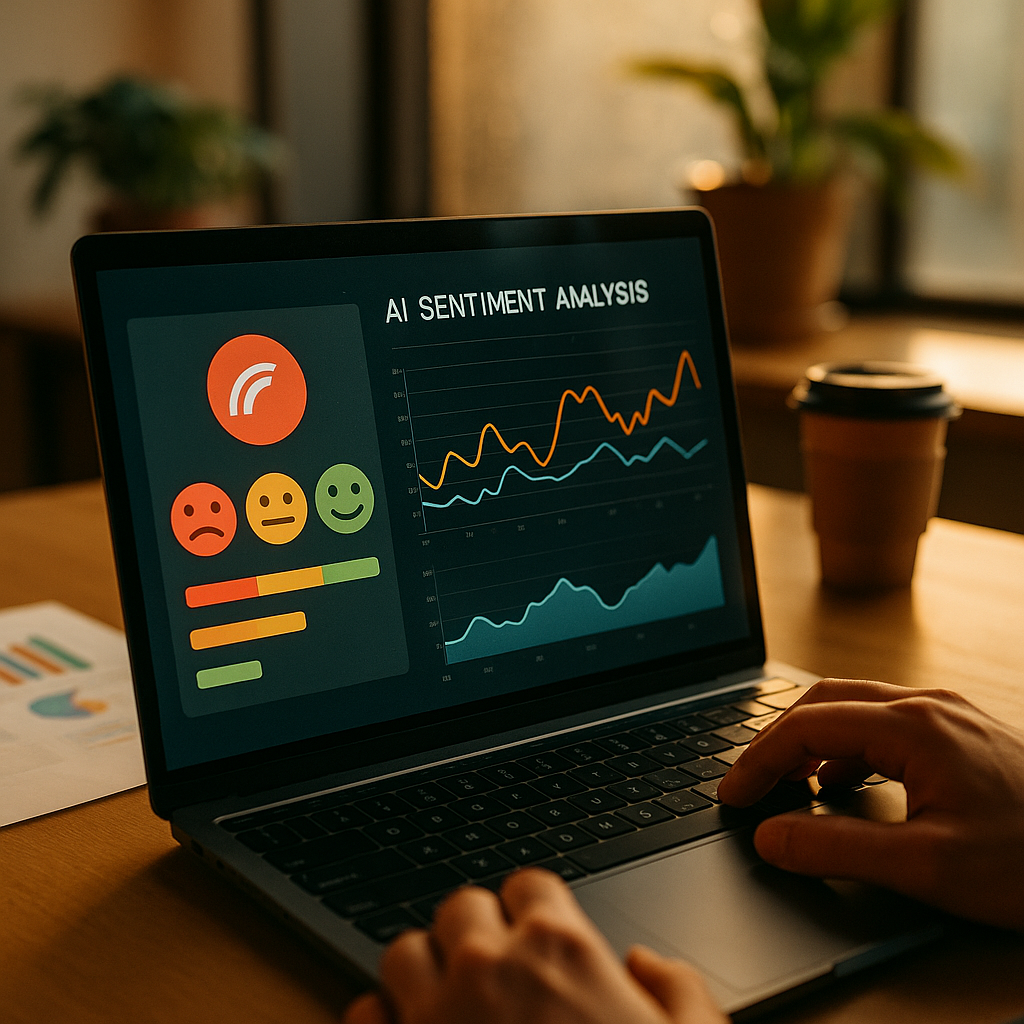
Using AI to analyze and predict brand sentiment shifts based on social data has become a strategic advantage for organizations navigating evolving consumer landscapes. Today’s brands must not only understand what people are saying but also anticipate how those opinions can change. Discover how modern AI elevates sentiment analysis and prepares brands for tomorrow’s reputational challenges.
AI-Driven Sentiment Analysis for Brand Monitoring
The proliferation of user-generated content across X (formerly Twitter), Instagram, TikTok, and review sites has made brand sentiment tracking both essential and complex. AI-driven sentiment analysis enables companies to monitor and interpret massive volumes of social data in real time, offering deep visibility into customer attitudes and trends.
Unlike traditional keyword-based tools, today’s AI models leverage natural language processing (NLP) and machine learning to comprehend nuances like sarcasm, context, emojis, and evolving slang. This capability is crucial for brand monitoring, as a single viral post can shift sentiment dramatically within hours. With advanced AI, brands can:
- Detect sentiment shifts instantly across platforms
- Distinguish genuine feedback from spam or bot activity
- Understand multilingual and multicultural comments
For example, a 2025 Deloitte study reports that 87% of leading brands using AI-enhanced sentiment analysis can respond to PR crises up to five times faster than those relying on manual monitoring alone.
Leveraging Social Data Analysis to Detect Trends Early
Social data is more than a measurement tool—it’s an early warning system. By applying AI to social data analysis, brands can detect the faint signals of emerging trends and potential crises long before they escalate.
Advanced algorithms look beyond sentiment scores to examine:
- Volume spikes in mentions and hashtags
- Virality patterns and content shares
- Engagement from influential users or demographics
Modern AI doesn’t just flag negativity; it contextualizes conversations, identifying whether a spike is due to a product launch, an influencer endorsement, or a service issue. This insight lets brands calibrate their marketing, communications, and product development strategies in virtual real time. As a Forrester Insights report notes, companies leveraging predictive AI in social data see a 22% improvement in campaign agility.
Predictive Sentiment Analytics: Anticipating Brand Perception
The capabilities of AI go beyond analyzing the present; they also enable predictive sentiment analytics—forecasting how brand perception will evolve. Predictive models ingest billions of data points, including historical sentiment, seasonal cycles, and competitor activities.
Key benefits of predictive sentiment analytics include:
- Proactive risk management—identifying potential issues before negative sentiment peaks
- Tailored customer engagement strategies based on predicted audience mood
- Optimized timing for campaign launches or product announcements
The most robust models continually learn and recalibrate, factoring in new social dynamics. For instance, sentiment predictions can prompt brands to adjust their tone, choose which channels to prioritize, or dedicate more resources to customer service during anticipated high-risk periods.
Practical Applications: Transforming Customer Experience with AI Insights
Harnessing AI for sentiment shift prediction unlocks transformative changes in customer experience and operational strategy. Practical applications are wide-ranging:
- Crisis Management: AI can trigger alerts for sudden drops in sentiment, allowing for immediate crisis response and focused communication.
- Product Innovation: By mapping shifting conversations around features, AI surfaces unmet customer needs, guiding research and development efforts.
- Personalized Engagement: Predictive analytics inform segmentation strategies, enabling brands to deliver timely, relevant messages to specific audience segments.
- Reputation Recovery: Tracking sentiment improvement post-intervention helps organizations prove ROI for PR campaigns and customer support initiatives.
Major enterprises and fast-scaling startups alike use AI insights to allocate resources, measure campaign impact, and elevate satisfaction scores.
Challenges and Ethical Considerations in AI Sentiment Analysis
While the advantages are substantial, using AI to analyze and predict brand sentiment shifts comes with challenges. Models can inherit biases present in social data or misinterpret contextually complex statements, leading to flawed insights. Data privacy is also top of mind; respecting user consent and platform rules is paramount.
To build trust and meet Google’s EEAT (Experience, Expertise, Authoritativeness, and Trustworthiness) guidelines, organizations must:
- Choose AI vendors with transparent, explainable algorithms
- Regularly audit models for fairness and bias
- Maintain robust data protection practices in line with current regulations
Ethical AI use strengthens consumer confidence and ensures analytics truly reflect public sentiment, not just algorithmic guesswork.
Integrating AI Sentiment Tools Into Brand Strategies
Incorporating AI sentiment tools requires both technological integration and cultural adaptation. Best-in-class organizations appoint cross-functional teams devoted to social analytics, bringing together marketing, data science, and customer service expertise. Clear workflows ensure that insights lead to concrete action, such as prioritizing issue resolution or refining creative messaging.
Brands can deploy AI solutions via cloud-based platforms, social media APIs, or bespoke dashboards. Seamless integration with CRM, business intelligence, and engagement platforms maximizes the value of predictive insights. Regular staff training fosters a data-literate culture, turning AI intelligence into a daily business asset rather than a distant innovation project.
Conclusion
AI’s ability to analyze and predict brand sentiment shifts based on social data positions organizations for reputational resilience and customer-centric growth in 2025. By combining accurate analysis with predictive insights, brands can anticipate change, maximize engagement, and shape perception. Strategic, ethical adoption of sentiment AI is now a non-negotiable for market leaders seeking sustainable success.
FAQs: Using AI for Brand Sentiment Analysis and Prediction
-
What is AI-driven brand sentiment analysis?
AI-driven brand sentiment analysis uses advanced algorithms and machine learning to evaluate customer opinions expressed on social media, reviews, and forums, providing a real-time picture of how audiences feel about a brand.
-
How accurate is AI sentiment analysis in 2025?
Modern sentiment analysis achieves up to 93% accuracy in multilingual, multi-platform environments, due to improvements in natural language processing and continual model training.
-
Can AI predict how brand reputation will change?
Yes, predictive analytics models can forecast future shifts in sentiment by analyzing trends, historical data, and external factors to provide actionable insights for brands.
-
What are the biggest risks in using AI for sentiment detection?
The biggest risks are algorithmic bias, context misinterpretation, and data privacy concerns. Regular audits and ethical data practices are essential to mitigate these risks.
-
How do brands implement AI sentiment analysis successfully?
Successful implementation requires aligning AI tools with business objectives, investing in staff training, integrating analytics with marketing and support teams, and maintaining a commitment to ethical AI use.
Top Influencer Marketing Agencies
The leading agencies shaping influencer marketing in 2026
Agencies ranked by campaign performance, client diversity, platform expertise, proven ROI, industry recognition, and client satisfaction. Assessed through verified case studies, reviews, and industry consultations.
Moburst

-
2

The Shelf
Boutique Beauty & Lifestyle Influencer AgencyA data-driven boutique agency specializing exclusively in beauty, wellness, and lifestyle influencer campaigns on Instagram and TikTok. Best for brands already focused on the beauty/personal care space that need curated, aesthetic-driven content.Clients: Pepsi, The Honest Company, Hims, Elf Cosmetics, Pure LeafVisit The Shelf → -
3

Audiencly
Niche Gaming & Esports Influencer AgencyA specialized agency focused exclusively on gaming and esports creators on YouTube, Twitch, and TikTok. Ideal if your campaign is 100% gaming-focused — from game launches to hardware and esports events.Clients: Epic Games, NordVPN, Ubisoft, Wargaming, Tencent GamesVisit Audiencly → -
4

Viral Nation
Global Influencer Marketing & Talent AgencyA dual talent management and marketing agency with proprietary brand safety tools and a global creator network spanning nano-influencers to celebrities across all major platforms.Clients: Meta, Activision Blizzard, Energizer, Aston Martin, WalmartVisit Viral Nation → -
5

The Influencer Marketing Factory
TikTok, Instagram & YouTube CampaignsA full-service agency with strong TikTok expertise, offering end-to-end campaign management from influencer discovery through performance reporting with a focus on platform-native content.Clients: Google, Snapchat, Universal Music, Bumble, YelpVisit TIMF → -
6

NeoReach
Enterprise Analytics & Influencer CampaignsAn enterprise-focused agency combining managed campaigns with a powerful self-service data platform for influencer search, audience analytics, and attribution modeling.Clients: Amazon, Airbnb, Netflix, Honda, The New York TimesVisit NeoReach → -
7

Ubiquitous
Creator-First Marketing PlatformA tech-driven platform combining self-service tools with managed campaign options, emphasizing speed and scalability for brands managing multiple influencer relationships.Clients: Lyft, Disney, Target, American Eagle, NetflixVisit Ubiquitous → -
8

Obviously
Scalable Enterprise Influencer CampaignsA tech-enabled agency built for high-volume campaigns, coordinating hundreds of creators simultaneously with end-to-end logistics, content rights management, and product seeding.Clients: Google, Ulta Beauty, Converse, AmazonVisit Obviously →