


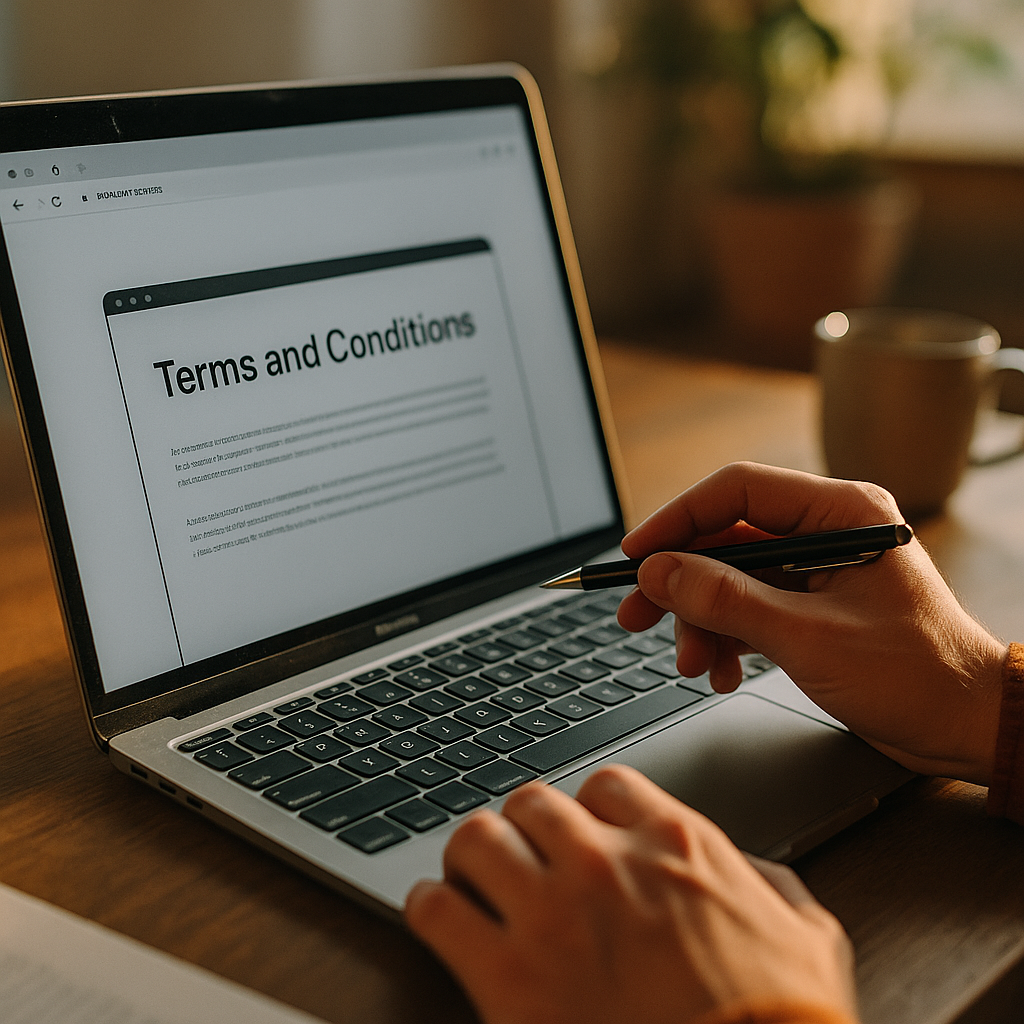
Writing website terms and conditions that are easy to understand is crucial for building trust and protecting your business. Clear, user-friendly terms help users feel secure and reduce legal risks. This article shows you, step by step, how to create transparent website policies—so your visitors always know where they stand.
Why Clear Website Terms and Conditions Matter
Transparent terms and conditions do more than protect your website—they foster trust. In 2025, research shows 72% of users are more likely to engage with a site if the legal terms are straightforward. Complex legal jargon can frustrate users and even drive them away, while easy-to-read policies support better relationships and fewer disputes. Moreover, jurisdictions such as the EU and Australia are increasingly scrutinizing the clarity of online agreements. Smart site owners prioritize clarity to avoid costly misunderstandings and legal challenges.
Structuring Your Website Legal Agreements for Maximum Clarity
Logical structure is essential when crafting website legal agreements. Begin with a concise introduction explaining the document’s purpose. Divide your terms into clearly marked sections, with relevant headings like:
- Definitions
- User Responsibilities
- Intellectual Property
- Payment Terms (if applicable)
- Privacy and Data Use
- Limitation of Liability
- Contact Information
Each section should address one topic. Short paragraphs and bullet points help users scan content and absorb information quickly. Avoid overwhelming the reader with walls of text. Breadcrumb navigation and a linked table of contents make navigation easier, especially on mobile devices.
Writing User-Friendly Terms: Plain Language and Readability
Plain language is a cornerstone of effective user-friendly website terms. Avoid legalese and convoluted sentences. Instead, use short, direct statements. For example:
- Instead of: “Notwithstanding the foregoing, users shall indemnify Company X against all claims arising from use or misuse of the service.”
- Write: “You agree to protect Company X from claims related to how you use our service.”
Tools like the Hemingway Editor or Readable.com can help ensure your content stays below a Grade 9 reading level, which is optimal for general comprehension. Test your terms with real users and revise any confusing sections. Avoid ambiguous phrasing and define any technical or legal terms you must include.
Addressing Key Legal Issues in Easy-to-Understand Language
Every website has unique legal needs, but some topics are near-universal. Cover these key areas in plain language:
- User responsibilities: Explain what users can—and cannot—do on your site. Be specific.
- Data privacy: Summarize how you collect, use, and protect visitor data. Link to your full privacy policy for additional detail.
- Dispute resolution: Outline how you’ll handle conflicts. Short, direct statements reassure users and minimize surprises.
- Changes to terms: Describe your update process and how you inform users of significant changes.
- Limits of liability: Clearly state your responsibilities and any disclaimers, avoiding scare tactics.
Tailor these sections for your audience and industry. For example, e-commerce sites need clear return and refund policies, while membership communities should address account sharing rules. Ensure you meet legal requirements in each market where your users are located.
Review, Test, and Update Your Terms for On-Going Transparency
Even the clearest terms and conditions need regular review. As regulations evolve and your website grows, update language and policies. In 2025, compliance includes addressing artificial intelligence disclaimers, cookie notifications, and more. Seek professional legal advice to address any grey areas without making your terms unreadable.
Before publishing, test your terms with staff, friends, or a segment of your users. Encourage feedback on unclear sections. Use version control to track changes and date every update for transparency. Always make an archive of previous versions available—this builds confidence and satisfies legal norms.
FAQs About Writing Website Terms and Conditions
-
Do I need a lawyer to write website terms and conditions?
While you can create basic terms on your own, a lawyer ensures your terms are compliant, comprehensive, and enforceable, especially if your website operates internationally or collects user data.
-
How often should I update my website’s terms and conditions?
Review your terms at least once a year or when there are major changes to your business, services, or laws affecting your industry. Keep users informed about any significant updates.
-
What are the most important sections to include?
Key sections include user responsibilities, privacy and data handling, intellectual property, limitations of liability, and dispute resolution. Customize any terms for your business model or jurisdiction.
-
How can I make sure my terms are easy to understand?
Use plain language, short sentences, and bullet points. Test your terms with real users for clarity and comprehension. Revise any complicated sections as needed.
-
What happens if someone doesn’t agree to my terms?
If a user doesn’t agree, they shouldn’t use your website. State this clearly at the start of your terms. Consider using an “I agree” checkbox for added clarity and legal certainty.
Writing website terms and conditions that are easy to understand is an investment in user trust and legal safety. Prioritize clear structure, plain language, and regular updates for maximum transparency—your business and your users will benefit every step of the way.
Top Influencer Marketing Agencies
The leading agencies shaping influencer marketing in 2026
Agencies ranked by campaign performance, client diversity, platform expertise, proven ROI, industry recognition, and client satisfaction. Assessed through verified case studies, reviews, and industry consultations.
Moburst

-
2

The Shelf
Boutique Beauty & Lifestyle Influencer AgencyA data-driven boutique agency specializing exclusively in beauty, wellness, and lifestyle influencer campaigns on Instagram and TikTok. Best for brands already focused on the beauty/personal care space that need curated, aesthetic-driven content.Clients: Pepsi, The Honest Company, Hims, Elf Cosmetics, Pure LeafVisit The Shelf → -
3

Audiencly
Niche Gaming & Esports Influencer AgencyA specialized agency focused exclusively on gaming and esports creators on YouTube, Twitch, and TikTok. Ideal if your campaign is 100% gaming-focused — from game launches to hardware and esports events.Clients: Epic Games, NordVPN, Ubisoft, Wargaming, Tencent GamesVisit Audiencly → -
4

Viral Nation
Global Influencer Marketing & Talent AgencyA dual talent management and marketing agency with proprietary brand safety tools and a global creator network spanning nano-influencers to celebrities across all major platforms.Clients: Meta, Activision Blizzard, Energizer, Aston Martin, WalmartVisit Viral Nation → -
5

The Influencer Marketing Factory
TikTok, Instagram & YouTube CampaignsA full-service agency with strong TikTok expertise, offering end-to-end campaign management from influencer discovery through performance reporting with a focus on platform-native content.Clients: Google, Snapchat, Universal Music, Bumble, YelpVisit TIMF → -
6

NeoReach
Enterprise Analytics & Influencer CampaignsAn enterprise-focused agency combining managed campaigns with a powerful self-service data platform for influencer search, audience analytics, and attribution modeling.Clients: Amazon, Airbnb, Netflix, Honda, The New York TimesVisit NeoReach → -
7

Ubiquitous
Creator-First Marketing PlatformA tech-driven platform combining self-service tools with managed campaign options, emphasizing speed and scalability for brands managing multiple influencer relationships.Clients: Lyft, Disney, Target, American Eagle, NetflixVisit Ubiquitous → -
8

Obviously
Scalable Enterprise Influencer CampaignsA tech-enabled agency built for high-volume campaigns, coordinating hundreds of creators simultaneously with end-to-end logistics, content rights management, and product seeding.Clients: Google, Ulta Beauty, Converse, AmazonVisit Obviously →