


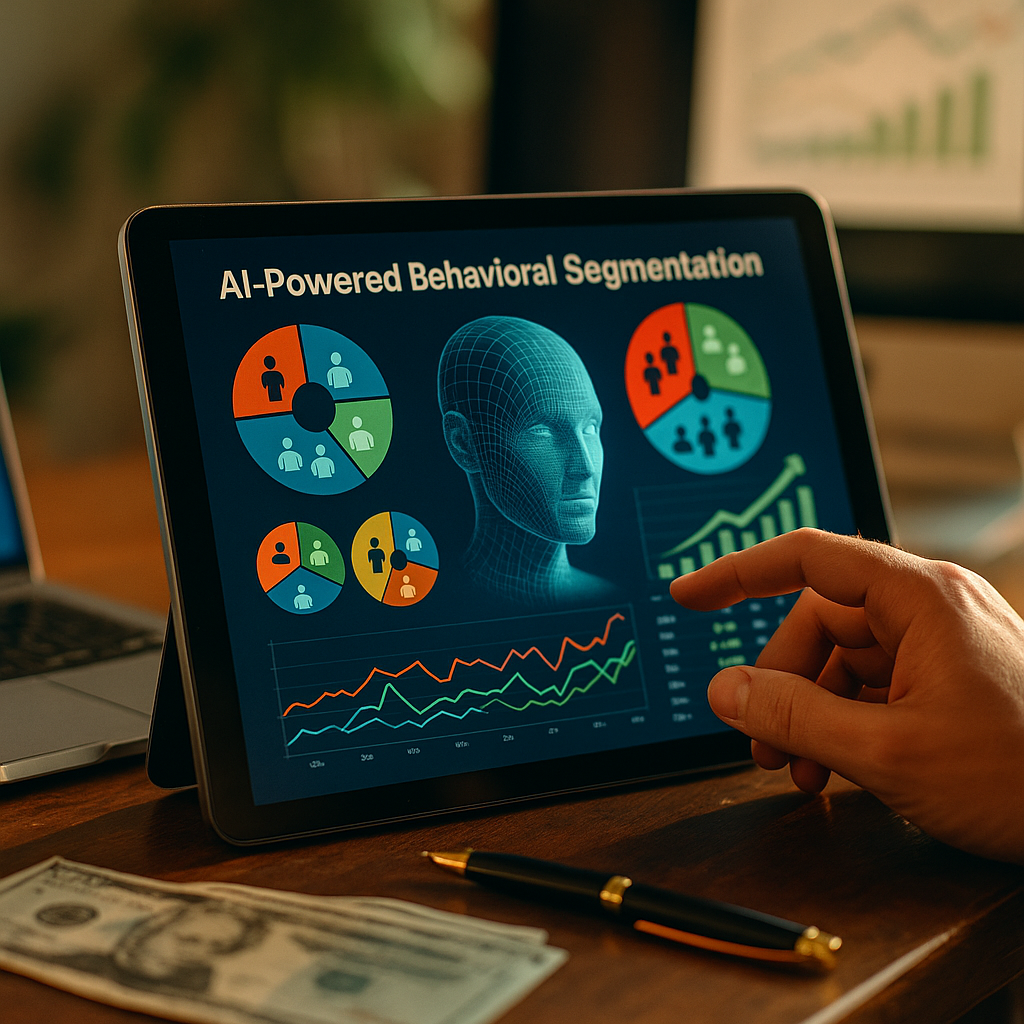
Organizations are increasingly leveraging AI to automate customer segmentation based on behavior for sharper targeting and increased ROI. By analyzing user actions, AI offers deeper, dynamic insights impossible to achieve manually. Ready to unlock the real power behind your data? Dive in to discover how AI-driven behavioral segmentation is transforming customer intelligence in 2025.
Understanding Behavioral Customer Segmentation with Machine Learning
Behavioral customer segmentation, especially with machine learning for segmentation, goes beyond demographics and basic purchase history. It involves analyzing granular actions—like browsing patterns, frequency of purchases, and response to campaigns—to build profiles based on genuine intent and preferences. Today’s AI models can process these digital footprints at scale, uncovering micro-segments and emerging trends that boost marketing precision.
Unlike static rule-based segmentation, AI-powered models—such as clustering algorithms and neural networks—continuously learn from new data. This real-time adaptation means businesses can quickly spot customer shifts, optimize offers, and personalize outreach with unprecedented accuracy. From segmenting browsers who abandon carts to identifying VIP repeat buyers, AI brings a scientific edge to segmentation that was previously out of reach.
Benefits of AI-Powered Behavioral Analytics in Customer Segmentation
Leveraging AI behavioral analytics for customer segmentation delivers tangible business benefits:
- Enhanced Personalization: AI understands subtle signals to tailor messaging and offers, increasing conversion rates and customer satisfaction.
- Scalability: Machine learning algorithms analyze millions of data points faster than any human team, revealing niche segments instantly.
- Real-Time Insights: As user behaviors shift, AI updates segments dynamically—keeping campaigns relevant and timely.
- Operational Efficiency: Automated segmentation frees data teams to focus on strategy rather than manual analysis.
- Higher ROI: More accurate targeting boosts response rates, reduces wasted spend, and increases customer lifetime value.
These advantages make advanced behavioral segmentation a cornerstone for brands seeking to compete and win in the digital-first landscape of 2025.
How AI Algorithms Segment Customers Based on Behavior Data
Effective AI-driven customer segmentation relies on sophisticated algorithms to automatically detect patterns and group customers. Here’s how leading organizations approach this challenge:
- Data Collection and Preparation: Raw behavioral data is gathered from sources like websites, mobile apps, POS systems, and email platforms. This includes clickstreams, page views, session times, purchase frequencies, and campaign responses.
- Feature Engineering: AI models require relevant input features—such as recency of last purchase, frequency of visits, product categories browsed, and engagement scores—to train on behavioral patterns.
- Unsupervised Learning: Techniques like k-means clustering and hierarchical clustering group customers with similar behaviors, while anomaly detection spots outliers and new trends.
- Dynamic Segmentation: Real-world AI systems recalculate segments continuously as new data flows in, ensuring customer profiles stay current and actionable.
- Actionable Integration: Segmented audiences are synced with marketing automation tools for precise targeting, journey mapping, and predictive interventions.
By combining data engineering, cloud infrastructure, and advanced models, brands translate raw behavioral data into strategic customer segments.
Practical Applications: Personalization and Campaign Optimization
One of the most significant impacts of automated behavioral segmentation is hyper-personalized marketing at scale. Instead of guessing what resonates, AI applies deep learning to deliver:
- Trigger-Based Messaging: Automated workflows target users when they abandon carts, complete a purchase, or show high intent but don’t convert.
- Predictive Recommendations: Machine learning suggests products or content tailored to each segment’s preferences and next-best actions.
- Loyalty Experiences: VIP customers and frequent buyers receive exclusive offers, enhancing retention and increasing lifetime value.
- Campaign Performance Optimization: AI allocates budgets and creative variations based on predicted uplift within each behavioral segment.
For instance, e-commerce leaders like Shopify Plus report that AI-driven segmentation increases average order value by over 15%, while financial services firms note improved upsell rates and a reduction in churn after introducing real-time behavioral cohorts in 2025.
Ensuring Data Governance and Ethical Use of AI for Segmentation
As the use of AI in customer segmentation accelerates, organizations must prioritize ethical guidelines, privacy, and accuracy:
- Transparency: Businesses should document AI decision logic, sharing with stakeholders how customers are grouped and targeted.
- Bias Mitigation: Regularly review models for discriminatory impacts or unintentional exclusion of protected groups.
- Compliance: Adhere to the latest global data privacy standards, such as GDPR, and obtain consent before analyzing behavioral data.
- Data Security: Deploy robust controls to safeguard sensitive customer activity data against breaches and misuse.
- Continuous Audit: Implement ongoing evaluations by both data scientists and independent experts to maintain accuracy and fairness.
These best practices not only support regulatory compliance but also build customer trust—a vital currency as AI becomes an embedded part of segmentation strategies.
Future Trends: The Next Evolution of AI-Driven Customer Segmentation
The future of AI-driven customer segmentation is shaped by rapid advances in generative AI, explainable machine learning, and omnichannel analytics. In 2025, expect to see:
- Context-Aware Segmentation: AI factors in location, time, mood, and environmental context to refine segments dynamically.
- Customer Journey Orchestration: Automated engines map interactions across email, mobile, web, and offline channels to build richer, multi-touch profiles.
- Explainable AI Models: Businesses use interpretable machine learning to clarify why segments are formed, helping marketers make informed decisions.
- Self-Optimizing Campaigns: AI tests, learns, and re-optimizes segmentation rules in real time to improve engagement rates with less manual input.
Ultimately, organizations that invest in continuous innovation and responsible deployment will stay ahead in the race to build exceptional, data-driven customer experiences.
To sum up, automating customer segmentation with AI delivers deeper insights, smarter targeting, and higher ROI—while demanding thoughtful data governance and ethics. The brands who use behavioral data to understand and delight their customers are poised for remarkable growth in 2025 and beyond.
FAQs: Using AI to Automate Customer Segmentation Based on Behavior
-
What is AI-based behavioral customer segmentation?
AI-based behavioral segmentation uses machine learning to analyze customer actions—such as browsing habits, purchases, and engagement—to group them into targeted segments automatically, enabling more personalized marketing and communication strategies.
-
Which industries benefit most from automated behavioral segmentation?
Industries with large, diverse customer bases—such as e-commerce, financial services, telecommunications, and retail—see the most impact from AI-driven behavioral segmentation, thanks to higher personalization and measurable improvements in engagement and retention.
-
What data is required for AI customer segmentation?
AI models require behavioral data such as website activity, purchase frequency, product preferences, engagement with marketing campaigns, and even offline interactions. The richer the data, the more sophisticated the segmentation can be.
-
How does AI ensure privacy and compliance in segmentation?
Responsible organizations implement strong data governance, anonymization, and regular audits to ensure AI models comply with privacy regulations and use customer data ethically, protecting both business and customer interests.
-
Can small businesses use AI for segmentation?
Yes, thanks to cloud platforms and user-friendly AI tools, small businesses in 2025 can quickly adopt automated segmentation, often through integrations with CRMs and marketing automation software, without large data science teams.
Top Influencer Marketing Agencies
The leading agencies shaping influencer marketing in 2026
Agencies ranked by campaign performance, client diversity, platform expertise, proven ROI, industry recognition, and client satisfaction. Assessed through verified case studies, reviews, and industry consultations.
Moburst

-
2

The Shelf
Boutique Beauty & Lifestyle Influencer AgencyA data-driven boutique agency specializing exclusively in beauty, wellness, and lifestyle influencer campaigns on Instagram and TikTok. Best for brands already focused on the beauty/personal care space that need curated, aesthetic-driven content.Clients: Pepsi, The Honest Company, Hims, Elf Cosmetics, Pure LeafVisit The Shelf → -
3

Audiencly
Niche Gaming & Esports Influencer AgencyA specialized agency focused exclusively on gaming and esports creators on YouTube, Twitch, and TikTok. Ideal if your campaign is 100% gaming-focused — from game launches to hardware and esports events.Clients: Epic Games, NordVPN, Ubisoft, Wargaming, Tencent GamesVisit Audiencly → -
4

Viral Nation
Global Influencer Marketing & Talent AgencyA dual talent management and marketing agency with proprietary brand safety tools and a global creator network spanning nano-influencers to celebrities across all major platforms.Clients: Meta, Activision Blizzard, Energizer, Aston Martin, WalmartVisit Viral Nation → -
5

The Influencer Marketing Factory
TikTok, Instagram & YouTube CampaignsA full-service agency with strong TikTok expertise, offering end-to-end campaign management from influencer discovery through performance reporting with a focus on platform-native content.Clients: Google, Snapchat, Universal Music, Bumble, YelpVisit TIMF → -
6

NeoReach
Enterprise Analytics & Influencer CampaignsAn enterprise-focused agency combining managed campaigns with a powerful self-service data platform for influencer search, audience analytics, and attribution modeling.Clients: Amazon, Airbnb, Netflix, Honda, The New York TimesVisit NeoReach → -
7

Ubiquitous
Creator-First Marketing PlatformA tech-driven platform combining self-service tools with managed campaign options, emphasizing speed and scalability for brands managing multiple influencer relationships.Clients: Lyft, Disney, Target, American Eagle, NetflixVisit Ubiquitous → -
8

Obviously
Scalable Enterprise Influencer CampaignsA tech-enabled agency built for high-volume campaigns, coordinating hundreds of creators simultaneously with end-to-end logistics, content rights management, and product seeding.Clients: Google, Ulta Beauty, Converse, AmazonVisit Obviously →