


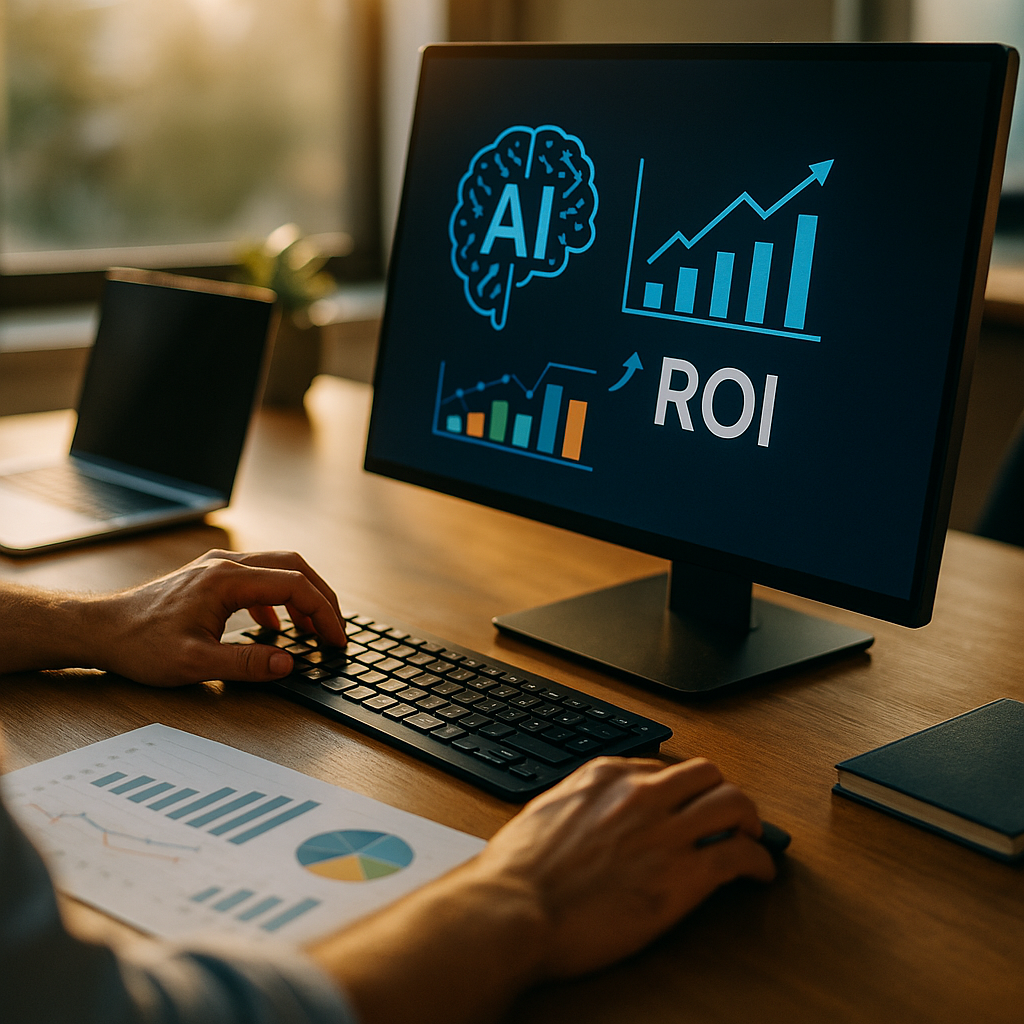
Understanding how AI helps brands forecast campaign ROI is crucial for marketers aiming to maximize budget impact and minimize risk. In 2025, precision is everything, and artificial intelligence is transforming how brands plan campaigns. Ready to discover why AI-powered forecasting is now an essential competitive advantage? Let’s unpack how your brand can capitalize on this game-changing capability.
Data-Driven Campaign Planning with AI Forecasting
Modern marketing campaigns generate vast amounts of data, from customer interactions across digital platforms to granular sales conversions. AI leverages machine learning and advanced analytics to sift through this information, identifying which data points are true indicators of campaign performance. Brands that adopt AI for forecasting gain a holistic view of past campaign results, passing trends, and outliers.
According to a 2024 report from Gartner, over 70% of leading brands now use AI-enabled analytics tools to enhance campaign efficiency. By aggregating and analyzing multichannel data, AI-powered tools reveal which strategies deliver the highest ROI and help preempt potential pitfalls before launching a campaign. This evidence-based approach allows marketers to build plans grounded in real insights rather than intuition.
Predictive Analytics: The Heart of ROI Optimization
At the core of AI-driven ROI forecasting are predictive analytics. These algorithms investigate large datasets to uncover patterns, correlations, and causal relationships that affect marketing success. AI doesn’t simply analyze results after a campaign; it anticipates outcomes before spend occurs.
Predictive models consider factors such as seasonality, demographic shifts, pricing changes, competitor movements, and even macroeconomic trends. By processing these elements simultaneously, AI produces highly accurate ROI forecasts that allocate resources efficiently. For instance, AI can pinpoint which channels are likely to yield the strongest returns in the upcoming quarter, eliminating much of the guesswork from the planning process.
Personalization and Dynamic Messaging Powered by AI
One major impact of AI on campaign ROI forecasting is its ability to enable hyper-personalization. AI segments audiences far more granularly than traditional methods. It analyzes behavioral data, preferences, purchase histories, and engagement trends to tailor messages and offers to each micro-segment.
This level of personalization leads to better engagement rates and stronger conversion pipelines. Importantly, AI measures these micro-campaigns in real time, feeding new data back into its forecasting models. This self-improving loop means forecasts become more precise and campaigns more effective with every iteration. Brands adopting this data-driven personalization see not only improved ROI predictions but also higher overall revenue and customer loyalty.
Mitigating Risk and Enhancing Campaign Agility
Forecasting campaign ROI has always involved a degree of uncertainty. However, AI reduces financial risk by identifying patterns in real-time and quickly flagging underperforming elements. Through automated dashboards and instant alerts, marketers can pivot strategies within hours, not weeks—drastically improving agility.
For example, a retail brand can automatically halt spend on an ad campaign that’s underdelivering and redirect resources to a high-performing channel as detected by AI metrics. This ability to course-correct greatly reduces wasted budget and sharpens total campaign ROI. In today’s volatile digital landscape, such agility isn’t just useful—it’s imperative.
Case Study: AI-Driven ROI Forecasting in E-commerce
E-commerce brands in 2025 are leveraging AI solutions to refine every stage of campaign planning and execution. Consider a global apparel retailer using AI tools to analyze customer journeys, historical sales spikes, external market factors, and influencer impact. With these inputs, the AI system forecasts campaign results down to SKU level, suggesting tailored budgets for each product and segment.
During peak shopping seasons, this retailer can accurately predict which products will sell fastest and adjust inventory and ad budgets in real time. Post-campaign, AI rapidly analyzes outcomes, feeding new learnings back into its predictive models. This loop has led to a reported 22% increase in campaign ROI and stronger year-over-year growth.
Ethical Data Use and Building Consumer Trust
As brands harness AI to forecast campaign ROI, ethical data use and consumer privacy are paramount. Leading brands ensure all AI-driven marketing strategies comply with evolving data regulations and champion transparent communication with consumers. This approach fosters trust and minimizes reputational risks.
AI applications must strictly follow consent protocols, anonymize data, and give users control over their information. In return, brands build stronger relationships and gather more reliable data, enhancing AI’s forecasting accuracy. The payoff is twofold–better ROI forecasts and improved consumer loyalty driven by responsible stewardship.
Conclusion: The Future of ROI Forecasting Is AI-First
AI-powered forecasting is redefining campaign ROI for brands, making performance more predictable and resource allocation more precise. By embedding AI into campaign planning, marketers gain sharper insights, reduce risk, and unlock new levels of agility. Embrace this AI-first approach today, and your brand will be strategically equipped to thrive in 2025 and beyond.
FAQs: AI and Campaign ROI Forecasting
-
How accurate are AI-powered ROI forecasts?
With quality data inputs and robust algorithms, AI-powered forecasts in 2025 routinely achieve 85-90% accuracy, outperforming traditional models. Accuracy improves as more campaign data is fed into the system.
-
What types of data does AI use for campaign ROI forecasting?
AI uses a mix of first-party behavioral data, sales transactions, market trends, competitive intelligence, and even unstructured data like social media sentiment to deliver comprehensive predictions.
-
Is AI-driven ROI forecasting suitable for small businesses?
Yes—many cloud-based AI marketing tools are affordable and scalable, enabling small and medium-sized businesses to get accurate ROI predictions without major upfront investment.
-
How does AI maintain data privacy when forecasting ROI?
AI solutions in 2025 embed privacy-by-design, ensuring all forecasting complies with regulations, anonymizes sensitive data, and allows users control over shared information.
-
How quickly can AI detect underperforming campaigns?
State-of-the-art AI systems provide near-real-time analysis, often flagging underperformance within hours and supporting swift reallocation of resources to optimize ROI.
Top Influencer Marketing Agencies
The leading agencies shaping influencer marketing in 2026
Agencies ranked by campaign performance, client diversity, platform expertise, proven ROI, industry recognition, and client satisfaction. Assessed through verified case studies, reviews, and industry consultations.
Moburst

-
2

The Shelf
Boutique Beauty & Lifestyle Influencer AgencyA data-driven boutique agency specializing exclusively in beauty, wellness, and lifestyle influencer campaigns on Instagram and TikTok. Best for brands already focused on the beauty/personal care space that need curated, aesthetic-driven content.Clients: Pepsi, The Honest Company, Hims, Elf Cosmetics, Pure LeafVisit The Shelf → -
3

Audiencly
Niche Gaming & Esports Influencer AgencyA specialized agency focused exclusively on gaming and esports creators on YouTube, Twitch, and TikTok. Ideal if your campaign is 100% gaming-focused — from game launches to hardware and esports events.Clients: Epic Games, NordVPN, Ubisoft, Wargaming, Tencent GamesVisit Audiencly → -
4

Viral Nation
Global Influencer Marketing & Talent AgencyA dual talent management and marketing agency with proprietary brand safety tools and a global creator network spanning nano-influencers to celebrities across all major platforms.Clients: Meta, Activision Blizzard, Energizer, Aston Martin, WalmartVisit Viral Nation → -
5

The Influencer Marketing Factory
TikTok, Instagram & YouTube CampaignsA full-service agency with strong TikTok expertise, offering end-to-end campaign management from influencer discovery through performance reporting with a focus on platform-native content.Clients: Google, Snapchat, Universal Music, Bumble, YelpVisit TIMF → -
6

NeoReach
Enterprise Analytics & Influencer CampaignsAn enterprise-focused agency combining managed campaigns with a powerful self-service data platform for influencer search, audience analytics, and attribution modeling.Clients: Amazon, Airbnb, Netflix, Honda, The New York TimesVisit NeoReach → -
7

Ubiquitous
Creator-First Marketing PlatformA tech-driven platform combining self-service tools with managed campaign options, emphasizing speed and scalability for brands managing multiple influencer relationships.Clients: Lyft, Disney, Target, American Eagle, NetflixVisit Ubiquitous → -
8

Obviously
Scalable Enterprise Influencer CampaignsA tech-enabled agency built for high-volume campaigns, coordinating hundreds of creators simultaneously with end-to-end logistics, content rights management, and product seeding.Clients: Google, Ulta Beauty, Converse, AmazonVisit Obviously →