


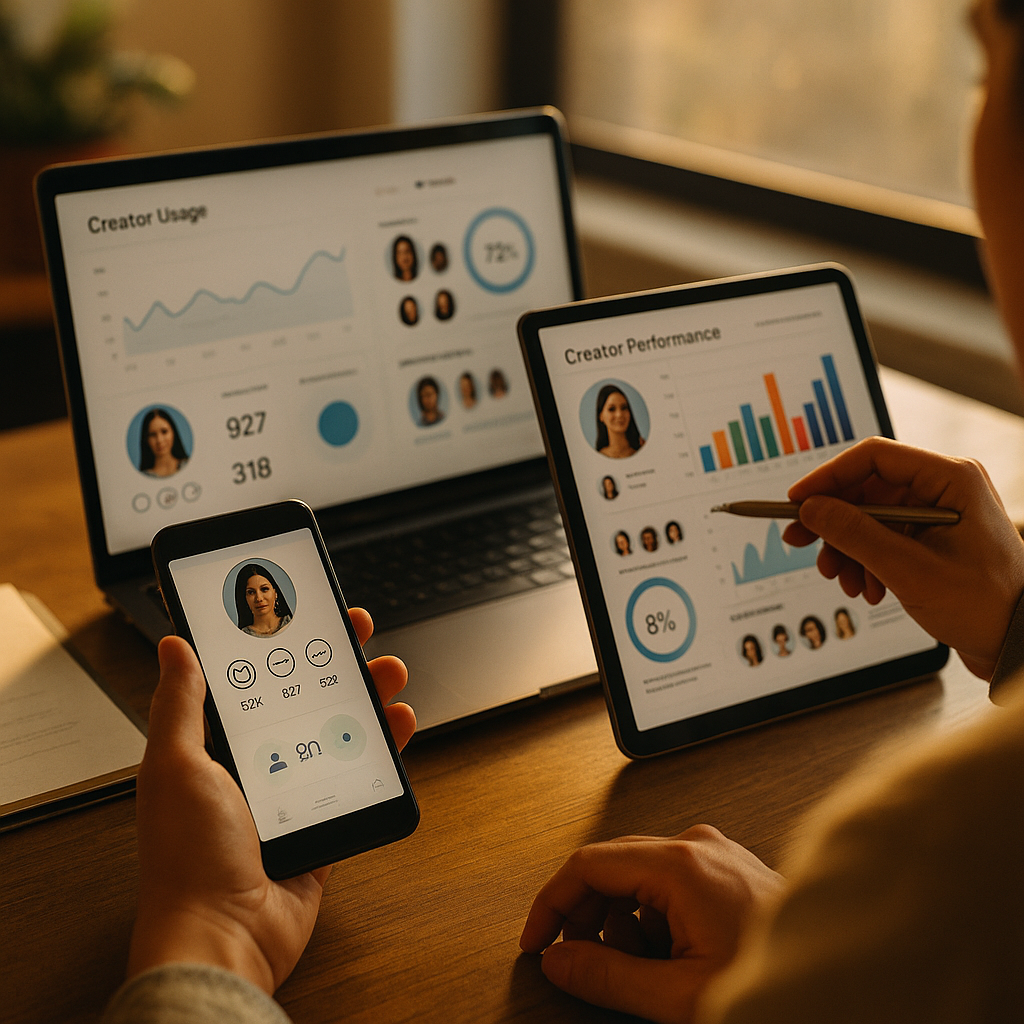
Emerging tools for creator usage tracking are transforming how brands, agencies, and individual creators measure and optimize their online presence. These platforms harness advanced analytics, automation, and AI to deliver actionable insights. As content ecosystems grow more complex in 2025, staying informed about the latest tracking solutions is essential for maximizing impact. Ready to discover which new tools are leading the way?
Key Benefits of Creator Usage Analytics Solutions
Usage analytics solutions offer much more than vanity metrics. These tools empower both brands and creators to extract meaningful patterns from raw engagement data. By providing an in-depth look at audience demographics, platform performance, and content longevity, they help stakeholders understand real ROI. Modern solutions highlight:
- Granular Content Insights: Dive into specific video, post, or story performance on a range of platforms including TikTok, Instagram, YouTube, and niche networks.
- Real-Time Engagement Tracking: Monitor impressions, likes, comments, shares, and watch time instantly—enabling swift campaign tweaks.
- Attribution Clarity: Attribute sales or conversions directly to the creator’s work with reliable tracking pixels and referral codes.
- Compliance Monitoring: New tools ensure creators and brands meet FTC and platform-specific transparency requirements.
- Monetization Optimization: Identify which content, platforms, or formats deliver the best financial returns to fine-tune strategies.
This depth of insight allows for continuous learning, helping brands and creators to improve effectiveness through every campaign iteration.
Feature Advances in Social Media Tracking Platforms
The latest generation of social media tracking platforms have shifted from simple dashboards to dynamic, AI-powered suites. In 2025, the most competitive tools use machine learning for pattern recognition, predictive analytics, and sentiment analysis. This supports smarter decision-making for campaigns, partnerships, and content creation. Notable advances include:
- Multi-Platform Aggregation: Modern tracking tools centralize data from major and emerging platforms—allowing for cross-platform comparison and consolidation.
- Influencer Fraud Detection: Robust AI scanning identifies fake followers, engagement pods, and manipulated reach to protect campaign integrity.
- Customizable Reporting: Drag-and-drop modules and exportable reports make stakeholder communication seamless.
- API Integrations: Direct connections with e-commerce, CRM, and advertising platforms allow for holistic performance reviews.
- Sentiment and Emotion Mapping: Beyond engagement, tools now analyze emotional tone in comments and reactions to refine brand messaging.
Such features allow agencies and brands to make data-driven choices by evaluating true value and consistent trends across every campaign touchpoint.
How AI and Automation are Enhancing Usage Tracking
Artificial intelligence is at the heart of the latest creator usage tracking solutions. Rather than manually parsing vast spreadsheets, automation delivers actionable alerts and suggestions before you even ask for them. In practice, this looks like:
- Anomaly Detection: AI instantly flags engagement spikes, sudden drops, or unusual traffic sources—enabling quick investigation or intervention.
- Automated Recommendations: Machine learning algorithms suggest optimal posting times, content formats, or collaboration prospects to boost performance.
- Predictive Analytics: Forward-looking insights help anticipate campaign ROI, trending hashtags, or viral potential based on historical data.
- Workflow Integration: Automated reporting, approval flows, and payment tracking streamline day-to-day operations for agencies and large brands.
- Summary Snapshots: At-a-glance dashboards powered by AI summarize key metrics for non-technical stakeholders.
This combination of AI and automation not only saves time but empowers teams to focus on strategic creative decisions.
Data Privacy and Compliance Considerations in 2025
As reliance on tracking tools intensifies, so does the importance of data privacy and compliance in 2025. Evolving regulations and audience expectations demand transparent, secure data handling. Today’s top creator usage tracking tools prioritize:
- Global Regulation Compliance: Support for GDPR, CCPA, and newer, region-specific privacy laws is standard, protecting both creators and audience data.
- User Consent Management: Seamless opt-outs and clear consent capture mechanisms maintain trust and ethical standards.
- Data Minimization: Tools now limit collection to essential data, reducing exposure and storage risks.
- End-to-End Encryption: Secure data transfers and storage remain non-negotiable for all tracking activities.
- Audit Logging: Detailed activity logs ensure transparency for all data access requests and changes.
Prioritizing these features enhances brand reputation and future-proofs campaigns against evolving regulatory environments.
Which Emerging Creator Usage Tracking Tools Stand Out in 2025?
Innovation continues to reshape the creator analytics landscape. While the “best” platform often depends on niche, scale, and strategy, several solutions stand out in 2025 for their unique features and reliability. Among them:
- DataStitch: Renowned for its interoperability, DataStitch connects social, e-commerce, and email data, providing a 360° view of creator ROI.
- PulseTrack: Using AI, PulseTrack surfaces deep content insights and detects emerging trends before they hit the mainstream.
- ThirdSpace Metrics: Gives creators and brands robust audience segmentation and predictive revenue analytics for maximizing paid partnership outcomes.
- VerifierAI: Excels at influencer verification, ensuring follower and engagement authenticity at scale with advanced fraud detection mechanics.
- ComplySphere: Specializes in compliance tracking and automated alerting for evolving regulatory requirements worldwide.
Each of these new platforms emphasizes actionable intelligence, security, and usability, helping brands and creators stay ahead.
Practical Steps for Brands and Agencies Adopting New Tracking Tools
Adopting advanced creator usage tracking tools requires a proactive, strategic approach. To maximize value in 2025, brands and agencies should:
- Audit Current Analytics Processes: Identify pain points and redundancies in existing workflows and reporting.
- Align With Business Goals: Select tools based on specific KPIs—be it growth, compliance, or monetization.
- Pilot and Test: Implement trial periods, gathering feedback from stakeholders and adjusting for usability or integration needs.
- Prioritize Training: Ensure teams and creators understand both technical and ethical dimensions of usage tracking.
- Monitor and Adapt: Schedule regular assessments for tool efficacy, ROI, and evolving platform features.
Taking these steps leads to more measurable, secure, and impactful creator partnerships.
Conclusion: Maximizing Value with Emerging Tracking Tools
Emerging tools for creator usage tracking redefine what’s possible in campaign measurement, optimization, and security. By combining AI, cross-platform insights, and robust privacy safeguards, brands and creators gain the clarity to scale their impact. Proactive adoption of these innovations is essential for thriving in the competitive creator economy of 2025.
FAQs: Emerging Tools for Creator Usage Tracking
-
What is creator usage tracking?
Creator usage tracking refers to monitoring and analyzing a creator’s online content performance, including reach, engagement, conversions, and compliance across various social platforms.
-
How do these tools help brands and creators?
They enable data-driven decisions, streamline reporting, highlight successful campaigns, and automate compliance—resulting in optimized content strategies and ROI.
-
What are the risks associated with usage tracking in 2025?
Risks include privacy violations, non-compliance with regional laws, and reliance on inaccurate or manipulated engagement data without proper verification tools.
-
What should I look for in an emerging tracking platform?
Prioritize platforms that offer real-time AI insights, seamless API integrations, robust privacy safeguards, customizable reports, and strong fraud detection.
-
Are there free creator tracking tools available?
While some platforms offer limited free versions, most robust solutions are subscription-based due to the high cost of development, AI features, and compliance support.
-
How often should I review usage analytics?
For ongoing campaigns, weekly reviews are best. For one-off collaborations, post-campaign deep dives ensure valuable learning and performance optimization.
Top Influencer Marketing Agencies
The leading agencies shaping influencer marketing in 2026
Agencies ranked by campaign performance, client diversity, platform expertise, proven ROI, industry recognition, and client satisfaction. Assessed through verified case studies, reviews, and industry consultations.
Moburst

-
2

The Shelf
Boutique Beauty & Lifestyle Influencer AgencyA data-driven boutique agency specializing exclusively in beauty, wellness, and lifestyle influencer campaigns on Instagram and TikTok. Best for brands already focused on the beauty/personal care space that need curated, aesthetic-driven content.Clients: Pepsi, The Honest Company, Hims, Elf Cosmetics, Pure LeafVisit The Shelf → -
3

Audiencly
Niche Gaming & Esports Influencer AgencyA specialized agency focused exclusively on gaming and esports creators on YouTube, Twitch, and TikTok. Ideal if your campaign is 100% gaming-focused — from game launches to hardware and esports events.Clients: Epic Games, NordVPN, Ubisoft, Wargaming, Tencent GamesVisit Audiencly → -
4

Viral Nation
Global Influencer Marketing & Talent AgencyA dual talent management and marketing agency with proprietary brand safety tools and a global creator network spanning nano-influencers to celebrities across all major platforms.Clients: Meta, Activision Blizzard, Energizer, Aston Martin, WalmartVisit Viral Nation → -
5

The Influencer Marketing Factory
TikTok, Instagram & YouTube CampaignsA full-service agency with strong TikTok expertise, offering end-to-end campaign management from influencer discovery through performance reporting with a focus on platform-native content.Clients: Google, Snapchat, Universal Music, Bumble, YelpVisit TIMF → -
6

NeoReach
Enterprise Analytics & Influencer CampaignsAn enterprise-focused agency combining managed campaigns with a powerful self-service data platform for influencer search, audience analytics, and attribution modeling.Clients: Amazon, Airbnb, Netflix, Honda, The New York TimesVisit NeoReach → -
7

Ubiquitous
Creator-First Marketing PlatformA tech-driven platform combining self-service tools with managed campaign options, emphasizing speed and scalability for brands managing multiple influencer relationships.Clients: Lyft, Disney, Target, American Eagle, NetflixVisit Ubiquitous → -
8

Obviously
Scalable Enterprise Influencer CampaignsA tech-enabled agency built for high-volume campaigns, coordinating hundreds of creators simultaneously with end-to-end logistics, content rights management, and product seeding.Clients: Google, Ulta Beauty, Converse, AmazonVisit Obviously →