


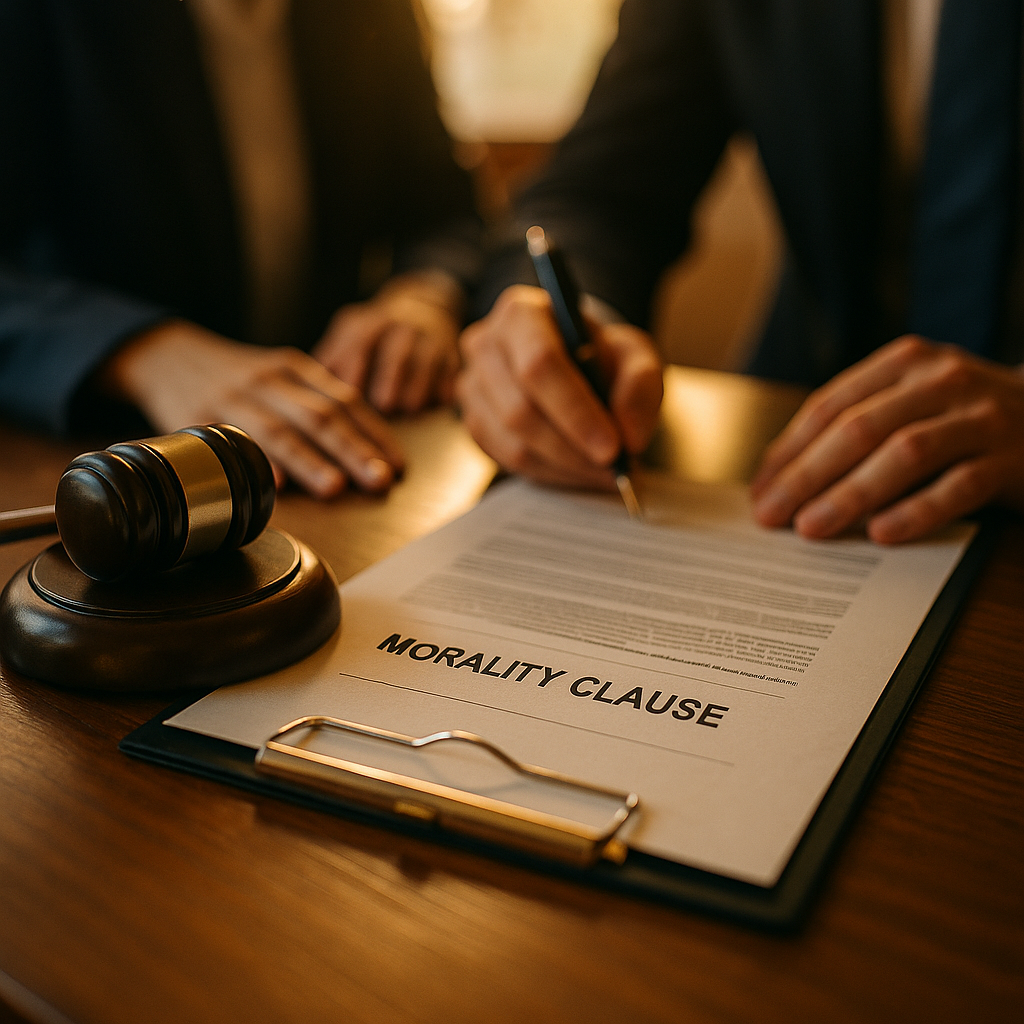
Morality clauses have become essential for brands striving to protect their reputations in today’s fast-moving world. These powerful contractual tools can shield your organization from costly scandals related to spokespeople, employees, or partners. Understanding how morality clauses work—and why your company needs them—could save you from millions in damages and lost goodwill. Ready to future-proof your brand?
Understanding Morality Clauses in Modern Contracts
Morality clauses, sometimes called “morals clauses,” are provisions in contracts designed to protect a brand or company from reputational harm linked to the actions of an individual or partner. They allow a business to terminate or penalize agreements if the other party’s behavior violates certain ethical standards or brings negative publicity.
With brands frequently enlisting celebrities, influencers, and key executives as public faces, the risk of personal scandals impacting business has increased. According to a 2024 Forbes survey, 63% of large companies updated their contracts to include rigorous morality clauses after witnessing viral scandals harm their competitors. Morality clauses are now standard practice in industries like entertainment, sports, tech, and even finance.
They address behaviors including, but not limited to:
- Criminal conduct
- Substance abuse
- Discriminatory or offensive remarks
- Social media incidents
- Any activity likely to elicit public criticism
As community standards evolve and news spreads rapidly online, clearly defined morality clauses help safeguard a brand’s hard-earned reputation.
Why Brands Need Morality Clauses in the Era of Instant Information
The era of instant information has amplified both the rewards and risks of public partnerships. A single misstep by a brand representative can ignite a media firestorm, erode consumer trust, and inflict heavy financial losses within hours. In fact, a study by Reputation Management Institute in early 2025 found that 72% of consumers will boycott a brand involved in a major public scandal, even if the company is not directly at fault.
Morality clauses give companies legal leverage to swiftly distance themselves from parties whose actions clash with brand values. From terminating endorsement deals with athletes accused of misconduct to holding executives accountable for breaches of ethical standards, these clauses act as proactive shields. They also encourage contract parties to uphold high standards of behavior, knowing that violations could bring immediate consequences.
Additionally, using morality clauses demonstrates to stakeholders, investors, and the public that your company takes its ethical commitments seriously—key for building long-term trust in today’s transparent business environment.
Drafting Effective Morality Clauses: Legal Considerations
Morality clauses provide flexibility, but their enforceability hinges on careful drafting. The wording should be clear, specific, and tailored to the individual or circumstances involved. Ambiguous language can lead to disputes or challenges in court. Here are best practices for crafting robust clauses in 2025:
- Define “moral turpitude” or misconduct clearly: Avoid vague references—list specific behaviors and offenses that trigger the clause.
- Set thresholds for triggering the clause: State whether the clause is activated by allegations, formal charges, convictions, or public backlash.
- Outline remedies and repercussions: Detail what happens in the event of a breach—termination, suspension, financial penalties, or loss of bonuses.
- Address due process: Let both parties know how an alleged violation will be investigated or resolved to ensure fairness and transparency.
- Stay compliant with local and employment laws: Morality clauses may intersect with labor rights and privacy regulations. Legal review is essential before implementation.
Increasingly, companies also incorporate social media conduct explicitly due to its potential for rapid harm. Consulting with legal experts ensures your morality clauses are both enforceable and reflective of your brand’s current values.
The Impact of Morality Clauses: Real-World Examples and Lessons
Why do so many leading brands insist on morality clauses? Experience provides the answer. High-profile scandals involving sports stars, film actors, or tech leaders have cost companies millions in lost sponsorships and consumer boycotts. For example, in recent high-visibility cases, global apparel brands swiftly ended multi-million-dollar partnerships when athletes’ off-field actions triggered morality clauses, limiting damage and signaling accountability to the public.
Conversely, brands lacking clear morality terms have faced legal deadlocks and negative headlines, prolonging crises. Smart organizations use these contract provisions to:
- Respond quickly and decisively to emerging PR risks
- Clarify internal expectations for brand ambassadors
- Offer transparency and fairness in contract enforcement
- Reinforce corporate social responsibility commitments
As incidents continue to draw global attention thanks to online platforms, brands with comprehensive morality clauses bounce back faster and sustain less lasting damage. Reviewing case studies and keeping current with shifting public standards helps organizations update and refine these clauses proactively.
Integrating Morality Clauses in Influencer and Endorsement Deals
The explosion of influencer marketing, user-generated content, and sponsored partnerships in the digital age makes morality clauses even more vital. Partnering with online personalities expands a brand’s reach—but also its exposure to unvetted behavior made public to millions of followers.
Here’s how brands are using morality clauses in influencer agreements as of 2025:
- Pre-contract screening: Conduct background checks and social media audits to identify red flags before signing.
- In-depth consultation: Educate influencers on acceptable conduct, giving real-world examples of past infractions and their consequences.
- Flexible termination rights: Incorporate provisions allowing for suspension or severance in cases of damaging behavior, even before formal investigations conclude.
- Ongoing monitoring: Employ reputation tracking tools to detect concerning behavior early and respond swiftly if issues arise.
Given how fast information travels, waiting to act until a scandal fully unfolds is riskier than ever. Proactive morality clauses empower brands to act at the first sign of trouble—often preventing crisis escalation and limiting reputational fallout.
Future Trends: Evolving Morality Clauses in a Changing World
As societal values shift and global media landscapes evolve, morality clauses themselves must adapt. In 2025, we see companies expanding the scope of these clauses to cover:
- Broader ethical standards: Including commitments to diversity, equity, and environmental responsibility
- Virtual and AI-powered personas: Applying clauses to digital brand ambassadors, avatars, and emerging technologies
- Global harmonization: Adapting morality provisions to suit international markets with varying cultural norms and legal systems
Technology is also influencing enforcement. Brands increasingly use AI tools to monitor public sentiment and flag potential contract breaches in real-time. To remain effective, morality clauses must be regularly reviewed and refined—ensuring they reflect not just the law, but also your brand’s evolving promises to the public.
Conclusion: Protect Your Brand With Proactive Morality Clauses
Morality clauses have become indispensable risk management tools for modern brands seeking reputation protection. By crafting clear, fair, and adaptable clauses, your organization can act swiftly in the face of scandal, align with stakeholder values, and maintain public trust—even in a turbulent digital landscape. Now is the time to review your contracts and ensure your brand is securely future-proofed.
FAQs: Morality Clauses and Brand Protection
-
What is a morality clause?
A morality clause is a contractual provision allowing brands to terminate or penalize agreements if an individual’s conduct risks damaging the brand’s reputation or conflicts with its values. -
Who should be subject to morality clauses in 2025?
Anyone representing your brand publicly—including influencers, spokespeople, executives, and key employees—should be covered by morality clauses due to their potential impact on your reputation. -
How can a company enforce a morality clause?
Clear definitions, documented processes, and legal review help ensure morality clauses are enforceable. Investigations should follow transparent procedures, and actions taken must align with what’s specified in the contract. -
Are morality clauses legally enforceable globally?
Enforceability varies by jurisdiction. Always consult legal experts to ensure clauses comply with relevant employment laws, privacy regulations, and local standards. -
Should morality clauses include social media activity?
Yes. Given the speed of digital communication, most brands now explicitly address social media conduct to quickly respond to online scandals or controversy.
Top Influencer Marketing Agencies
The leading agencies shaping influencer marketing in 2026
Agencies ranked by campaign performance, client diversity, platform expertise, proven ROI, industry recognition, and client satisfaction. Assessed through verified case studies, reviews, and industry consultations.
Moburst

-
2

The Shelf
Boutique Beauty & Lifestyle Influencer AgencyA data-driven boutique agency specializing exclusively in beauty, wellness, and lifestyle influencer campaigns on Instagram and TikTok. Best for brands already focused on the beauty/personal care space that need curated, aesthetic-driven content.Clients: Pepsi, The Honest Company, Hims, Elf Cosmetics, Pure LeafVisit The Shelf → -
3

Audiencly
Niche Gaming & Esports Influencer AgencyA specialized agency focused exclusively on gaming and esports creators on YouTube, Twitch, and TikTok. Ideal if your campaign is 100% gaming-focused — from game launches to hardware and esports events.Clients: Epic Games, NordVPN, Ubisoft, Wargaming, Tencent GamesVisit Audiencly → -
4

Viral Nation
Global Influencer Marketing & Talent AgencyA dual talent management and marketing agency with proprietary brand safety tools and a global creator network spanning nano-influencers to celebrities across all major platforms.Clients: Meta, Activision Blizzard, Energizer, Aston Martin, WalmartVisit Viral Nation → -
5

The Influencer Marketing Factory
TikTok, Instagram & YouTube CampaignsA full-service agency with strong TikTok expertise, offering end-to-end campaign management from influencer discovery through performance reporting with a focus on platform-native content.Clients: Google, Snapchat, Universal Music, Bumble, YelpVisit TIMF → -
6

NeoReach
Enterprise Analytics & Influencer CampaignsAn enterprise-focused agency combining managed campaigns with a powerful self-service data platform for influencer search, audience analytics, and attribution modeling.Clients: Amazon, Airbnb, Netflix, Honda, The New York TimesVisit NeoReach → -
7

Ubiquitous
Creator-First Marketing PlatformA tech-driven platform combining self-service tools with managed campaign options, emphasizing speed and scalability for brands managing multiple influencer relationships.Clients: Lyft, Disney, Target, American Eagle, NetflixVisit Ubiquitous → -
8

Obviously
Scalable Enterprise Influencer CampaignsA tech-enabled agency built for high-volume campaigns, coordinating hundreds of creators simultaneously with end-to-end logistics, content rights management, and product seeding.Clients: Google, Ulta Beauty, Converse, AmazonVisit Obviously →