


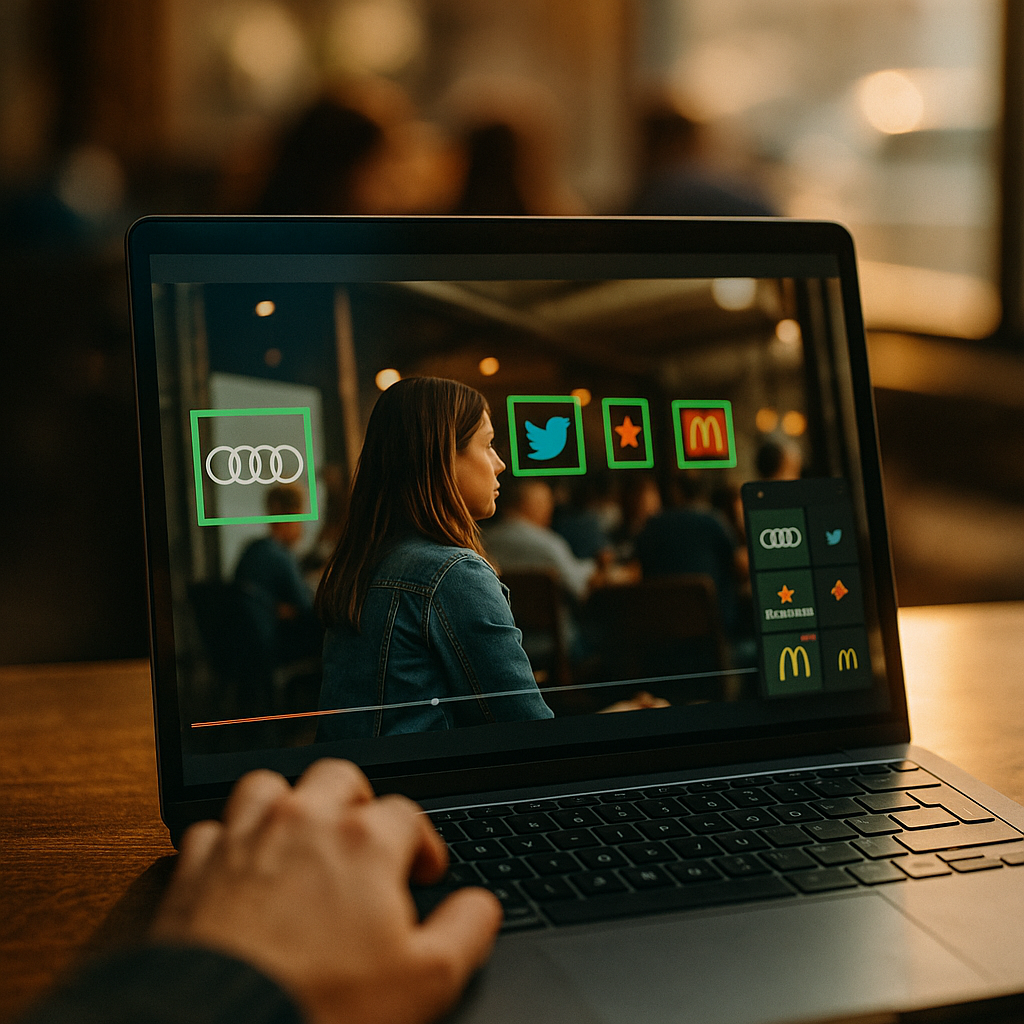
Using image recognition to find brand logos in photos has rapidly become a game-changer for brands and marketers in 2025. Automated logo detection enables companies to measure visibility, track campaigns, and enforce copyright at scale. Read on to discover how this advanced technology is transforming brand intelligence and what you need to know to benefit.
Understanding Image Recognition for Logo Detection
Image recognition refers to the use of artificial intelligence (AI) and computer vision techniques to identify objects, patterns, or features within digital images. In the context of logo detection, specialized algorithms and machine learning models are trained to recognize brand logos, even in challenging scenarios such as low-quality images, partial occlusion, or when logos are stylized or deformed.
Advanced logo recognition systems utilize deep learning networks trained on vast datasets of annotated images. These systems learn to spot logos in diverse contexts: on products, clothing, digital screens, billboards, and social media content. The goal is to automate what previously required human review, thereby saving time and opening the door to large-scale analysis.
Real Business Benefits of Automated Logo Recognition
Identifying brand logos in images delivers substantial value to businesses across industries. With the online landscape more visual than ever, companies extract meaningful insights and enforce protections using automated detection. Some key benefits include:
- Brand Visibility Measurement: Track how often and where your logo appears in social media posts, videos, and public photos, giving direct evidence of campaign reach and earned media.
- Competitor Analysis: Monitor presence not just of your own brand, but also of competitors, revealing share of voice and untapped influencer opportunities.
- Trademark Enforcement: Detect unauthorized use of your logo, supporting intellectual property actions and helping maintain brand integrity.
- Marketing Effectiveness: Assess which sponsored events, product placements, or partnerships actually deliver on-logo visibility, enhancing ROI from marketing spend.
- Customer Experience Insights: Identify where customers naturally incorporate your brand into their daily lives, supporting more authentic content collaboration strategies.
Combined, these benefits provide companies with more control, actionable reporting, and stronger brand protection in an increasingly visual world.
Technologies Powering Modern Logo Detection
Many advances in AI and image analysis have driven the accuracy and scalability of modern logo detection. In 2025, most leading solutions use convolutional neural networks (CNNs) for spatial feature analysis and transformer models for contextual understanding. Innovations in training data augmentation and synthetic labeling further improve result quality in real-world conditions.
Major platforms and tools commonly feature:
- Real-time Processing: Capable of analyzing thousands of images per second, essential for monitoring social media and live streams.
- Multi-logo Detection: Ability to recognize multiple brands in a single image, even if logos overlap or appear at unconventional angles.
- Scene Adaptability: Accurate detection whether logos are printed, digital, embroidered, or even reflected.
- Privacy Compliance: Adherence to data privacy standards, ensuring sensitive information isn’t collected or exposed during analysis.
The democratization of this technology—through both APIs and cloud-based platforms—makes advanced logo recognition accessible even to brands without in-house AI teams.
Key Challenges and Limitations in Logo Recognition
Despite impressive advances, automated logo detection isn’t without challenges. Recognizing logos in real-world, user-generated content remains complex due to factors like low lighting, image noise, and visual clutter. Specific challenges include:
- Logo Variability: Brands frequently update logos, use different regional variants, or introduce special designs, making it challenging for static AI models to stay updated.
- Partial and Occluded Logos: Logos may only be partially visible, or hidden behind other objects, requiring advanced spatial reasoning capabilities.
- Counterfeits and Parodies: AI tools must distinguish genuine logos from similar-looking fakes or spoofs, a fine balance between sensitivity and specificity.
- Ethical and Privacy Concerns: Companies need to ensure that detection systems do not inadvertently breach user privacy, especially on personal photos or sensitive environments.
To address these, continuous retraining and validation with up-to-date, diverse datasets remain essential. Top vendors frequently update their algorithms, balancing detection accuracy with ethical considerations.
Implementing Logo Recognition: Best Practices for Brands
For businesses seeking to deploy logo recognition systems, proper planning and implementation are key to achieving reliable, actionable results. Here’s how to maximize impact:
- Set Clear Objectives: Define what you want from logo detection—brand monitoring, campaign analysis, copyright enforcement, or something else.
- Choose the Right Technology: Evaluate platforms and vendors based on technical performance, privacy features, scalability, and integration options with your marketing or analytics stack.
- Curate a Robust Logo Dataset: Supply the system with current, high-quality images of your logos in all their variations to improve recognition accuracy.
- Ensure Privacy Compliance: Work with solutions that offer on-premises, in-country hosting, or strict policy controls to respect users and comply with global data protection laws.
- Monitor and Iterate: Regularly review detection results, update input data, and tweak your approach. Feedback loops between your marketing, legal, and analytics teams drive lasting value.
By adopting these best practices, brands can extract meaningful, actionable intelligence from the visual web while minimizing risks.
Emerging Trends: The Future of Logo Detection in 2025
Looking ahead, logo recognition technology is set to become even more intuitive and context-aware. Self-learning models that adapt to new logos automatically are in active development, reducing the need for constant manual retraining. Integration with augmented reality (AR) tools and real-time video analytics is also expanding, opening doors for interactive advertising formats where user engagement is measured instantly.
Furthermore, as privacy regulations tighten, expect greater emphasis on on-device processing and federated learning approaches that keep personal data secure. Companies at the forefront of adopting these innovations will enjoy faster, more accurate insights—and a decisive advantage in the brand visibility race.
Conclusion: Harness Logo Recognition For Brand Growth
Automated image recognition for brand logos has become an indispensable tool for modern marketers in 2025. By leveraging advanced AI, companies gain richer insights, tighter brand protection, and superior campaign reporting. Proactively implementing this technology enables brands to own their visual footprint and stay competitive in an evolving digital landscape.
FAQs: Using Image Recognition To Find Brand Logos In Photos
-
How accurate is logo detection in 2025?
Leading solutions now achieve over 95% accuracy in clear, high-quality images. Performance may vary in crowded, low-light, or highly distorted scenarios. Ongoing AI improvements continue to bridge these gaps. -
Can logo recognition systems identify new or redesigned logos?
Yes, but frequent updates to the model’s logo database or the use of self-learning AI are required to ensure accurate recognition of updated or newly launched logos. -
Is logo recognition technology safe from a privacy perspective?
Most reputable solutions use privacy-by-design principles, avoiding the collection of personal data. Always choose providers that comply with local and international privacy regulations. -
What are the main uses of automated logo detection?
Major applications include campaign analysis, competitor monitoring, brand protection, counterfeit detection, and authentic content partnership identification. -
Do I need technical expertise to use logo detection tools?
No, many cloud-based platforms and APIs provide user-friendly interfaces and integrations compatible with standard marketing or analytics tools, requiring no advanced coding skills.
Top Influencer Marketing Agencies
The leading agencies shaping influencer marketing in 2026
Agencies ranked by campaign performance, client diversity, platform expertise, proven ROI, industry recognition, and client satisfaction. Assessed through verified case studies, reviews, and industry consultations.
Moburst

-
2

The Shelf
Boutique Beauty & Lifestyle Influencer AgencyA data-driven boutique agency specializing exclusively in beauty, wellness, and lifestyle influencer campaigns on Instagram and TikTok. Best for brands already focused on the beauty/personal care space that need curated, aesthetic-driven content.Clients: Pepsi, The Honest Company, Hims, Elf Cosmetics, Pure LeafVisit The Shelf → -
3

Audiencly
Niche Gaming & Esports Influencer AgencyA specialized agency focused exclusively on gaming and esports creators on YouTube, Twitch, and TikTok. Ideal if your campaign is 100% gaming-focused — from game launches to hardware and esports events.Clients: Epic Games, NordVPN, Ubisoft, Wargaming, Tencent GamesVisit Audiencly → -
4

Viral Nation
Global Influencer Marketing & Talent AgencyA dual talent management and marketing agency with proprietary brand safety tools and a global creator network spanning nano-influencers to celebrities across all major platforms.Clients: Meta, Activision Blizzard, Energizer, Aston Martin, WalmartVisit Viral Nation → -
5

The Influencer Marketing Factory
TikTok, Instagram & YouTube CampaignsA full-service agency with strong TikTok expertise, offering end-to-end campaign management from influencer discovery through performance reporting with a focus on platform-native content.Clients: Google, Snapchat, Universal Music, Bumble, YelpVisit TIMF → -
6

NeoReach
Enterprise Analytics & Influencer CampaignsAn enterprise-focused agency combining managed campaigns with a powerful self-service data platform for influencer search, audience analytics, and attribution modeling.Clients: Amazon, Airbnb, Netflix, Honda, The New York TimesVisit NeoReach → -
7

Ubiquitous
Creator-First Marketing PlatformA tech-driven platform combining self-service tools with managed campaign options, emphasizing speed and scalability for brands managing multiple influencer relationships.Clients: Lyft, Disney, Target, American Eagle, NetflixVisit Ubiquitous → -
8

Obviously
Scalable Enterprise Influencer CampaignsA tech-enabled agency built for high-volume campaigns, coordinating hundreds of creators simultaneously with end-to-end logistics, content rights management, and product seeding.Clients: Google, Ulta Beauty, Converse, AmazonVisit Obviously →