


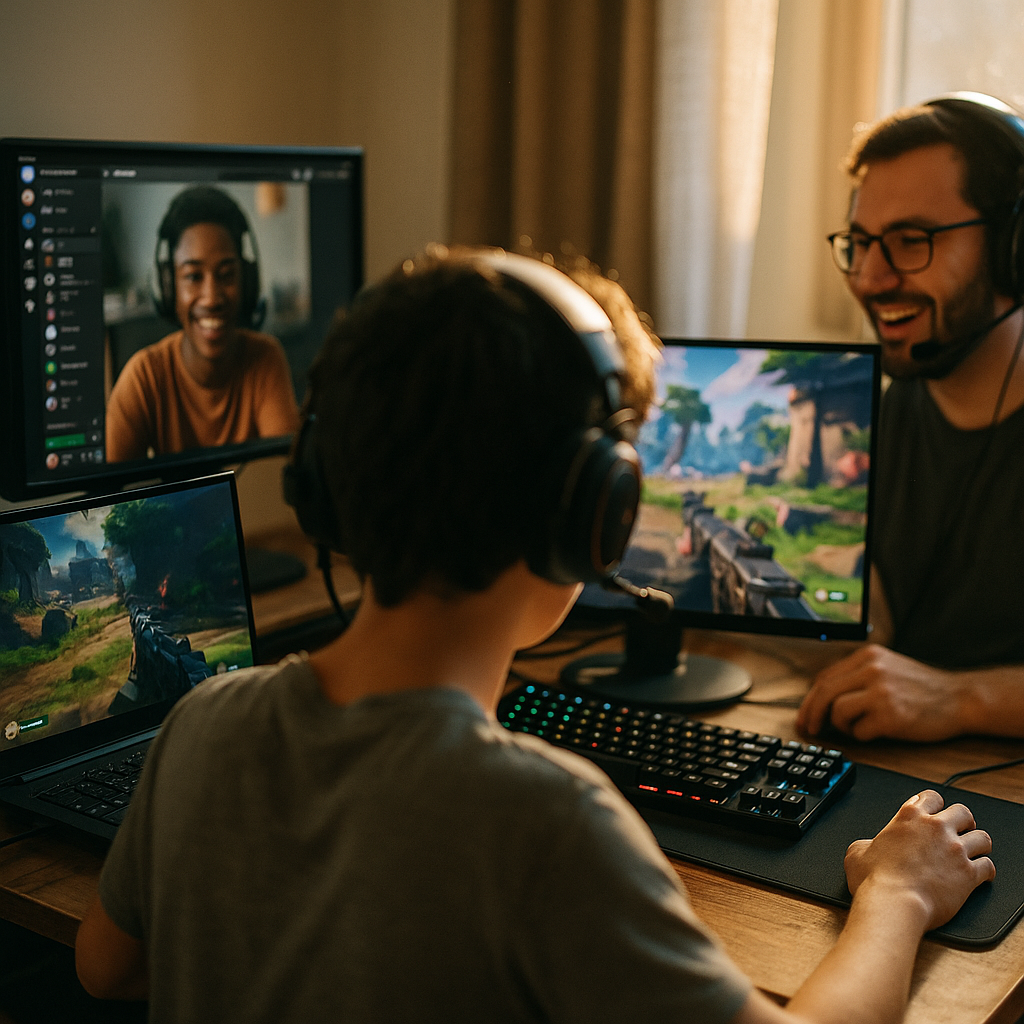
The concept of the “Third Place” has entered the digital age with online platforms like Discord and gaming lobbies, serving as modern gathering spots beyond home and work. As people seek new ways to connect, these virtual spaces build community in unexpected ways. How are online third places shaping our social lives in 2025? Read on to discover their evolving impact.
Understanding the Digital “Third Place” Phenomenon
The notion of a “Third Place,” coined by sociologist Ray Oldenburg, traditionally refers to informal public spaces like cafés and pubs—neutral grounds where community thrives. Today’s digital revolution has reimagined third places for an online world. Platforms such as Discord, gaming lobbies, and group chats now provide social infrastructure where people gather, converse, and build identity outside of home and work.
According to a 2024 Pew Research Center study, over 60% of Americans aged 18-35 report feeling closer to online communities than some real-life groups. This shift highlights the importance of virtual third places, offering inclusion, stability, and well-being—especially for those separated by distance or circumstance. Discord servers and multiplayer game lobbies have become microcosms of modern society, evolving far beyond their original technical purposes.
Why Discord Stands Out as a Virtual Community Hub
Discord began as a gamer-centric chat service but, in recent years, has matured into a social platform accommodating countless interest groups. Its blend of persistent chat rooms (servers), customizable access, and real-time communication tools fosters ongoing engagement—a key trait of a thriving third place. Discord’s focus on community-led moderation empowers users, building trust and a sense of ownership.
In 2024, Discord surpassed 350 million registered users globally, according to company figures. People flock to Discord for:
- Community: Niche servers host fandoms, creative groups, study partners, and support networks.
- Accessibility: Cross-device compatibility and free access lower the barrier to entry.
- Customization: Users tailor experiences with roles, bots, and unique channels, adapting to each group’s needs.
- Events & Voice: Scheduled events, voice lounges, and even integrated video calls re-create the feeling of real-world hangouts.
For many, Discord delivers the social heartbeat their offline lives may lack, providing spaces for meaningful and lasting connections.
The Social Role of Gaming Lobbies in Online Interaction
Gaming lobbies were once mere waiting rooms before matches but have evolved into vibrant community arenas. With advances in gaming technology, lobbies now support voice chat, text discussion, matchmaking, and player-driven events. Competitive and casual players alike exchange tips, banter, or even life advice as they spend hours together online.
Recent surveys from the Entertainment Software Association reveal that 72% of US gamers play online social games weekly, with multiplayer lobbies acting as everyday social venues. These interactions foster:
- Social Support: Many players form friendships and support networks that last well beyond the game.
- Conflict Resolution: Players learn teamwork and communication, skills that transfer to offline life.
- Diversity: Lobbies mix backgrounds, ages, and cultures, expanding the horizons of all participants.
Game developers now design lobbies with social features in mind, recognizing their impact as much more than technical necessities. Virtual badges, customizable avatars, and open chat channels encourage identity expression—qualities central to authentic third places.
Connection, Safety, and Moderation: Building Trust Online
Creating a trustworthy third place online demands more than just digital walls—it requires robust moderation, clear community standards, and active participation. Discord’s moderation tools, from AI-powered message scanning to member verification, bolster safety. Meanwhile, gaming lobbies increasingly deploy improved reporting systems, automated filters, and community moderators to reduce harassment and misinformation.
According to a 2024 report by the Anti-Defamation League, 61% of online users cite better moderation as one reason they feel comfortable socializing in digital spaces. Successful virtual third places practice:
- Transparent Rules: Clear community guidelines enforced fairly to protect vulnerable members.
- User Empowerment: Roles and reporting features that allow users to shape their environments.
- Responsive Support: Quick, human-centered responses to issues, building confidence in community safety.
When trust flourishes, so does engagement. People return knowing their voice matters and their experience will be positive, continually strengthening the ties that define third places.
The Impact of Virtual Third Places on Mental Health and Well-Being
Online third places are not just about passing time—they serve as vital spaces for personal growth, belonging, and emotional support. Mental health organizations note a surge in young people citing Discord servers or gaming lobbies as key sources of encouragement during stressful periods. For marginalized and geographically isolated communities, these platforms often offer support unavailable elsewhere.
The American Psychological Association’s 2024 review found that regular participation in online communities leads to higher reported levels of well-being, particularly for neurodiverse and LGBTQ+ individuals. The benefits include:
- Belonging: Finding like-minded peers eases loneliness and affirms personal identity.
- Expression: Anonymity allows users to share thoughts and seek help without fear.
- Growth: Collaboration in gaming or creative Discord spaces encourages learning and resilience.
Of course, these advantages hinge on healthy moderation and usage habits. Overexposure or toxic environments can have adverse effects, making community best practices crucial. As with physical third places, mindful participation maximizes benefits.
The Future of Online Third Places: Trends and Predictions
As we move through 2025, online third places are poised for continued evolution. Advances in AI-powered moderation, virtual reality integration, and cross-platform compatibility will further blur the lines between physical and digital gathering spaces. Key trends to watch include:
- Hyper-Personalized Spaces: Machine learning will tailor server and lobby experiences based on interests, behavior, and mood.
- Virtual Reality Socialization: VR chatrooms and lobby environments will offer even more immersive community experiences.
- Integrated Well-being Tools: Mental health check-ins, resource bots, and safe spaces will become standard to enhance digital wellness.
- Corporate and Educational Expansion: More professional and academic organizations will adopt Discord and gaming lobby frameworks for networking and collaboration.
These advancements promise to make digital third places richer and more inclusive, continuing to rewrite how we socialize in a rapidly changing world.
In summary, Discord and gaming lobbies now play a transformative role as online third places, fostering real friendship, support, and social development well beyond gaming. By embracing trust, moderation, and inclusiveness, these platforms have redefined what it means to belong—no matter where you connect from.
FAQs: The “Third Place” Online, Discord, and Gaming Lobbies
-
What is a digital or online third place?
An online third place refers to digital platforms—like Discord servers or gaming lobbies—where people regularly gather for social connection outside their homes (first place) and work/school (second place). -
Why are Discord and gaming lobbies important for community?
They provide safe, persistent, interest-driven environments for people to meet, chat, collaborate, and form meaningful relationships that may have been harder to forge offline. -
Are these online spaces safe?
Most major platforms, including Discord and popular game lobbies, invest in moderation tools, clear community guidelines, and user-driven safety features. However, individuals should always use privacy settings and report abuse when necessary. -
Can virtual third places benefit mental health?
Yes. Healthy, well-moderated online communities can ease loneliness, encourage expression, and provide vital support systems—especially for marginalized or isolated individuals. -
How can I find the right online community for me?
Search for Discord servers or game communities related to your interests, read their guidelines, and observe before joining discussions. Safe, welcoming groups will make new members feel included and respected from the start.
Top Influencer Marketing Agencies
The leading agencies shaping influencer marketing in 2026
Agencies ranked by campaign performance, client diversity, platform expertise, proven ROI, industry recognition, and client satisfaction. Assessed through verified case studies, reviews, and industry consultations.
Moburst

-
2

The Shelf
Boutique Beauty & Lifestyle Influencer AgencyA data-driven boutique agency specializing exclusively in beauty, wellness, and lifestyle influencer campaigns on Instagram and TikTok. Best for brands already focused on the beauty/personal care space that need curated, aesthetic-driven content.Clients: Pepsi, The Honest Company, Hims, Elf Cosmetics, Pure LeafVisit The Shelf → -
3

Audiencly
Niche Gaming & Esports Influencer AgencyA specialized agency focused exclusively on gaming and esports creators on YouTube, Twitch, and TikTok. Ideal if your campaign is 100% gaming-focused — from game launches to hardware and esports events.Clients: Epic Games, NordVPN, Ubisoft, Wargaming, Tencent GamesVisit Audiencly → -
4

Viral Nation
Global Influencer Marketing & Talent AgencyA dual talent management and marketing agency with proprietary brand safety tools and a global creator network spanning nano-influencers to celebrities across all major platforms.Clients: Meta, Activision Blizzard, Energizer, Aston Martin, WalmartVisit Viral Nation → -
5

The Influencer Marketing Factory
TikTok, Instagram & YouTube CampaignsA full-service agency with strong TikTok expertise, offering end-to-end campaign management from influencer discovery through performance reporting with a focus on platform-native content.Clients: Google, Snapchat, Universal Music, Bumble, YelpVisit TIMF → -
6

NeoReach
Enterprise Analytics & Influencer CampaignsAn enterprise-focused agency combining managed campaigns with a powerful self-service data platform for influencer search, audience analytics, and attribution modeling.Clients: Amazon, Airbnb, Netflix, Honda, The New York TimesVisit NeoReach → -
7

Ubiquitous
Creator-First Marketing PlatformA tech-driven platform combining self-service tools with managed campaign options, emphasizing speed and scalability for brands managing multiple influencer relationships.Clients: Lyft, Disney, Target, American Eagle, NetflixVisit Ubiquitous → -
8

Obviously
Scalable Enterprise Influencer CampaignsA tech-enabled agency built for high-volume campaigns, coordinating hundreds of creators simultaneously with end-to-end logistics, content rights management, and product seeding.Clients: Google, Ulta Beauty, Converse, AmazonVisit Obviously →