


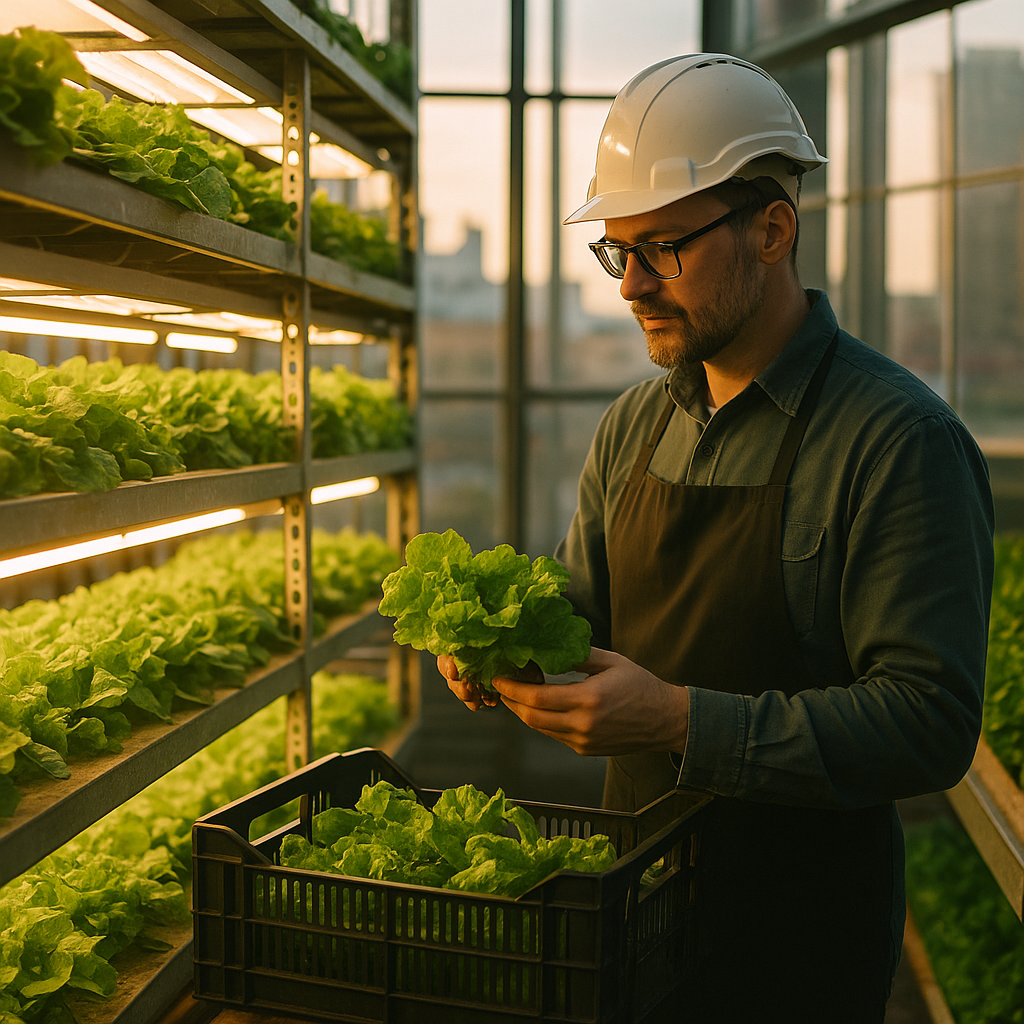
Vertical farming is revolutionizing how we grow and access food in urban environments. As AgTech rapidly evolves in 2025, educating consumers on vertical farming’s benefits and breakthroughs is essential for widespread adoption. But what exactly sets vertical farming apart, and how can consumers become more informed participants in this agricultural transformation?
Understanding Vertical Farming: What Makes It Different?
Vertical farming utilizes advanced agricultural technology to grow plants in stacked layers within controlled indoor environments. Unlike traditional soil-based agriculture, vertical farms use hydroponics, aeroponics, or aquaponics to nourish crops. This approach conserves water, optimizes space, reduces pesticide use, and brings food production closer to consumers in urban centers.
Many indoor farms are powered by LED lighting and controlled climate systems, enabling year-round cultivation of leafy greens, herbs, and even some fruits. Multiple harvests per year become possible, resulting in higher yields per square foot than conventional fields. Educational outreach is vital to help consumers understand these differences and the science behind them.
AgTech Innovations Powering Vertical Farming
AgTech, or agricultural technology, refers to cutting-edge tools driving efficiency and sustainability in vertical farming. Automated monitoring systems track temperature, humidity, and nutrient levels, while AI-driven algorithms adapt growing conditions minute-by-minute. Robotics aid in planting, harvesting, and packaging, reducing the need for manual labor.
Consumers often ask if these technologies affect food quality or nutritional value. The answer: research in 2025 confirms that vertical farming often leads to fresher produce, delivered within hours of harvest, with comparable or improved nutrient content compared to field-grown crops. Transparency about these innovations builds trust in the AgTech process and its results.
Educating Consumers on Sustainability and Environmental Impact
One of vertical farming’s compelling advantages is its positive impact on the environment. By recycling water, minimizing transportation, and reducing food waste, vertical farms present a sustainable solution in the face of climate change. These urban farms can use up to 95% less water and 99% less land than traditional agriculture.
Many consumers are motivated by environmental concerns but may not understand how vertical farms operate or their benefits. Education campaigns—both at point of sale and through digital storytelling—demonstrate how AgTech innovations lead to fresher, lower-carbon-footprint produce. Empowering the public with credible, up-to-date data helps them make informed food choices that support sustainability goals.
Engaging the Public: The Role of Urban Vertical Farms
Urban farms are not just production facilities; they serve as vital touchpoints for community engagement. Tours, educational workshops, and farm-to-table events increase transparency, letting consumers see firsthand how their food is grown. These activities foster a sense of connection and demystify AgTech, turning consumers into advocates.
For families and students, urban vertical farms can spark interest in STEM education. The accessibility of these farms means that people can learn about plant biology, environmental science, and technology all in one place. More food companies in 2025 are integrating consumer education into their business models to build lasting customer relationships.
Overcoming Misconceptions About Vertical Farming Food
Despite clear advantages, some consumers remain skeptical. Common concerns include food safety, artificial lighting, taste differences, and perceived “unnatural” growing conditions. Addressing these misconceptions requires clear, science-backed communication.
Vertical farm operators now openly share food safety protocols, from controlled air filtration to chemical-free pest management. Blind taste tests and nutritional analyses regularly demonstrate the quality and flavor of vertically farmed produce. Informed consumers are more confident in trying and adopting these products, seeing them as both safe and delicious.
Looking Ahead: Consumer Participation in the AgTech Revolution
As AgTech continues to evolve, consumer education plays a crucial role in shaping the industry. By learning how vertical farming works and understanding its impact, shoppers can make choices that reflect their health values and environmental priorities. The future of food relies on informed voices—and every consumer’s input.
In conclusion, vertical farming’s success in 2025 depends on educating consumers about AgTech innovations, sustainability, and food quality. By fostering transparency and busting myths, the industry empowers individuals to participate in a more sustainable, tech-forward food system—one vertical farm at a time.
FAQs
-
What is vertical farming?
Vertical farming is a method of growing crops indoors in stacked layers using advanced technologies like hydroponics, aeroponics, and climate controls. This approach makes efficient use of space and resources while producing fresh food closer to consumers.
-
Is food from vertical farms safe and nutritious?
Yes. In 2025, vertical farms are subject to strict food safety protocols. Multiple independent studies have shown that vertically farmed produce is as safe and often more nutritious and fresher than traditional field-grown crops.
-
How does vertical farming benefit the environment?
Vertical farms use much less water and land, drastically reduce transportation emissions, and generate less food waste. These lower-resource production methods support the shift toward more sustainable urban food systems.
-
Can vertical farms grow all types of crops?
Currently, vertical farms are most efficient at producing leafy greens, microgreens, herbs, and some fruits. Research in AgTech is ongoing to expand the crop range, making vertical farming more versatile over time.
-
How can I learn more or visit a vertical farm?
Many urban vertical farms offer guided tours, workshops, and educational events. Check with local farms in your city or look for virtual events organized by AgTech companies to experience vertical farming firsthand.
Top Influencer Marketing Agencies
The leading agencies shaping influencer marketing in 2026
Agencies ranked by campaign performance, client diversity, platform expertise, proven ROI, industry recognition, and client satisfaction. Assessed through verified case studies, reviews, and industry consultations.
Moburst

-
2

The Shelf
Boutique Beauty & Lifestyle Influencer AgencyA data-driven boutique agency specializing exclusively in beauty, wellness, and lifestyle influencer campaigns on Instagram and TikTok. Best for brands already focused on the beauty/personal care space that need curated, aesthetic-driven content.Clients: Pepsi, The Honest Company, Hims, Elf Cosmetics, Pure LeafVisit The Shelf → -
3

Audiencly
Niche Gaming & Esports Influencer AgencyA specialized agency focused exclusively on gaming and esports creators on YouTube, Twitch, and TikTok. Ideal if your campaign is 100% gaming-focused — from game launches to hardware and esports events.Clients: Epic Games, NordVPN, Ubisoft, Wargaming, Tencent GamesVisit Audiencly → -
4

Viral Nation
Global Influencer Marketing & Talent AgencyA dual talent management and marketing agency with proprietary brand safety tools and a global creator network spanning nano-influencers to celebrities across all major platforms.Clients: Meta, Activision Blizzard, Energizer, Aston Martin, WalmartVisit Viral Nation → -
5

The Influencer Marketing Factory
TikTok, Instagram & YouTube CampaignsA full-service agency with strong TikTok expertise, offering end-to-end campaign management from influencer discovery through performance reporting with a focus on platform-native content.Clients: Google, Snapchat, Universal Music, Bumble, YelpVisit TIMF → -
6

NeoReach
Enterprise Analytics & Influencer CampaignsAn enterprise-focused agency combining managed campaigns with a powerful self-service data platform for influencer search, audience analytics, and attribution modeling.Clients: Amazon, Airbnb, Netflix, Honda, The New York TimesVisit NeoReach → -
7

Ubiquitous
Creator-First Marketing PlatformA tech-driven platform combining self-service tools with managed campaign options, emphasizing speed and scalability for brands managing multiple influencer relationships.Clients: Lyft, Disney, Target, American Eagle, NetflixVisit Ubiquitous → -
8

Obviously
Scalable Enterprise Influencer CampaignsA tech-enabled agency built for high-volume campaigns, coordinating hundreds of creators simultaneously with end-to-end logistics, content rights management, and product seeding.Clients: Google, Ulta Beauty, Converse, AmazonVisit Obviously →