


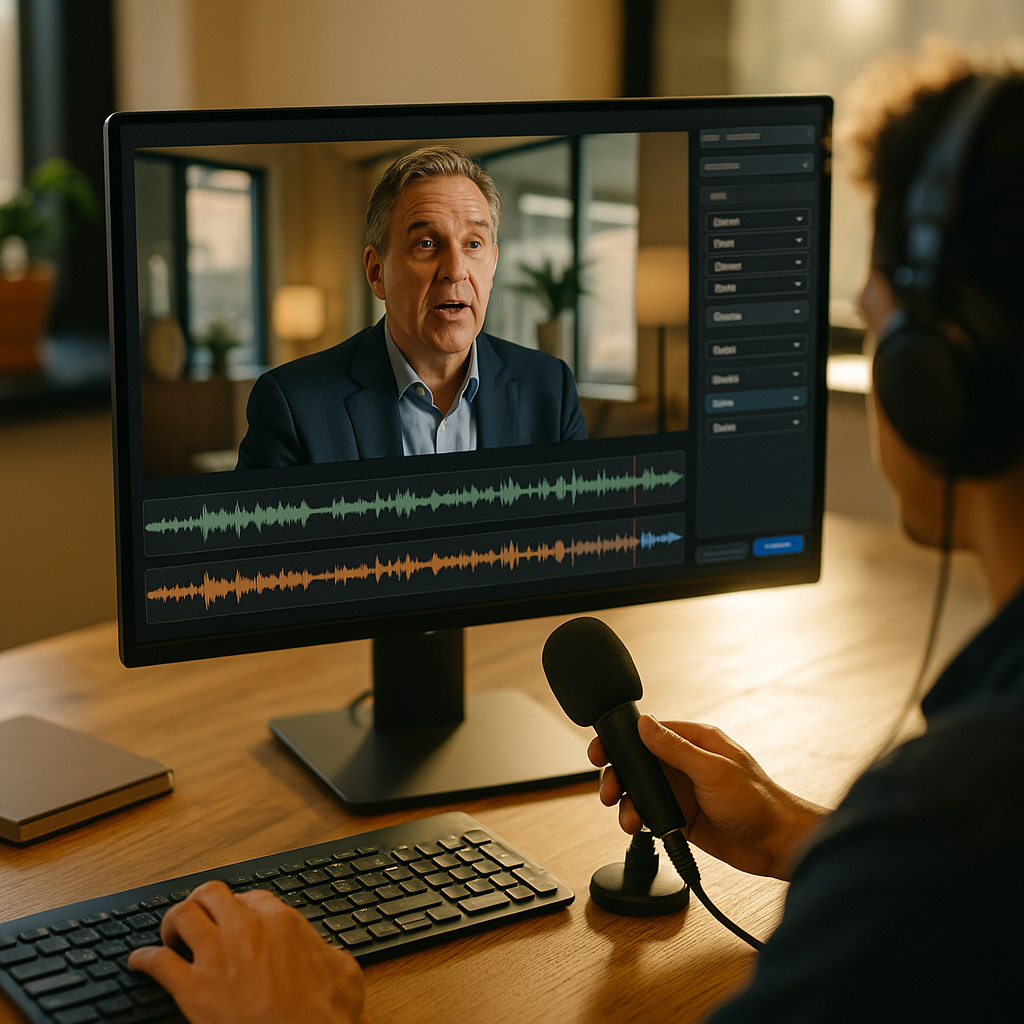
Generative AI for creating localized voiceovers at scale is transforming how global brands and media companies connect with diverse audiences. By enabling high-quality, culturally attuned voice content quickly and cost-effectively, organizations can now expand internationally without language barriers. Discover how this technology advances accessibility, brand engagement, and operational efficiency—all while maintaining an authentic local touch.
How Generative AI Voiceover Technology Works
Generative AI leverages state-of-the-art deep learning models, such as large language models and neural text-to-speech (TTS) systems, to automate the creation of natural-sounding voiceovers in multiple languages and dialects. With self-improving algorithms trained on vast multilingual datasets, these tools synthesize human-like speech from text, incorporating the right prosody, tone, and emotion.
Unlike traditional TTS, modern generative AI solutions can:
- Mimic nuanced expressions and accent variations.
- Adapt voice styles for different content types (e.g., eLearning, advertising, entertainment).
- Support complex localization, such as slang or idiomatic expressions, for cultural relevance.
By working directly from script input, these platforms accelerate the production pipeline significantly, ensuring scalable voiceover creation with consistent quality.
The Benefits of Scalable Localized Voiceover Production
The demand for multilingual content is rising. In 2025, Statista reports that over 75% of global consumers prefer buying products in their native language. Generative AI provides organizations with several competitive advantages for serving these audiences:
- Rapid Expansion: Enter new markets by producing high-quality localized audio in dozens of languages simultaneously.
- Cost Efficiency: Cut translation and production costs significantly by reducing reliance on multiple recording studios and voice actors.
- Consistency: Maintain brand voice and compliance across languages and regions without manual intervention.
- Customization: Adapt the same message to resonate with local sensibilities through regional accents, vocabularies, and tone shifts.
- Faster Time to Market: Drastically reduce the time between script finalization and content launch with automated workflows.
These benefits make generative AI a pivotal tool for marketing, gaming, eLearning, and streaming media organizations aiming to deliver accessible and engaging experiences worldwide.
Challenges and Considerations in AI Voiceover Localization
While generative AI for voiceover localization brings unparalleled speed and scale, it’s not without challenges. Achieving true cultural and linguistic authenticity remains complex. Considerations include:
- Cultural Sensitivity: Local idioms, humor, and context can be subtle. Reliable AI systems must be fine-tuned for each market.
- Accuracy: Machine translation can misinterpret nuanced content, potentially leading to brand risks. Human oversight is critical for validation.
- Diversity of Voices: Representing emerging dialects, gender diversity, and minority accents still depends on the breadth of training data.
- Regulatory Compliance: Data privacy, copyright, and consent requirements vary by country—AI platforms must adhere to global standards and local laws.
Modern best practices involve a “human-in-the-loop” approach: linguists and native speakers review and approve AI-generated content, ensuring high fidelity and audience trust.
Optimizing Localization Workflow with Generative AI Tools
To maximize the value of generative AI in localized voiceover production, organizations should align workflow strategies to their content and audience needs. In 2025, industry leaders employ an integrated approach that combines AI automation with specialized localization expertise.
- Script Preparation: Localize the core message and terminology before AI narration begins, respecting linguistic and cultural subtleties.
- Voice Selection: Choose AI voice models that match the brand persona and intended audience, favoring those validated for target regions.
- Post-processing: Use human reviewers to ensure emotional tone, pronunciation, and context are preserved accurately in the final voiceover.
- Feedback Loops: Collect audience data and linguistic feedback to continually improve the AI models over time.
- Automation Integration: Employ scalable content management systems (CMS) and APIs for seamless distribution and updating of voice content across platforms.
This end-to-end system creates a robust pipeline—from localization to AI voiceover generation to final review and deployment—reducing manual effort while sustaining quality at scale.
Future Trends: The Evolution of Generative AI in Voiceover Localization
The generative AI landscape is evolving rapidly, enabling even greater sophistication for localized voiceovers. In 2025, notable trends include:
- Emotionally-Aware Synthesis: AI models interpret script sentiment to create nuanced emotional delivery—enhancing storytelling and advertising impact.
- Personalization: Hyper-localized voice models tailor content to user region, demographic, or even individual preferences.
- Real-Time Localization: AI-powered voiceover tools now facilitate live translations and dubbing during webinars, gaming, and broadcasts.
- Voice Cloning for Accessibility: Custom voice avatars help brands and content creators offer inclusive experiences for visually impaired or multilingual users.
- Synthetic Voice Attribution: Advances in watermarking clearly distinguish AI-generated voices, promoting transparency and ethical use.
By investing in these capabilities, brands can deepen audience engagement, strengthen global reputation, and stay ahead in the multilingual digital economy.
Choosing the Right Generative AI Platform for Localized Voiceovers
Not all generative AI voiceover solutions are created equal. When selecting a technology partner, expert evaluators recommend focusing on the following EEAT-aligned criteria:
- Experience: The provider should demonstrate proven results and client success in your industry and target regions.
- Expertise: Look for best-in-class AI models with native support for your required languages and dialects.
- Authority: Favor solutions backed by robust linguistic research and positive testimonials from recognized global brands.
- Trust: Examine compliance with international localization standards, security practices, and data privacy laws.
- Support: Reliable customer service, continuous improvement, and community engagement are key for long-term partnerships.
Matching your business needs to a reputable AI partner forms the foundation for successful, scalable, and culturally authentic voiceover localization strategies in 2025 and beyond.
Conclusion: Harnessing Generative AI for Global Voiceover Localization
Generative AI for creating localized voiceovers at scale provides brands with a powerful edge—fueling worldwide reach, enhancing user experience, and optimizing costs. By uniting cutting-edge technology with cultural expertise and ethical best practices, businesses can embrace the multilingual future confidently and authentically.
FAQs on Generative AI for Localized Voiceovers
- What is generative AI voiceover localization?
It’s the process of using AI to convert scripts into natural-sounding, localized audio in multiple languages and dialects, enabling fast and scalable content production. - How accurate are AI-generated voiceovers?
State-of-the-art generative AI systems produce voiceovers with a high degree of naturalness and accuracy, though human review is typically recommended for culturally sensitive content. - Can generative AI capture regional slang and emotion?
Yes—advanced AI can mimic regional vocabulary, slang, and emotional tones, especially when trained on large, diverse data samples from native speakers. - Is human involvement still necessary in the workflow?
For best results, yes: linguists and local reviewers validate translations and voiceovers to ensure authenticity and prevent errors or cultural missteps. - How do brands protect data privacy when using these tools?
Leading AI voice platforms adhere to strict global privacy standards, including data encryption, user consent, and compliance with regional laws such as GDPR and CCPA. - What are the main applications for AI-localized voiceovers in 2025?
Leading use cases include international marketing, multilingual eLearning modules, global streaming media, video game localization, and accessible content for visually impaired users.
Top Influencer Marketing Agencies
The leading agencies shaping influencer marketing in 2026
Agencies ranked by campaign performance, client diversity, platform expertise, proven ROI, industry recognition, and client satisfaction. Assessed through verified case studies, reviews, and industry consultations.
Moburst

-
2

The Shelf
Boutique Beauty & Lifestyle Influencer AgencyA data-driven boutique agency specializing exclusively in beauty, wellness, and lifestyle influencer campaigns on Instagram and TikTok. Best for brands already focused on the beauty/personal care space that need curated, aesthetic-driven content.Clients: Pepsi, The Honest Company, Hims, Elf Cosmetics, Pure LeafVisit The Shelf → -
3

Audiencly
Niche Gaming & Esports Influencer AgencyA specialized agency focused exclusively on gaming and esports creators on YouTube, Twitch, and TikTok. Ideal if your campaign is 100% gaming-focused — from game launches to hardware and esports events.Clients: Epic Games, NordVPN, Ubisoft, Wargaming, Tencent GamesVisit Audiencly → -
4

Viral Nation
Global Influencer Marketing & Talent AgencyA dual talent management and marketing agency with proprietary brand safety tools and a global creator network spanning nano-influencers to celebrities across all major platforms.Clients: Meta, Activision Blizzard, Energizer, Aston Martin, WalmartVisit Viral Nation → -
5

The Influencer Marketing Factory
TikTok, Instagram & YouTube CampaignsA full-service agency with strong TikTok expertise, offering end-to-end campaign management from influencer discovery through performance reporting with a focus on platform-native content.Clients: Google, Snapchat, Universal Music, Bumble, YelpVisit TIMF → -
6

NeoReach
Enterprise Analytics & Influencer CampaignsAn enterprise-focused agency combining managed campaigns with a powerful self-service data platform for influencer search, audience analytics, and attribution modeling.Clients: Amazon, Airbnb, Netflix, Honda, The New York TimesVisit NeoReach → -
7

Ubiquitous
Creator-First Marketing PlatformA tech-driven platform combining self-service tools with managed campaign options, emphasizing speed and scalability for brands managing multiple influencer relationships.Clients: Lyft, Disney, Target, American Eagle, NetflixVisit Ubiquitous → -
8

Obviously
Scalable Enterprise Influencer CampaignsA tech-enabled agency built for high-volume campaigns, coordinating hundreds of creators simultaneously with end-to-end logistics, content rights management, and product seeding.Clients: Google, Ulta Beauty, Converse, AmazonVisit Obviously →