


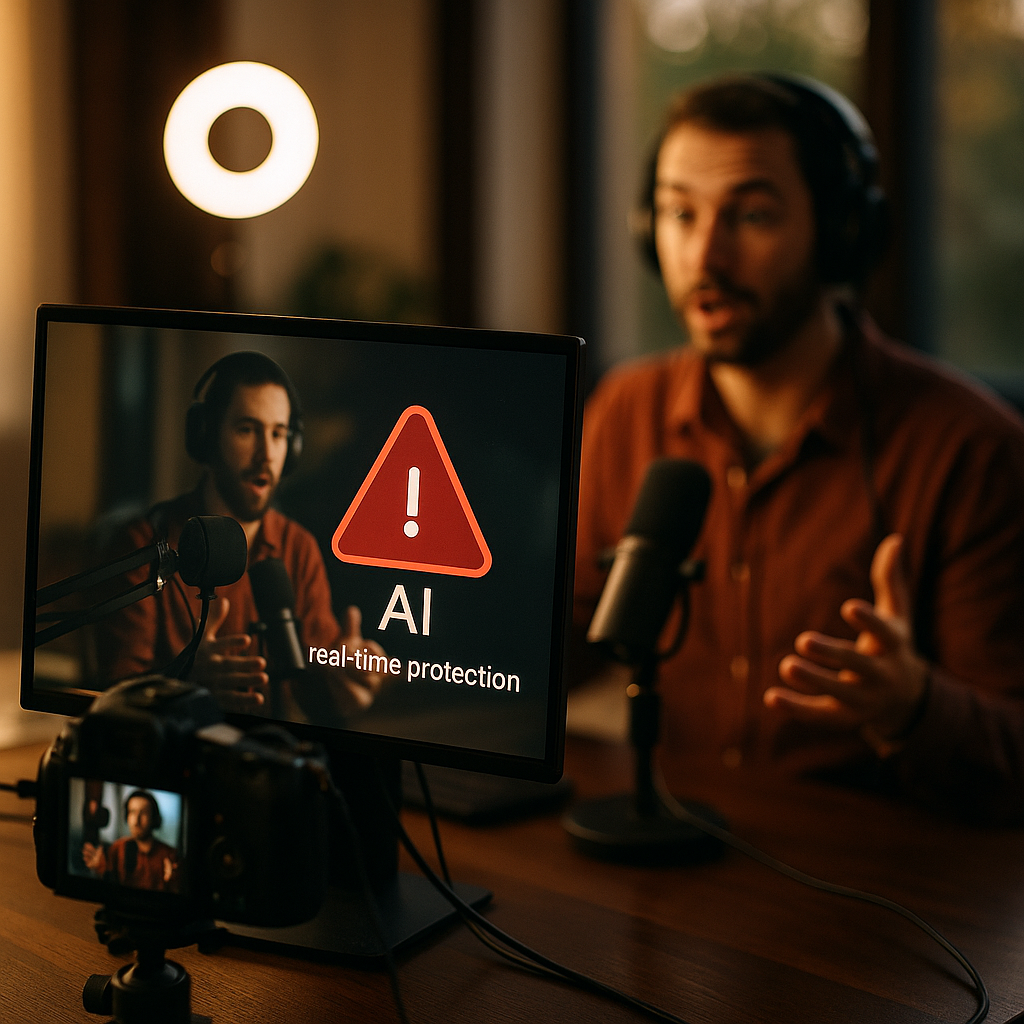
Using AI to detect brand safety risks in real-time livestream comments has become a practical necessity in 2025, as audiences expect open chat while brands demand safe environments. Live conversations move fast, and one harmful thread can snowball into screenshots, headlines, and lost trust. The right approach blends smart automation, clear rules, and human judgment—so how do you keep pace when every second counts?
What “brand safety in livestreams” really means in 2025
Brand safety in livestreams goes beyond blocking profanity. Livestream comment streams can introduce reputational, legal, and platform-policy risks in minutes because they’re public, searchable, and easily clipped for redistribution. For advertisers, sponsors, creators, and platforms, “safe” means viewers can participate without being exposed to content that violates community standards, harms protected groups, or encourages dangerous behavior.
Common livestream brand safety risks include:
- Hate and harassment: slurs, dehumanizing language, targeted abuse, brigading, doxxing attempts.
- Extremism and violent threats: incitement, glorification of violence, coded extremist slogans and symbols.
- Sexual content and grooming signals: explicit content, sexualization of minors, coercive language.
- Self-harm and crisis content: encouragement, instructions, or graphic references that require escalation.
- Health and financial misinformation: “miracle cures,” scams, impersonation, pump-and-dump style hype.
- IP and legal issues: defamatory statements, sharing private info, unlawful instructions.
- Contextual adjacency: comments that may be “mild” alone but toxic in combination, or harmful when posted under sensitive live events.
Two realities make livestreams uniquely difficult: context changes rapidly (a joke becomes a dogpile), and adversaries adapt fast (misspellings, emojis, code words). Effective brand safety programs treat this as an ongoing risk-management discipline—not a one-time filter list.
Real-time comment moderation with AI: how detection actually works
Real-time comment moderation with AI relies on multiple models and signals working together under strict latency constraints. The goal is not just to remove bad content, but to reduce exposure time, prevent pile-ons, and protect brand adjacency—without silencing legitimate speech.
A typical AI moderation pipeline includes:
- Ingestion and normalization: capture comments, user metadata (where permitted), language detection, and normalization of repeated characters, leetspeak, and obfuscation.
- Text classification: models score toxicity, hate, harassment, sexual content, self-harm, threats, and spam. Modern systems often use ensemble approaches rather than a single classifier.
- Context modeling: the system considers prior messages in the thread, reply targets, time windows, and surge patterns (e.g., coordinated brigades).
- Policy mapping: scores translate into actions based on your brand rules: allow, allow-but-warn, hold-for-review, hide, delete, timeout, or ban.
- Explainability cues for moderators: highlight trigger phrases, conversation context, and confidence levels so humans can act quickly.
Why “real-time” is hard: livestream chat can spike to thousands of messages per minute. A workable system must maintain low latency (often sub-second), handle multilingual input, and avoid cascading failures when traffic surges. It also has to stay calibrated: a safety model that is too aggressive causes audience backlash; too lenient creates brand damage.
Where AI adds the most value: AI is best at catching volume-driven issues (spam floods, repeated harassment), identifying obfuscated toxic language, and triaging ambiguous cases so human moderators focus on the highest-risk items. The most successful deployments treat AI as a decision-support layer, not an infallible judge.
Brand safety risk detection models: signals, thresholds, and context
Brand safety risk detection models are only as effective as the signals they use and the thresholds you set. In livestreams, static keyword blocklists are inadequate because they miss coded language and over-block benign uses (for example, reclaimed slurs in some contexts or educational discussions). Modern programs prioritize layered detection and context-aware decisions.
Key signals to combine:
- Content signals: toxicity and hate scores, sexual content likelihood, threat probability, self-harm indicators, scam patterns, link analysis.
- Behavioral signals: rapid posting rate, repeated copy-paste, newly created accounts, sudden follower influx, coordinated timing across accounts.
- Conversation signals: reply chains that escalate, repeated targeting of a single user, dogpile signatures, moderator interventions that correlate with topic shifts.
- Channel and event context: the creator’s typical audience norms, the category (gaming vs. finance), and the sensitivity of the live topic.
Thresholding strategy that works in practice:
- Use tiered actions: don’t treat every risk equally. For lower-risk toxicity, “hide from public view but keep for review” reduces disruption while protecting brand adjacency.
- Calibrate by harm class: threats, hate targeting protected groups, and grooming signals should have lower action thresholds and faster escalation paths than mild sarcasm.
- Introduce “velocity rules”: if borderline content appears at high frequency, escalate actions faster to prevent pile-ons.
- Implement “confidence + severity” logic: a medium-confidence but high-severity threat should still trigger an immediate hold.
Answering a common follow-up: “Can AI understand sarcasm?” Sometimes, but not reliably in high-noise livestream settings. That’s why systems should use AI to prioritize and constrain exposure time, while humans resolve nuanced intent—especially for creator communities where in-jokes are common.
Livestream chat monitoring tools: workflows, roles, and escalation paths
Livestream chat monitoring tools succeed when they fit your operational reality. Even the best model will fail if no one owns the workflow, escalation is unclear, or moderators lack authority. A strong setup combines platform-native tools, third-party moderation layers (when needed), and documented playbooks.
Recommended operational roles:
- Live moderator: executes actions (timeouts, bans, message holds), monitors queue, and communicates with the creator or host.
- Safety lead (on-call): handles high-severity escalations (threats, self-harm, doxxing), decides when to pause chat or end the stream.
- Brand/PR contact: coordinates messaging if harmful content goes viral; ensures sponsor obligations are met.
- ML or trust & safety analyst: reviews false positives/negatives post-stream and adjusts thresholds and policies.
Essential workflow elements to build into your tools:
- Pre-stream risk setup: select policy profile by event type (product launch, charity stream, political commentary, financial education) and language mix.
- Real-time queues: separate queues for “high severity,” “spam flood,” and “borderline toxicity” to keep moderators focused.
- One-click actions: timeout/ban with reason codes; hiding comments can protect viewers without provoking the poster.
- Escalation triggers: automatic alerts when threat probability passes a threshold, when doxxing patterns appear, or when toxic volume spikes.
- Audit trails: every automated and human action should be logged for accountability and post-mortems.
How to handle the hardest moment: if a livestream becomes a magnet for harassment or misinformation, your system should enable “circuit breakers” such as slow mode, follower-only chat, keyword gating, or temporarily switching chat to moderated-only mode. These are not last resorts; they are safety controls that protect both community and brand partners.
EEAT and responsible AI moderation: accuracy, privacy, and governance
To align with Google’s EEAT expectations for helpful, trustworthy content, your brand safety approach should demonstrate real expertise, transparent processes, and accountable governance. In practice, that means documenting policies, measuring outcomes, protecting user privacy, and ensuring humans can override automation.
Build credibility with clear policy definitions:
- Define harm categories: what counts as hate, harassment, threats, misinformation, and sexual content for your channel and sponsors.
- Publish community rules: short, readable, and visible in-stream. Viewers comply more when rules are explicit.
- Explain enforcement: clarify what leads to timeouts vs. bans and how appeals work (even if simple).
Measure what matters (and review after every major stream):
- Exposure time: how long harmful messages remained visible before removal or hiding.
- Precision/false positives: how often harmless comments were actioned, by category and language.
- Recall/false negatives: harmful items that slipped through, especially high-severity classes.
- Moderator load: queue size, response time, and burnout indicators.
- Brand outcomes: sponsor complaints, viewer churn during incidents, and post-stream sentiment.
Handle privacy and data protection responsibly:
- Minimize data: store only what you need for safety, auditing, and model improvement.
- Limit retention: keep logs for a defined period aligned to risk and legal needs.
- Secure access: role-based permissions and encrypted storage for moderation logs.
Bias and multilingual coverage: evaluate model performance across dialects, minority languages, and reclaimed terms. Use human review and community feedback to reduce disparate impact. If your stream reaches multiple regions, ensure you have language support—AI alone will miss culturally specific slurs and coded harassment.
Answering another follow-up: “Should we let the model auto-ban?” For most brands, auto-bans should be reserved for high-confidence spam bots and repeat offenders. For sensitive categories (hate, threats, self-harm), safer practice is immediate hiding plus fast human confirmation, unless you have proven, audited performance and strong appeal paths.
Implementing AI brand safety monitoring: a practical rollout plan
Implementing AI brand safety monitoring works best as an iterative program, not a big-bang launch. The fastest path to value is to start with triage and exposure reduction, then expand automation as you validate accuracy and governance.
Step-by-step rollout (designed for real teams):
- 1) Set objectives: define what “success” means (e.g., reduce harmful exposure time, lower moderator workload, improve sponsor confidence).
- 2) Create policy profiles: build 3–5 profiles for common stream types with different thresholds and actions.
- 3) Start with “hide + review”: default to hiding questionable content while you measure false positives; keep the community experience stable.
- 4) Add circuit breakers: configure slow mode, gating rules, and automated alerts for surges.
- 5) Train moderators on edge cases: sarcasm, reclaimed terms, coordinated raids, and misinformation patterns specific to your niche.
- 6) Run post-stream audits: review samples of allowed, hidden, and removed comments; update thresholds and dictionaries weekly.
- 7) Expand automation carefully: only automate stronger actions (timeouts/bans) when your metrics show consistent performance.
Vendor vs. in-house decision: if you have limited trust & safety staffing, a mature third-party layer can accelerate deployment. If you operate at high scale or have unique risk profiles (finance, healthcare, youth audiences), investing in custom models and governance may be justified. Either way, insist on auditability, configurable policies, and clear data-handling terms.
What to prepare before your next big livestream: a one-page incident plan, pre-approved statements for common issues, and a dedicated escalation channel (internal chat or hotline). Speed and clarity reduce damage more than any single model upgrade.
FAQs
What is the fastest way to reduce brand safety risk in livestream comments?
Implement AI-based triage that can instantly hide high-risk comments, add slow mode and follower-only gating for spikes, and staff at least one trained moderator with a clear escalation path. Reducing harmful exposure time is the quickest measurable win.
Can AI moderate multilingual livestream chats accurately?
It can help significantly, but accuracy varies by language and dialect. Use language detection, region-specific policy tuning, and human reviewers for your top languages. Track false positives and false negatives by language to avoid uneven enforcement.
How do you handle misinformation in livestream comments without over-censoring?
Use a graduated response: de-amplify spammy claims, hold borderline statements for review, and apply stricter actions to scams, impersonation, and dangerous instructions. Pair enforcement with pinned clarifications from the host and trusted sources when appropriate.
Should brands delete harmful comments or hide them?
Hiding is often better as a default because it immediately protects viewers while preserving an audit trail for review and appeals. Deletion can be reserved for clear violations, while threats, doxxing, and grooming signals should trigger immediate hiding plus escalation.
What metrics prove that AI moderation is working?
Track harmful exposure time, moderator response time, precision/false positives, recall/false negatives (especially for high-severity harms), volume of spam removed, and incident frequency. Tie these to brand outcomes like sponsor satisfaction and reduced post-stream complaints.
How do you prevent coordinated raids and harassment campaigns?
Combine AI detection with velocity rules, account-level signals (new accounts, repeated copy-paste), and circuit breakers like slow mode and gated chat. Prepare an incident playbook so moderators can tighten controls within seconds.
AI-driven brand safety in livestream comments is most effective when it reduces exposure time, adapts to context, and keeps humans in control of high-impact decisions. In 2025, brands that pair real-time detection with clear policies, measurable thresholds, and disciplined escalation protect both community trust and sponsorship value. Build a workflow-first system, audit it after every stream, and iterate—because the chat will keep evolving.
Top Influencer Marketing Agencies
The leading agencies shaping influencer marketing in 2026
Agencies ranked by campaign performance, client diversity, platform expertise, proven ROI, industry recognition, and client satisfaction. Assessed through verified case studies, reviews, and industry consultations.
Moburst

-
2

The Shelf
Boutique Beauty & Lifestyle Influencer AgencyA data-driven boutique agency specializing exclusively in beauty, wellness, and lifestyle influencer campaigns on Instagram and TikTok. Best for brands already focused on the beauty/personal care space that need curated, aesthetic-driven content.Clients: Pepsi, The Honest Company, Hims, Elf Cosmetics, Pure LeafVisit The Shelf → -
3

Audiencly
Niche Gaming & Esports Influencer AgencyA specialized agency focused exclusively on gaming and esports creators on YouTube, Twitch, and TikTok. Ideal if your campaign is 100% gaming-focused — from game launches to hardware and esports events.Clients: Epic Games, NordVPN, Ubisoft, Wargaming, Tencent GamesVisit Audiencly → -
4

Viral Nation
Global Influencer Marketing & Talent AgencyA dual talent management and marketing agency with proprietary brand safety tools and a global creator network spanning nano-influencers to celebrities across all major platforms.Clients: Meta, Activision Blizzard, Energizer, Aston Martin, WalmartVisit Viral Nation → -
5

The Influencer Marketing Factory
TikTok, Instagram & YouTube CampaignsA full-service agency with strong TikTok expertise, offering end-to-end campaign management from influencer discovery through performance reporting with a focus on platform-native content.Clients: Google, Snapchat, Universal Music, Bumble, YelpVisit TIMF → -
6

NeoReach
Enterprise Analytics & Influencer CampaignsAn enterprise-focused agency combining managed campaigns with a powerful self-service data platform for influencer search, audience analytics, and attribution modeling.Clients: Amazon, Airbnb, Netflix, Honda, The New York TimesVisit NeoReach → -
7

Ubiquitous
Creator-First Marketing PlatformA tech-driven platform combining self-service tools with managed campaign options, emphasizing speed and scalability for brands managing multiple influencer relationships.Clients: Lyft, Disney, Target, American Eagle, NetflixVisit Ubiquitous → -
8

Obviously
Scalable Enterprise Influencer CampaignsA tech-enabled agency built for high-volume campaigns, coordinating hundreds of creators simultaneously with end-to-end logistics, content rights management, and product seeding.Clients: Google, Ulta Beauty, Converse, AmazonVisit Obviously →