


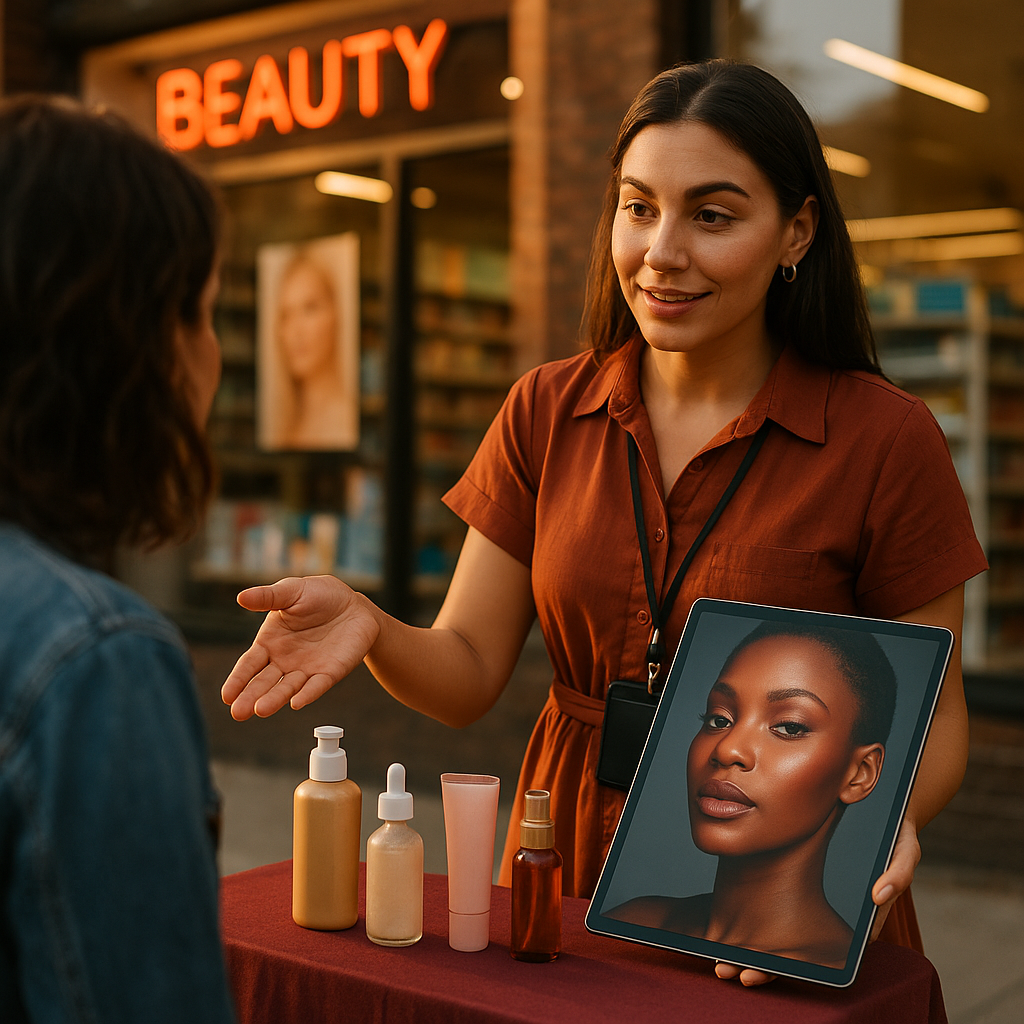
In 2025, beauty marketers face higher acquisition costs and lower attention spans, yet shoppers still crave relevance. This case study: a beauty brand’s success with targeted hyper-local campaigns shows how one mid-sized skincare line used neighborhood-level insights, localized creative, and store-ready offers to lift sales while improving efficiency. What changed when the brand stopped marketing to “cities” and started marketing to blocks?
Hyper-local marketing strategy: brand context, goals, and constraints
Brand snapshot: “Luminé Skin” (pseudonym), a mid-sized clean skincare brand sold through its own DTC site plus 180 retail doors across three metro areas. The brand’s hero products were a vitamin C serum and a barrier-repair moisturizer.
The challenge: City-wide targeting was producing inconsistent results. The brand saw strong online engagement but uneven in-store sell-through. Leadership suspected that store performance varied less by “metro” and more by neighborhood realities: commuter patterns, local demographics, micro-climates, and proximity to competing retailers.
Primary business goals:
- Increase retail sales in underperforming doors without discounting brand-wide.
- Lower blended CAC for DTC while protecting margin.
- Improve inventory efficiency by aligning product emphasis with local demand signals.
Constraints: A modest media budget, limited internal analytics support, and strict requirements to avoid sensitive targeting categories. The plan had to be privacy-forward, compliant, and practical for a small team.
Why hyper-local: The team believed that beauty shopping is often “last mile.” People buy when an offer matches where they are, what the weather feels like, what the local trend cycle looks like, and how quickly they can pick up a product.
Geo-targeted beauty ads: how the campaign was designed
Step 1: Define “local” in operational terms. The team avoided vague radius targeting and instead built “trade areas” around each retail door using three inputs: store catchment assumptions (drive/walk time), local foot-traffic corridors, and delivery feasibility for same-day shipping zones. Each store got its own geo cell, and overlapping areas were resolved so customers didn’t see conflicting messages.
Step 2: Build neighborhood personas from first-party and contextual data. Luminé Skin used:
- First-party data: CRM purchase history, loyalty sign-ups, on-site search terms, quiz responses, and email engagement by ZIP/postal cluster.
- Retail signals: weekly sell-through by SKU, out-of-stock frequency, and returns reasons by door.
- Contextual signals: local weather (humidity, cold snaps), commuting patterns (weekday vs weekend spikes), and event calendars (fitness races, festivals).
The team focused on non-sensitive attributes: skin concerns customers explicitly shared (dryness, dullness, sensitivity) and contextual conditions (seasonal dryness), rather than inferring personal traits.
Step 3: Creative templates with local swaps. Instead of producing dozens of bespoke ads, they built modular creative:
- Headline modules tied to local context (“Cold, windy week? Barrier care that lasts”).
- Offer modules tied to store benefits (gift-with-purchase at Door 14, free mini-facial consult Saturdays at Door 22).
- CTA modules reflecting fulfillment (“Pick up 10 minutes away” vs “Deliver today”).
Step 4: A measurement plan before launch. To keep the case study credible, the brand set guardrails:
- Every store cell had a holdout area with no hyper-local ads for comparison.
- They pre-defined success metrics (incremental revenue, ROAS, store visits, email capture, and out-of-stock rate).
- They used consistent attribution rules across cells so results were comparable.
Step 5: Channel selection that matched intent. The brand split spend across:
- Paid social for discovery and localized storytelling.
- Search for high intent (“vitamin C serum near me,” “hydrating moisturizer”).
- Maps and local inventory ads to connect shoppers directly to nearby doors.
Importantly, they aligned budget to the shopper journey: discovery ads created demand; maps/search captured it when customers were close enough to act.
Localized beauty messaging: creative, offers, and community fit
What changed in messaging: City-wide creative talked about brand values (“clean, effective, dermatologist-tested”). Hyper-local creative kept those claims but added specific “why now, why here” cues. This made ads feel like useful information rather than generic persuasion.
Three localized angles that performed best:
- Micro-climate skincare: In colder, windier neighborhoods, barrier-repair messaging and routine bundles led. In humid pockets, lightweight hydration and “non-greasy glow” claims won.
- Commuter convenience: For neighborhoods with transit hubs, the brand promoted “grab-and-go” sets and emphasized store proximity and fast pickup.
- Event-triggered routines: Around local fitness events, messaging shifted to “post-workout redness calming” and “sweat-friendly sunscreen layering,” paired with in-store sampling.
Offer design without brand dilution: Instead of blanket discounts, each door used a controlled set of incentives:
- Gift-with-purchase (travel minis) to preserve price integrity.
- Service-forward perks (10-minute skin consult, shade/texture matching for tinted SPF).
- Retail-exclusive bundles with a small value advantage over DTC.
Local proof, not empty hype: The brand collected short staff tips and customer quotes at specific doors (“Our most-requested routine for winter redness”) and used them as attributed content in ads and landing pages. They avoided unverifiable claims and kept language aligned with product testing and labeling.
Landing page structure: Each geo cell drove to a localized landing page that answered likely follow-ups:
- Exact store address, hours, and “how to find us” notes.
- Top 3 products stocked today (based on inventory feeds).
- What the offer is, how long it runs, and how to redeem.
- Short routine guidance for the local climate condition currently trending.
This reduced friction and increased trust by making the path from ad to purchase obvious.
Local SEO for beauty brands: store pages, listings, and “near me” demand
Paid hyper-local ads worked best when organic local presence was strong. Luminé Skin treated local SEO as performance infrastructure, not a side project.
1) Store locator that behaves like a local directory. They rebuilt store pages so each door had a unique URL with distinct content (hours, in-store services, parking/transit notes, top SKUs, and FAQs). Thin, duplicated pages were replaced with genuinely helpful, door-specific details.
2) Listing hygiene at scale. The team audited name-address-phone consistency, categories, and attributes across major listing ecosystems. They added:
- Accurate categories aligned to skincare and cosmetics retail.
- Service attributes (consults, sampling availability) where permitted.
- UTM-tagged links for cleaner measurement between listings and site behavior.
3) Review strategy with clear ethics. Staff asked for reviews after consults using a simple script and QR code, without gating or incentivizing. Reviews were routed to the correct door page, improving relevance for local intent queries.
4) “Near me” content that answers intent. The brand published short, non-fluffy answers to common local queries on store pages: “Do you carry the vitamin C serum in-store?” “Is the moisturizer fragrance-free?” “Can I pick up today?” This improved conversion and reduced customer service load.
Why this mattered: When someone saw an ad and then searched the brand name plus “near me,” listings and store pages confirmed credibility. That second step often decides the sale.
Retail foot traffic attribution: measurement, experiments, and results
Luminé Skin treated measurement as a product, not a report. The goal was to learn what truly drove incremental sales at the neighborhood level.
Attribution approach:
- Matched-market testing: Similar store trade areas were paired; one received hyper-local spend and one served as holdout.
- Promo code and offer mapping: Each door used unique redemption mechanics (QR, barcode, or phrase at checkout) to connect exposure to sales without collecting unnecessary personal data.
- Inventory-aware reporting: Out-of-stock days were flagged so performance wasn’t misread as “low demand.”
What they found (high-confidence learnings):
- Localized landing pages lifted conversion versus sending everyone to the generic homepage, especially on mobile. Shoppers wanted immediate confirmation of availability and proximity.
- Gift-with-purchase beat discounts in repeat purchase rate for new customers acquired via hyper-local cells, supporting long-term value instead of short-term spikes.
- Store consult messaging increased basket size in neighborhoods where shoppers preferred in-person guidance, while “fast pickup” messaging performed better in commuter-heavy corridors.
Results summary (aggregated across the three metros): Over an eight-week flight in 2025, hyper-local cells outperformed holdouts on incremental revenue and in-store redemption. The strongest lift came from combining (1) local inventory visibility, (2) door-specific offers, and (3) intent capture via maps/search. The team also reduced wasted spend by pausing cells that underperformed due to stock constraints or misaligned messaging.
How to interpret these results responsibly: The brand avoided overclaiming by reporting incremental improvements relative to holdouts, not just platform-reported ROAS. They also documented assumptions and limitations (weather anomalies, inventory disruptions) so internal stakeholders trusted the conclusions.
Beauty brand growth playbook: what to replicate and what to avoid
Replicate these moves:
- Start with trade areas, not radiuses. Define “local” based on how people actually shop and travel near each door.
- Use modular creative. Swap headlines and offers without reinventing the whole asset library.
- Connect ads to operational reality. If a door is low on hero SKUs, shift messaging to what’s in stock or pause spend.
- Make store pages conversion assets. Add inventory, services, FAQs, and clear redemption instructions.
- Measure incrementality. Holdouts, matched markets, and door-level redemption mechanisms are more persuasive than last-click claims.
Avoid these common pitfalls:
- Over-segmentation too early. Do not create dozens of micro-cells before you have enough data to optimize.
- Inconsistent offers across overlapping areas. Customers notice when two nearby doors promote conflicting incentives.
- Local claims without proof. Keep messaging aligned with what the store can deliver and what product testing supports.
- Ignoring staff enablement. If the store team doesn’t know the offer details, redemption breaks and trust erodes.
Reader follow-up: “How small can I go?” If you have limited budget, start with 10–20 priority doors or neighborhoods. Build one strong localized landing page template, test two offer types, and expand only after you can show incremental lift with clean comparisons.
FAQs: targeted hyper-local campaigns for beauty brands
What is a targeted hyper-local campaign in beauty marketing?
A targeted hyper-local campaign uses neighborhood-level targeting, door-specific offers, and localized creative to reach shoppers based on where they are and what nearby stores can fulfill. It typically combines paid media (social/search/maps) with local SEO and store landing pages.
Do hyper-local campaigns work for DTC-only beauty brands?
Yes. DTC brands can localize by delivery zones, pop-up locations, events, or same-day shipping coverage. The key is to offer a real local benefit (faster delivery, local sampling, or event pickup) and route traffic to pages that confirm availability and timelines.
How do I measure in-store impact without violating privacy?
Use aggregated, consent-based methods: door-level offer redemption (QR or barcode), matched-market or holdout testing, and inventory-aware sales comparisons. Avoid collecting sensitive data and document your methodology so stakeholders trust the results.
What channels perform best for hyper-local beauty campaigns?
Most brands see strong performance from a combination: paid social for discovery, search for intent capture, and maps/local inventory ads for “near me” shoppers. Results improve when local SEO and store pages are accurate and helpful.
How often should localized creative change?
Refresh core creative monthly and update contextual modules weekly when conditions shift (weather changes, local events, inventory constraints). Keep a stable structure so you learn what drives performance rather than constantly resetting tests.
What budget do I need to start?
You can start small by focusing on a handful of doors, two message themes, and one offer type. The budget should be enough to generate meaningful comparisons between test and holdout areas; if volume is too low, expand geography before adding more segments.
Targeted hyper-local campaigns helped this beauty brand grow by aligning marketing with how people shop in real neighborhoods: what’s nearby, what’s in stock, and what problem needs solving today. In 2025, the most efficient spend often comes from specificity, not scale. Build strong store pages, localize offers responsibly, and measure incrementality. The payoff is steadier sales and clearer decisions.
Top Influencer Marketing Agencies
The leading agencies shaping influencer marketing in 2026
Agencies ranked by campaign performance, client diversity, platform expertise, proven ROI, industry recognition, and client satisfaction. Assessed through verified case studies, reviews, and industry consultations.
Moburst

-
2

The Shelf
Boutique Beauty & Lifestyle Influencer AgencyA data-driven boutique agency specializing exclusively in beauty, wellness, and lifestyle influencer campaigns on Instagram and TikTok. Best for brands already focused on the beauty/personal care space that need curated, aesthetic-driven content.Clients: Pepsi, The Honest Company, Hims, Elf Cosmetics, Pure LeafVisit The Shelf → -
3

Audiencly
Niche Gaming & Esports Influencer AgencyA specialized agency focused exclusively on gaming and esports creators on YouTube, Twitch, and TikTok. Ideal if your campaign is 100% gaming-focused — from game launches to hardware and esports events.Clients: Epic Games, NordVPN, Ubisoft, Wargaming, Tencent GamesVisit Audiencly → -
4

Viral Nation
Global Influencer Marketing & Talent AgencyA dual talent management and marketing agency with proprietary brand safety tools and a global creator network spanning nano-influencers to celebrities across all major platforms.Clients: Meta, Activision Blizzard, Energizer, Aston Martin, WalmartVisit Viral Nation → -
5

The Influencer Marketing Factory
TikTok, Instagram & YouTube CampaignsA full-service agency with strong TikTok expertise, offering end-to-end campaign management from influencer discovery through performance reporting with a focus on platform-native content.Clients: Google, Snapchat, Universal Music, Bumble, YelpVisit TIMF → -
6

NeoReach
Enterprise Analytics & Influencer CampaignsAn enterprise-focused agency combining managed campaigns with a powerful self-service data platform for influencer search, audience analytics, and attribution modeling.Clients: Amazon, Airbnb, Netflix, Honda, The New York TimesVisit NeoReach → -
7

Ubiquitous
Creator-First Marketing PlatformA tech-driven platform combining self-service tools with managed campaign options, emphasizing speed and scalability for brands managing multiple influencer relationships.Clients: Lyft, Disney, Target, American Eagle, NetflixVisit Ubiquitous → -
8

Obviously
Scalable Enterprise Influencer CampaignsA tech-enabled agency built for high-volume campaigns, coordinating hundreds of creators simultaneously with end-to-end logistics, content rights management, and product seeding.Clients: Google, Ulta Beauty, Converse, AmazonVisit Obviously →