


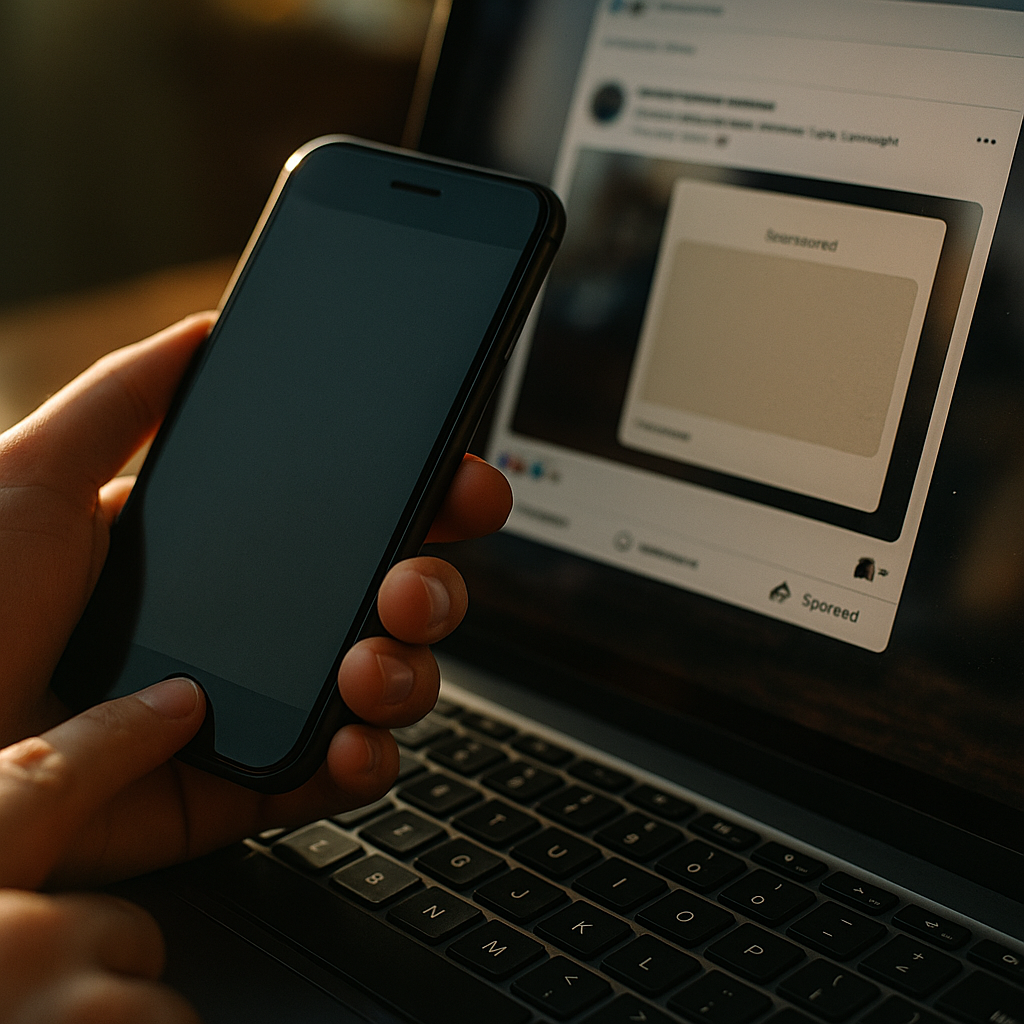
The Rise Of Digital Minimalism And Its Effect On Ad Frequency is reshaping how people browse, buy, and subscribe in 2025. Consumers are trimming notifications, deleting apps, and demanding calmer screens. That shift changes what “enough advertising” means and how often brands can appear before trust drops. For marketers, it’s not about shouting louder; it’s about earning attention—so what happens next?
Digital minimalism trend: why fewer screens win in 2025
Digital minimalism is a deliberate approach to technology: people keep the tools that clearly improve their lives and remove the rest. In practice, that means fewer apps, fewer alerts, more intentional social use, and a preference for clean, fast experiences. The “digital minimalism trend” is accelerating because the costs of constant connectivity have become obvious: distraction, decision fatigue, and a growing sense that time online is being monetized rather than respected.
Several forces make this trend structurally durable rather than a passing mood. First, platform design has become more aggressive in capturing attention, which pushes some users toward boundaries, limiters, and paid ad-free tiers. Second, remote and hybrid work have increased screen time; many people respond by reducing optional digital noise. Third, better privacy controls and OS-level tools make minimalism easier to practice, from focus modes to app timers and subscription bundles that reduce ad exposure.
For advertisers, the key implication is simple: audiences are not disappearing, but tolerance for interruptions is. This changes the risk profile of high-frequency campaigns and increases the value of ads that feel useful, well-timed, and easy to dismiss. If your growth model assumes ever-increasing impressions per user, digital minimalism will force a redesign.
Ad frequency capping: the new baseline for attention respect
As consumers become more selective, ad frequency capping moves from a technical setting to a brand promise. Frequency cap decisions shape how users perceive your intent: are you trying to help them decide, or trying to wear them down? In minimalism-oriented environments, overexposure can be interpreted as disrespect, especially on small screens and in private contexts like messaging, email, and audio.
Modern frequency strategy needs to account for:
- Channel sensitivity: Users often accept higher frequency in high-intent environments (search, retail media) than in passive feed browsing.
- Creative fatigue curves: Repetition becomes waste faster when ads are visually similar or lack new information.
- User controls: “Hide ad,” “mute,” and “why am I seeing this?” options turn annoyance into a measurable signal.
- Attention scarcity: If a user has intentionally reduced screen time, each impression carries more reputational weight.
A practical approach is to treat frequency like dosage. Use lower caps by default, then “earn” additional exposures only when engagement indicates relevance (site visits, product views, cart activity, email opens, or content completion). Instead of pushing for the highest reachable frequency, aim for the lowest frequency that still delivers incremental lift.
Marketers often ask, “What number should our cap be?” There is no universal number. The helpful answer is to test caps by objective: awareness, consideration, and conversion behave differently. In awareness, variety usually beats repetition. In consideration, a smaller number of high-information exposures often performs best. In conversion, frequency can rise briefly, but only with strict time windows and suppression after purchase.
Consumer ad fatigue: how minimalism changes tolerance thresholds
Consumer ad fatigue is not only about “too many ads.” In 2025, fatigue also comes from perceived manipulation: urgency banners, pop-ups that block reading, autoplay audio, and repetitive retargeting that follows people across devices. Digital minimalists tend to interpret these patterns as cues that a brand is optimizing for clicks instead of customer outcomes.
Fatigue shows up in measurable behaviors:
- Lower engagement: Diminishing click-through and view-through completion rates as frequency rises.
- More avoidance: Scrolling faster, muting, skipping, closing, or leaving the page.
- Negative feedback: Hides, blocks, spam reports, and “don’t show me this” actions.
- Brand effects: Reduced trust, weaker recall quality, and a tendency to associate the brand with noise.
Minimalism raises tolerance thresholds in an uneven way. People may still welcome ads that solve a problem at the right time: a replacement filter for a product they own, a local service when moving, or a truly relevant price drop. What they reject is ambient repetition: ads that keep appearing without new value.
To address likely follow-up concerns, here are two clarifications. First, digital minimalism does not mean “no ads.” It means “no unnecessary ads.” Second, fatigue is not purely frequency-driven. Poor landing pages, slow load times, and misleading claims amplify fatigue because they waste the limited attention users have chosen to allocate.
Privacy-first marketing: why targeting shrinkage increases frequency risk
The shift toward privacy-first marketing intersects with digital minimalism in a way many teams underestimate. As targeting becomes less granular due to consent requirements and platform restrictions, campaigns often compensate by buying more impressions. That can unintentionally increase frequency on the same reachable users, especially in smaller audiences or niche categories.
This is the paradox: reduced tracking can lead to more repetition, because ad systems have fewer signals to diversify delivery. The result is a higher likelihood that your best prospects see the same creative too often, while other potential customers remain unreached.
To manage frequency risk in a privacy-first environment:
- Invest in first-party data quality: Clean, permissioned data improves relevance and reduces waste. Strong preference centers also align with minimalist values.
- Use contextual and moment-based signals: Content category, query intent, and on-site behavior can outperform hyper-personalization without feeling intrusive.
- Broaden creative variation: Multiple angles, formats, and messages lower fatigue even if the same user is reached.
- Strengthen suppression logic: Exclude recent buyers, service-ticket creators, and people who have hit frequency thresholds across channels.
From an EEAT perspective, privacy-first marketing is also a credibility issue. Brands that clearly explain data use, offer straightforward controls, and avoid dark patterns earn more latitude from minimalists. Your policies and your ad experiences must match; inconsistency becomes a trust leak that frequency cannot fix.
Attention economy shift: fewer impressions, higher standards, better outcomes
The attention economy shift is not simply “people are distracted.” It is “people are becoming more disciplined.” Digital minimalists curate their feeds, limit notifications, and choose ad-free subscriptions where possible. That pressures publishers and platforms to balance revenue with usability and pushes advertisers to focus on quality signals rather than raw impression volume.
What does “higher standards” look like in ads?
- Clarity: A clear value proposition in the first seconds or first line, without bait-and-switch.
- Low-friction experiences: Fast pages, readable layouts, minimal pop-ups, and transparent pricing.
- Utility: Guides, calculators, comparisons, and demos that help decision-making rather than interrupt it.
- Respectful formats: Non-intrusive placements, easy dismissals, and no forced audio.
Marketers often worry: “If we show fewer ads, will revenue drop?” Not necessarily. In minimalist conditions, incremental lift per impression matters more than total impression count. When you reduce waste and increase relevance, you can maintain or improve performance with fewer exposures. This is particularly true when you align ad delivery with the user’s journey: discovery, evaluation, purchase, and post-purchase support.
One useful operational change is to report outcomes by “effective reach” and “attention-adjusted frequency,” not just impressions. Pair frequency data with engagement quality, time-to-conversion, and customer satisfaction signals. If additional frequency drives complaints, churn, or unsubscribes, it is not profitable even if it boosts short-term clicks.
Minimalist-friendly ad strategy: practical playbook for brands and publishers
A minimalist-friendly approach does not mean abandoning advertising. It means building a system where frequency is controlled, relevance is provable, and the user experience stays clean. Brands and publishers that adopt this approach can differentiate themselves because many competitors still rely on brute-force retargeting and cluttered pages.
Use this playbook to align ad frequency with digital minimalism:
- Set tiered frequency caps by intent: Lower caps for cold audiences; higher caps only in short, high-intent windows (for example, after a product view) with strict decay and exclusions.
- Rotate creatives with purpose: Each exposure should add something new: a feature, proof point, use case, or price clarity. Avoid running the same visual for weeks.
- Build suppression as a customer experience rule: Suppress after purchase, after sign-up, after support interactions, and when negative feedback appears.
- Prefer “pull” content for awareness: Publish useful content and use ads to invite people to it. Educational assets often tolerate lower frequency because they earn time rather than steal it.
- Make landing pages minimalist too: If your ad promises calm, your page cannot be a maze of pop-ups and countdowns. Consistency is part of trust.
- Measure beyond clicks: Track incremental conversions, assisted conversions, brand search lift, and customer satisfaction to avoid optimizing for noisy engagement.
Publishers can also respond by offering cleaner ad packages: lighter pages, fewer placements, and guaranteed frequency controls within their inventory. In 2025, that can be a premium product. Advertisers increasingly pay for environments where attention is less fragmented and where frequency can be managed without relying on fragile cross-site identifiers.
FAQs
What is digital minimalism, in plain terms?
It is the practice of using technology intentionally: keeping apps and services that provide clear value and removing or limiting those that create distraction, noise, or stress.
Does digital minimalism mean people stop buying online?
No. Many minimalists still shop online, but they prefer faster paths to decisions, fewer interruptions, and more trustworthy information. They often respond better to helpful content and clear offers than to repeated reminders.
How does digital minimalism affect ad frequency specifically?
It lowers tolerance for repetitive exposure and increases the reputational cost of intrusive formats. Brands need stronger frequency caps, more creative variety, and better suppression rules to avoid fatigue and negative feedback.
What is the best ad frequency cap?
There is no universal cap. The right number depends on channel, audience size, creative variety, and campaign objective. The most reliable method is to test multiple caps and measure incremental lift alongside negative signals such as hides, unsubscribes, and churn.
Will privacy-first marketing force higher frequency?
It can if campaigns rely on fewer signals and smaller addressable pools. To prevent overexposure, improve first-party data quality, use contextual targeting, broaden creative sets, and apply cross-channel suppression where possible.
How can small businesses adapt without big ad tech budgets?
Start with simple steps: cap retargeting windows, rotate two to four creatives, exclude recent customers, prioritize search and high-intent placements, and send fewer, more useful emails. Clean landing pages and honest messaging often outperform complex targeting.
Are ad-free subscriptions a threat to advertisers?
They reduce inventory in certain environments, but they also signal what users value: calm, control, and speed. Advertisers can respond by shifting toward high-trust channels, better creatives, and partnerships with publishers offering cleaner experiences.
How do I know if we’re causing ad fatigue?
Watch for declining engagement at higher frequency, rising negative feedback, falling conversion rates from retargeting, shorter site sessions after ad clicks, and brand sentiment issues in surveys or support interactions.
What formats work best with minimalist audiences?
Formats that respect attention: clear search ads, useful native placements, short informative video, sponsored content that teaches, and retail media tied to shopping intent. Avoid disruptive interstitials and autoplay audio when possible.
Can fewer ads actually improve results?
Yes. When frequency is reduced to the level that still creates incremental lift, waste drops and brand trust improves. In minimalist contexts, relevance and experience quality often beat volume.
Digital minimalism is changing advertising in 2025 by making attention more intentional and interruptions less acceptable. That reality raises the cost of overexposure and rewards brands that cap frequency, rotate meaningful creatives, and respect privacy. The best response is not to chase more impressions, but to deliver more value per impression. When your ads feel useful and controlled, audiences stay open to them.
Top Influencer Marketing Agencies
The leading agencies shaping influencer marketing in 2026
Agencies ranked by campaign performance, client diversity, platform expertise, proven ROI, industry recognition, and client satisfaction. Assessed through verified case studies, reviews, and industry consultations.
Moburst

-
2

The Shelf
Boutique Beauty & Lifestyle Influencer AgencyA data-driven boutique agency specializing exclusively in beauty, wellness, and lifestyle influencer campaigns on Instagram and TikTok. Best for brands already focused on the beauty/personal care space that need curated, aesthetic-driven content.Clients: Pepsi, The Honest Company, Hims, Elf Cosmetics, Pure LeafVisit The Shelf → -
3

Audiencly
Niche Gaming & Esports Influencer AgencyA specialized agency focused exclusively on gaming and esports creators on YouTube, Twitch, and TikTok. Ideal if your campaign is 100% gaming-focused — from game launches to hardware and esports events.Clients: Epic Games, NordVPN, Ubisoft, Wargaming, Tencent GamesVisit Audiencly → -
4

Viral Nation
Global Influencer Marketing & Talent AgencyA dual talent management and marketing agency with proprietary brand safety tools and a global creator network spanning nano-influencers to celebrities across all major platforms.Clients: Meta, Activision Blizzard, Energizer, Aston Martin, WalmartVisit Viral Nation → -
5

The Influencer Marketing Factory
TikTok, Instagram & YouTube CampaignsA full-service agency with strong TikTok expertise, offering end-to-end campaign management from influencer discovery through performance reporting with a focus on platform-native content.Clients: Google, Snapchat, Universal Music, Bumble, YelpVisit TIMF → -
6

NeoReach
Enterprise Analytics & Influencer CampaignsAn enterprise-focused agency combining managed campaigns with a powerful self-service data platform for influencer search, audience analytics, and attribution modeling.Clients: Amazon, Airbnb, Netflix, Honda, The New York TimesVisit NeoReach → -
7

Ubiquitous
Creator-First Marketing PlatformA tech-driven platform combining self-service tools with managed campaign options, emphasizing speed and scalability for brands managing multiple influencer relationships.Clients: Lyft, Disney, Target, American Eagle, NetflixVisit Ubiquitous → -
8

Obviously
Scalable Enterprise Influencer CampaignsA tech-enabled agency built for high-volume campaigns, coordinating hundreds of creators simultaneously with end-to-end logistics, content rights management, and product seeding.Clients: Google, Ulta Beauty, Converse, AmazonVisit Obviously →